You want to light up your outdoor space without running wires, hiring an electrician, or adding to your electricity bill. That's a great idea. But there's a big difference between an outdoor solar LED light for $8 on a marketplace and a truly reliable model. You'll quickly feel that difference—often by the first winter.
This guide helps you understand what this generic term really means, guides you based on your needs, and helps you avoid regrettable purchases.
Outdoor Solar LED: What It Really Means
All solar lights sold today use LEDs. LEDs (Light-Emitting Diodes) have become the standard for a good reason: they consume much less energy than old bulbs, allowing a small solar battery to last much longer between charges. But beyond that, the differences are huge.
Why "Solar LED" Alone Doesn't Mean Much
The problem is that the "solar LED" label applies to everything from a decorative garden stake light to a powerful floodlight capable of illuminating an entire driveway. And when it comes to quality, you'll find everything: models that last 5 years and others that fail after the first rainy fall.
The real difference between a low-end solar LED light and a reliable model comes down to three things: the quality of the LED itself, the size of the solar panel, and the battery capacity. Very low-priced models often skimp on all three—and you pay for it with rapidly dimming brightness and autonomy that disappears as soon as days get shorter.
The Trap of 50 Lumens for $8
An outdoor solar LED light sold for under $10 typically offers between 30 and 80 lumens maximum. This is barely enough to create a decorative ambiance in a garden. If you're looking to secure a driveway, light up a gate, or see where you're stepping when you come home at night, this level of brightness isn't enough. Add to that a 300 to 500 mAh battery that struggles to store enough energy to last an entire night in the fall, and you'll understand why many people buy the same "economical" light two or three times, thinking they're getting a good deal.
Types of Outdoor Solar LED Lights
Outdoor solar lighting isn't just one type of product. Each format has its advantages and specific use cases. Here's an overview to help you find what fits your situation.
Solar Garden Stake Lights
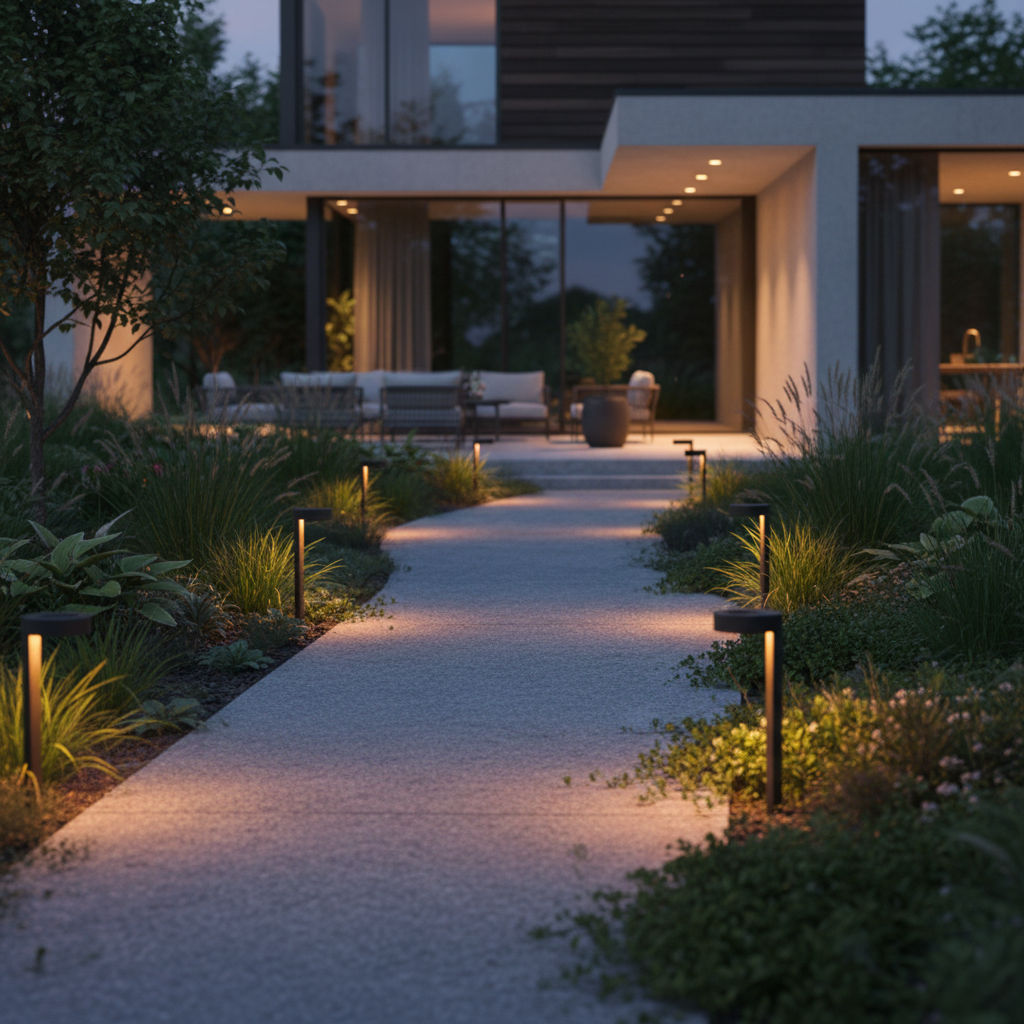
Low to the ground, placed on the surface or staked into the earth, garden stake lights are mainly used to mark a path or create ambiance around a patio. Their brightness is low (often 20 to 50 lumens), which is sufficient for decorative use. They don't provide security; they guide and beautify. If you're only looking for an aesthetic effect for a patio evening, this format might work. For everything else, you'll need something more powerful.
Solar Wall Sconces and Wall Lights
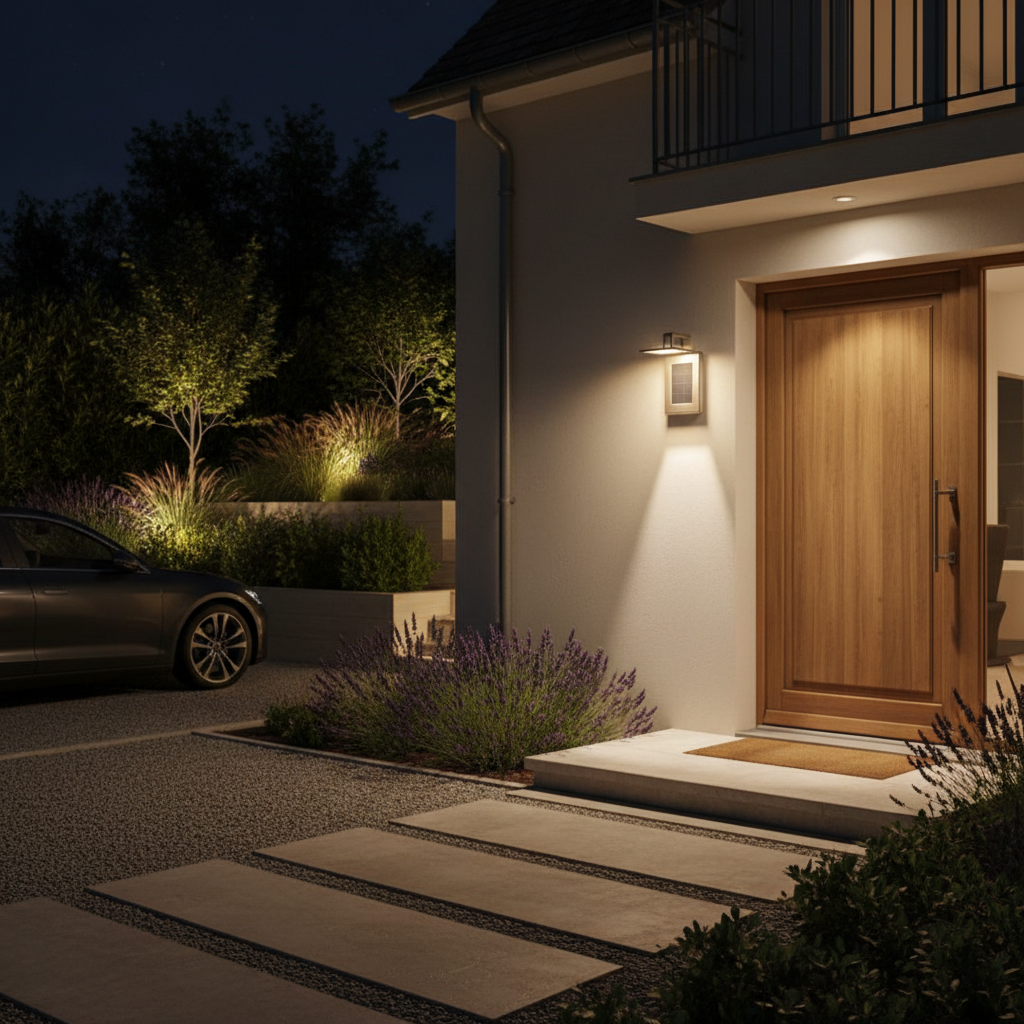
Mounted on a wall, facade, or pillar, a solar wall light is one of the most versatile formats. It can both decorate and illuminate an access point, entrance, or patio edge. Quality varies greatly between models. If this format interests you, check out our article on outdoor solar wall lights for more in-depth selection criteria.
Solar Garden Spotlights
Staked into the ground or adjustable on a spike, a solar spotlight highlights a tree, plant, or architectural feature. It's a directional light, often used for ambiance and landscaping. Not very useful for security, but highly effective for the aesthetic nighttime rendering of a well-maintained outdoor space.
Powerful Solar Floodlights
This format offers the most lumens and the best range. A good solar floodlight can exceed 1000 lumens and cover a large area like a garage, barn, private parking lot, or an entire facade. If you're looking to truly secure a perimeter or illuminate a significant surface, this is the format to choose. To understand what distinguishes an effective floodlight from one that disappoints after the second winter, our article on powerful solar floodlights details the key points.
The Criteria That Truly Make a Difference
Now that we've covered the formats, let's talk about what separates good models from bad—regardless of the chosen format. These criteria apply to any type of outdoor solar LED light.
The Battery: The Core of the Battle
This is probably the most underestimated criterion when buying. The battery stores energy captured during the day and releases it at night. The larger its capacity (expressed in mAh), the longer the light can last—especially in winter when days are short and skies are cloudy.
Entry-level models often have batteries of 400 to 600 mAh. A serious model generally starts at 1500 mAh and goes well beyond. The difference is directly felt in autonomy and lifespan: a small battery subjected to intense charge/discharge cycles degrades much faster. To learn more about this topic, our guide on solar light batteries explains in detail what makes all the difference in the durability of a solar light.
The Solar Panel and Its Orientation
The size of the solar panel determines how much energy the light can absorb each day. A panel that's too small won't recharge the battery enough to last an entire night, especially between October and March. Orientation also matters: a panel integrated into the light's body isn't always optimally oriented towards the sun, unlike models with a remote panel that you can adjust.
The Motion Sensor: Not a Gadget, Real Savings
A light continuously on all night consumes its battery much faster than a light that only turns on when it detects motion. A motion sensor therefore multiplies autonomy—sometimes by 5 or 10—while providing more intense lighting when you really need it.
This is particularly useful for driveways, gates, and garages. A good solar motion sensor should have a range of at least 16 to 26 feet (5 to 8 meters) and a sufficient coverage angle so you don't have to wait in the dark for it to detect you.
Weather Resistance
Every outdoor solar LED light must withstand rain, wind, frost, and temperature fluctuations. The IP (Ingress Protection) rating indicates the level of protection: IP44 resists water splashes, IP65 resists direct water jets and dust. Below IP44, you're taking a real risk with the integrated electronics. IP65 is the minimum recommended for outdoor ground or exposed facade installation.
The Quality of the LED Itself
Not all LEDs age the same way. Low-end models can lose 30% or more of their initial brightness within a few months of intensive use. A quality LED maintains stable lighting for several years. This is invisible at purchase, but it explains why some lights seem "less bright than before" after a summer.
Comparison Table: What to Expect Based on Budget
| Criterion | Entry-Level (< $15) | Mid-Range ($15-$40) | High-End (> $40) |
|---|---|---|---|
| Brightness | 30 to 100 lumens | 200 to 600 lumens | 800 to 1500+ lumens |
| Battery | 300 to 600 mAh | 1000 to 2000 mAh | 2000 to 5000+ mAh |
| Estimated Lifespan | 6 to 18 months | 2 to 3 years | 4 to 6 years |
| Weather Resistance | IP44 or lower | IP44 to IP65 | IP65 minimum |
| Motion Sensor | Sometimes, unreliable | Yes, decent range | Yes, wide range and angle |
| Warranty | Often none or 1 year | 1 to 2 years | 3 to 5 years |
Outdoor Solar LED for Your Yard: Which Light for Which Area?
A yard has very different lighting needs depending on the area. What works for a decorative patio corner won't work for a gate or a 65-foot (20-meter) driveway. Here's how to think about lighting each area.
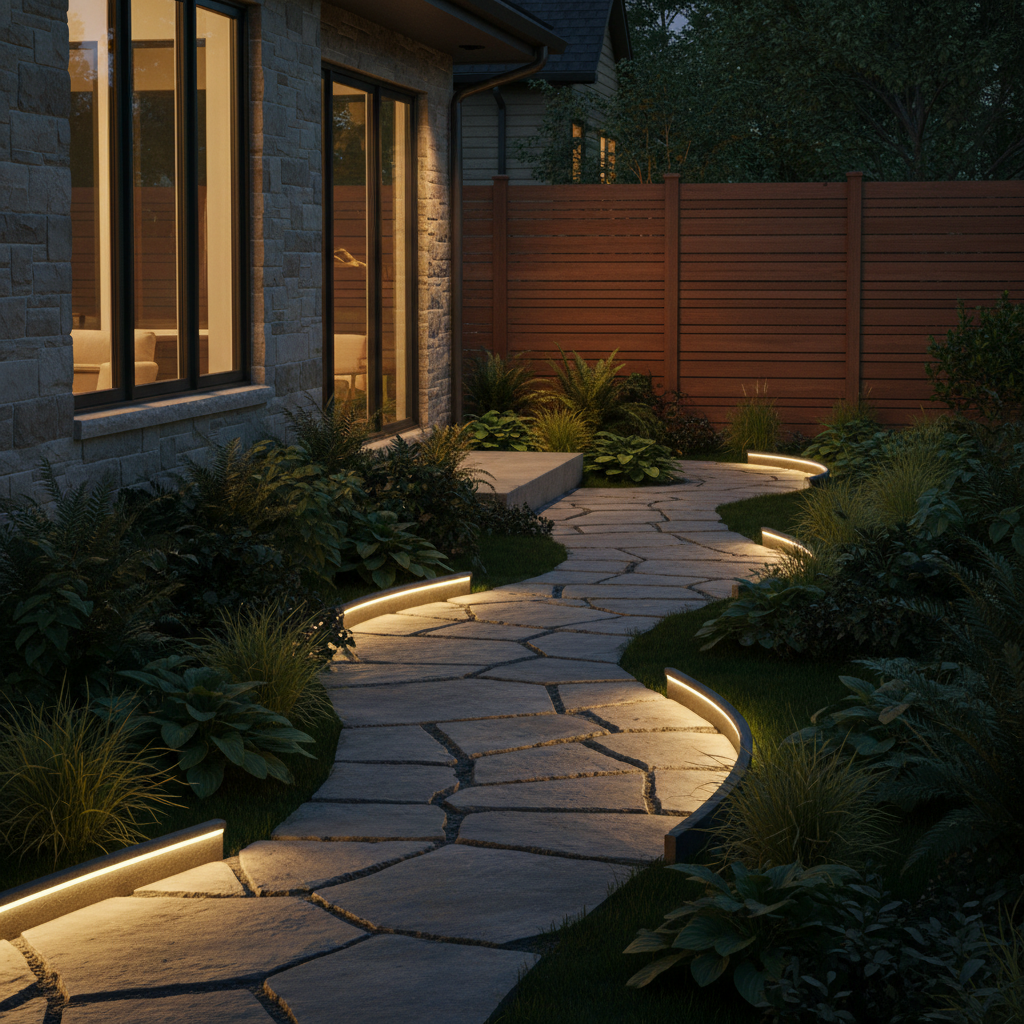
Driveways and Pathways
For a driveway, you need functional lighting: enough lumens not to trip, uniform coverage, and reliable activation when you come home at night. The combination of solar LED + motion sensor is ideal here: the light turns on as soon as you approach, with maximum intensity, and turns off a few seconds or minutes after you pass. To choose wisely for each area of your yard, our guide on solar garden lighting details the available options.
Patio and Outdoor Living Space
Here, ambiance matters as much as functionality. You want soft, warm light that allows you to enjoy the space without being blinded. A color temperature around 3000K (warm white) is generally preferable to cool white, which can feel harsh and unpleasant in the evening. Adjustable spotlights or wall sconces work well in this context.
Gate, Garage, and Security Zones
For these areas, the priority is strong light and responsive sensors. You want the light to turn on immediately and brightly as soon as motion is detected. A solar floodlight with a 180° sensor and a range of at least 26 feet (8 meters) is what you need here. LED power and battery capacity are the two non-negotiable criteria.
The Real Savings Over 3 Years: What Low Prices Hide
Many people calculate the price of a solar light without factoring in its lifespan. This is a costly mistake.
In practice, a model under $15 rarely lasts more than one to two years under real-world conditions (weather exposure, intense charge/discharge cycles in winter). If you replace the same low-end light three times in five years, you've spent $45 and wasted time reinstalling. Not to mention the frustration of nights when it no longer works correctly.
A serious model, with a 5-year warranty, does the opposite: you pay more upfront, but you don't have to touch it again. And the lighting quality remains stable over time. To delve deeper into the concept of autonomous outdoor lights, our guide helps you make the right choice based on your real needs.
What a Bad Battery Costs in the Long Run
A poor-quality battery degrades in 200 to 400 charge cycles. In detection mode with 10 to 12-hour nights, you can reach 200 cycles in less than a year. Result: the light quickly loses its ability to last all night, especially in winter. A good quality battery lasts 500 to 1000 cycles without significant performance loss.
How to Optimize the Autonomy of Your Outdoor Solar LED Light
Even with a good model, a few simple habits can help you get the most out of your solar lighting, especially in winter.
Orient the Solar Panel Correctly
The panel must capture maximum direct sunlight. In the US/Canada, south-facing exposure is ideal. If your facade faces east or west, you'll lose some charging capacity. Some models offer a remote panel on a cable so you can position it independently of the light—a real advantage in this case.
Use Detection Mode Rather Than Continuous Mode
Continuous mode (light on all night) drains the battery much faster. For most outdoor uses—driveway, gate, entrance—motion detection mode is much more efficient: the light remains in standby and only turns on when a person or vehicle passes. This also allows a good battery to last several weeks without significant sun. Our guide on solar motion detection lighting explains how to configure this mode to optimize it for your use.
Clean the Panel Regularly
Dust, dead leaves, and hard water stains can significantly reduce panel efficiency. Monthly cleaning with a slightly damp cloth is enough to maintain optimal performance, especially between October and March.
SolarGlow: A Serious Option if You Seek Reliability
If, after reading this guide, you're looking for a model that truly ticks the important boxes—sufficient brightness, substantial battery, weather resistance, and autonomy even in winter—the Lumic SolarGlow is an option to consider.
It delivers 1200 lumens, features two 180° motion sensors with a range of about 26 feet (8 meters), is weather-resistant (IP65), and lasts up to 20 days without solar recharge in detection mode. It's the kind of light you install once and forget about—in a good way. It comes with a 5-year warranty and a 90-day satisfaction guarantee. Customer support responds within 24 hours.
For those who want to go further in the energy independence of their outdoor space, our guide on autonomous solar lighting details all available options.
What to Remember Before Buying an Outdoor Solar LED Light
The term outdoor solar LED light covers very different realities. Before deciding, ask yourself these simple questions:
- What is its purpose? Decoration, security, functional lighting? The need determines the format and necessary brightness.
- Where will I install it? Orientation to the sun affects charging quality.
- Do I need a motion sensor? Almost always yes, to preserve battery life and get strong light when you need it.
- What is the battery capacity? This is the least visible but most crucial criterion for longevity.
- Is there a serious warranty? A solar light without at least a 2-3 year warranty is a risky bet.
A good outdoor solar LED light is one you don't hear about after installation. Not one you rediscover every fall, wondering why it's no longer turning on.