Need to light a space without an electrical outlet nearby? Whether it's a dark closet, a garage without an electrical panel, a garden, or simply during a power outage, lighting solutions without electricity are more numerous and effective than you might think. This guide covers all the options, their true long-term cost, and who they're really for.
Why Look for Cordless Lighting?
The reasons are often very practical: a hallway without an accessible switch, a basement without an electrical circuit, an RV, a patio without power, or simply an outage. In these situations, autonomous solutions are no longer a luxury—they become a necessity.
When Do You Need Light Without an Outlet?
Situations can be grouped into four main categories, which will dictate the best solution:
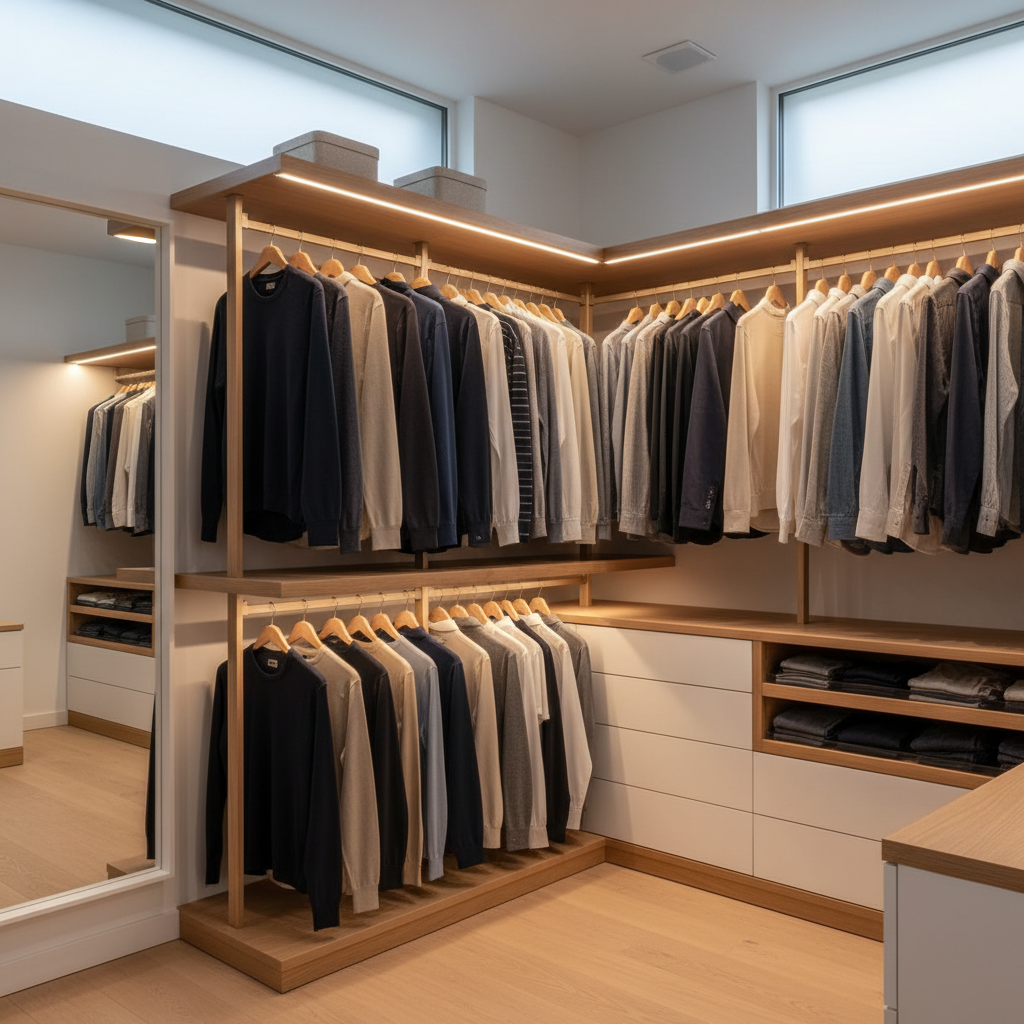
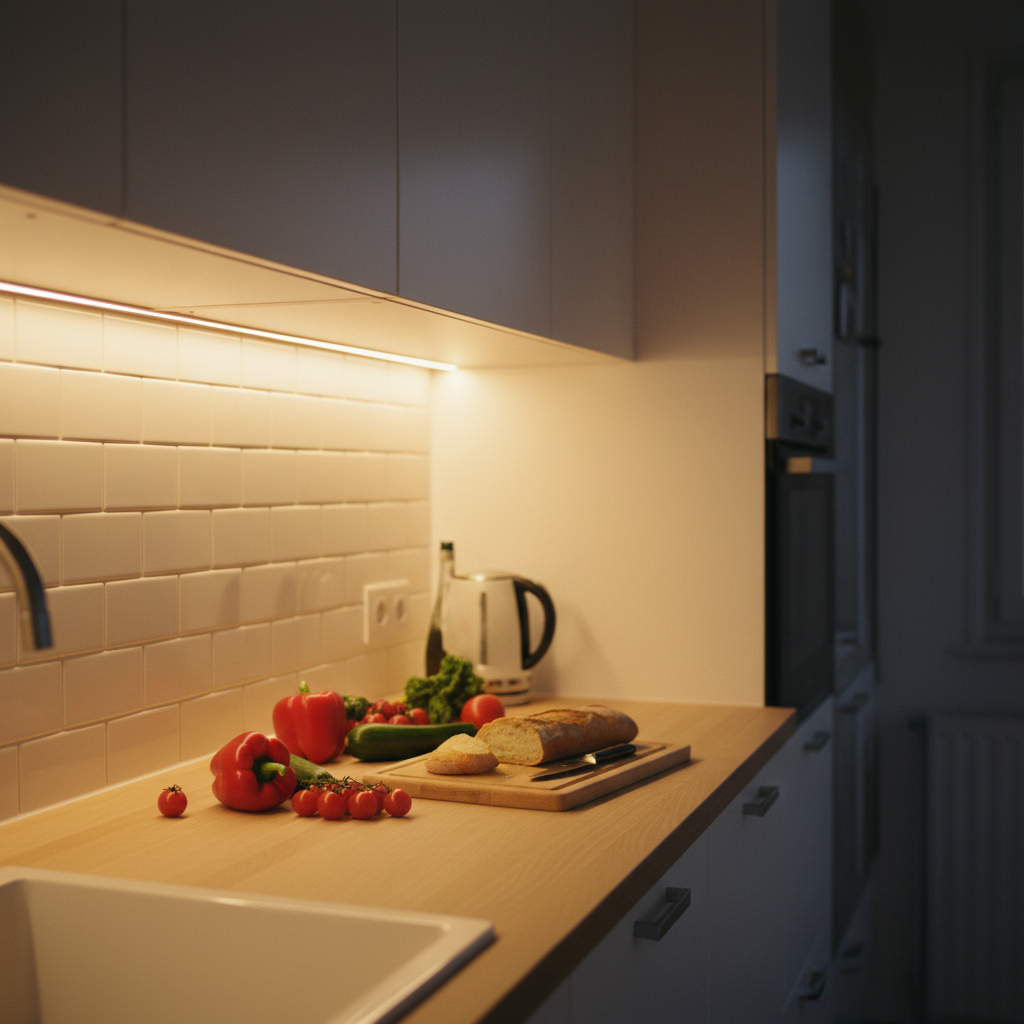
- Home, daily use: under kitchen cabinets, in closets, wardrobes, stairways, nighttime hallways.
- Ancillary spaces: garage, basement, storage room, garden shed—where electricity is absent or costly to install.
- Outdoor: driveway, gate, patio, parking area.
- Emergency or mobile situations: power outage, camping, van life, bivouac.
Each case has its ideal solution. No single technology fits all these contexts—which is why comparing them is useful.
Are Wireless Solutions Really Reliable for Daily Use?
This is a common question before making the switch. The honest answer: it depends on the technology. USB rechargeable options have significantly improved in recent years, with batteries lasting several weeks under normal use. Solar, long criticized for its winter performance, has advanced in panel size and battery capacity. Batteries, while reliable, come with a recurring cost often underestimated.
The 5 Main Types of Autonomous Lighting
Here's an honest overview of each option, with its advantages, limitations, and real annual cost.
USB Rechargeable Lighting: The Best Option for Indoors
Today, this is the most versatile solution for lighting without electricity indoors. The principle is simple: an integrated battery recharges via USB (on a phone charger, power bank, computer port) and then operates autonomously for several weeks.
The benefits are clear:
- No batteries to buy: recurring cost is almost zero after purchase.
- Most current models include a motion sensor and an ambient light sensor, ensuring power is only consumed when needed.
- No-drill installation (adhesive or magnetic), perfect for renters.
- Brightness is often sufficient for lighting a countertop, closet, or hallway.
The main limitation: periodic recharging is required. With a well-adjusted motion sensor, this is typically every 4 to 6 weeks—but if you forget, the light goes out. Not a disaster, but something to anticipate.
Annual Cost: $0 after purchase (excluding negligible USB charging costs).
To learn more about long-term implications, our article on the lifespan of rechargeable LED lighting provides concrete benchmarks.
Battery-Powered Lighting: Reliable for Emergencies, Costly Long-Term
Battery-powered lights have their place—especially for occasional use, emergencies, or in areas where recharging is difficult. They work immediately, without relying on a charging source.
The main issue is the cumulative cost. Depending on usage frequency, battery-powered lighting can incur $15 to $30 in annual alkaline battery expenses. Over 5 years, that adds up quickly. Not to mention the environmental impact of disposable batteries.
Another point: light output gradually decreases as batteries drain, often resulting in progressively weaker light before replacement.
Annual Cost: $15 to $30 on average.
Best for: emergency flashlights, electronic safety candles, truly occasional situations. Not as a primary solution for a kitchen or hallway.
Solar Lighting: Ideal for Outdoors
For an outdoor area without an outlet (driveway, patio, gate, garden), solar is often the smartest long-term choice. No cables to lay, no electrician needed, and after purchase, the operating cost is literally zero.
The key is to choose a model with a sufficiently large solar panel and a battery sized to last through nights and cloudy winter days. Low-cost $10 lights found on some platforms typically don't meet these criteria—too small a panel, anemic battery, short lifespan.
Good outdoor solar lighting should offer:
- Several days of autonomy without solar recharge (not just a few hours).
- Resistance to rain, frost, temperature variations (minimum IP65 rating).
- A motion sensor to conserve battery and only turn on when useful.
- Sufficient brightness to genuinely secure an entrance or pathway.
For areas like a driveway or gate, check our article on solar motion sensor lighting, which details criteria to verify before buying.
Annual Cost: $0 (excluding initial investment).
Dynamo Lighting: For Emergency Situations
Dynamo lights work without batteries or power: you operate them manually (by turning a crank) to generate electricity and power the LED. It's the only lighting truly independent of any external energy source.
Its use is very specific: prolonged power outages, survival kits, emergency vehicles. It's not suitable for comfortable daily use—a few minutes of cranking typically provide 20 to 30 minutes of dim to moderate light.
But in a true emergency, it's irreplaceable. Keep one in an emergency kit, not a kitchen cabinet.
Annual Cost: $0 (very occasional use).
Candles: Last Resort, Not a Solution
Let's be honest: candles remain an ultimate emergency light source, not a design solution. They pose real risks (fire, smoke, wax) and offer very insufficient light for practical activity.
LED candles (which mimic flickering without a flame) are safer and can help for a few hours. But they also run on batteries.
Keep them for truly exceptional power outages, with usual safety precautions. Never as a primary solution.
Annual Cost: Variable, from a few dollars to more depending on frequency.
Solution Comparison: What It Really Costs Over 5 Years
We often talk about the purchase price, rarely the total long-term cost. Here's an honest comparison table:
| Solution | Ideal Use | Annual Cost | Cost Over 5 Years | Constraint |
|---|---|---|---|---|
| USB Rechargeable | Daily Indoor | $0 | $0 (excluding purchase) | Recharge every 4-6 weeks |
| Batteries | Emergency, Occasional Use | $15-30 | $75-150 | Frequent replacement |
| Solar | Outdoor | $0 | $0 (excluding purchase) | Requires solar exposure |
| Dynamo | Emergency, Survival | $0 | $0 (excluding purchase) | Uncomfortable for regular use |
| Candle | Ultimate Emergency | Variable | Variable | Fire risk, dim light |
The conclusion is quite clear: over 5 years, rechargeable and solar solutions are the only ones with zero operating cost. Batteries, however, end up costing more than the device itself.
Which Solution for Which Location?
Now that we've covered the basics, let's apply them to common real-world situations.
How to Light a Kitchen Without an Accessible Outlet?
This is probably the most frequent case. The classic problem: upper cabinets over the countertop, ceiling light illuminating your head but not what you're cutting. The most practical solution is a rechargeable LED light bar with a motion sensor, installed under the cabinets. It turns on when you approach, turns off automatically, and requires no visible cables.
For a comparison of available models, our guide on rechargeable portable LED lamps will give you useful benchmarks.
If you're looking for an option with a large battery to avoid frequent recharging, the Movement 3.0 by Lumic (available in 9 inches or 16 inches) features a 3000 mAh battery—allowing it to last approximately 4 to 6 weeks in motion detection mode, depending on usage frequency. Magnetic attachment, industrial adhesive, aluminum. No drilling. 5-year warranty.
How to Light a Garage or Basement Without an Electrical Circuit?
Garages and basements are often the worst-lit spaces in a home—and the hardest to wire. Two approaches work well here:
- USB Rechargeable if the space is indoors and you can easily recharge the light (by bringing it into the house occasionally).
- Solar if the garage has an exposed facade or if the basement has outdoor access with sunlight.
For garages specifically, we've written a dedicated article on how to light a garage without electricity, which covers more complex setups. And for basements, our article on basement lighting without electricity details the constraints of humidity and low natural light.
How to Light a Patio or Driveway Without Cables?
Here, solar is the clear winner. A well-chosen solar light, installed high on a wall or stake, covers a driveway or patio with no cables to lay. Installation takes just minutes.
Essential criteria to check: water resistance (minimum IP65), autonomy in cloudy weather (not just summer sun), and motion sensor range.
The SolarGlow by Lumic reaches 1200 lumens, covers up to 26 feet with its two 180° sensors, resists rain and frost (IP65), and can last up to 20 days without solar recharge in detection mode. These are the specifications that differentiate a true solar light from a garden gadget.
How to Prepare for a Power Outage?
For emergencies, the simplest strategy is to have on hand:
- A portable rechargeable LED light (already charged, placed somewhere accessible).
- A dynamo light in an emergency cabinet (in case the rechargeable one is also dead).
- A few candles with a lighter, as a last resort.
The principle: have multiple backup levels. The rechargeable covers 95% of short outages. The dynamo covers the rest. Candles are for when everything else is unavailable.
Wireless LED: Choosing the Right Model for Your Use
Not all wireless lights are equal. Here's what to look for before buying.
How Many Lumens for What Use?
Lumens measure light output—in other words, the amount of light produced. Some practical benchmarks:
- 80-150 lumens: sufficient for a closet, drawer, or nighttime hallway (directional lighting).
- 150-300 lumens: comfortable for a kitchen countertop, wardrobe, or small basement area.
- 500 lumens and up: necessary for lighting a garage, stairway, or an entire room.
- 800-1200 lumens: outdoor lighting (driveway, patio, security area).
The Movement 3.0 offers approximately 150 lumens in 9 inches and 320 lumens in 16 inches—which aligns well with common indoor uses. For outdoors, the SolarGlow at 1200 lumens is in the right range.
Warm, Neutral, or Cool White: Which Color for Which Space?
Color temperature significantly changes a space's ambiance:
- 3000K (warm white): golden light, similar to an incandescent bulb. Perfect for bedrooms, living areas, hallways. Creates a relaxed atmosphere.
- 4000K (neutral white): balanced light, neither too warm nor too cool. Ideal for the kitchen, wardrobe, workshop—where you need to see colors as they are.
- 6000K (cool white): light similar to daylight. Perfect for a garage, workshop basement, office. Less pleasant in living spaces.
If you're unsure, start with 4000K—it's the most versatile.
Magnetic or Adhesive: Which Attachment to Choose?
Both systems have their advantages. Magnetic attachment allows you to easily remove the light bar for recharging, then instantly reattach it. Industrial adhesive offers a permanent hold but is less practical if you need to move the device regularly.
The best models offer both: an adhesive mount fixed once and for all, and a light bar that detaches magnetically for recharging. This is the most practical combination for daily use.
To delve deeper into criteria for choosing a wireless LED light bar, our 2026 comparison reviews available models with concrete criteria.
What People Often Forget to Check Before Buying
Some practical points that make the difference between a satisfying purchase and a disappointment:
Is the actual battery life clearly indicated?
Many manufacturers state autonomy in continuous mode (e.g., 5 hours)—which seems short. But in motion detection mode with a well-adjusted sensor, the same battery can last several weeks. Always ask for autonomy in detection mode, not just continuous mode.
Is the device waterproof if I install it near a water source?
For a kitchen near a sink, a bathroom, or outdoors, checking the IP rating is essential. IP44 protects against water splashes. IP65 resists direct rain. A device without an IP rating has no place in these areas.
How is customer support handled if it doesn't work?
This is often where a serious brand differs from a low-cost product. A 5-year warranty with customer support reachable within 24 hours is a real difference. Check the conditions before buying, not after.
In Summary: Which Solution for You?
If you want reliable lighting without electricity, here's the logic to follow:
- Indoor, daily use (kitchen, closet, hallway): USB rechargeable with motion sensor. Zero operating cost, maximum convenience.
- Outdoor (driveway, patio, gate): Solar with motion sensor and IP65. 5-minute installation, no cables.
- Occasional backup: Batteries for occasional use, but not as a primary solution.
- Emergency/outage: Charged rechargeable light + dynamo as backup.
- Ambiance/last resort: Candle, with precautions.
The economic logic is simple: over 5 years, rechargeable and solar are the only choices that cost you nothing to operate. Batteries, however, accumulate $75 to $150 in expenses over the same period. For daily use, the initial investment in a good rechargeable light bar pays for itself in a few months.
If you want to learn more about indoor motion sensor lights, our dedicated guide will help you identify exactly what you need based on space and frequency of use.