You're cooking dinner, you have a nice ceiling light, yet you find yourself chopping vegetables in the dark. It's not your light's fault — it's just that your body casts a shadow between the ceiling and your countertop. This is a common problem in kitchens, and a kitchen LED light bar is designed to fix it.
However, "kitchen LED light bar" covers many different products: an under cabinet strip light, an LED tube to replace an old fixture, an adhesive strip, a rechargeable wireless light bar... It's hard to know what to choose. This guide helps you identify what you really need, based on your situation, before you buy just anything.
Why Your Ceiling Light Isn't Enough for the Kitchen
It's counter-intuitive, but a generally well-lit kitchen can have very poor countertop lighting. The reason is simple: when you stand in front of your counter, your body blocks the light from the ceiling. The result: a shadow cast exactly where you're working.
The Problem of Shadows on the Countertop
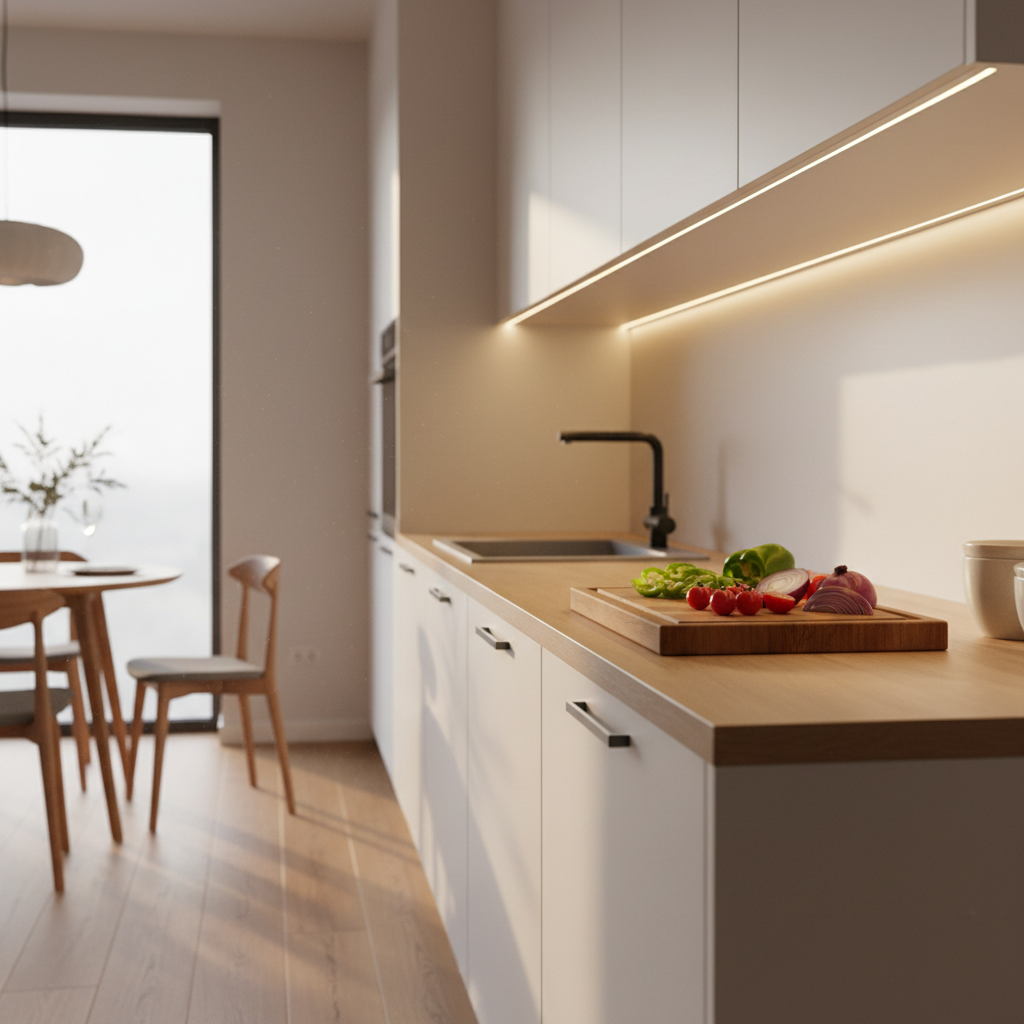
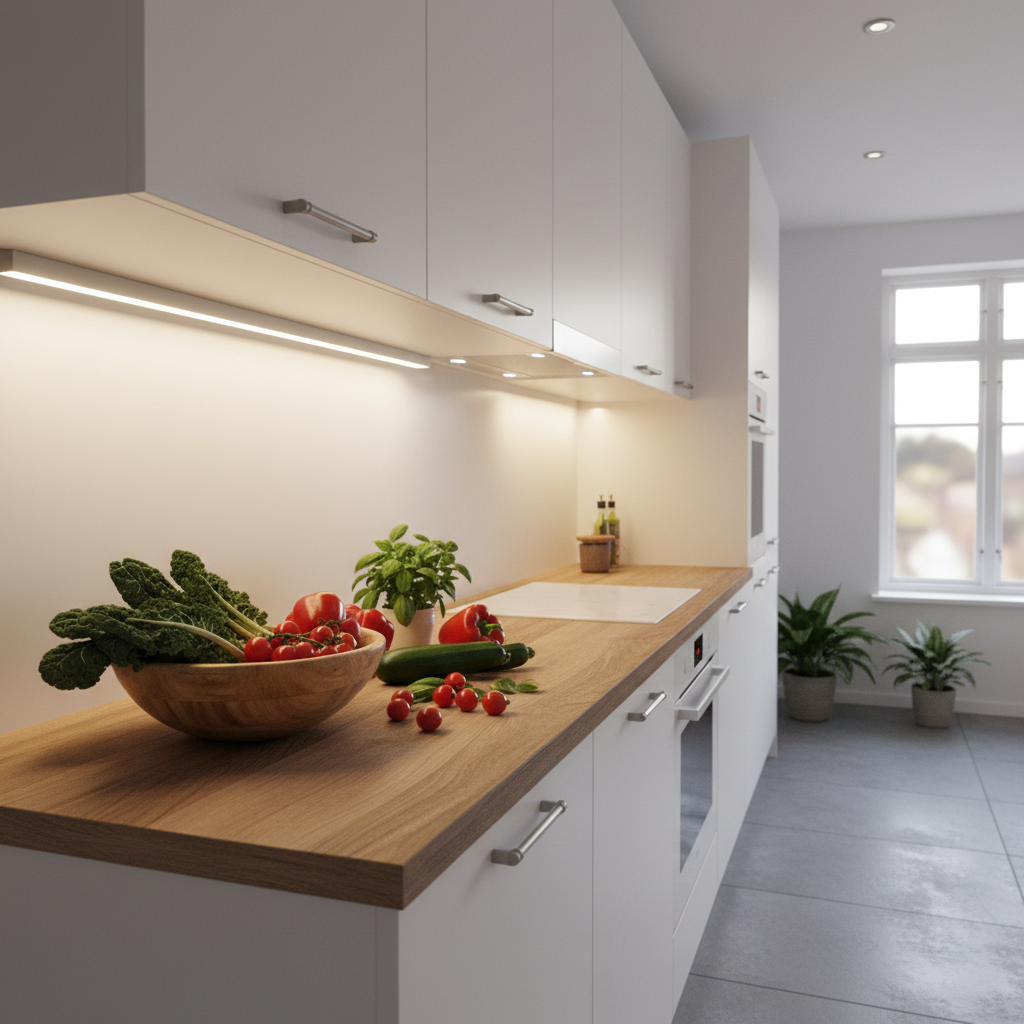
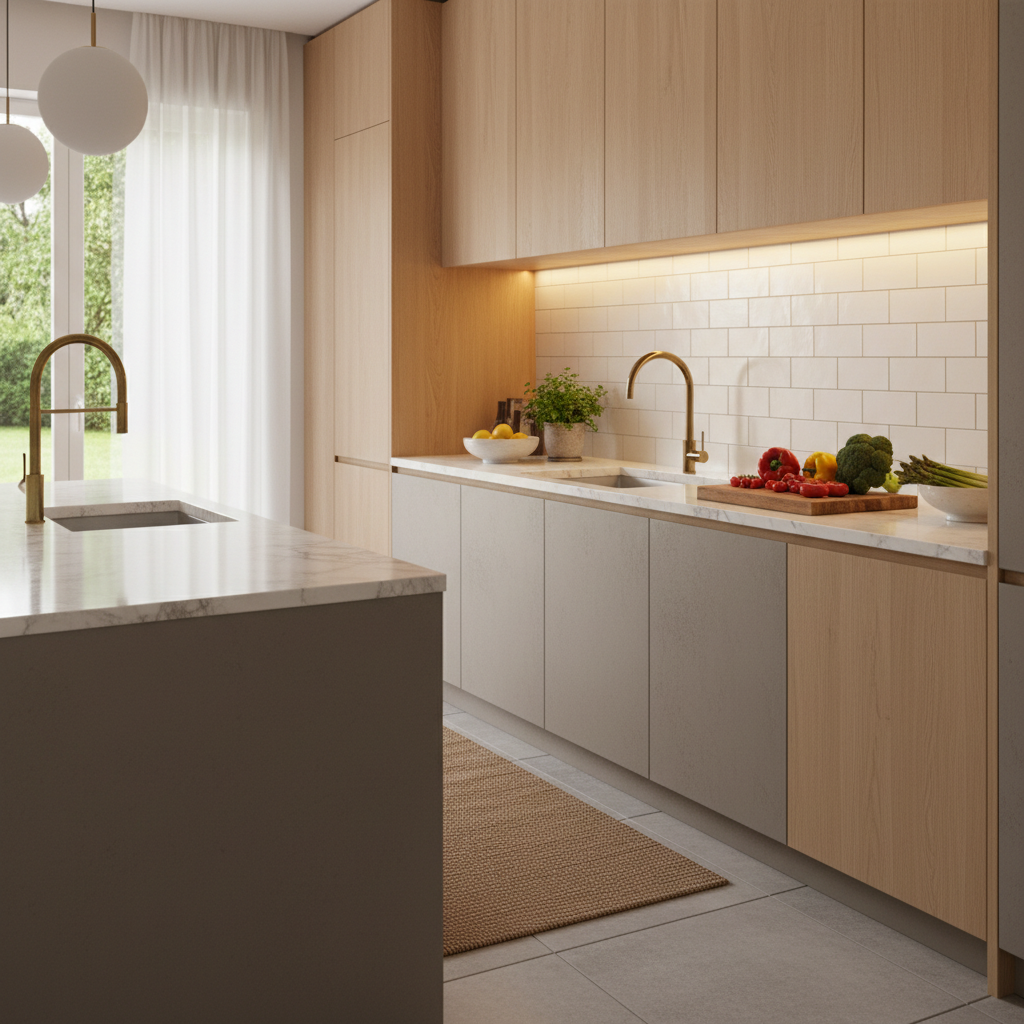
This phenomenon is universal, regardless of how powerful your ceiling light is. The lighting angle is inherently wrong. To clearly see what you're doing — slicing, dicing, reading a recipe — you need a light source close to the countertop and positioned in front of you, not above. This is precisely the role of an under cabinet light bar: it illuminates horizontally from the front, eliminating shadows and making food prep much more comfortable and safe.
When Does the Problem Become Truly Annoying?
In the evening, of course, when natural light disappears. But also in the morning in kitchens with little natural light, or in apartments with windows facing a courtyard. If you find yourself craning your neck or using your phone's flashlight to see what you're doing, your current lighting isn't in the right place. A countertop LED light bar solves this permanently.
Which Kitchen LED Light Bar for Your Real Needs
Before looking at products, ask yourself a simple question: what is my specific problem? We can summarize needs into three main situations. Each corresponds to a different type of light bar.
You Want to Light Under Your Kitchen Wall Cabinets
This is the most common scenario. You have wall cabinets above your countertop and you want a light bar that attaches underneath to direct light onto your work surface. An under cabinet light bar is perfect for this.
Two variants exist: wired with an outlet or wireless rechargeable. The choice depends on one question: is there an accessible outlet under your cabinet, or within reach without needing electrical work? If yes, a wired light bar is stable, permanent, and you'll forget it's there once installed. Otherwise, a rechargeable light bar is the only truly practical option. To learn more about ideal placement, check out our article on under cabinet kitchen lighting — it details exactly where to place the light bar to avoid blind spots.
You Want to Replace an Old Fluorescent Tube
Many older kitchens have an embedded fluorescent tube or a wall-mounted fixture that's 20 years old and buzzing. Replacing it with an equivalent LED ceiling or wall light bar is a good idea: better light quality, reduced energy consumption, and a much longer lifespan. This type of light bar connects to the existing electrical network and replaces the fluorescent tube directly, either in the same fixture or a new one. It's a simple installation for an electrician, or doable yourself if you're comfortable with electrical work.
You Need Flexible Accent Lighting, No Installation Required
Sometimes, the need is more temporary: lighting a forgotten kitchen corner, a countertop without cabinets above, a kitchen island, or just testing a location before a permanent installation. Here, a wireless rechargeable LED light bar is the most flexible solution. It can be placed anywhere, no drilling, no electrician, in seconds.
Wired or Rechargeable Under Cabinet Light Bar: How to Choose
This choice comes up often and deserves attention. It's not a matter of quality — both types are effective. It's a matter of practical constraints.
The Wired Light Bar: Stable and Forgettable
Once installed with its cable and plug, you won't think about it again. It turns on with a switch or dimmer, doesn't need recharging, and operates at full power continuously. This is the right choice if you have an accessible electrical outlet under or next to your wall cabinet, or if you're willing to have an electrician install one.
The downside: having an electrical outlet installed in a kitchen costs between $150 and $300, depending on the professional and installation complexity. This is not insignificant for a light bar.
The Rechargeable Light Bar: Zero Work, Zero Electrician
If you don't have an outlet under the cabinet — which is very common in standard kitchens — the rechargeable LED light bar is the obvious answer. It attaches in seconds (magnet, adhesive, or clips), operates autonomously thanks to its integrated battery, and recharges via USB when needed.
For it to be truly practical for daily use, two criteria are very important: battery capacity (a small battery needs recharging every week, which quickly becomes inconvenient) and the motion sensor, which automatically turns the light on when you approach the countertop and off when you leave. This saves battery life and is very convenient to use.
The Movement 3.0 by Lumic is a rechargeable light bar designed exactly for this. It features a 3000 mAh battery — significantly higher capacity than most comparable models — providing approximately 4 weeks of autonomy in motion detection mode for the 9-inch (23 cm) model, and 5 to 6 weeks for the 16-inch (40 cm) model. Available in three color temperatures (warm white 3000K, neutral white 4000K, cool white 6000K), adjustable brightness, magnetic attachment on industrial adhesive backing. It installs in under a minute, no tools, no drilling. 5-year warranty. If you want to delve deeper into the wired vs. rechargeable comparison, the article wired or rechargeable kitchen LED light bar details both options with their respective constraints.
What Length LED Light Bar to Choose for Your Kitchen
Length directly affects the amount of light and coverage of the illuminated area. You don't need to cover the entire cabinet — the goal is to light the countertop in front of you.
For a Standard Countertop
A 16-inch (40 cm) light bar is usually sufficient for a prep area about 24 to 32 inches (60 to 80 cm) wide. It emits about 320 lumens, which is enough for kitchen use as a supplement to general lighting. If your countertop is longer than 4 feet (1.20 meters), consider two light bars rather than one long one: you'll have more flexibility in positioning and avoid shadows at the ends.
For a Cabinet or Narrow Space
A 9-inch (23 cm) model (approximately 150 lumens) is well-suited for small spaces: inside cabinets, under-stair niches, deep drawers, or small work surfaces. It's also more visually discreet if displayed in an open storage area.
Color Temperature: Warm White, Neutral White, or Cool White in the Kitchen
This choice significantly impacts the feel of the room and often divides opinion. There's no universal answer — it depends on your kitchen style and how you use it.
Warm White (3000K): Cozy but Less Precise
Warm white provides a golden light, similar to an incandescent bulb. It creates a warm, pleasant ambiance in the evening. In the kitchen, it can slightly distort colors (a cooked chicken might appear more golden than it is). A good choice for a kitchen that's also a living space, where you eat and socialize.
Neutral White (4000K): The Best Kitchen Compromise
4000K is often recommended for countertops: it renders colors well without being harsh, allows you to easily distinguish food and textures, and suits most modern or contemporary kitchens. It's the safe bet if you're unsure.
Cool White (6000K): Precise but Clinical
Cool light is very crisp and high-contrast. It's ideal if you do a lot of technical cooking (baking, precise cutting) but can feel cold or unpleasant in a living space. Use it if you have a very functional kitchen or if you like very bright lighting. Our article warm white or cool white in the kitchen helps you decide based on your specific interior.
What to Check Before Buying a Kitchen LED Light Bar
A few practical points to consider to avoid unpleasant surprises once the light bar arrives.
Attachment: Adhesive, Screws, or Magnetic
If you're a renter or don't want to drill, industrial adhesive or magnetic attachment are your best allies. Magnetic attachment has an advantage over adhesive alone: you can easily move the light bar (remove for recharging, change position). Adhesive alone is more permanent. Make sure the surface under your cabinet is clean, dry, and relatively smooth — adhesive doesn't stick well to raw wood or porous surfaces.
Battery Life if You Choose Rechargeable
A light bar that needs recharging every week is a hassle. For daily use in motion detection mode (a few activations per day, each lasting a few seconds), a good capacity battery easily lasts several weeks. Be wary of cheap models that make big promises on the packaging but die after 10 days of real use.
Light Quality Over Time
A cheap LED can yellow or lose intensity after a few months. An aluminum casing helps dissipate heat and preserves LED quality long-term. The warranty is also a good indicator of the manufacturer's confidence in their product: a 5-year warranty is a concrete commitment.
Kitchen LED Light Bar: Summary by Profile
| Your Situation | Recommended Type | Key Criterion |
|---|---|---|
| Accessible outlet under cabinet | Wired light bar | Stability, no recharging |
| No outlet, no desire for electrical work | Rechargeable light bar | Battery life, motion sensor |
| Renter, no drilling possible | Adhesive or magnetic light bar | Damage-free installation |
| Replacing an old fluorescent tube | Ceiling/wall LED light bar | Compatibility with existing fixture |
| Temporary or test lighting | Portable rechargeable light bar | Positioning flexibility |
To go further in choosing a wireless LED light bar, our article wireless LED light bar: how to choose the best one details all the technical criteria to compare based on your usage.
Common Mistakes to Avoid
Some pitfalls we often see in customer service questions or purchase returns.
- Getting a light bar that's too short. A 8-inch (20 cm) light bar under a 32-inch (80 cm) wide cabinet lights the center and leaves the sides in shadow. Two well-placed smaller light bars are better than one that's too small.
- Forgetting about color temperature. Ordering without thinking, then finding the light too cool or too yellow, is the most frequent disappointment. Take the time to check this criterion before confirming your purchase.
- Underestimating the importance of the motion sensor. Without a sensor, you have to remember to turn it on and off manually. With a sensor, lighting becomes automatic and the battery lasts much longer — especially if the light bar is in a cabinet or a place you open and close regularly.
- Sticking adhesive to a dirty or damp surface. The kitchen is an environment with humidity and grease. Clean and dry the surface thoroughly before installation, otherwise the light bar will only stick for a few days before falling.
- Buying without checking the warranty. LEDs can fail. A manufacturer offering a 5-year warranty stands by their product. This is a trust criterion as valid as technical specifications.
To integrate your light bar into a more global kitchen lighting project, check out our article on kitchen countertop lighting — it covers the different areas to light in a kitchen and how to combine light sources intelligently.
Conclusion: Choose Your Light Bar Based on Your Real Needs
An effective kitchen LED light bar is, first and foremost, the right light bar in the right place. If you have an accessible outlet, a wired light bar solves the problem permanently. If you don't and refuse to pay an electrician for it, a rechargeable light bar with motion detection is the most pragmatic solution. And if you're still unsure about positioning, lengths, or color temperature, the linked articles in this guide will help you refine your choice before buying. What matters is that you stop cooking in the dark.