Looking for a wireless lamp, free from disposable batteries and power outlets? Great idea. But once you hit Amazon or a store, you're swamped with dozens of models whose specs mean little. "800 mAh", "2200 mAh", "USB-C", "micro-USB"... What's the real difference?
This guide gives you the only criteria that truly matter for choosing a rechargeable lamp that will last, not just for a few weeks.
What "Rechargeable" Really Means (and Why It Matters to You)
A rechargeable lamp has an internal battery you charge with a cable, just like your phone. No more buying AA batteries every month, no permanent power cord. Charge it once, then enjoy.
Why Have Rechargeable Lamps Replaced Disposable Batteries?
Three simple reasons. First, cost: regularly buying disposable batteries costs far more over 5 years than a rechargeable lamp. Second, convenience: no battery shortage in the middle of the night, no corrosion in the compartment. Finally, eco-friendliness: rechargeable lithium batteries generate much less waste than a stream of disposable ones.
What Types of Rechargeable Lamps Are There?
The term "rechargeable lamp" is broad, and that's normal. It covers several very different uses:
- Rechargeable table or bedside lamps: Placed on a surface, easily moved from room to room.
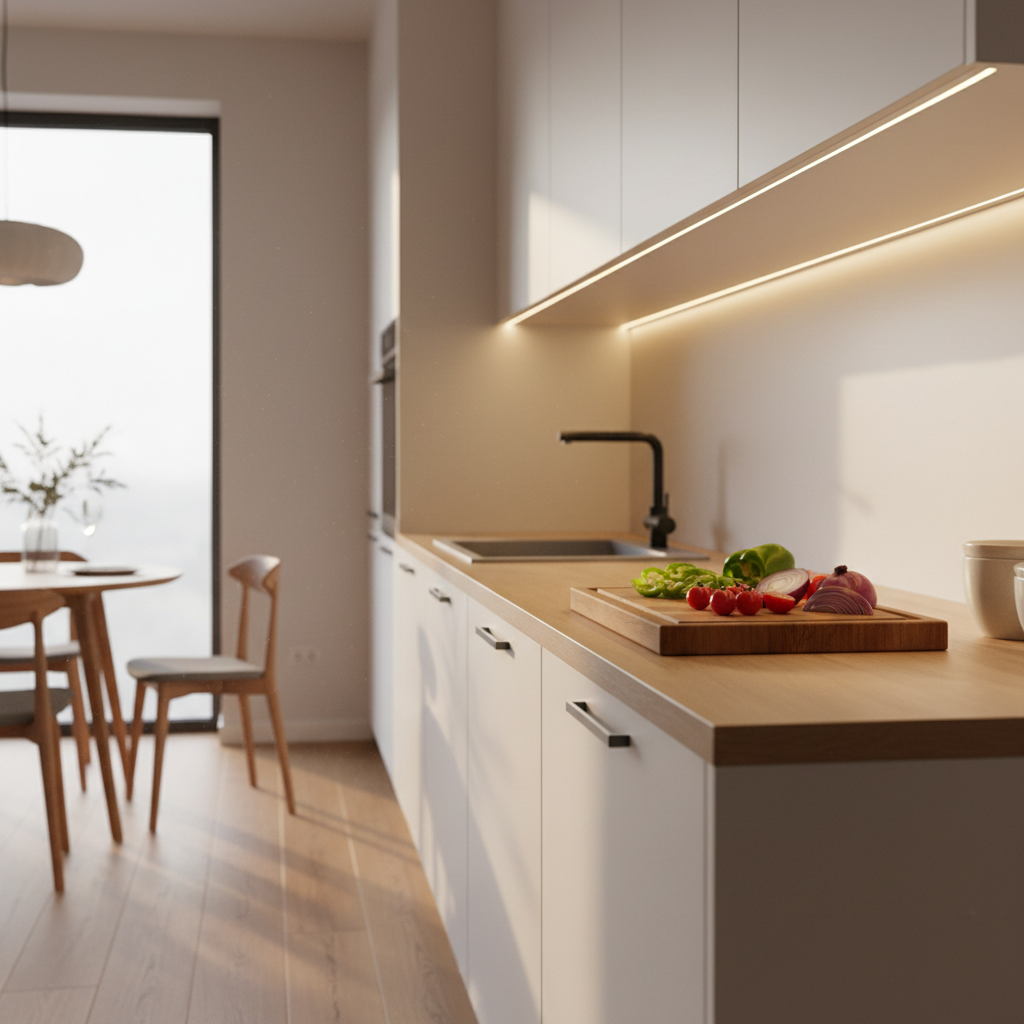
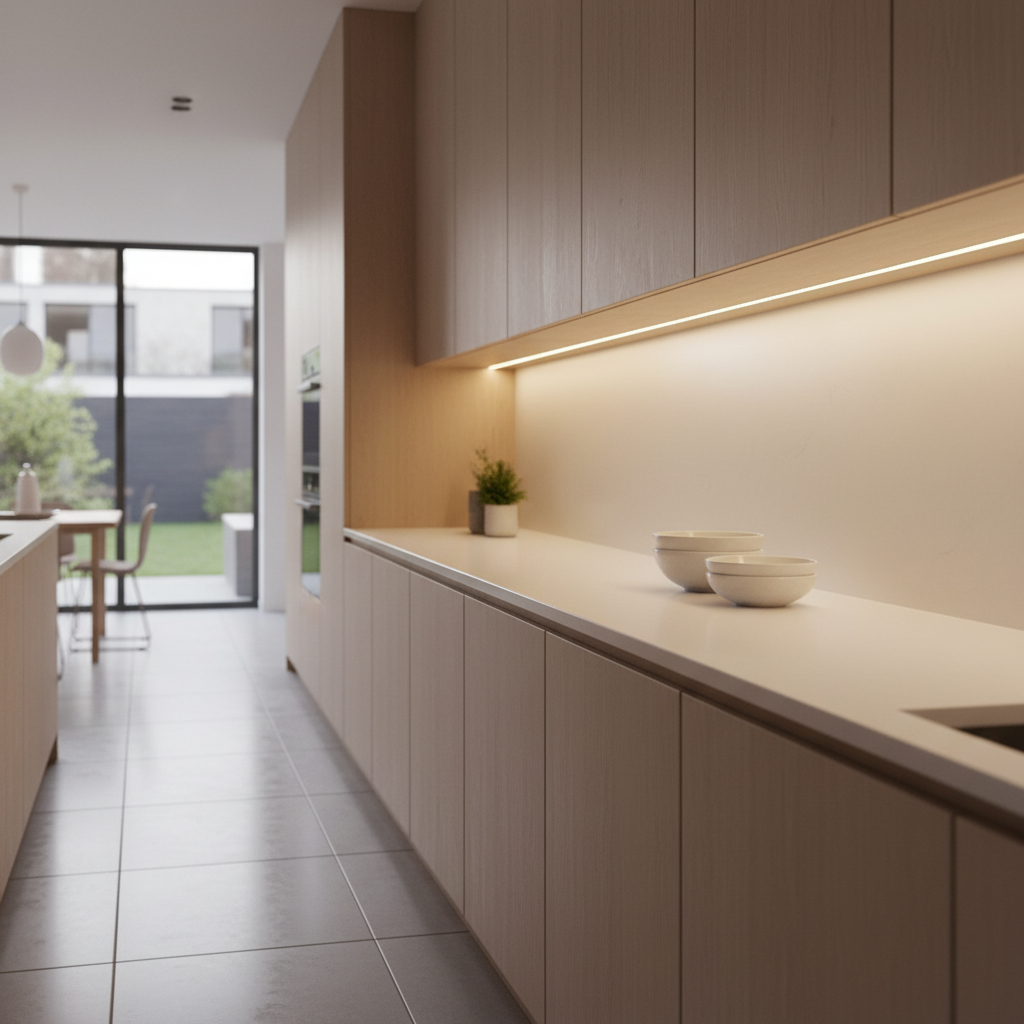
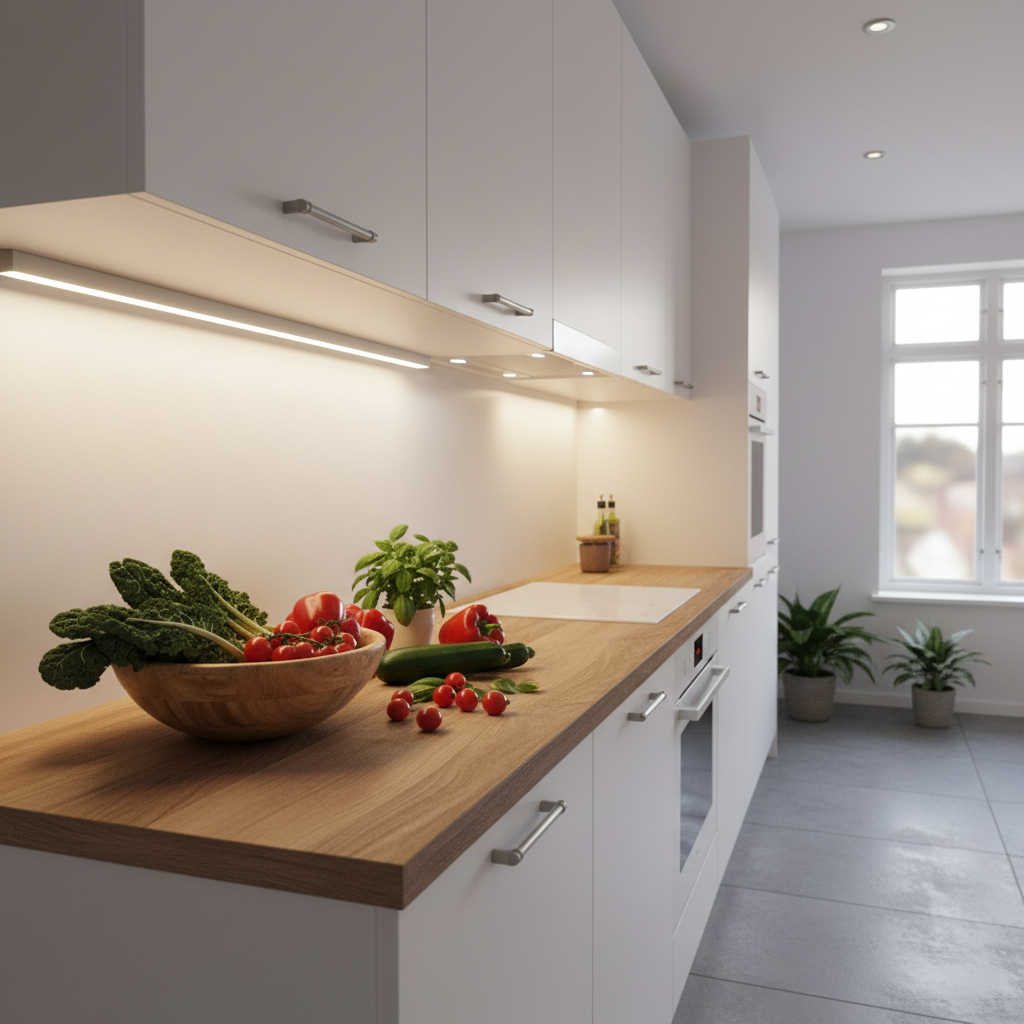
- Under cabinet LED light bars: Adhered under kitchen cabinets, in closets, or on stairs.
- Portable desk lamps: Adjustable, often with dimmable brightness.
- Rechargeable ambient lamps: LED candles, light balls, lanterns for patios or tables.
The selection criteria differ based on use. A bedside lamp you rarely move doesn't need the same battery life as an under cabinet light bar you never want to recharge.
Battery Capacity: The Only Number That Truly Changes Your Life
This is the criterion no one clearly explains. Yet, it's the most important. Battery capacity is expressed in mAh (milliampere-hours). The higher this number, the longer your lamp lasts between charges.
How Many mAh Do You Need for an Everyday Rechargeable Lamp?
Here are concrete benchmarks to help you choose:
| Battery Capacity | Estimated Recharge Frequency | Daily Experience |
|---|---|---|
| Less than 1000 mAh | Every 3-5 days | Annoying, you constantly think about it |
| 1000 to 1500 mAh | About once a week | Manageable, but quickly inconvenient |
| 2000 mAh | Every 2-3 weeks | Acceptable for moderate use |
| 3000 mAh and up | A month or more | You forget about it, it's always ready |
The market is full of 800 mAh lamps sold as great deals. In practice, you'll recharge it twice a week if you use it regularly. That's just as annoying as changing batteries.
Key takeaway: 2000 mAh minimum. 3000 mAh if you truly want peace of mind.
Motion Sensor Mode vs. Continuous Mode: A Game Changer for Battery Life
A rechargeable lamp with a motion sensor consumes infinitely less power than a continuously lit lamp. In motion sensor mode, it only turns on when someone passes by, for a few seconds. Actual battery life can be 5 to 10 times longer compared to continuous mode.
Practical consequence: a 3000 mAh lamp used in motion sensor mode in a hallway or under a cabinet can easily last 4 to 6 weeks without recharging. In continuous mode (desk or bedside lamp on for several hours), battery life will be much shorter.
USB-C or Micro-USB: A Difference That Matters
You might not think about it when buying, but this criterion will impact your daily life.
Why Is USB-C Better for a Rechargeable Lamp?
USB-C has become the universal standard. Your phone, tablet, computer: everything charges via USB-C. With a USB-C rechargeable lamp, you don't need a specific cable. You use the same cable as your phone, and you're good to go.
Micro-USB, however, is becoming obsolete. If your lamp uses it, you'll be searching for a compatible cable in 2 years when you no longer have any at home.
Simple rule: prefer USB-C. If two equivalent models are available, always choose the USB-C one.
Can You Recharge the Lamp While It's in Place?
Good question, especially for lamps fixed under cabinets or in hard-to-reach places. Some models allow recharging without removing the lamp from its mount (cable plugs directly into the lamp). Others require detaching the lamp from its fixture to recharge, which can be inconvenient if it's mounted high or in a cluttered cabinet.
Check this point before buying, especially for under cabinet light bars.
Other Criteria Not to Ignore
Battery capacity and charging type are priorities. But a few other elements are worth checking depending on your use.
Light Quality: Color Temperature and Brightness
A rechargeable LED lamp can emit cool light (bluish, around 6000K), neutral light (white, around 4000K), or warm light (yellowish, around 3000K). For a bedroom or living room, warm white is more relaxing. For a desk or countertop, neutral white is more suitable.
Ideally: a lamp with multiple color temperature options and adjustable brightness. You can adapt it to the time of day and use.
For kitchen under cabinet light bars or in closets, check our article on rechargeable LED light bars, which details recommended color temperatures for different areas.
Mounting Type: Adhesive, Magnetic, or Freestanding
This determines where and how quickly you can install the lamp. Three main categories:
- Freestanding lamps (bedside, desk): No permanent mounting, you move them freely.
- Adhesive mounting: Sticks directly to a surface. Simple, discreet, but hard to remove without marks.
- Magnetic mounting: The lamp attaches to an adhesive base; you can remove and reattach it in a second. Ideal for uses where you want to remove the lamp for recharging.
For a rechargeable LED spotlight or an under cabinet light bar, magnetic mounting is generally the most practical for daily use.
What Does It Really Cost Over 5 Years?
The listed price of a rechargeable lamp doesn't reflect its true cost. A good rechargeable LED lamp costs about the same as two packs of batteries per year, but it lasts 5 years. Calculate what you spend annually on AA or AAA batteries for your closet, hallway, or bedside lighting. Over 5 years, it's often more than the cost of a good rechargeable lamp.
Should You Avoid Cheap Rechargeable Lamps?
Not necessarily. But very low-end models often have two problems: an undersized battery (800-1000 mAh) that wears out quickly, and poor light quality with brightness variations as it discharges. In practice, you'll replace them after a year or two, ending up with the same cost as a more reliable solution from the start.
The sweet spot: a model with 2000+ mAh, aluminum construction, USB-C. This offers the best quality-to-lifespan ratio. To help you compare, check out our selection of the best portable rechargeable LED lamps, with a model-by-model analysis.
Real-World Scenarios: Which Rechargeable Lamp for Which Use?
Here's how to apply these criteria to your situation.
Rechargeable Lamp for Kitchen or Closets
Typical use: turns on when you open a cabinet or walk past. A few seconds, dozens of times a day. Motion sensor mode is essential here; otherwise, you'll drain the battery in a few hours.
What you need: an LED light bar with an integrated motion sensor, magnetic mounting for easy removal for recharging, and a battery of at least 2500-3000 mAh. In motion sensor mode, this type of lamp can last a month or more without recharging.
Lumic's Movement 3.0 fits this category: 3000 mAh (about 3x the average for entry-level lamps in this segment), motion sensor mode with ambient light detection (it won't turn on if the room is already bright), and an advertised battery life of 4 to 6 weeks depending on the model. If you're looking for details on rechargeable LED light bars for this type of use, we also have a dedicated guide.
Rechargeable Lamp for Bedside or Desk
Very different use: continuously on for 1, 2, or 3 hours. Actual battery life drops compared to motion sensor mode. Here, a 3000 mAh battery in continuous mode will give you about 5 to 8 hours, depending on the chosen brightness, which is enough for several evenings of reading or work between charges.
Look for a lamp with adjustable brightness and color temperature. For a desk lamp, USB-C is especially convenient: you can recharge it with the same cable as your phone during the day.
Rechargeable Lamp for Areas Without Power Outlets
Basement, garage, dark hallway, room under renovation. Here, battery life is the primary criterion, and mounting is often secondary. If you need lighting without electricity for these spaces, portable rechargeable solutions are often the most suitable. We cover all options in our article on lighting without electricity.
What to Check Before Buying
To summarize the essential criteria in a quick list:
- Battery capacity: 2000 mAh minimum, 3000 mAh if you want to forget about it for a month.
- Charging type: USB-C preferred, micro-USB to avoid if possible.
- Operating mode: Motion sensor or continuous, depending on intended use.
- Mounting: Magnetic, adhesive, or freestanding, consistent with the installation location.
- Color temperature: 3000K for relaxation/ambiance, 4000K for work or kitchen.
- Adjustable brightness: A big plus for adapting to the moment.
- Warranty: Minimum 2 years. A manufacturer offering a 5-year warranty believes in their product.
And a last, often overlooked point: the lifespan of a rechargeable lamp. The lithium battery in a good lamp lasts several hundred charge cycles. With one charge per month, you're good for years. With a charge every 5 days, it will age much faster.
Key Takeaways for Choosing Your Rechargeable Lamp
A rechargeable lamp that performs well is simple: a battery large enough that you don't have to think about it, a charging cable you already own (USB-C), and light quality suited to the use.
The classic pitfall: buying based on the listed price without checking battery capacity. An 800 mAh model will seem like a good deal until you find yourself recharging it twice a week.
The 3000 mAh rule is easy to remember: below that, you'll feel the inconvenience. Above that, you'll forget about it in the best way, because it's always charged when you need it.