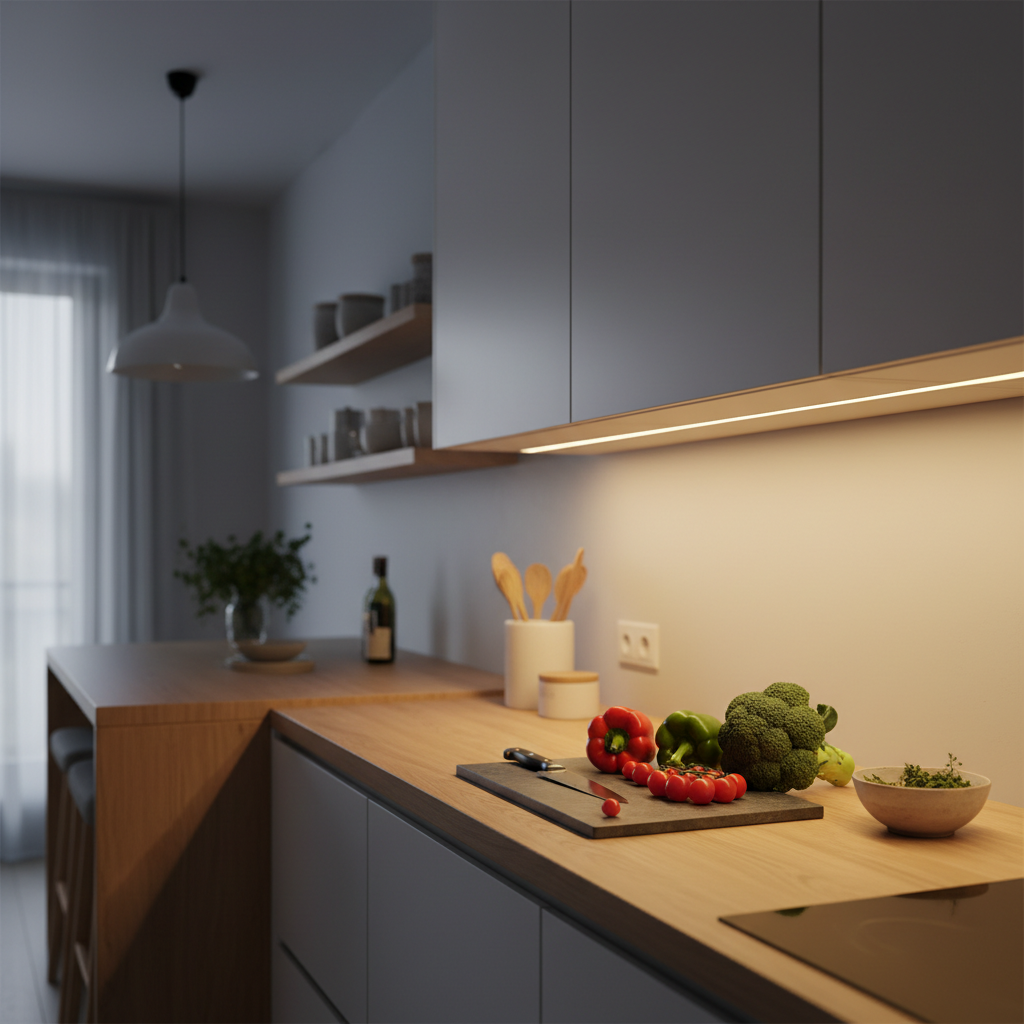
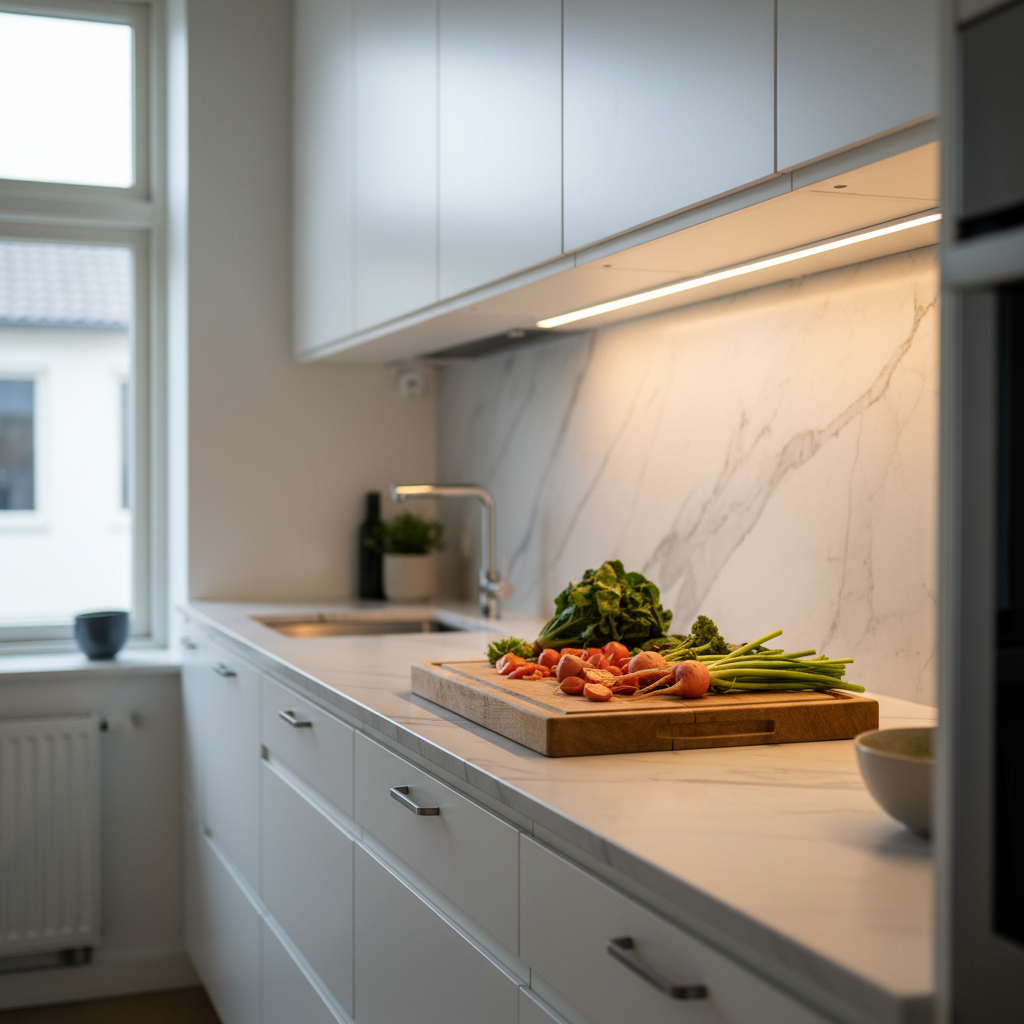
Your ceiling light does its job. It illuminates the room, true. But as soon as you stand in front of the counter, your own body casts a shadow exactly where you need to see. You're cutting, peeling, and cooking in dim light. This is the classic problem of a poorly lit kitchen — and a kitchen LED light bar installed under upper cabinets solves it in seconds.
In this guide, we'll break down the two main types of kitchen light bars: wired models (permanent, powerful) and rechargeable models (flexible, no installation work). We'll also discuss sizes, color temperatures, and what truly makes a difference in daily use.
Kitchen LED Light Bar: What It Is (and Isn't)
A kitchen LED light bar is an elongated light strip designed to be installed under upper cabinets or other overhead kitchen elements. The term "bar" simply refers to its shape: long, thin, compact. It's the same as a strip light — the two terms are used interchangeably.
Why under cabinets and not on the ceiling?
Because light should come from in front of you, not from behind. Lighting positioned above the countertop, 20-24 inches (50-60 cm) away, eliminates shadows cast by your body. A ceiling light, however, is 8.2 feet (2.5 meters) up — too far, wrong angle. The result with an LED light bar installed under the cabinet: the countertop is uniformly lit, with no dark spots, no glare.
What length should you choose for your kitchen LED light bar?
The basic rule: the bar should cover at least 70% of the cabinet's length. In practice, three common sizes are found:
- ~9 inches (23 cm): Ideal for a small cabinet, storage space, or narrow corner.
- ~16 inches (40 cm): The versatile size, suitable for most standard upper cabinets.
- 24 inches (60 cm) and up: For large backsplashes or wide cabinets.
If your countertop is 4 feet (1.2 meters) long, two 16-inch (40 cm) bars side-by-side are often more effective than a single long one — especially if you work in multiple areas.
Wired vs. Rechargeable LED Light Bar: The Real Differences
This is THE choice to make before any purchase. These two types of kitchen light bars cater to different needs, and their constraints are radically different.
The Wired LED Light Bar: Powerful but Restrictive
A wired LED light bar connects directly to the mains — either via an accessible outlet under the cabinet or hardwired into the electrical circuit. This is the brightest and most stable solution over time: no battery to monitor, no service interruptions.
It's particularly suitable for new kitchens or renovations where electrical installation is planned in advance. Its weakness? If you don't have an outlet under the cabinet, you'll need an electrician — which can cost between $80 and $200 depending on the case, not including wall modifications.
For renters, this option is often impossible without landlord permission. And even for homeowners, it represents work many prefer to avoid.
To delve deeper into the concrete differences between these two approaches, our wireless vs. wired LED strip light comparison details each criterion with concrete examples.
The Rechargeable LED Light Bar: Flexible and No-Drill
The rechargeable model operates on an integrated battery, charges via USB, and requires no visible outlets or cables. You place it wherever you want, detach it to recharge, and it's ready to go again. This solution has exploded in popularity over the past two years, especially for rental kitchens or setups where running a cable is impossible.
The classic objection: "How long does the battery last before needing a recharge?" That's a valid question. The answer primarily depends on two factors: battery capacity and usage mode (continuous or motion sensor). A low-end rechargeable LED light bar with a small battery might only last 3 to 4 days with normal use. A bar with a quality battery can last several weeks.
For everything you need to know on this topic, we've written a comprehensive article on the battery life of an LED strip light based on usage and battery capacities.
| Criterion | Wired LED Light Bar | Rechargeable LED Light Bar |
|---|---|---|
| Installation | Electrician often needed | Tool-free, cable-free |
| Light Output | High (stable) | Good (varies by battery) |
| Maintenance | None | Periodic recharging |
| Flexibility | Fixed position | Movable |
| Ideal for | Renovation, owned home | Rental, no-drill |
| Operating Cost | Low (electricity) | Zero (USB) |
Key Factors That Truly Matter When Buying
Beyond the wired/rechargeable choice, several characteristics determine the actual quality of a kitchen LED light bar. Here are the ones that truly count.
Color Temperature: Warm White, Neutral, or Cool?
This is often underestimated, yet it completely changes visual comfort. Kitchen LED light bars generally offer three options:
- Warm White (3000K): Golden light, cozy ambiance. Ideal for kitchens with wood, warm interiors. Less precise for cutting tasks.
- Neutral White (4000K): The best compromise. Clear light without being cold, natural color rendering. Recommended for general kitchen use.
- Cool White (6000K): Bright light, "laboratory" style. Precise for technical tasks, but tiring over time and less pleasant in a kitchen.
For most kitchens, neutral white at 4000K is the most versatile choice. If you want to adjust it according to the time of day (warmer in the evening, brighter in the morning), some LED light bars offer color temperature adjustment — a real plus.
Mounting System: Adhesive, Magnetic, Screwed?
The mounting system determines both ease of installation and long-term durability. Three systems exist:
- Adhesive only: Simple to install, but if the adhesive fails (heat, kitchen humidity), the bar falls. Avoid for heavier models.
- Screwed: Solid, but requires drilling into the cabinet wood. Irreversible.
- Magnetic + Adhesive: The best of both worlds. The adhesive mount stays fixed to the cabinet, and the bar clips on and off by hand. Convenient for recharging without disassembling everything.
Motion Sensor: Useful or Gimmick?
In the kitchen, a motion sensor is genuinely useful. You arrive with hands full of groceries, the light turns on automatically. You finish cooking, walk away, it turns off. No unnecessary gestures, no forgotten lights.
But pay attention to sensor sensitivity: an overly sensitive sensor turns on for no reason (draft, reflection), too insensitive and it misses movement. The best behavior: immediate activation upon approach, automatic shutdown after 15-30 seconds of inactivity.
Models with an additional ambient light sensor are even smarter: they refuse to turn on during the day when there's already enough light. This preserves battery life and avoids unnecessary activations.
How to Properly Install a Kitchen LED Light Bar Without Mistakes
For a wired bar, installation depends on your electrical setup. If you have an outlet under the cabinet, it's simple: plug in, mount, done. If you don't have an outlet, an electrician is necessary. Plan for this constraint before purchasing.
For a rechargeable bar with magnetic mounting, here's how to proceed:
- Clean the surface under the cabinet (degreaser, paper towel).
- Attach the magnetic mount — industrial adhesive typically takes 48 hours to reach full strength.
- Clip the bar onto the mount.
- Adjust the angle if the model allows.
Ideal placement: at the front of the lower cabinet, not at the back. The goal is for the light to fall on the work area, not the back wall. If installing multiple bars, space them to uniformly cover the entire length of the countertop.
For an overview of best installation practices, our article on wireless lighting for countertops provides concrete advice based on configurations.
What Lumic Offers with Movement 3.0
If you're looking at rechargeable LED light bars, Lumic's Movement 3.0 is worth discussing. It's not the only model on the market, but a few features concretely distinguish it from what you find at Home Depot or Lowe's.
First, the battery: 3000 mAh, which is significantly larger than most alternatives. In motion sensor mode, this provides about 4 weeks of battery life for the 9-inch (23 cm) model, 5 to 6 weeks for the 16-inch (40 cm) model. In continuous mode, expect 5 hours (9 inches / 23 cm) or 8 hours (16 inches / 40 cm). Recharging is via USB — a universal cable, no proprietary charger.
The three color temperatures (3000K, 4000K, 6000K) are selectable, and brightness is adjustable. The mounting combines magnetic and industrial adhesive: you apply the mount once, and you can unclip the bar to recharge it without touching the mount. The casing is aluminum.
Two sizes available: 9 inches (23 cm) (~150 lumens) and 16 inches (40 cm) (~320 lumens). For a standard kitchen, the 16-inch (40 cm) is best suited for a countertop. The 9-inch (23 cm) is perfect for a cabinet, corner, or narrow area. 5-year warranty, 90-day returns.
In summary: for the cost of an hour of an electrician's time, you get a rechargeable LED light bar with motion detection, a month of battery life, and installation in under a minute.
Mistakes to Avoid When Choosing a Kitchen Light Bar
Some common pitfalls we often see:
Choosing a bar that's too short for your kitchen
The "it'll be fine" reflex is often misleading. A 9-inch (23 cm) bar under a 24-inch (60 cm) cabinet will create dark areas at the ends. Measure before buying, and if you're torn between two sizes, choose the larger one.
Ignoring battery life
A rechargeable bar that needs recharging every week quickly becomes a hassle. Check the battery capacity (in mAh) and the usage mode associated with the advertised battery life. "Standby" figures don't correspond to real-world use. Our article on the lifespan of a rechargeable LED light explains how to read this data correctly.
Forgetting color temperature
Buying a 6000K bar without checking, then finding it too cool once installed, is common. If the model doesn't offer adjustment, ensure you know the temperature before buying. 4000K is the safest choice if you're unsure.
Applying adhesive to a dirty or greasy surface
In the kitchen, surfaces under cabinets accumulate cooking grease. Adhesive applied without prior degreasing will hold poorly, or not at all. Thoroughly degrease, wait for the surface to dry, and respect the indicated curing time before stressing the mount.
Not considering under-cabinet height
Some upper cabinets are installed very high above the countertop (35 inches / 90 cm or more). In this case, a bar positioned at the back of the cabinet will project light onto the backsplash rather than the work surface. Always place the bar at the front, angled downwards.
Going Further: Properly Lighting Your Entire Kitchen
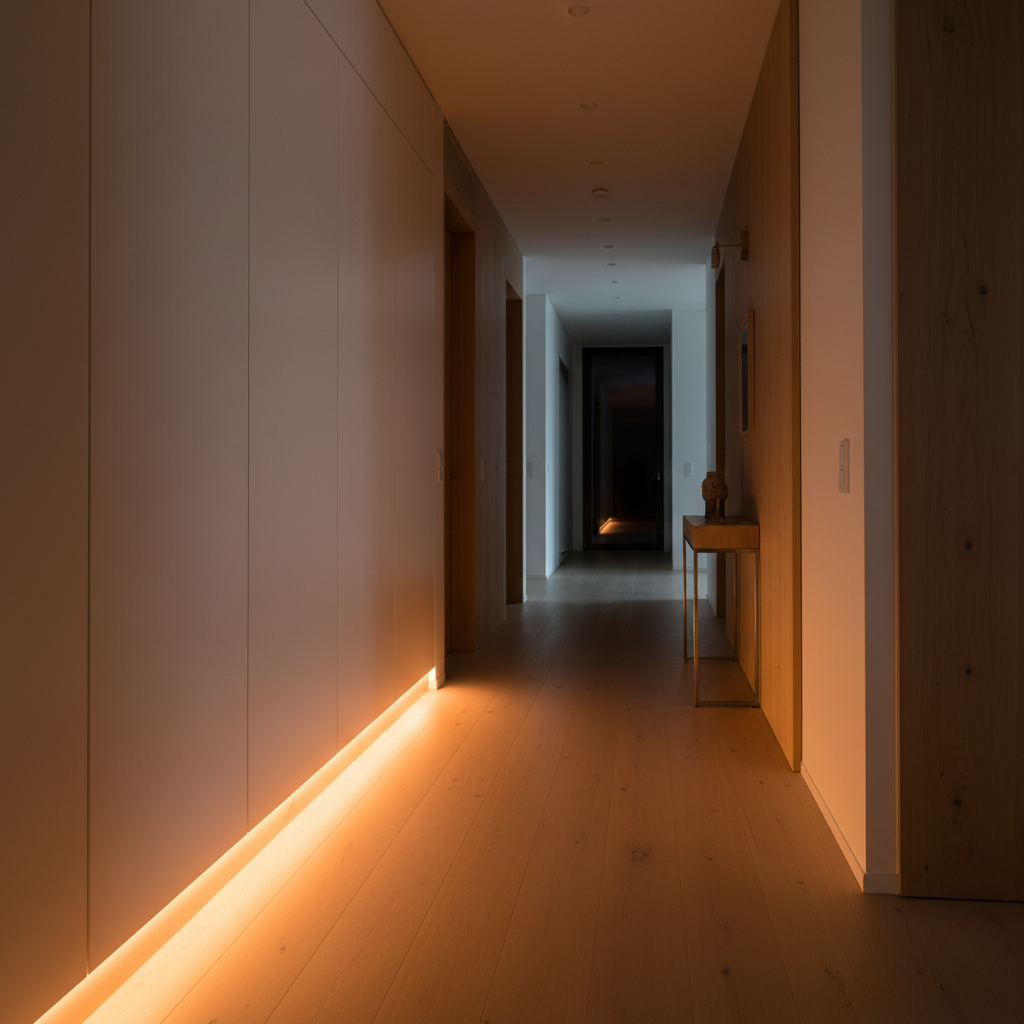
The under-cabinet LED light bar solves the countertop lighting problem. But a well-lit kitchen involves multiple layers of light: general lighting (ceiling light or recessed spotlights), task lighting (your LED bars), and possibly accent lighting (toe-kick lighting, inside display cabinets).
If you're starting from scratch or completely rethinking your setup, our complete guide to LED kitchen lighting covers the entire lighting strategy, from general lighting to work zones.
And if electricity consumption is an important criterion for you (especially for a wired bar), we've done the calculations in our article on electricity consumption and savings with LED strip lights.
Kitchen LED Light Bar: Key Takeaways
Choosing a kitchen LED light bar boils down to one main decision: wired or rechargeable. If you have an accessible outlet and a fixed installation, the wired model is more powerful and maintenance-free. If you're a renter, don't have an outlet, or want a flexible, no-drill solution, the rechargeable model is the right option — provided you choose a battery large enough to last several weeks.
For size: 16 inches (40 cm) suits most standard upper cabinets. For color: 4000K is the best compromise between comfort and precision. For mounting: opt for a magnetic + adhesive system if you want to move or recharge without disassembling everything.
Countertop lighting is probably the quickest and most visible improvement you can make to a kitchen — and it's often the cheapest compared to other renovations. A good LED light bar, well-positioned, truly changes daily life in the kitchen.