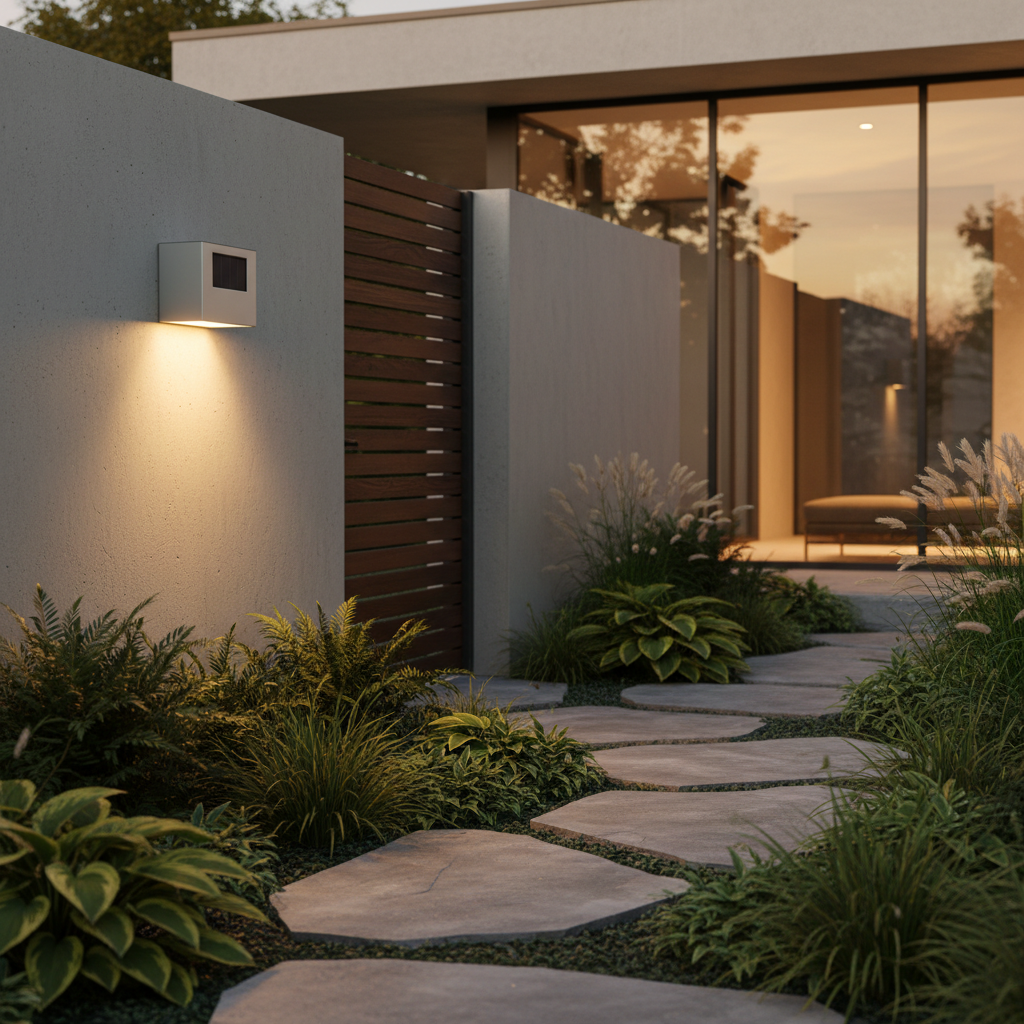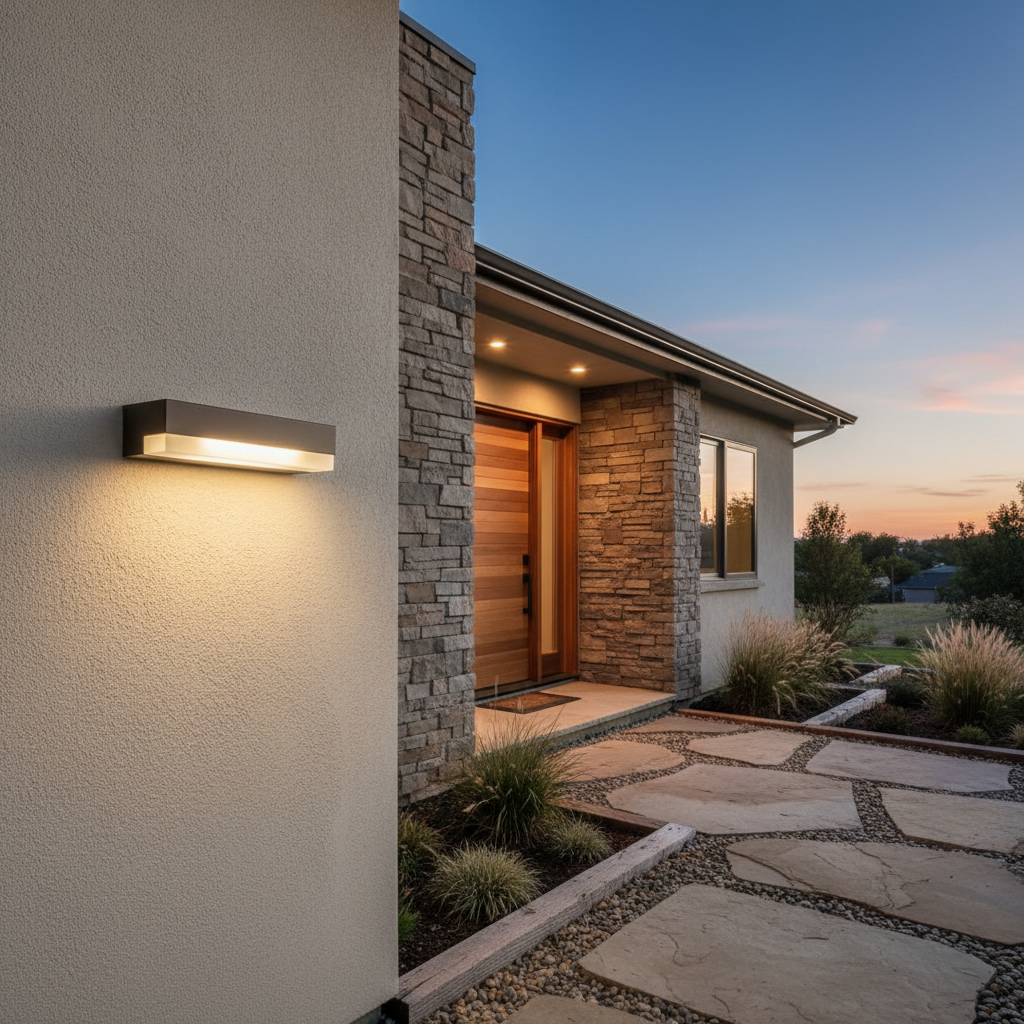
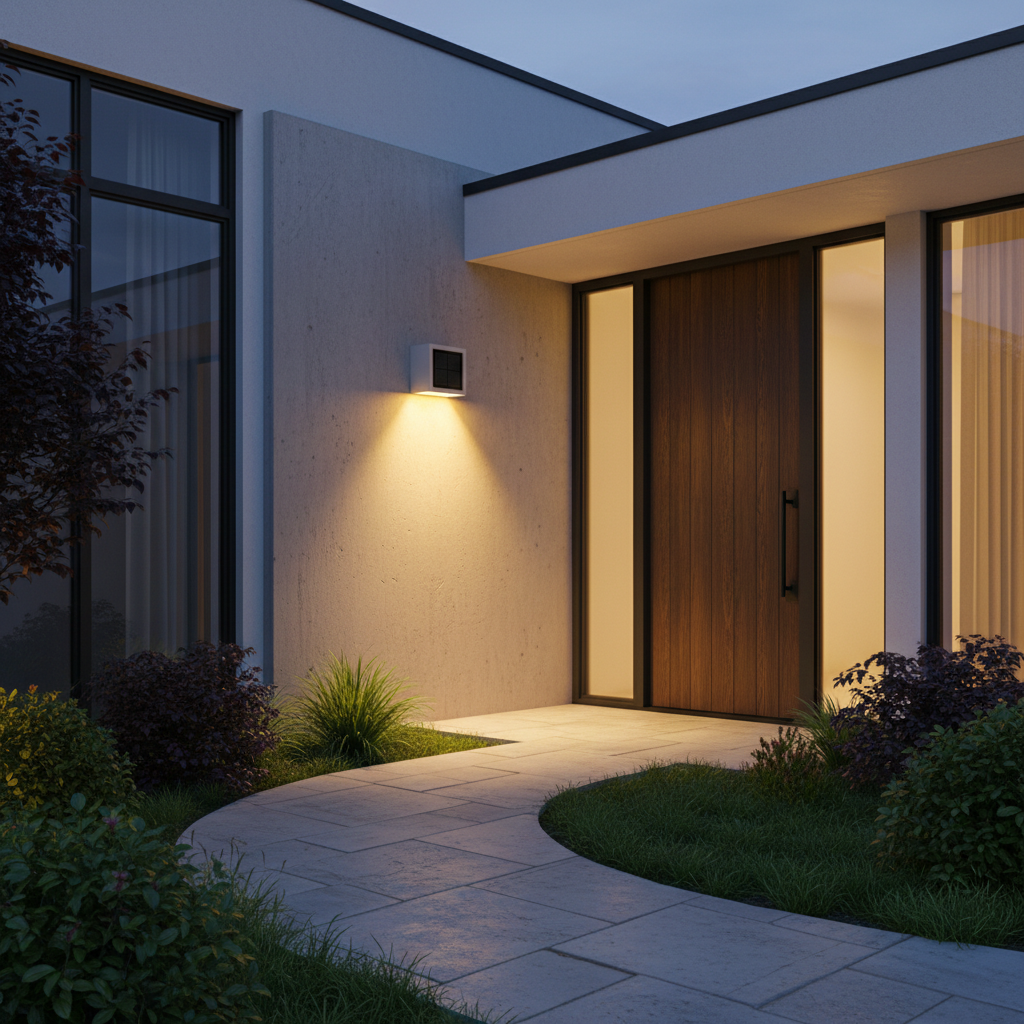
Want to install a light in your yard, on your patio, or in front of your garage — without digging trenches, calling an electrician, or spending a fortune before you even turn anything on? That's exactly the idea behind an autonomous outdoor light.
But "autonomous" is a term thrown around loosely. Is a battery-powered light truly autonomous? What about a USB-rechargeable light? Spoiler: no. We'll break down what true autonomy really means and why it changes everything about how you choose.
What is a Truly Autonomous Outdoor Light?
An autonomous light, in the strict sense, is one that doesn't need you for anything: it recharges itself, turns itself on, and turns itself off. If you have to think about it once a month — changing batteries, plugging in a USB cable, checking the battery level — that's not autonomy, it's semi-autonomy.
Batteries: The False Autonomy Sold for 20 Years
Battery-powered lights seem convenient. No cables, quick installation. But in reality, you'll be changing batteries every 4 to 8 weeks depending on usage, sometimes less in winter when nights are long. It's time-consuming, costly over time, and frankly, not very eco-friendly. That's not what we're looking for here.
USB Rechargeable: Semi-Autonomous at Best
USB-rechargeable lights are an improvement: an integrated lithium battery, stable performance, no disposable batteries. But you still have to take them down, bring them inside, and plug them in. Outdoors, facing weather and seasonal changes, this is a recurring hassle. For occasional use, it's fine. For entryway or driveway lighting, it's insufficient.
Solar: The Only True Total Autonomy
An autonomous solar light recharges during the day thanks to its integrated panel and turns on automatically at dusk or when it detects motion. Zero human intervention. The ultimate test: if you set up the light and don't think about it for weeks, that's real autonomy.
That's why, in this guide, we focus on solar — the only option that fully meets the intent of a proper wireless outdoor light.
Why Autonomous Outdoor Lighting is So Popular Today
Beyond convenience, there's a very concrete reason for the popularity of autonomous outdoor lights: the cost of outdoor electrical wiring. Having an electrician install power in a garden typically costs several hundred dollars — sometimes between $300 and $800, depending on distance, trenching, and installation complexity. For simply lighting a pathway or garage entrance, it's often disproportionate.
The autonomous solar light solves this problem at its root: no wiring, no electrician, no modification to existing electrical installations. For renters, it's often the only realistic option.
Who Really Needs an Autonomous Outdoor Light?
In practice, several profiles frequently emerge:
- Homeowners who want to light a pathway, gate, or garden corner without major work.
- Renters for whom drilling or running cables is impossible or undesirable.
- Those with an area lacking electrical access: a remote part of the garden, a shed, an un-wired patio corner.
- Those disappointed by cheap solar lights and seeking a truly functional alternative, even in winter.
How an Autonomous Solar Light Actually Works
The principle is simple, but component quality makes all the difference. A solar panel captures sunlight during the day and converts it into electricity, which is stored in a rechargeable battery. At night, this energy powers the LEDs. A dusk-to-dawn sensor detects ambient light reduction and automatically triggers the lighting.
The Critical Role of the Battery in Real Autonomy
This is where many cheap solar lights fail. A low-capacity battery drains quickly, doesn't handle freezing temperatures well, and degrades performance after a few cycles. For a durable wireless autonomous outdoor light, battery size and quality are the primary criteria to consider. To learn more about this, check out our article on the role of the battery in a solar light — it's often the key factor.
Motion Detection: Energy Savings and Extended Lifespan
A solar light that shines all night at full power will drain its battery in a few hours. Those equipped with a motion sensor operate in low-power standby and activate at full power only when someone passes by. The result: the battery lasts much longer between solar recharges, and overall autonomy significantly increases. If you want to understand how these systems work in detail, our guide on solar lighting with motion detection explains everything.
Criteria Defining a Good Autonomous Solar Light
No need to read 15 spec sheets. Here are the 4 criteria that truly matter for a solar light to deliver on its promise of autonomy.
1. Battery Capacity and Days of Autonomy Without Sun
This is the first question to ask: how many days can the light operate without any solar recharge? An entry-level light will last 2 to 3 days. A quality light can last several weeks in motion detection mode. This figure is particularly important for winter, cloudy days, or if your light is installed in a partially shaded area.
2. Weather Resistance (IP Rating)
An autonomous outdoor light must withstand rain, snow, frost, and temperature variations. An IP65 waterproof rating means the light is protected against water jets from all directions — this is the minimum for permanent outdoor use. Below this, you risk real issues in winter or during heavy rains.
3. Light Output and Sensor Range
In lumens, needs vary: lighting a pedestrian path doesn't require the same power as securing a garage entrance or illuminating a large patio. The motion sensor's range is also important: a sensor that only detects movement at 10 feet (3 meters) is not very useful for a driveway. For high-power needs, our guide on powerful wireless outdoor lighting provides concrete benchmarks.
4. Solar Panel Orientation
A panel integrated into the light, facing the sky, is the simplest to install but can be limited if the light is mounted under an overhang or in a less sunny area. Some models offer a remote panel, providing more flexibility to capture light where it's available, even if the light itself is in the shade.
North Exposure: The Edge Case to Know
Let's be honest: an autonomous solar light needs light to recharge. In a north-facing exposure, with obstacles (wall, tall hedge, building), the panel may not get enough sunlight to maintain proper autonomy, especially from November to February. In this specific case, a solar light with a large-capacity battery is essential, and even then, in deep winter with little sun, performance will be reduced.
This isn't a reason to avoid solar — it's a reason to choose intelligently and consult our guide on solar light performance in winter before buying.
Where to Install an Autonomous Outdoor Light: Best Locations
Placement affects both solar charging efficiency and lighting utility. Here are the areas where a wireless autonomous outdoor light provides the most value.
Entrance and Gate
This is the primary use. A light that turns on automatically when you come home, without fumbling for a switch in the dark, is both practical and safe. A motion sensor with good range is essential here.
Pathway and Garden Path
For guiding without glare, soft, downward-facing light is preferred. Solar bollards or low-height lights with diffusers are ideal. They also create a pleasant visual ambiance in the evening.
Patio
For a patio, ambiance becomes important, not just function. Color temperature (warm white versus cool white) greatly influences the atmosphere. For concrete ideas, our article on wireless patio lighting solutions explores different approaches based on use.
Garage and Parking Area
Here, light output and sensor range are priorities. You want the light to turn on as soon as a car or person approaches, not just when you're already at the door. An autonomous solar floodlight is often better suited than a simple wall light. If this is your case, check out our guide on how to choose an outdoor solar floodlight.
Comparison Table: Batteries, USB, Solar
| Criterion | Batteries | USB Rechargeable | Solar |
|---|---|---|---|
| Regular Intervention | Every 4-8 weeks | Every 1-4 weeks | None |
| Recurring Cost | High (batteries) | Low (electricity) | Zero |
| Installation | Easy | Easy | Easy |
| Winter Autonomy | Reduced (cold) | Stable | Varies by model |
| True "Set and Forget" | No | No | Yes |
| Outdoor Resistance | Variable | Variable | IP65 on serious models |
What Disappointed Buyers of Cheap Solar Lights Have in Common
If you've ever tried a solar light bought for under $20 on a marketplace, you know the scenario: it works well in summer for two or three weeks, then becomes erratic in fall, and by January, barely anything works. The light flickers, the battery no longer holds a charge, and you stash it in the garage.
It's not solar technology that's at fault — it's the quality of the battery and the panel. Entry-level models use small-capacity batteries that quickly degrade performance with charge cycles and freezing temperatures. The often undersized panel doesn't recharge enough on cloudy days.
Criteria Distinguishing a Good Model from a Bad One
- A large-capacity battery that maintains performance for several years.
- A sufficiently sized solar panel to recharge effectively even in cloudy weather.
- A minimum IP65 resistance for weather protection.
- A motion sensor with good range for practical operation.
- A real warranty that demonstrates the manufacturer's confidence in their product.
To compare market options based on these criteria, our comparison of the best outdoor solar lights objectively sorts them out.
Lumic's SolarGlow: Designed for Those Tired of Fixing Things
If you're looking for an autonomous solar light that truly meets the "set it and forget it" criterion, Lumic's SolarGlow is designed for that. Its solar panel and battery are sized to last up to 20 days without any solar recharge in motion detection mode. In practice, this means it continues to function normally even during a week of consecutive bad weather in winter.
It features two motion sensors covering 180° with a range of about 26 feet (8 meters), an IP65 rating for resistance to rain, snow, and frost, and 1200 lumens at full power — sufficient for a pathway, entrance, or patio corner. Installation is wireless, no-drill if you use the adhesive mounting. It comes with a 5-year warranty and a 90-day satisfaction guarantee. For those unsure about the ideal energy source, our article on choosing between solar or rechargeable lights can help you decide based on your specific context.
Key Takeaways for Making the Right Choice
A truly autonomous outdoor light is a solar light with a quality battery, a properly sized panel, and a motion sensor that handles everything for you. Battery-powered and USB-rechargeable options are semi-autonomous — practical in some contexts, but not sufficient for permanent outdoor lighting.
Before buying, ask yourself these two questions: does the location receive direct sunlight for at least part of the day? And are you ready to trust the product for weeks without touching it? If the answer to both is yes, solar is your best option — and probably the only one that will give you true peace of mind.