Looking for a rechargeable LED strip light? You've probably scoured Amazon, Home Depot, maybe even IKEA. You've seen dozens of products with enticing photos, promising total freedom, no cables, and 30-second installation. But then you read the reviews, and it's often a different story.
This article will honestly explain why the rechargeable LED strip light as we imagine it barely exists, what's actually on the market, and most importantly, what can truly solve your cable-free lighting problem.
Why True Rechargeable LED Strip Lights Are So Rare
An LED strip light is a flexible band of diodes that lays flat, can be cut, curved, and tucked behind furniture or under a cornice. That's its strength. But it's also its weakness when it comes to battery life.
The Physical Challenge of LED Strip Lights and Batteries
To power an LED strip light with a battery, that battery needs to be integrated somewhere. And the physical constraints are unforgiving: a standard LED strip consumes between 4 and 14 watts per 3.3 feet (1 meter), depending on its density. To last even a few hours, you need a bulky battery. However, a strip is thin, flexible, and often installed lengthwise. There's simply no obvious place to house a decent battery.
The result: manufacturers who still attempt this make severe compromises. Tiny batteries, actual continuous use battery life of 30 minutes to 2 hours maximum, and dimmer LEDs to compensate. It's not a high-performance rechargeable LED strip light; it's a party gadget or temporary decoration.
What You Actually Find on Amazon Labeled "Rechargeable"
Browsing product pages, you quickly realize that most products sold as "rechargeable LED strip lights" are actually one of three things:
- Thin LED light bars disguised as strips, with a battery pack integrated at one end. Visually similar, but much more rigid.
- Decorative RGB LED strips, designed for a party or behind a TV, not for lighting a kitchen counter at 9 PM while you're chopping vegetables.
- Classic LED strip lights sold with a separate battery pack, which means dragging around a bulky block connected to the strip by a cable. Wireless autonomy isn't really wireless anymore.
This isn't a criticism of the concept; it's a technical reality that product descriptions rarely mention clearly. Understanding the pros and cons of wireless versus wired will help you set the right criteria before buying.
Uses for Which People Seek a Rechargeable LED Strip Light
Before looking for a solution, it's helpful to understand why people seek a rechargeable LED strip light. In most cases, it's for one of the following reasons:
No Electrical Outlet Nearby
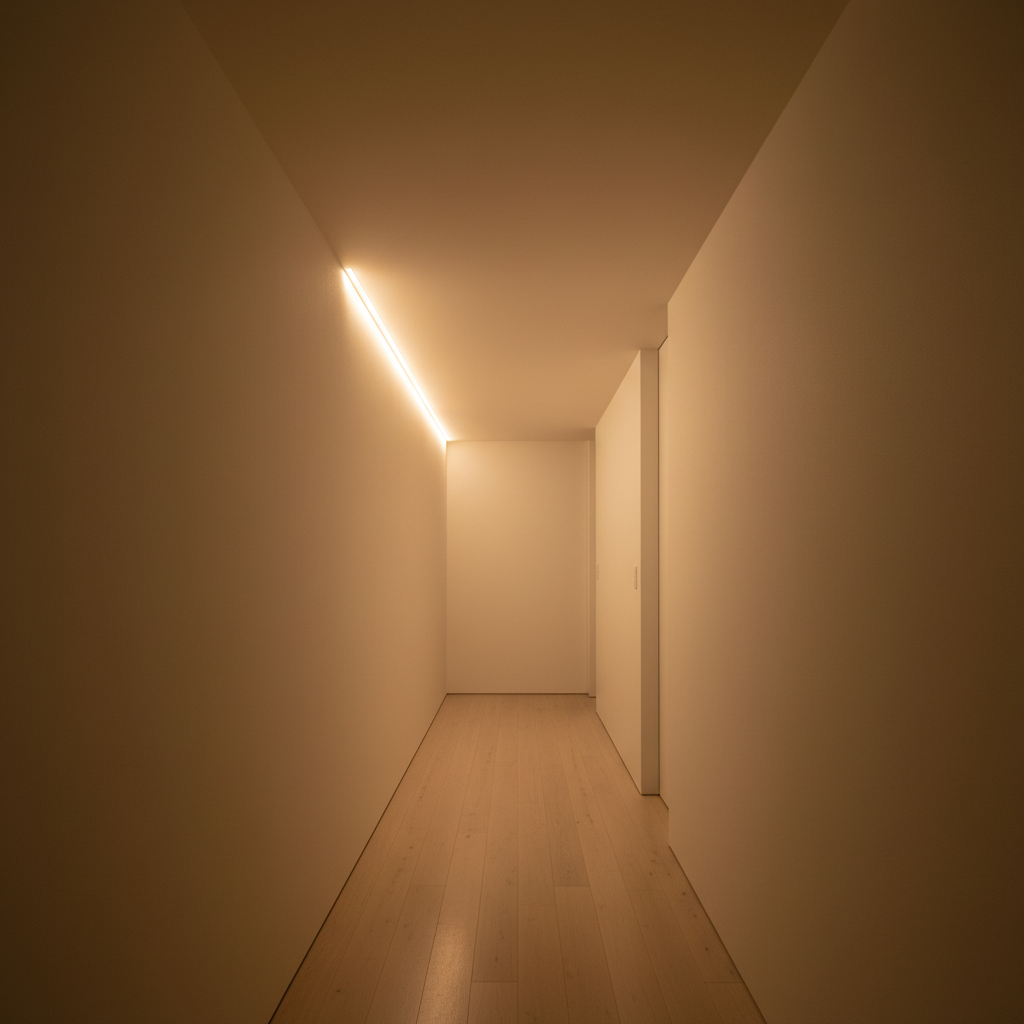
This is probably the number one reason. A closet, a narrow hallway, stairs, a basement, or a garage without an easily accessible outlet. You want light where there isn't any, without drilling or running cables. In this case, the goal isn't necessarily an LED strip light specifically; it's autonomous lighting. If you find yourself in this situation, our guide to lighting a space without an electrical outlet details the real options available.
Renter or Refusal to Drill Walls
Renovations are out of the question. No new electrical circuits, no electricians, not even screwing a bracket into a wall. You're looking for something that installs, stays put, and can be removed without a trace if needed. A rechargeable LED strip light seems to fit the bill on paper.
Temporary Accent or Ambient Lighting
Sometimes it's simpler: you want a linear lighting effect for an occasion, an event, or a temporary decorative setup. This is the only case where cheap battery-powered RGB LED strips might suffice, with their limitations.
Movable Furniture or Objects
Removable shelves, storage units, or a living room bar that you reposition. Here, the cable is a functional problem, not just an aesthetic one. Rechargeable portable LED lamps can sometimes meet this need with more flexibility than a strip.
How to Compare Available Rechargeable LED Strip Lights
If you still want to buy a battery-powered LED strip light, here are the criteria to prioritize:
| Criterion | What to Look For | What You Often Find |
|---|---|---|
| Battery Capacity | Minimum 2000 mAh for daily use | 500 to 800 mAh in reality |
| Actual Battery Life (not advertised) | 4 hours minimum continuous | 30 min to 2 hours in real use |
| Brightness | Sufficient for task lighting | Decorative only (low lumen output) |
| Charging | USB-C, universal standard | Micro-USB or proprietary cable |
| Mounting | Strong, repositionable adhesive | Low-quality adhesive that fails |
| Motion Sensor | Practical for extending battery life | Rare, often absent |
Based on these criteria, most products under $20 fail on at least three or four points. This isn't about brand; it's about physical constraints. Miniaturizing a high-performance battery into a flexible strip remains technically very difficult at that price point.
What Looks Like a Rechargeable LED Strip Light But Does a Better Job
Let's be frank. If your goal is linear, cable-free lighting that's functional for daily use, turns on when you need it, and turns off automatically, there are products that meet this need much better than a mid-range rechargeable LED strip light.
Wireless LED Light Bars: Same Visual Result, Much More Reliable
A wireless LED light bar is a rigid light fixture, often aluminum, with a properly sized integrated battery. It provides the exact same visual effect as an LED strip light under a cabinet: a continuous, uniform line of light that illuminates your countertop or closet. The difference is it doesn't bend. For 99% of practical uses, this changes nothing. To better compare your options, our comparison of wireless LED light bars covers the models available in 2026.
Lumic's Movement 3.0 is a good example of this format. It's not a strip; it's clearly an aluminum light bar. But it checks boxes that few products actually do: a 3000 mAh battery (rare for this format), USB charging, an integrated motion sensor to only turn on when needed, and magnetic mounting that installs in seconds without tools. Available in 9 inches (~150 lumens) or 15.7 inches (~320 lumens) depending on the area to be lit.
For a closet, a night hallway, or under upper cabinets, the advertised battery life is approximately 4 to 6 weeks in motion detection mode, depending on the model. In continuous mode, it's 5 to 8 hours, depending on the chosen length. This is incomparable to a low-end rechargeable LED strip light.
When a Rechargeable Light Bar Outperforms a Strip
There are concrete cases where switching to a rechargeable light bar instead of an LED strip is clearly the best decision:
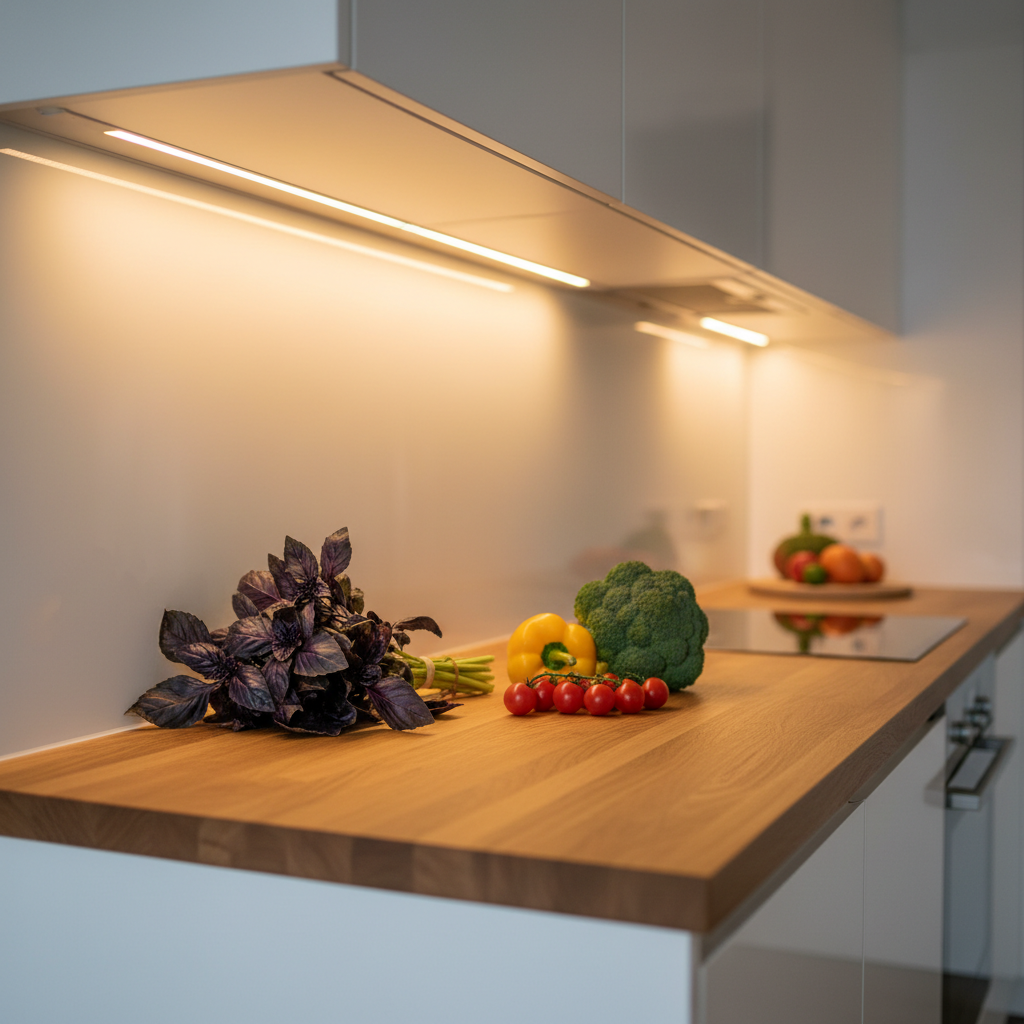
- Under-cabinet kitchen lighting: rigidity is not an issue, and the brightness is much more useful. Wireless lighting solutions for kitchen countertops provide precise benchmarks on this topic.
- Closet or wardrobe: the light needs to turn on automatically, last over time, and not require weekly battery changes. Wireless solutions for closet lighting are often much better suited than a strip.
- Stairs or night hallway: the motion sensor is a real functional asset here, not just a gadget.
- Renter who refuses to drill: magnetic mounting on industrial adhesive backing leaves no trace on a flat surface. It removes cleanly.
The Only Cases Where a Rechargeable LED Strip Light Remains Relevant
Let's be honest the other way around too. There are situations where an LED strip light, even with its limitations, is truly the best option:
- You want lighting that curves around a circular piece of furniture or a frame.
- You're looking for a colorful RGB effect for a party or temporary decoration, not functional lighting.
- You need to precisely cut the length to within a few inches to fit a custom niche.
In these specific cases, an LED strip light with an external battery pack remains the only real solution, despite its battery life drawbacks.
The Question of Lifespan: Battery vs. Classic Strip
One point often overlooked when looking for a rechargeable LED strip light: battery-powered products have a lifespan that directly depends on the quality of their battery, not just their LEDs. A poor battery starts to degrade after 300 to 500 charge cycles. A good lithium-ion battery lasts 800 cycles or more.
On this topic, our article on the lifespan of rechargeable LED lights details what to check before buying: battery type, storage conditions, and the impact of temperature on actual battery life. Information that Amazon product descriptions rarely mention.
For comparison, Lumic's 5-year warranty on the Movement 3.0 provides a concrete indicator of the manufacturer's confidence in its product's durability. This is a useful signal to compare with products without a warranty or with a 6-month warranty.
In Summary: What to Choose Based on Your Need
Here's a quick read to decide in 30 seconds:
- You want functional linear lighting (kitchen, closet, hallway) without cables → a rechargeable LED light bar with a motion sensor. It does the same job visually, with a decent battery and reliable lifespan.
- You want a colorful decorative effect or a strip that curves → an RGB LED strip with an external battery, accepting limited battery life.
- You want to cut to exact custom lengths → a wired LED strip light with power supply; there's no truly viable rechargeable version for this level of precision.
Before ordering, take the time to compare rechargeable LED spotlights if you're looking for spot and directional lighting rather than linear. And if the kitchen brought you here, our guide on wireless kitchen lighting solutions gets straight to the point.
The ideal rechargeable LED strip light doesn't quite exist yet. But solutions to the problem it was meant to solve do exist. Ask yourself the right question: do you really want a strip, or do you just want cable-free light where you need it?