You've seen "IP65" on a product and don't know what it means?
It's a fair question. On packaging for lamps, sensors, or outdoor outlets, you often see codes like IP44, IP65, IP67, IP68. Sometimes IP20. No explanation. Just two letters and two numbers that seem important, but you don't really know why.
Here's the one-sentence takeaway: The IP rating measures how well an electrical device is protected against dust and water. Nothing more, nothing less. This article will give you the keys to understand what each combination specifically means, and more importantly, how to choose the right rating for where you're installing lighting.
What "IP" Means: Ingress Protection
IP stands for Ingress Protection. It's an international standard (IEC 60529) that defines the level of resistance of electrical equipment against two types of intrusions: solid particles (dust, debris, foreign objects) and liquids (water, humidity, splashes).
This isn't a specific national standard or a brand-specific certification. It's a global standard. When you read IP65 on a lamp, you can precisely verify what it guarantees—without relying on marketing claims.
How to Read the Two Digits After "IP"?
The structure is simple: IP followed by two digits. The first digit concerns protection against solids. The second concerns protection against liquids. They are independent of each other.
- First digit (solids): from 0 (no protection) to 6 (total dust-tight)
- Second digit (liquids): from 0 (no protection) to 9 (resistance to high-pressure, high-temperature jets)
If one of the digits is replaced by an X—like IPX5—it means that parameter hasn't been tested. It's not zero; it's simply uncertified. An important distinction.
What Each Level of Solid Protection Means
| Digit | Protection Against Solids | Real-World Example |
|---|---|---|
| 0 | No protection | Basic indoor device |
| 1 | Objects > 2.0 inches (hand) | Minimal protection |
| 2 | Objects > 0.5 inches (finger) | Standard indoor outlet |
| 3 | Tools > 0.1 inches | Workshop, protected light fixture |
| 4 | Objects > 0.04 inches (wire) | Bathroom (wet areas) |
| 5 | Dust protected (not total) | Outdoor, garage |
| 6 | Totally dust-tight | Industrial environments, heavy-duty outdoor |
What Each Level of Liquid Protection Means
| Digit | Protection Against Water | Real-World Example |
|---|---|---|
| 0 | No protection | Dry indoor device only |
| 1 | Vertical dripping water | Light condensation |
| 2 | Dripping water at 15° tilt | Protected indoor use |
| 3 | Rain (spray at 60°) | Outdoor awning |
| 4 | Splashing water from all directions | Bathroom (Zone 2) |
| 5 | Low-pressure water jets (0.25 inch nozzle) | All-weather outdoor, hose cleaning |
| 6 | Powerful water jets (0.5 inch nozzle) | Boats, basements, heavy-duty outdoor |
| 7 | Immersion < 3.3 feet for 30 min | Poolside, ponds, coastal areas |
| 8 | Continuous immersion (conditions defined) | Underwater equipment |
| 9 | High-pressure + high-temperature jets | Food processing industry |
IP65 Exact Meaning: What It Guarantees (and What It Doesn't)
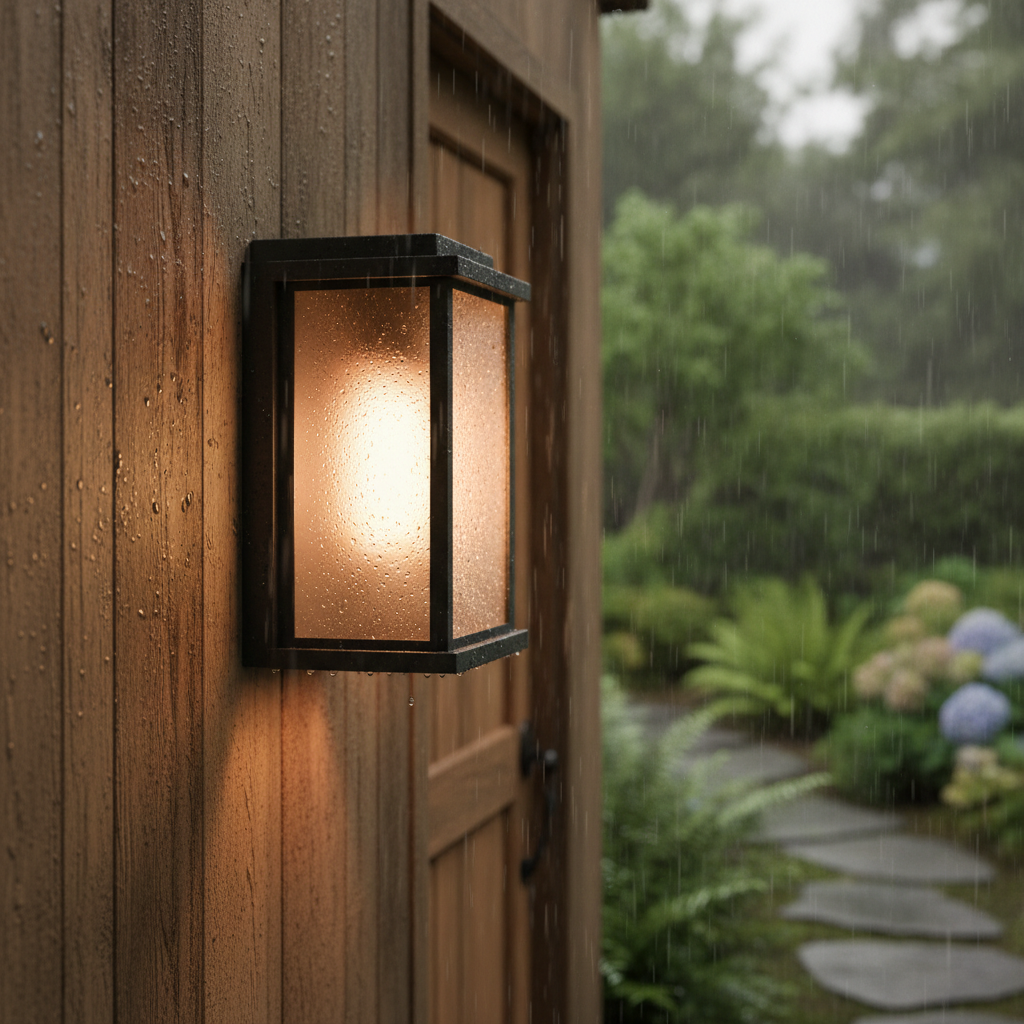
IP65 decodes as: 6 = totally dust-tight + 5 = resistant to low-pressure water jets. Practically, an IP65 device can be exposed to rain, splashes, and common cleaning jets—without water penetrating inside.
What it doesn't guarantee: immersion. You can't submerge an IP65 device in a pond and expect it to survive. It's not designed for that. For immersion, you'll need IP67 (30 minutes at 3.3 feet) or IP68 (conditions defined by the manufacturer).
IP65 vs. IP67: What's the Real-World Difference?
The difference between IP65 and IP67 is solely immersion resistance. For typical outdoor use—garden lights, pathway lighting, patio spots—IP65 is more than sufficient. Rain, snow, frost, an occasional hose-down: IP65 handles all of this without issue.
IP67 becomes useful if the device might be submerged or immersed—near a pond, in regularly flooded areas, or where water pools. For ordinary outdoor lighting, the difference is often theoretical.
IP65 vs. IP44: The Right Choice for the Right Place
IP44 is the minimum recommended rating for a bathroom (Zone 2 and 3). It protects against splashing water from all directions, covering normal splashes from a shower or sink. It's sufficient for damp indoor areas—but insufficient for outdoors.
IP65, on the other hand, resists direct water jets. If your lighting is exposed to heavy rain, constant humidity, or occasional jet cleaning, IP44 isn't enough. For permanent outdoor use, IP65 is the serious minimum.
Which IP Rating to Choose Based on Location?
This is often the next natural question. Here's a clear table to avoid overpaying for unnecessary protection or—worse—buying a device unsuitable for its environment.
| Location | Minimum Recommended IP | Why |
|---|---|---|
| Living room, bedroom, office | IP20 | Dry indoor, no specific constraints |
| Closet, dressing room, dry basement | IP20 | No significant humidity |
| Kitchen (dry zone) | IP20 to IP44 | Away from sink and steam |
| Bathroom Zone 2 (> 24 inches from water) | IP44 | Possible splashes |
| Bathroom Zone 1 (above tub/shower) | IP65 | Direct water contact possible |
| Garage (dry) | IP44 | Dust + light humidity |
| Garage (open or damp) | IP54 to IP65 | More humidity + dust present |
| Outdoor under awning | IP44 to IP54 | Indirect splashes |
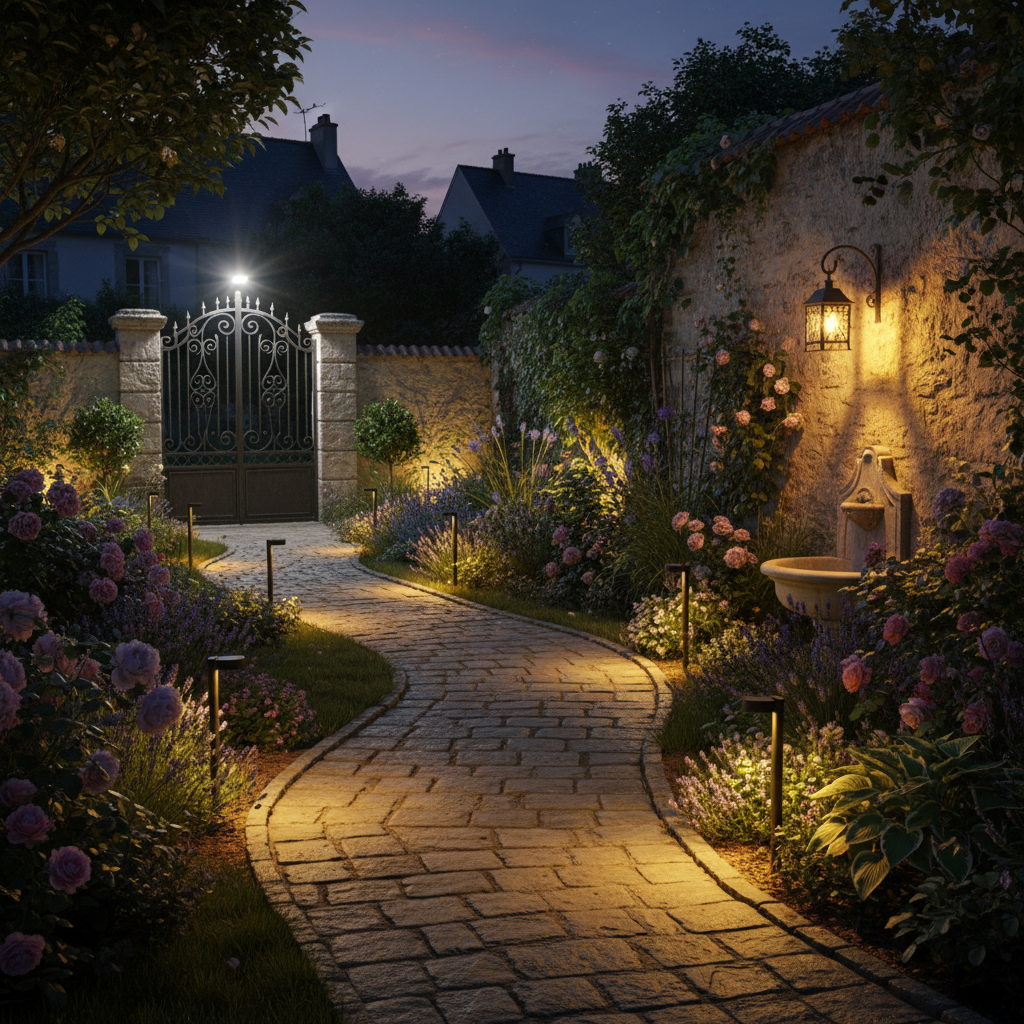
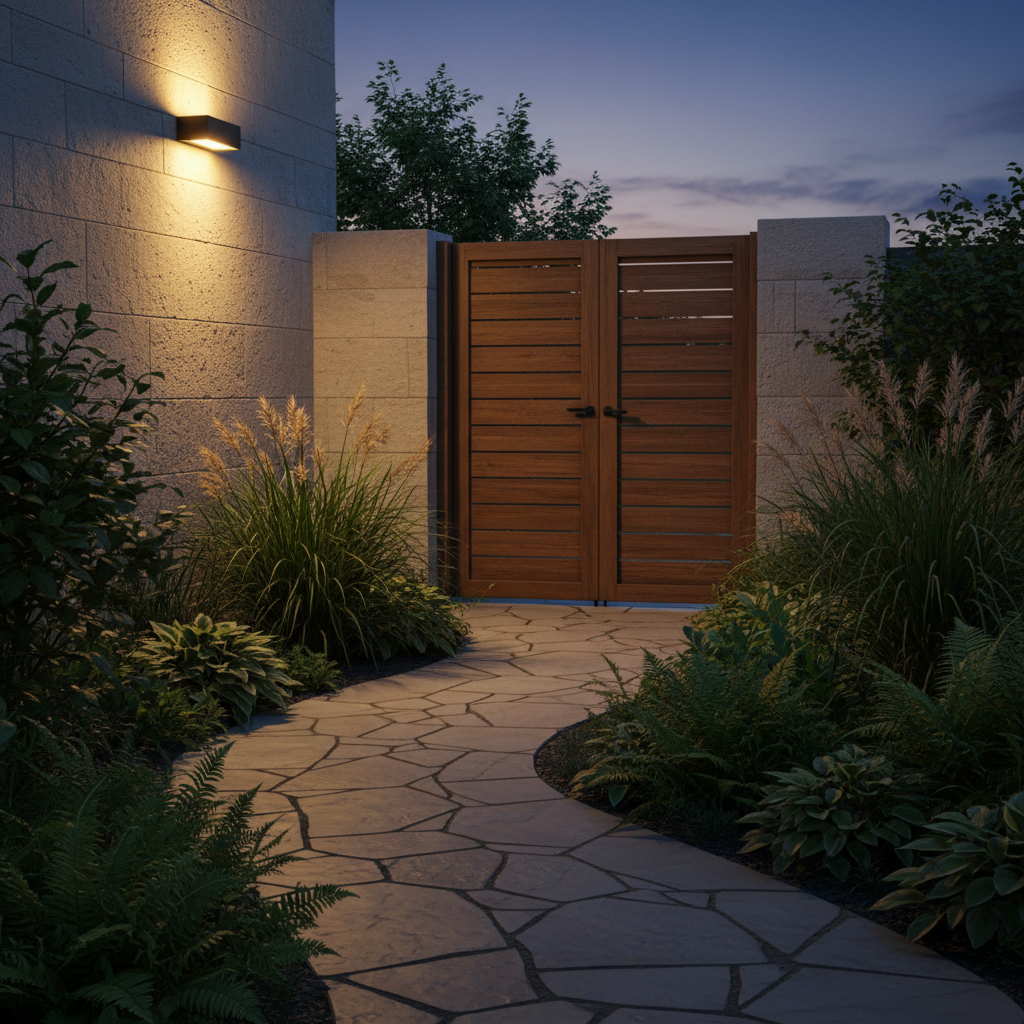
| Exposed outdoor (garden, pathway, gate) | IP65 minimum | Direct rain, snow, cleaning |
| Poolside or pond edge | IP67 | Risk of immersion or submersion |
The golden rule is simple: never pay for an IP you don't need, and don't skimp on IP where it truly matters. An IP65 in a dry indoor closet is wasteful. An IP20 outdoors is guaranteed to fail within weeks.
What Really Happens if You Install a Device with Insufficient IP?
Water infiltrates the casing. It causes short circuits, accelerates component corrosion, and eventually renders the device unusable—or even dangerous. With an inadequately protected outdoor light, it's usually a matter of weeks or months, not years. And in case of an electrical incident, insurance may refuse coverage if the equipment wasn't suitable for its environment.
IP Rating and Bathroom Lighting: Regulatory Zones
In the US/Canada, the National Electrical Code (NEC) defines zones in wet areas, and each zone requires a minimum IP rating. This is an electrical safety rule, not just a recommendation. If you're installing lighting in a bathroom, here's what you need to know:
- Zone 0: Inside the tub or shower itself. IP67 minimum—and in practice, almost nothing should be installed here.
- Zone 1: Above the tub or shower, up to 7.5 feet (2.25 m) high. IP65 minimum.
- Zone 2: 24 inches (60 cm) around Zone 1. IP44 minimum.
- Outside Zones: IP20 is sufficient, but protecting outlets with covers is still prudent.
For more on this specific topic, find all the practical explanations in our dedicated article on choosing an LED light bar for bathrooms based on IP rating.
Why Bathroom IP is a Safety Issue, Not a Preference
Contrary to popular belief, the IP rating in a bathroom isn't about taste or comfort. It's a safety rule related to the simultaneous presence of water and electricity. Installing a device with insufficient IP in a wet area exposes you to real risks—electrocution, short circuits, fire. Checking the IP before buying takes 10 seconds and can prevent serious problems.
IP65 Outdoors: The Serious Minimum for Long-Term Durability
For permanent outdoor lighting—house entrance, garden path, gate, patio—IP65 is the baseline. Not the maximum, but the floor below which you're taking risks.
The reason is simple: an IP65 device resists low-pressure water jets from any direction, is totally dust-tight, and withstands normal weather conditions without premature degradation. Rain, fog, snow, ambient humidity: it handles it. Frost itself isn't covered by the IP rating (which only addresses liquid water and dust), but most reputable IP65 products specify a temperature range in their specifications.
Lumic's SolarGlow: A Concrete Example of Outdoor IP65
The SolarGlow is Lumic's outdoor solar light. It is IP65 certified—making it a seriously protected light for permanent outdoor use. Heavy rain, snow, occasional hose-down: the IP65 rating covers these situations. It delivers 1200 lumens with a 180° motion sensor and a range of about 26 feet (8 meters). Wireless, no-drill installation.
This isn't a cheap solar light with a fake IP rating: IP65 is the rating verified by the international standard, not a marketing promise. For those who want to understand what truly differentiates solar lights, this article on powerful and durable outdoor solar lights goes deeper into the subject.
Wireless Outdoor: Which IP Protection for Which Uses?
If you're looking for wireless outdoor lighting—solar or battery-powered—the IP rating is one of the first criteria to check, even before lumens or battery life. A device that can't withstand the elements will become unusable before the end of its first year. To explore available options, our guide on powerful wireless outdoor lighting solutions with high IP protection reviews the criteria that truly matter.
IP and Specific Environments: Garage, Workshop, Basement
The garage deserves special attention. It's neither a typical indoor room nor an open outdoor space—it's in-between. Construction dust, water splashes from washing the car, humidity rising from the ground in winter: all these factors argue for a minimum IP44, and IP54 if the garage is poorly ventilated or regularly damp.
For a garage open to the outside (gate without a door) or directly exposed to the elements, IP65 is the target. To learn more about specific selection criteria for this environment, check out our article on dust and moisture-resistant LED lighting for garages.
What About a Workshop or Basement?
In a dry indoor workshop, IP20 to IP44 is sufficient depending on activities. If you use machinery that throws off chips or oil, upgrade to IP54. For a basement with rising humidity, IP44 minimum—IP54 if walls regularly seep. The goal isn't to maximize IP but to adjust it to the reality of the environment.
Most Common Mistakes Regarding IP Ratings
After explaining what IP means, here are the most common mistakes:
- Confusing IP65 with total waterproofing: IP65 = resistance to water jets. Not a guarantee of immersion. To submerge a device, you need at least IP67.
- Ignoring the first digit: We often only think about water. But dust also degrades electronic components. In a workshop or garage, the first digit matters just as much.
- Believing a high IP compensates for everything: IP65 doesn't protect against mechanical shocks or extreme temperatures beyond the manufacturer's specifications. IP is a partial measure.
- Buying an IP20 for outdoor use because it's cheaper: This is the classic mistake. The savings are real at purchase, but the loss is too—often just a few months later.
- Ignoring bathroom IP, thinking "it'll be fine": In Zone 1, it's an electrical safety issue, not comfort. It's non-negotiable.
Key Takeaways on IP65 and Protection Ratings
The IP rating involves two digits, a simple logic, and concrete consequences for the lifespan and safety of your equipment. The first digit = dust, the second = water. The higher the number, the stronger the protection.
For permanent outdoor use, IP65 is the serious baseline. For bathrooms, the minimum IP depends on the zone. For dry indoor areas, IP20 is sufficient—no need to pay for more. The golden rule remains: match the IP to the actual use, not to what looks impressive on the box.
And if you have questions about the right lighting for outdoor use with motion detection, powerful solar spotlights with appropriate IP ratings are also worth a look.