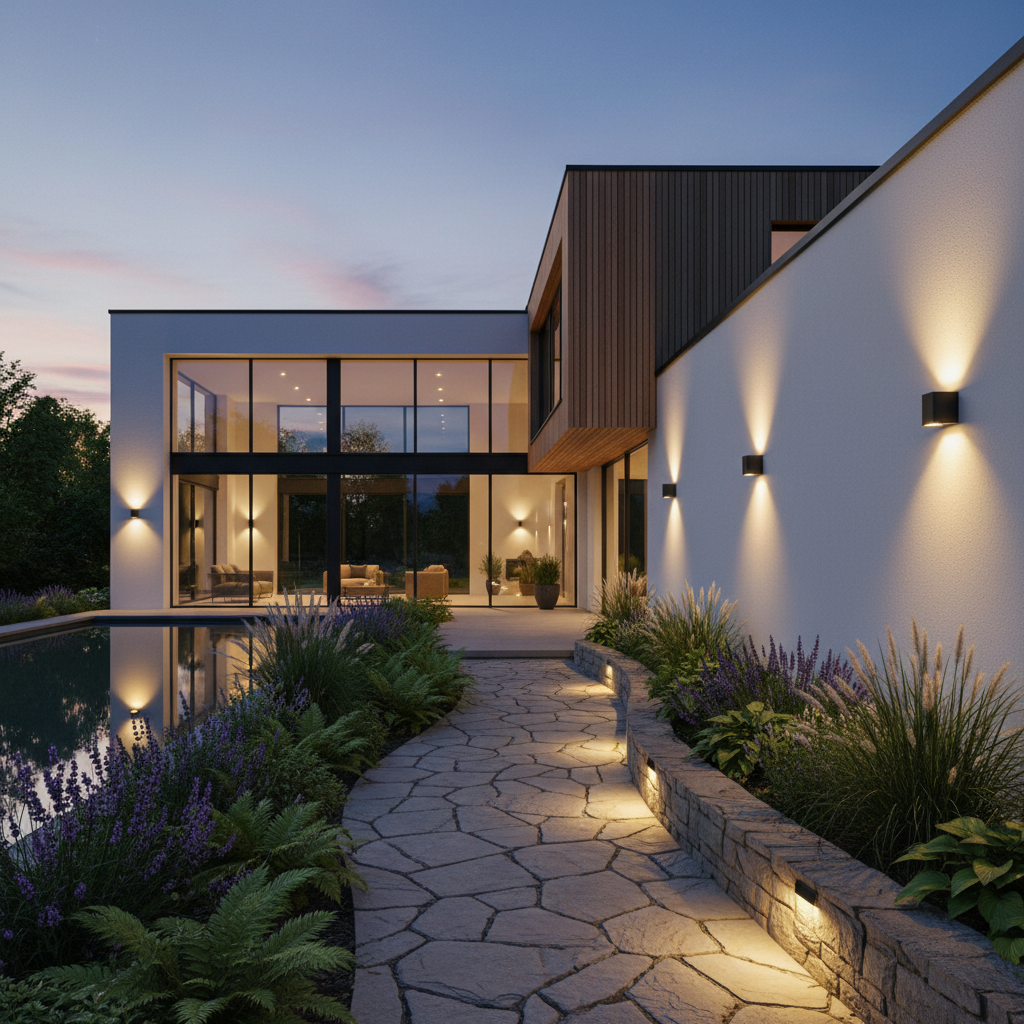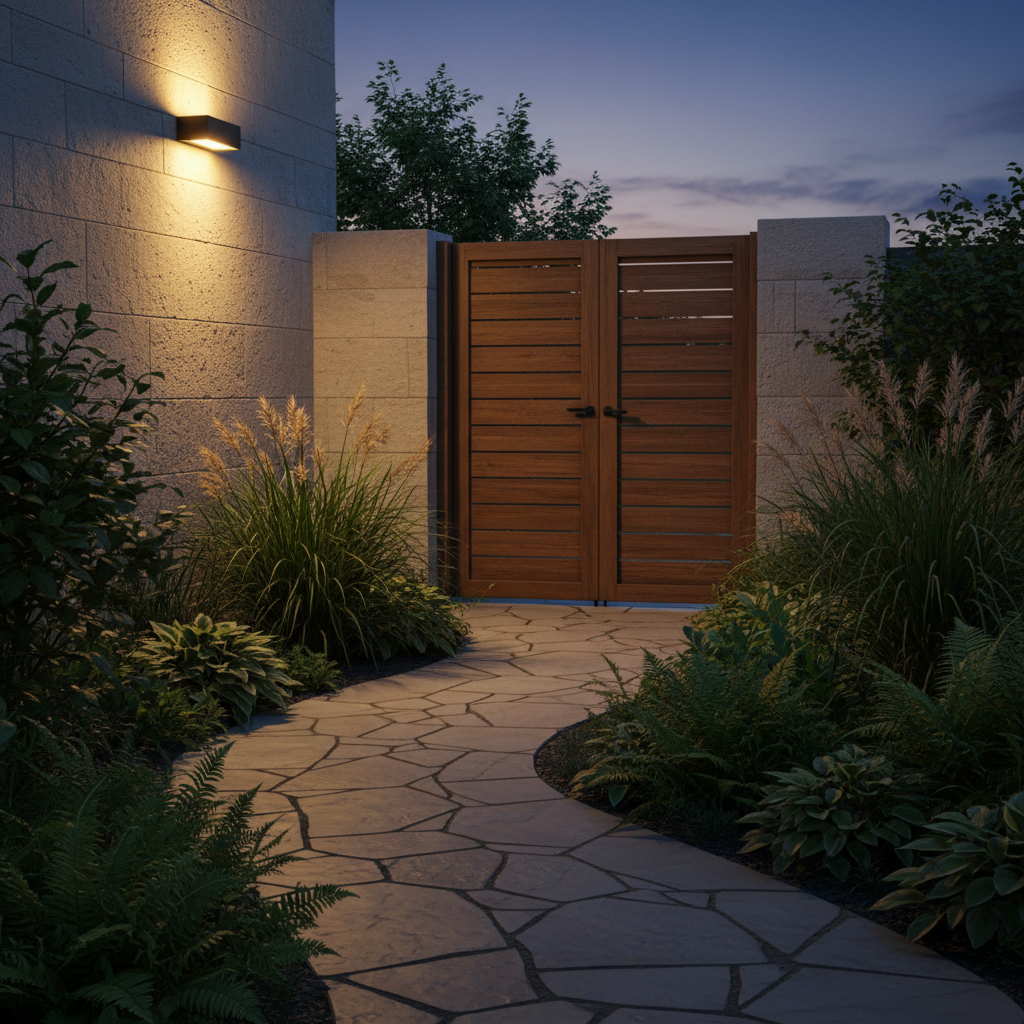

Want to light up your garden with solar power, but find yourself overwhelmed by a wall of path lights, spotlights, and wall sconces, unsure what goes where? It's a classic problem: you buy a solar garden light at random, install it, and the result is disappointing—either too dim, poorly placed, or dead by November.
The reality is, a garden has different zones with very distinct needs. Your pathway doesn't require the same lighting as your flowerbeds, and your entrance is completely different from your patio. This guide offers a simple logic: one zone, one light type, one concrete result.
Understand Your Garden Zones Before Buying Anything
Before diving into lumens and battery life comparisons, take a couple of minutes to mentally map out your garden. Four main zones almost always emerge in a typical North American home garden, and each has its own specific requirements.
Why Zone Determines Everything Else
A solar path light along a walkway should guide, not blind. A spotlight in a flowerbed should highlight a plant or border, not illuminate 25 feet away. A wall sconce on a fence needs to withstand rain and wind without requiring wiring. And an entrance light must deter—with power and a responsive sensor, not just a pretty design.
Simply put: the right tool for the right job. This principle makes the difference between a well-lit garden and one with solar lights scattered haphazardly without purpose.
The Four Zones to Treat Differently
- The Pathway: Guidance, ambiance, safe movement
- Flowerbeds and Borders: Decorative accent lighting
- Walls, Fences, and Hedges: Ambient or boundary lighting
- Main Entrance: Security, deterrence, visibility
The Pathway: Path Lights or Spotlights, Spacing, and Consistency
The goal of a lit pathway is to guide the eye and footsteps—not to turn your yard into a sports field. Lighting should be consistent, soft, and sufficient to prevent tripping.
Which Solar Light to Choose for a Garden Pathway?
Solar path lights are the most logical option here. They stake directly into the ground with no drilling, and their low height (typically 8-24 inches) directs light downwards—where it's needed. For consistent lighting, the recommended spacing is 6-10 feet between each light. Closer than that is too dense. Further apart creates dark spots between lights.
If your pathway is paved or concrete and you don't want to use stakes, solar in-ground spotlights can work, but they are more complex to install and less flexible if you want to change the layout. For more on this topic, our article on solar path lights for your walkways details all the selection criteria.
What Battery Life to Expect from a Solar Path Light in Winter?
This is often the unpleasant surprise of fall: the path lights installed in June start dimming earlier as days shorten. In winter, a decent quality solar path light usually lasts all night in motion detection mode, but not necessarily in continuous mode. If your pathway is only used occasionally (returning from work, going out in the evening), motion detection mode is ample and helps preserve battery life.
Low-end path lights with small panels and small batteries show their limitations by October. Prioritize models with adequately sized batteries over cheap packs of 6 lights.
Flowerbeds and Borders: Stake Spotlights for Garden Accent Lighting
Here, the focus shifts from safety to aesthetics. You want to highlight a shrub, outline a flowerbed, or create shadow play on a wall. Stake spotlights are the ideal tool.
How to Position Solar Spotlights in a Flowerbed?
A stake spotlight is placed at the base of a plant and directs its light upwards (backlighting foliage) or downwards to define an area. Solar spotlights for your garden come in various beam angles—some have a narrow beam (30°) to highlight a specific plant, while others have a wide beam to cover a larger surface. To explore available options, our article on different categories of solar garden spotlights covers the topic thoroughly.
A practical tip: avoid placing spotlights under trees or dense foliage. The integrated solar panel needs direct sunlight to charge efficiently. If the spotlight is in the shade, it won't charge properly—regardless of its quality.
Do You Need Spotlights with or without Sensors in Flowerbeds?
For decorative flowerbeds, motion sensors are rarely useful—and often annoying. A spotlight that turns on and off every time a cat crosses the garden is irritating. Here, prefer a permanent low-intensity lighting mode or a programmable one (e.g., turning on at dusk, off at midnight). Ambiance is key in a flowerbed, not responsiveness.
Walls, Fences, and Hedges: Solar Wall Sconces
Fences, side facades, trimmed hedges—all these vertical surfaces can accommodate solar wall sconces. The advantage? They are mounted high, the panel captures light well, and they illuminate a wide area without cluttering the ground.
Which Solar Wall Sconce for a Garden Fence?
A solar garden wall sconce must meet two non-negotiable criteria: solid mounting (a few screws into wood or concrete) and good waterproofing. In North America, gardens experience significant rainfall, especially in fall and winter. A minimum IP65 rating is recommended for permanent outdoor use.
For this type of location, downward-facing lighting (lantern or downward-facing sconce style) creates a warm ambiance. Upward-facing lighting illuminates the facade or hedge foliage—an interesting effect but one that consumes more lumens for a visible result.
Will a Solar Sconce Last All Night on a North-Facing Wall?
A north-facing wall receives little to no direct sunlight in winter. A sconce placed there will be underpowered and turn off earlier than expected. If your fence wall is north-facing or very shady, you have two options: choose a model with a remote panel (the panel is placed elsewhere, in a sunny spot), or accept reduced battery life in winter. Transparency on this point is important: no solar light performs at its maximum in an un-sunny location.
For a comprehensive approach to outdoor solar lighting, you can also consult our article on solar patio lighting, which covers similar principles for relaxation areas.
Your Home Entrance: High Power with Motion Sensor is Key
Your home's main entrance deserves the most attention—and paradoxically, it's often treated with the least seriousness. People install a small decorative path light or a discreet sconce and move on.
This is a mistake. Your home entrance is the first thing visitors see, and it's also the number one area for attempted intrusions. This isn't paranoia—it's logic. Powerful, motion-activated lighting is one of the simplest ways to deter a potential intruder. Not because it causes harm, but because it exposes them.
Why Decorative Lighting Isn't Enough for the Entrance
A 50-lumen garden path light or a solar string light around a shrub creates a nice ambiance in flowerbeds. But at your front door or gate, you don't need ambiance—you need immediate visibility and a quick reaction to any movement.
The critical criteria for an entrance: sufficient lumens to clearly see the area (several hundred lumens minimum), a motion sensor with a range and angle covering the entire access point, and winter reliability so it works even during weeks of cold, sunless weather. If your main goal is effective, deterrent lighting, then a powerful solar garden light suitable for the entrance is essential.
Lumic's SolarGlow: What It Brings to Your Entrance
The SolarGlow was designed precisely for this type of use. Here's why it meets entrance criteria, beyond just marketing:
- 1200 lumens: Enough to clearly illuminate an entrance area, a gate pathway, or a facade. This isn't ambient lighting; it's functional lighting.
- Two 180° motion sensors with a 26-foot (8-meter) range: The area is covered well before anyone even reaches your door. No blind spots.
- 20 days without solar recharge in detection mode: If you experience a week of rain in January, your light continues to function. This is the winter reliability that most low-end solar lights lack.
- IP65 rated: Certified to withstand rain, snow, and frost—non-negotiable for a permanent outdoor location.
- Wireless installation: No electrician, no trenching, no major work. You mount it, aim it, and it's ready.
And if you want to understand more about how solar motion detection technology works, our guide to solar motion sensor lighting details the mechanisms and quality criteria to check. To choose a solar light with a motion sensor that fits your entrance, range and angle criteria are the first to verify.
The SolarGlow is covered by a 5-year warranty and a 90-day return policy—giving you all winter to test if it meets your needs.
How to Organize Your Entire Garden's Solar Lighting
Now that you have a zone-by-zone logic, here's how to put it into practice without ending up with an overloaded or inconsistent garden.
Make a Quick Plan Before Buying
Grab a piece of paper or your phone and quickly sketch your garden from above. Identify the areas you want to light, their size, and their sun exposure during the day. This exercise takes 5 minutes and prevents you from buying unsuitable lights.
Also note specific constraints: a wall that never gets sun, a pathway under trees, a gate too far from the house to run a cable. These details guide product choices, not marketing spec sheets.
Combine Light Types for a Coherent Result
A well-lit garden is one where lights complement each other rather than compete. A basic idea that works well:
- Main pathway: Path lights every 6-10 feet in continuous low-intensity mode
- Flowerbeds: Stake spotlights under key plants
- Fence or facade wall: One or two wall sconces to define the space
- Entrance and gate: Powerful light with motion sensor (like the SolarGlow)
You don't need to light everywhere. Unlit areas between light sources create contrast and depth—this is what gives an elegant result rather than a stadium effect.
Common Mistakes to Avoid
Some pitfalls often found in poorly configured solar gardens:
- Too many dim path lights: 12 path lights at 15 lumens each provide less light than 6 path lights at 40 lumens with a better panel.
- Poorly oriented panels: A spotlight in a flowerbed with its panel facing north will never charge properly. Always check orientation during installation.
- Decorative light at the entrance: A string light or small path light at the main entrance is insufficient. The entrance demands power and responsiveness.
- Buying in bulk without criteria: Packs of 10 lights for $30 seem like a good deal. In practice, the panels are undersized, and the lifespan is short. Better to have fewer but higher-quality lights.
To choose among the best outdoor solar lights for your specific use, a structured comparison can help you refine your selection.
Key Takeaways from This Guide
The ideal solar garden light doesn't exist—but the right light for each zone does. Consistent path lights for the walkway, stake spotlights in flowerbeds, sconces on walls and fences, and a powerful light with a sensor at the entrance. Each location has its logic.
It's not a matter of budget: it's a matter of consistency between the intended use and the chosen product type. A well-functioning solar garden is one where nobody notices the lights—just the result. And if you want to delve deeper into the zone-by-zone logic, our article on solar garden lighting adapted to each zone perfectly complements this guide with concrete examples.