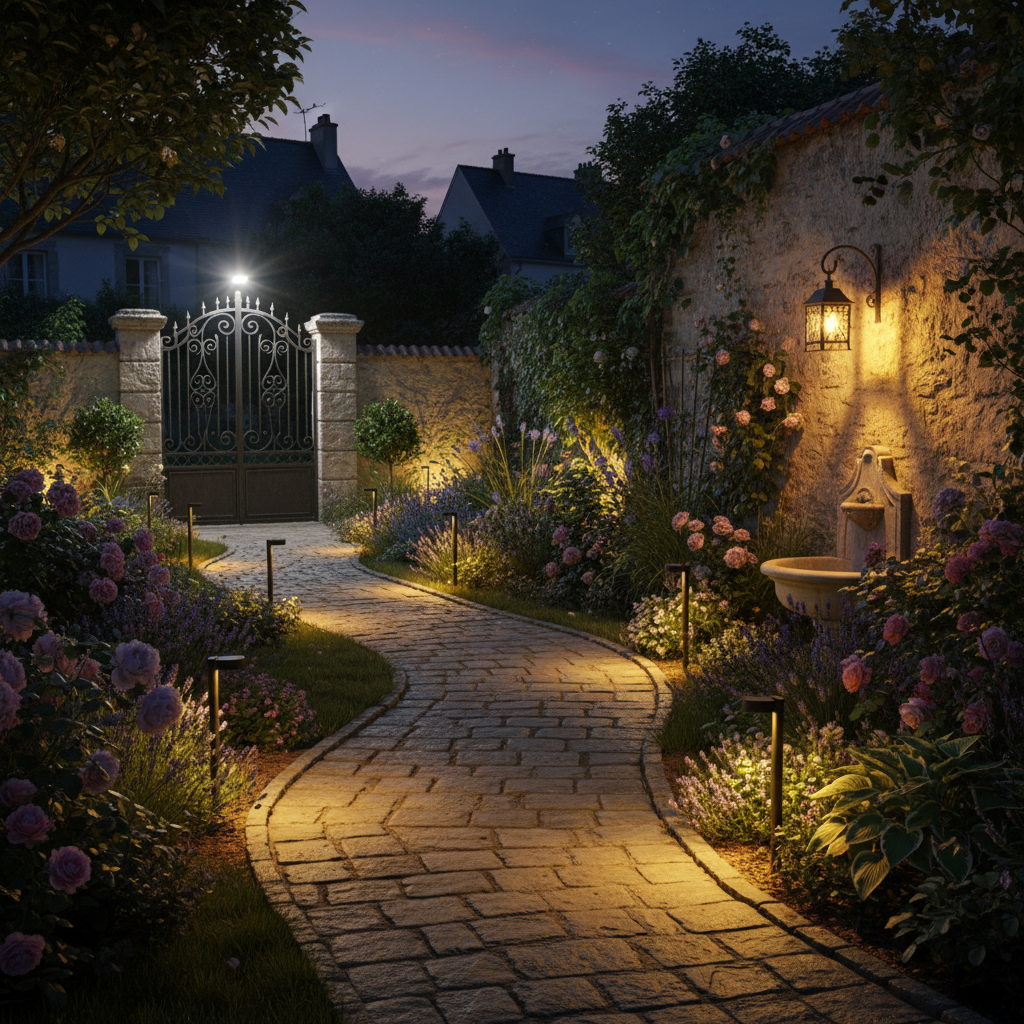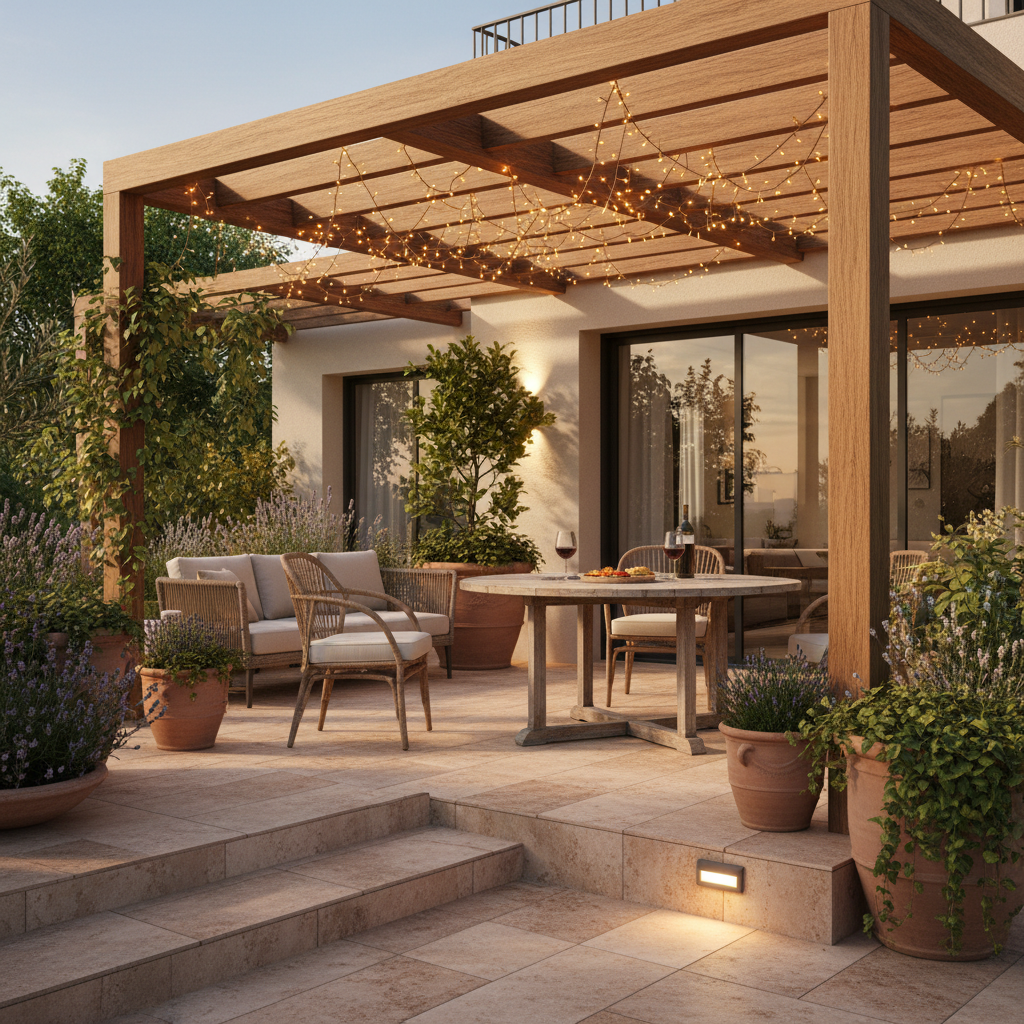
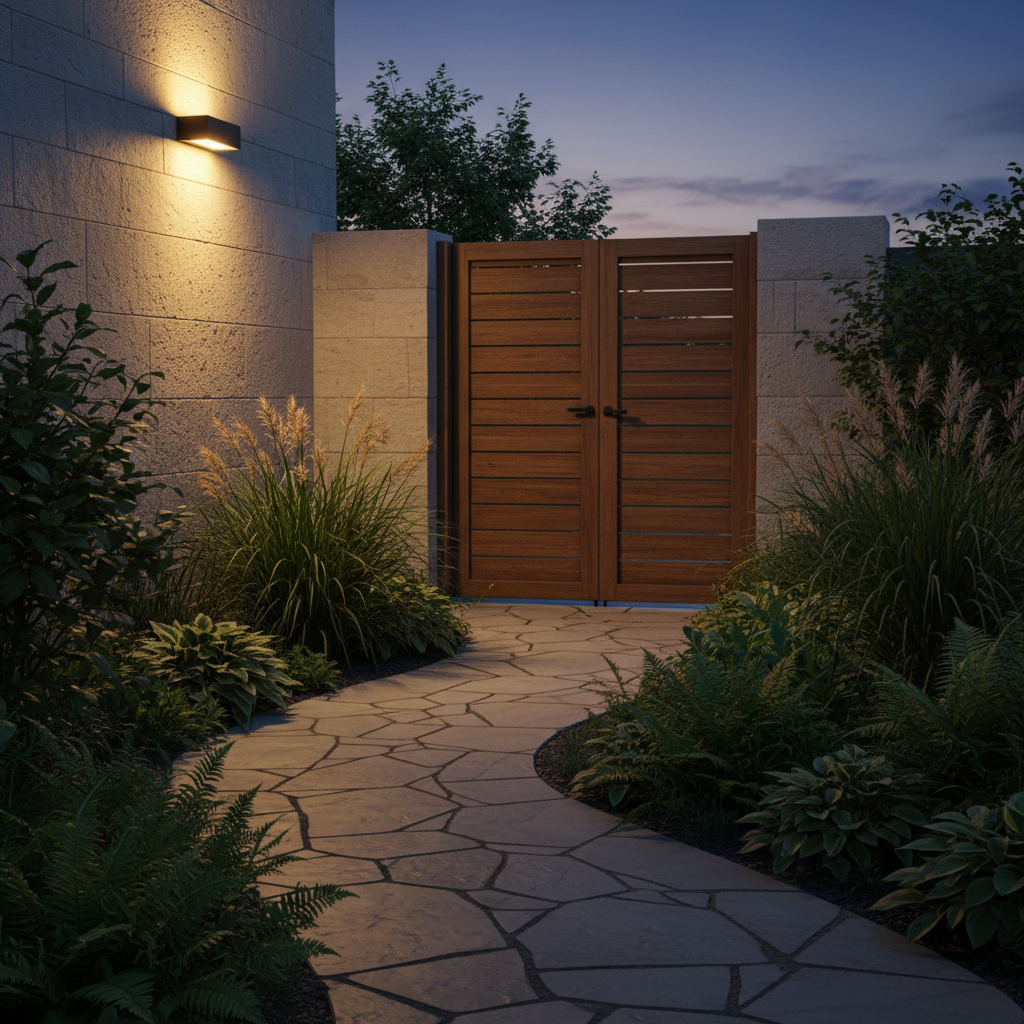
You want to light up your entryway, driveway, or patio without digging trenches or calling an electrician. Good news: it's totally possible today. The not-so-good news: you have a choice to make upfront, and it really impacts your long-term comfort.
Two technologies exist for a wireless outdoor light: solar and rechargeable. Both work. But not in the same situations. Here's how to decide — no BS.
Why a Wireless Outdoor Light Instead of a Wired Installation
The short answer: because drilling holes, running conduits, and hiring an electrician costs time, money, and construction. A wireless outdoor light avoids all that.
Does a Wireless Outdoor Light Really Provide Enough Illumination?
Yes, provided you don't confuse ambient lighting with security lighting. For a driveway or entryway, a model with a motion sensor and a few hundred lumens is more than enough. To illuminate an entire facade, you'll need multiple light sources.
What has changed in recent years is battery capacity and the size of integrated solar panels. Five years ago, wireless outdoor lights were often disappointing. Today, the best models seriously compete with traditional wired installations.
What Are the Real Advantages Over a Wired Installation?
- No cables to run, zero trenches, no electrician needed
- Installs in 10 minutes with screws or adhesive mounting
- You can move or remove the light without leaving marks
- Ideal for renters or those who don't want permanent installations
- Significant savings on installation costs
The only real drawback? You need to think about power differently. That's precisely where the choice between solar and rechargeable comes in.
Solar vs. Rechargeable: An Honest Comparison
Before deciding, you need to understand how these two technologies work in real outdoor conditions — not in a lab.
How Does a Wireless Solar Outdoor Light Work?
An integrated or separate photovoltaic panel captures sunlight during the day and stores it in a rechargeable battery. At night, the light draws from this reserve. If it has a motion sensor, it only turns on when someone passes by — which conserves battery life.
The main advantage: you do nothing. No outlet, no manual recharging, no cables. The light manages itself as long as there's sunlight.
The caveat: efficiency directly depends on the panel size and battery capacity. A small panel with a small battery is perfect from May to September. In December, with 8 hours of darkness and cloudy skies for 10 days, it can run out. This is the historical problem with cheap solar lights, not solar in general.
How Does a Wireless Rechargeable Outdoor Light Work?
It has a battery that you recharge via USB or a charging station, like any electronic device. No dependence on the sun. It works just as well in winter as in summer, in shade or sun.
Its strength: predictability. You know exactly how much time you have before the next recharge.
Its weakness for permanent outdoor use: you have to remove the light regularly to recharge it. In practice, an outdoor light exposed to the elements, mounted 6.5 feet (2 meters) high, that you have to bring in every 15 days... it quickly becomes inconvenient. For a patio table lamp you bring in every evening anyway, it's still relevant. For a light fixed on an entryway wall, it's less suitable long-term.
Comparison Table: Solar or Rechargeable, What to Choose for Your Situation
| Criterion | Solar Light | Rechargeable Light |
|---|---|---|
| Installation | Wireless, no outlet | Wireless, no outlet |
| Power Supply | Automatic (sun) | Manual (USB) |
| Maintenance | Almost none | Recharge every X days |
| Winter Efficiency | Depends on panel/battery | Independent of sun |
| Operating Cost | Zero (free energy) | Minimal (electric recharge) |
| Ideal for | Permanent fixed installation | Occasional or portable use |
| Main Constraint | Winter sunlight | Regular manual recharging |
The Decisive Factor Nobody Really Tells You
Here's the real question to ask: is your light installed permanently, or do you move it regularly?
For a Permanently Fixed Light, Solar is Best
If your light is screwed to a wall, above a door, or along a driveway, you don't want to have to take it down every two weeks to recharge it. It's tedious, sometimes risky (if it's high up), and you'll eventually forget until it goes out at the wrong time.
Solar structurally solves this problem. You install it. You forget about it. It does its job. The only real historical constraint of solar is winter: less sun, longer nights, cloudy skies for days. But this problem is related to the panel size and battery capacity, not the solar technology itself.
A small panel with a small battery dies in December. A properly sized panel with a sufficient battery lasts all winter, even during cloudy weeks. That's where the quality of the model makes all the difference.
If outdoor security is a priority, a model with a motion sensor is clearly the right choice. Our guide on solar motion sensor lighting will give you all the criteria to choose the right model.
For Occasional or Portable Use, Rechargeable Makes Sense
Are you hosting a barbecue and want to light up your patio for the evening? Do you want to place a lamp on a garden table that you bring in at night? In these cases, rechargeable is perfectly suited. You charge it, place it, enjoy it. The next morning, you bring it in.
Here, the recharging constraint isn't a problem since you handle the light anyway. And you don't need it to last for weeks without intervention.
The Winter Solar Problem: The Real Explanation
This is the most common topic, and for good reason: many people have had bad experiences with solar lights that died by November.
Why Do Some Solar Lights Not Work in Winter?
Two main reasons. First, the solar panel is too small to capture enough energy during short winter days or under cloudy skies. Second, the battery is too small to store enough energy to compensate for longer nights.
It's a sizing problem, not a technology problem. Entry-level solar lights, sold for under $20, are almost always undersized in these two areas. They work well in summer because days are long and nights are short — the battery doesn't need to be large. In winter, it's the opposite, and the system can't keep up.
The solution: a larger panel (which captures more even with little sun) and a larger battery (which stores enough to last several days without sun). Our dedicated guide on solar lights that work in winter explains exactly how to identify a model truly suitable for cold seasons.
How to Tell if a Solar Model Will Last Through Winter?
Look for two indicators in the product specifications:
- Advertised battery life without sun: A serious model indicates how many days it can operate in motion detection mode without solar recharge. If this figure is less than 5-7 days, be wary for winter.
- Battery capacity: Entry-level models typically have 1000-1500 mAh. A more robust model will offer 3000-4000 mAh or more.
Lumic's SolarGlow, for example, advertises 20 days without solar recharge in motion detection mode — meaning even a week and a half of completely cloudy skies in January won't stop it from working. This is the result of an oversized solar panel and a battery 4 times larger than entry-level models. It also resists rain, snow, and frost thanks to its IP65 certification.
What to Look for Before Buying a Wireless Outdoor Light
Beyond the solar or rechargeable question, a few criteria truly make a difference in the long run.
Weather Resistance is Non-Negotiable
An outdoor light must be waterproof. Period. In the US/Canada, we're talking about rain, ice, sometimes snow. The minimum to demand is an IP65 certification, which guarantees protection against water jets from all directions and against dust. Below that, you risk failure after the first winter.
Motion Sensor Changes Everything
For security or convenience (driveway, entryway, gate), a motion sensor is a real plus. It saves battery life — the light only turns on when someone passes — and it deters intruders. Some models combine a motion sensor and an ambient light sensor to only turn on at night. This is the smartest combo.
To compare wired and wireless options with sensors, our article wired or solar outdoor motion sensor light objectively covers the topic.
Sensor Range and Angular Coverage
A sensor with a 10-foot (3-meter) range is insufficient for a driveway. Aim for at least 20-26 feet (6-8 meters) of range and a detection angle of 120° to 180° to properly cover an entryway or facade. The SolarGlow, for example, features two 180° sensors with a 26-foot (8-meter) range — allowing it to cover a wide area without blind spots.
Where to Place Your Solar Light for Maximum Effectiveness
This is a crucial detail: your solar panel must be exposed to the sun for several hours a day. South or southwest-facing is ideal. A shaded location all day will negate the benefits of solar, even with a large panel. If your wall faces north or is constantly in the shade, a rechargeable light or a wired installation will be more suitable. For a complete guide on placement criteria, consult our article on outdoor solar wall lights.
Our Recommendation Based on Your Needs
Do you want a wireless garden light permanently fixed to a wall, driveway, or gate? Solar is clearly the best option — provided you choose a model with a panel and battery sized for winter. Lumic's SolarGlow precisely meets this need: 1200 lumens, two 180° sensors with a 26-foot (8-meter) range, 20 days of battery life without sun, IP65, wireless installation, and a 5-year warranty. Trustpilot rating: 4.5/5 from over 2200 reviews, and a 90-day money-back guarantee if it's not right for you.
Do you want a wireless outdoor light for occasional use (parties, barbecues, portable)? A quality rechargeable light will do the trick. You charge it beforehand, place it wherever you want, then bring it in afterward.
And if you're still unsure about the power you need for your space, our guide on powerful wireless outdoor lighting will help you calibrate your expectations based on the area to cover.
Common Mistakes to Avoid
- Buying based on price alone: A $12 solar light will work in summer. In winter, that's another story.
- Not checking the IP rating: A non-waterproof outdoor light is a guaranteed failure after a few rains.
- Forgetting panel orientation: Even the best solar model will be ineffective under an overhang shaded all day.
- Confusing lumens with quality: Some models advertise 2000 peak lumens but have such a small battery that they only last 30 minutes at that intensity. Check the actual battery life in normal mode.
- Neglecting sensor range: A sensor that detects nothing beyond 10 feet (3 meters) won't secure a 20-foot (6-meter) driveway.
To delve deeper into comparing available models, our comparison of the best outdoor solar lights analyzes key criteria for each use case.
In Summary: The Wireless Outdoor Light You Need
The choice between solar and rechargeable boils down to one question: do you want to maintain it regularly or forget about it once installed? For a permanent fixed installation, properly sized solar is the answer. For mobile and occasional use, rechargeable makes sense. In both cases, waterproofing and battery quality are the criteria that separate reliable models from the rest.