Is Your Closet a Black Hole? You're Not Alone
We all want the same thing at the back of a closet: to see what's inside without fumbling with a flashlight or waiting for our eyes to adjust. Yet, closet lighting remains one of the most common blind spots in a home — even new ones, even well-renovated ones.
The good news is, the problem is easily fixed. The bad news: not all solutions are created equal, and some end up costing you more than they seem in the long run. This guide honestly compares the three main options available today, with their real advantages and limitations.
Solution 1: Battery-Powered Light with Door Sensor
How Does It Work?
This is the simplest and cheapest model on the market. A small round or oval light, attached with adhesive inside the closet. It turns on automatically when you open the door thanks to a magnetic sensor (no motion, just door opening), and turns off as soon as you close it. Typical price: between $5 and $15.
When Is It Enough?
For a small hallway closet or a rarely used cabinet, this type of light can be a quick fix. Installation takes 30 seconds, there's nothing to plug in, and it works. If you open this closet two or three times a week, it holds up.
The True Long-Term Cost
This is where it gets complicated. These lights use non-rechargeable AAA or AA batteries. Depending on usage frequency, they last from a few weeks to a few months. In practice, batteries in a closet light used daily (like in a kitchen or walk-in closet) last between 2 and 4 months. Over a year, that quickly adds up to $15 to $30 in batteries. Over 3 years: between $45 and $90, for a light bought for $10. The math speaks for itself.
Another limitation: the door sensor. It only works when the door opens and closes. If you're working in a walk-in closet with the door open, the light stays off. It doesn't detect your presence, only the door's position.
| Criterion | Battery Light (Door Sensor) |
|---|---|
| Purchase Price | $5 to $15 |
| Annual Battery Cost | $15 to $30 |
| Total Cost Over 3 Years | $50 to $105 |
| Motion Detection | No (door sensor only) |
| Installation | Very Easy |
| Ideal For | Small, occasional-use closet |
Solution 2: Rechargeable LED Light Bar with Motion Sensor
Why Is It Different from a Simple Battery Light?
The difference is fundamental: a rechargeable LED light bar with a PIR (Passive Infrared) sensor doesn't detect the door's state; it detects your presence in the room. It turns on when you pass by, whether the door is open or closed. This is particularly useful for a walk-in closet, pantry, or large closet where you spend time searching for items.
This type of solution costs between $20 and $40 depending on length and brightness. To learn more about the different options available, check out our comparison of LED closet light types.
How Is Installation Done?
No cables, no outlets, no drilling needed. Attachment is via double-sided adhesive or magnetic mounts, depending on the model. You stick the mount, click the light bar onto it, charge it once via USB, and you're good to go. Battery life varies with use: in motion detection mode, a good battery lasts several weeks without recharging.
Zero Battery Cost After Purchase
This is the decisive argument. An integrated USB-rechargeable battery means zero cents spent on batteries over the product's lifespan. The total cost after the initial purchase is essentially nil (a negligible amount of electricity for charging). Compared to the $45 to $90 in batteries over 3 years for a basic light, the difference quickly becomes significant for any closet used daily.
If you're choosing between several models of this type, our article on wireless LED light bars will help you refine your selection criteria.
Solution 3: Wired LED Strip Light or Recessed Spotlights
What Exactly Is It?
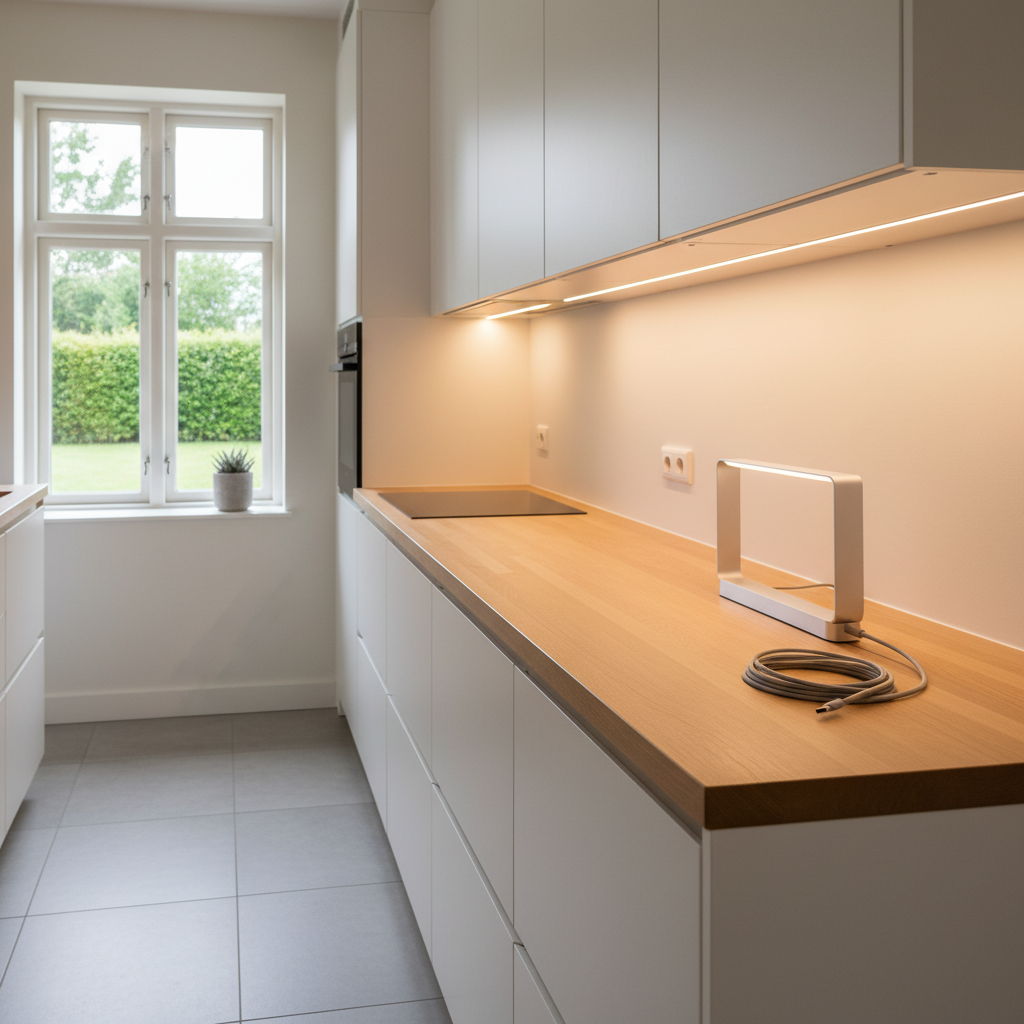
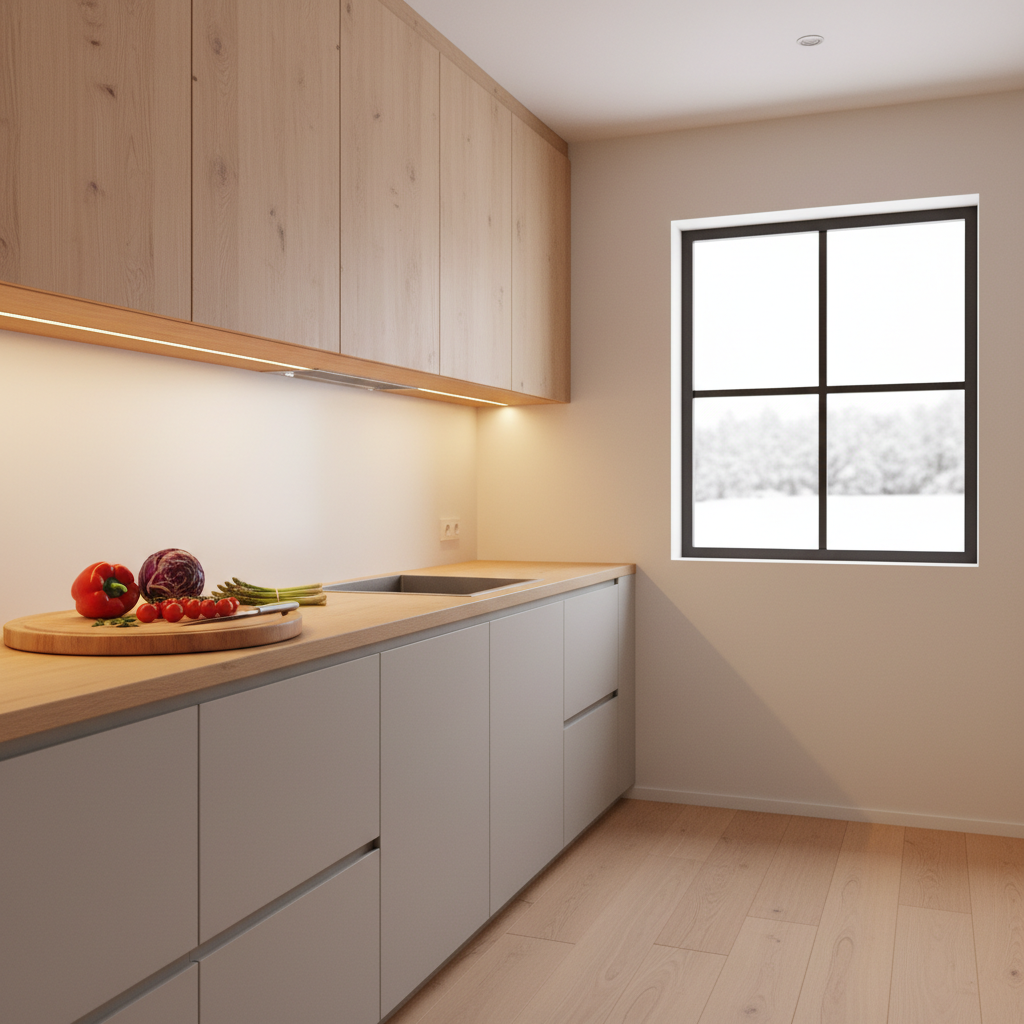
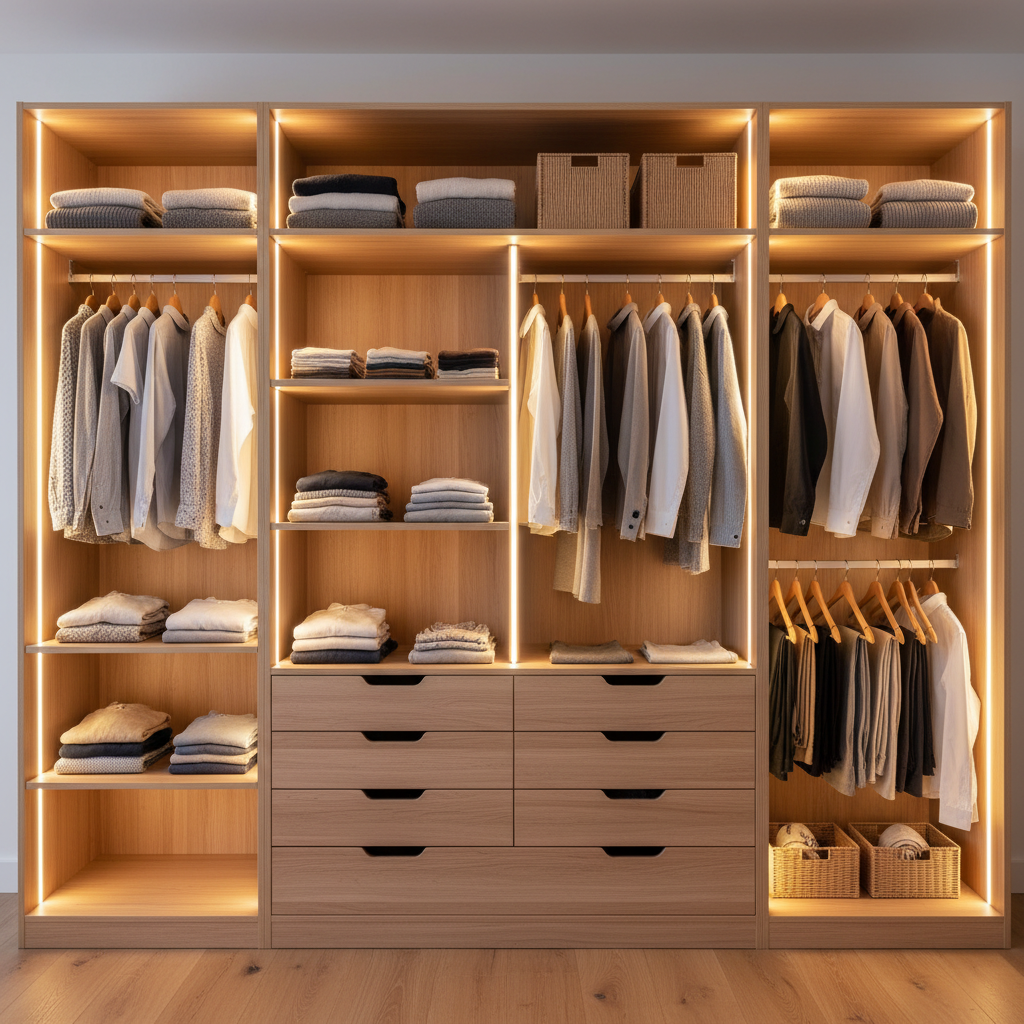
The permanent solution. An LED strip light or recessed spotlights in the closet, connected to the home's electrical circuit. This is what you find in high-end kitchens or custom walk-in closets. The lighting is uniform, powerful, and requires no recharging as it runs on mains power.
When Is It Really Worth It?
In two specific cases: when you're completely renovating a room and the work is already planned, or when you have a large walk-in closet that deserves sophisticated lighting. Outside these contexts, the installation investment (potentially an electrician, conduits, wiring) far exceeds what a standard closet justifies.
Known Limitations
This is not a solution for renters, nor for those who want to avoid renovations. Installation can quickly become complex if the power supply isn't nearby. And if you want automatic standby, you need to add a separate motion sensor — which isn't always easy to wire correctly. For everything about how motion sensors work in integrated lighting, it's a useful read before you start.
Comparison of the 3 Solutions at a Glance
| Criterion | Battery + Door Sensor | Rechargeable PIR Light Bar | Wired Strip Light |
|---|---|---|---|
| Purchase Price | $5 to $15 | $20 to $40 | $30 to $150+ |
| Cost Over 3 Years | $50 to $105 | Initial purchase only | Purchase + installation |
| Motion Detection | No | Yes (PIR) | Separate option |
| Installation | 30 seconds | 30 seconds to 2 minutes | Often requires work |
| No-Drill | Yes | Yes | Variable |
| Renter-Friendly | Yes | Yes | Rarely |
| Ideal For | Small, rarely used closet | Walk-in closet, kitchen, hallway | Full renovation |
What Type of Light to Choose for a Closet?
Warm, Neutral, or Cool White: Does It Really Make a Difference?
Yes, and it's often underestimated. In a walk-in closet, neutral white (4000K) is the most practical: it accurately renders the colors of your clothes, preventing you from walking out with a shirt you thought was blue but is actually gray. Warm white (3000K) is more pleasant to the eye but can slightly distort hues. Cool white (6000K) is reserved for work or technical environments — too harsh for daily closet use.
For a kitchen or utility closet, cool white is acceptable since object colors matter less. But for a walk-in closet or bedroom, it's better to stick to neutral or warm.
How Much Brightness Is Really Enough for a Closet?
A standard closet doesn't require enormous light output. For a small closet 24 to 31 inches (60 to 80 cm) wide, a 150-lumen light bar is ample to illuminate the entire space without blinding you. For a larger walk-in closet or open wardrobe, 300 lumens and above provide real comfort, especially if you have dark areas at the back of the closet. The key: light directed downwards and inwards, not towards you.
Does the Motion Sensor Work in a Closed Closet?
No — a PIR motion sensor needs to detect movement to activate. In a closed closet, no one is moving, so the light stays off. When you open the closet and pass in front of it, the sensor detects you and instantly turns on the light. This is much more practical than a simple door sensor in situations where your hands are full, or in a large walk-in closet where you move around inside.
Walk-in Closet Lighting: A Special Case
Why Do Walk-in Closets Have Specific Needs?
A walk-in closet is not just a simple closet. You spend several minutes in it, looking for clothes, comparing colors, turning around. A classic door sensor is useless: it turns off as soon as the door is fixed open, which happens in most walk-in closets. This is precisely why automatic walk-in closet lighting with presence detection is essential, not just convenient.
A PIR sensor that detects your movements inside the walk-in closet, door open or closed, allows you to work comfortably without the light turning off every 30 seconds. If you want to delve deeper, our guide on wireless solutions for your closet and walk-in closet also covers options for under-rod and side mounting.
How Many Light Bars Are Needed for a Full Walk-in Closet?
It depends on the configuration. For a small linear walk-in closet 5 to 6.5 feet (1.5 to 2 meters) long, a single 16-inch (40 cm) light bar placed above the viewing area is usually sufficient. For a U-shaped or L-shaped walk-in closet, two well-positioned light bars generally cover the entire space. The goal: no shadowed areas, especially in corners and under low shelves.
When Movement 3.0 Comes into Play
If you're looking for a rechargeable LED light bar with a motion sensor that meets the criteria described in this guide, the Movement 3.0 by Lumic is an option to seriously consider. It's available in 9 inches (23 cm, approximately 150 lumens) for small closets, and 16 inches (40 cm, approximately 320 lumens) for larger walk-in closets and cabinets. Three color temperatures to choose from: 3000K, 4000K, and 6000K, with adjustable brightness.
What truly sets it apart from entry-level alternatives: a 3000 mAh battery, which means significantly longer battery life in motion detection mode (about 4 weeks for the 9-inch model, 5 to 6 weeks for the 16-inch model). In continuous mode, about 5 hours for the small model and 8 hours for the large. Recharging is via USB, and attachment is magnetic with industrial adhesive backing — no tools, no screws, no drilling. Aluminum body. 5-year warranty. And 90-day satisfaction guarantee if it doesn't suit your needs.
To compare different sensor lights available, our overview of indoor motion sensor lights will give you a broader view of the market.
On Trustpilot, Lumic boasts a 4.5/5 rating from over 2200 reviews — a solid base of real customer feedback to rely on before buying.
What to Remember Before Buying
A few simple rules to avoid regretting your choice:
- Small, rarely used closet (2-3 times a week): A basic battery-powered light might be fine. Don't overthink it.
- Closet or walk-in closet used daily: Go straight for a rechargeable light bar. You'll recoup the investment in less than a year compared to batteries.
- Large walk-in closet or ongoing renovation: Wired solutions can make sense if electrical installation is already planned. Otherwise, two well-placed rechargeable light bars do the same job without any cables.
- Renter: Only no-drill solutions — adhesive or magnetic. The first two options are perfect for this, the third rarely.
- Walk-in closet with door fixed open: Exclude door sensors, prioritize PIR motion sensors.
Closet lighting is often the last detail considered in a home setup, yet it's one that changes daily life the most. Opening a closet and immediately seeing its contents, without fumbling, without turning on the room's overhead light at 6 AM — it's this kind of small comfort that's forgotten when it works, and sorely missed when it doesn't.