Why Drilling into a Wood Deck is Risky
You have a wood deck and want to light it up—makes sense. But before you grab the drill, there's something you need to know: every hole in wood is an open door for moisture. Water seeps in, stagnates, and rot does its work. Silently, but surely.
This isn't an exaggeration. It's the reality for all poorly protected wood decks. And when you add an electrical cable buried under the planks to power spotlights, the problem gets complicated: moisture + electricity = mandatory electrician intervention, meaning at least $500 to $1000 in labor, not to mention the risk of condensation in conduits.
So yes, there are ways to light a wood deck without damaging it. And some are truly impressive. We'll cover everything in this guide.
The Best Solutions for Successful Wood Deck Lighting
There isn't just one way to light a wood deck. It all depends on your budget, the stage you're at (construction or already installed deck), and the look you want. Here are the serious options, with their honest pros and cons.
In-Deck Spotlights: The Most Beautiful Finish
This is the most aesthetic option, no question. Small spotlights flush with the planks, close to the ground, creating a grazing light effect—the kind of look you see in design magazines.
But there's one non-negotiable condition: it must be done during deck installation, not after. You lay the planks, plan for holes and cable routing before securing everything. Professionals use waterproof conduits and IP67-rated spotlights to limit infiltration risks. Joints are carefully sealed, and the wood around cuts is treated. The result: a clean finish.
If your deck is already installed, forget this option—or call a professional who might need to remove planks to run cables. High cost, guaranteed disruption.
String Lights and Lanterns on Pergolas or Posts
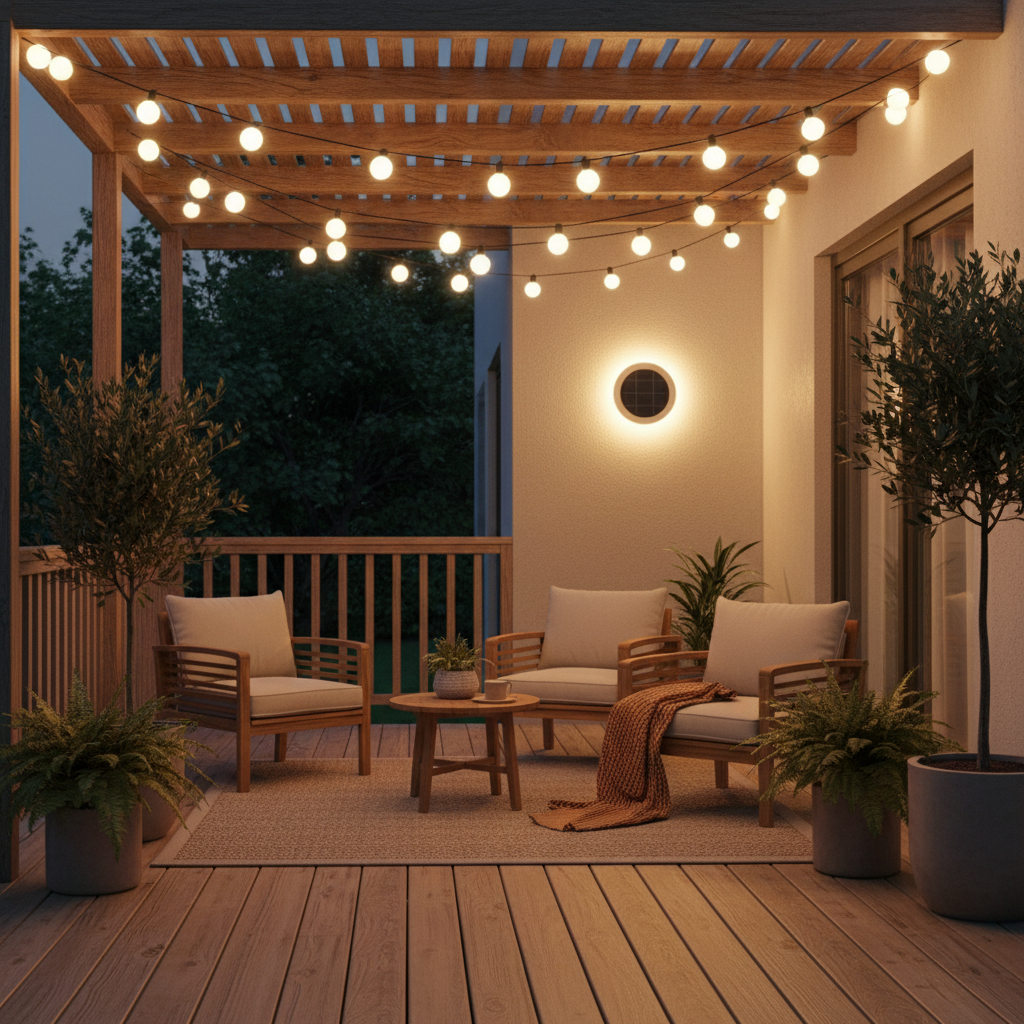
The simplest and most festive solution. String lights stretched between two posts or hung under a pergola don't touch the deck wood at all. They hang above it, at a distance. Visual result: warm, bright, inviting.
It's also the most affordable solution. A few hooks screwed into vertical posts (not horizontal planks), a solar cable or string light, and you're done. For solar string lights, you don't even need an electrical outlet.
Limitation: it lights the general ambiance, not a specific spot. If you want to read outside or see what you're cutting on the table, you'll need to supplement with another source.
Wall Sconces on Adjacent Walls
This is where it gets really interesting for a wood deck without drilling into the planks. If your deck is attached to your house or a concrete or brick wall, the adjacent wall becomes your ally.
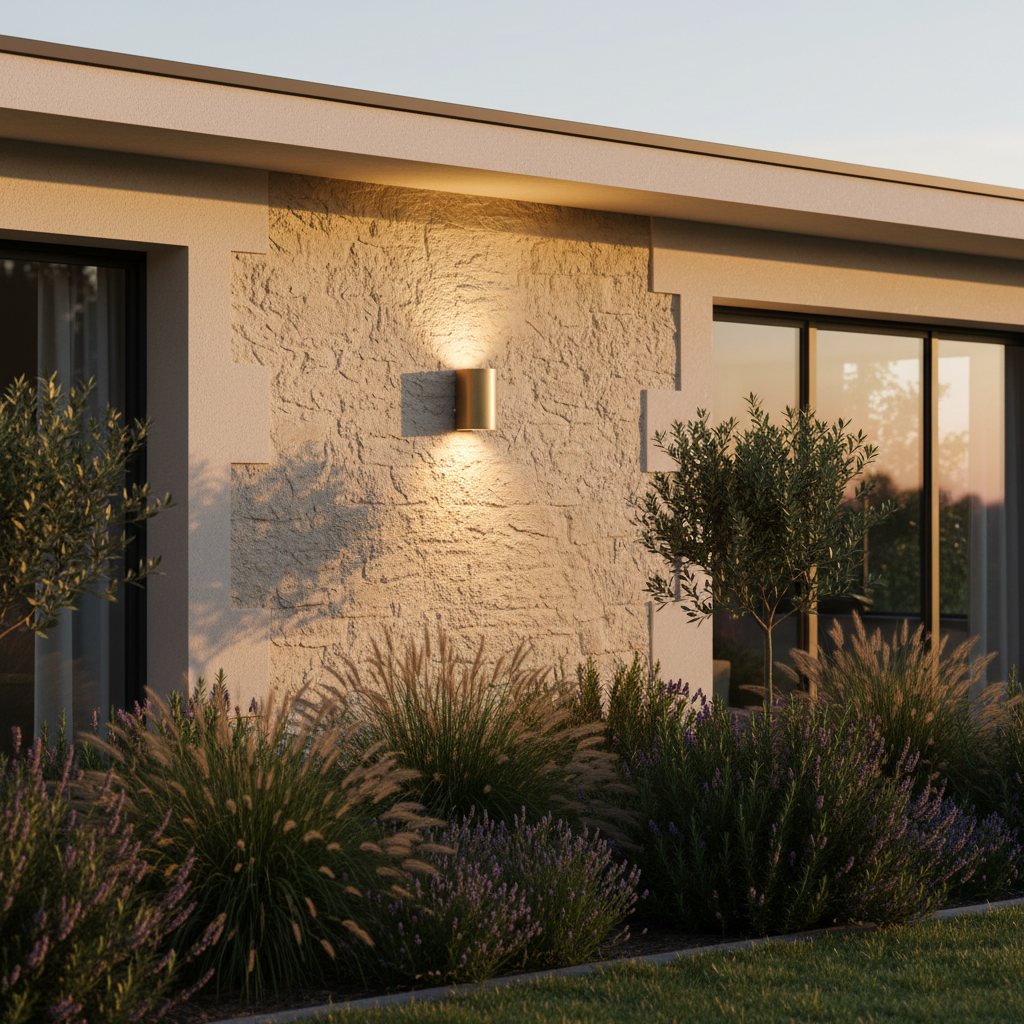
You install a wall sconce on the facade—not on the wood—and it illuminates the deck by projection. Zero contact with the planks, zero risk of infiltration. For wireless outdoor lighting, this is truly the ideal combination: a solar sconce on the wall, no cables to run, no intervention in the wood.
This is the option we primarily recommend for owners of existing wood decks who want to avoid major renovations.
Solar Wood Deck Lighting: The Smart Choice in 2026
Solar technology has advanced significantly in recent years. Gone are the small lights that lasted two hours and died in the first winter. Today's serious models are waterproof, self-sufficient for several weeks, and powerful.
For a wood deck, solar offers a clear advantage: zero cables, zero trenching, zero electricians. You install a sconce on the house wall, and that's it. No need to touch the wood.
How Much Power to Light a Deck?
This is the question everyone asks. For a typical-sized deck (200 to 300 sq ft), aim for at least 800 to 1200 lumens if you want functional lighting, not just decorative. Below that, you'll have ambiance, but you won't see much if you want to use your deck after 9 PM.
Low-end solar lights often claim 300-400 lumens. In practice, that's enough to define a space, but not to truly light it. If you're hosting friends in the evening or want to read outside, you'll need more.
Does a Solar Light Work in Winter in the US/Canada?
Yes, provided the solar panel is adequately sized. Entry-level models struggle in winter because their panels are too small to recharge sufficiently during short, cloudy days. Serious solar lights compensate with a larger panel and a battery with enough capacity to last several days without direct sunlight.
The practical rule: the larger the battery, the longer it can last during less sunny periods. This is a key criterion to consider before buying.
Where to Position a Solar Light for Wood Deck Lighting?
On the house wall, 8 to 10 ft high, facing the deck. This is the ideal position for two reasons: the solar panel is exposed to the sky (not in the shade of an overhang) and the beam effectively illuminates the entire deck surface by projection. Avoid placing it on wooden pergola posts—less stable, and you're back to the problem of screwing into wood.
Comparative Table of Wood Deck Lighting Solutions
| Solution | Contact with Wood | Difficulty Level | Visual Result | Indicative Budget | Ideal For |
|---|---|---|---|---|---|
| In-deck spotlights | Yes (cutting required) | High (during installation) | Exceptional | High (electrician) | New deck |
| String lights on pergola | No (vertical posts) | Low | Festive, ambiance | Low to medium | Ambiance / parties |
| Solar wall sconce | No (facade wall) | Very low | Functional + design | Medium | Existing deck |
| Solar stake light | No (ground, pathway) | Low | Accent, demarcation | Low | Borders, pathways |
| Portable solar floor lamp | No (placed on ground) | None | Variable | Low to medium | Maximum flexibility |
Deck Spotlights and Lights: How to Choose Based on Your Situation
The most common situation: an already installed wood deck, planks in good condition that you don't want to damage, and the desire for light in the evening. In this case, recessed spotlights are immediately out—too invasive, too expensive, and your wood already has its planks in place.
You Have an Accessible Facade Wall Next to the Deck
This is the ideal situation for a wood deck light without constraints. You install a sconce on the wall (concrete, brick, stucco)—not on the wood—and you have no risk to the planks. If you choose a solar sconce, you don't even need an outdoor electrical outlet. Just one screw in the wall (not in the wood), and it's done.
To learn more about choosing this type of solution, this guide on wall-mounted vs. stake solar spotlights will help you decide based on your space configuration.
You Have a Pergola or Wooden Posts
Vertical pergola posts are a much better option than horizontal planks for attaching something. String lights, a small sconce, or even a hanging lantern don't come into direct contact with the deck floor. Moisture doesn't wick up, and the wood isn't compressed around a cable.
Be careful to use fasteners suitable for outdoor wood (stainless steel or galvanized) and to drill at least 2 inches from the edge to prevent splitting.
Your Deck is Completely Isolated, Without a Nearby Wall
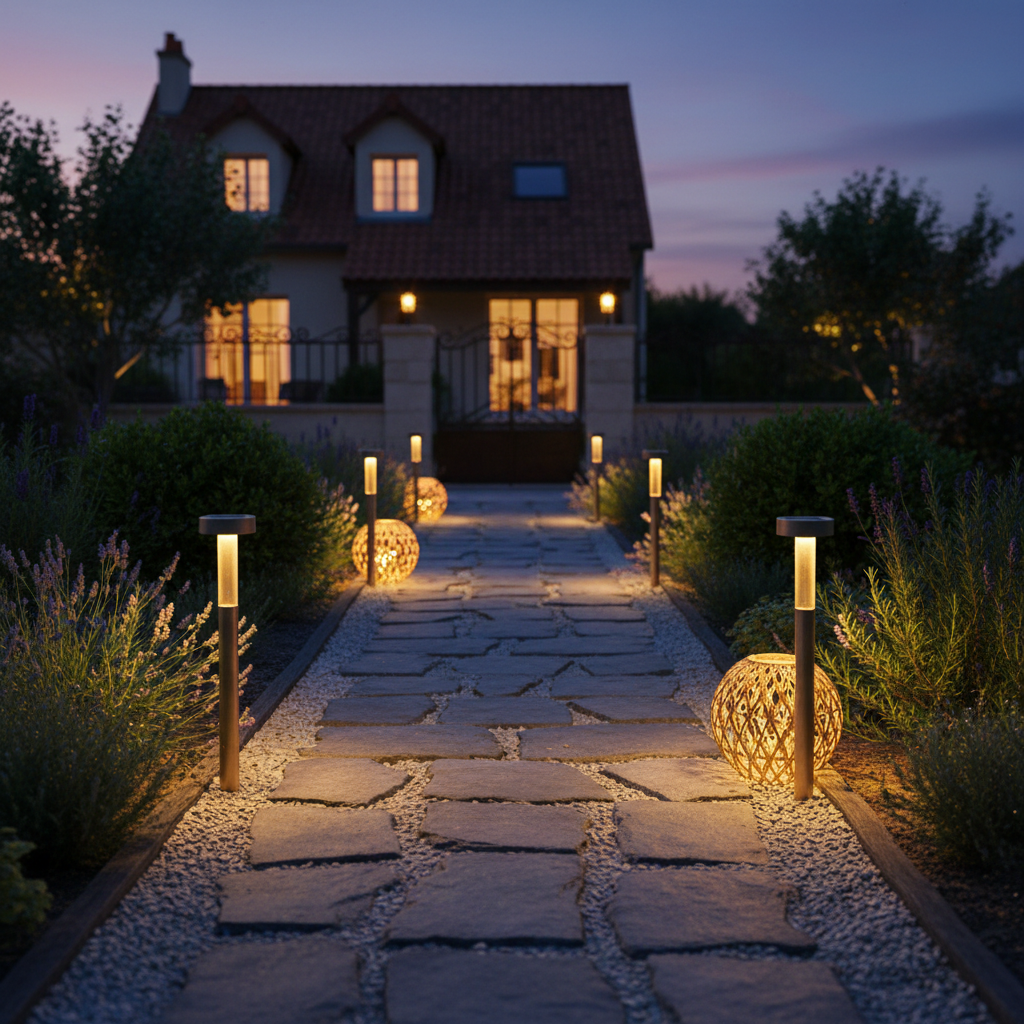
This is the least straightforward configuration, but solutions exist. Portable solar floor lamps simply sit on the deck without any drilling—they can be moved at will. Stake lights can be planted in flowerbeds or the ground at the edge of the deck. And for functional lighting, good wireless garden lighting can intelligently complement the setup.
The SolarGlow on the Wall: Zero Risk for Your Wood
If you're looking for a concrete solution for an existing wood deck, the Lumic SolarGlow addresses this exact problem. It mounts on the facade wall—not on the deck, not on the wood planks. No contact with the wood, no risk of infiltration.
What it offers: 1200 lumens (enough to light a medium-sized deck), two motion sensors with an 26 ft range and a 180° angle, IP65 waterproofing that resists rain and frost, and a 20-day battery life without solar recharge in motion detection mode. No cables to run, no electrician, no trenching.
The battery is sized to last during less sunny periods—an important point if you live in a region with cloudy winters. And like all Lumic products, it comes with a 5-year warranty and a 90-day satisfaction guarantee if it doesn't meet your expectations.
To delve deeper into the topic and compare different types of available solar lights, consult our guide to choosing the right outdoor solar light—the criteria are the same as for the deck.
Creating a True Ambiance on a Wood Deck
Deck lighting isn't just about lumens. It's also about ambiance. And on a wood deck, the natural atmosphere of the material calls for warm lights—2700K to 3000K maximum.
What Color Temperature for a Wood Deck?
Cool white (5000K and above) clashes with wood. It creates too strong a contrast, giving an industrial or security feel that doesn't match the idea of an inviting deck. Neutral white (4000K) is acceptable for pathways, but warm white (2700K to 3000K) clearly enhances the natural tones of wood best.
If you opt for a sconce or spotlight with temperature adjustment, always start with warm white and only adjust if you find the light too yellow for your needs.
Should You Combine Multiple Light Sources?
Yes, in most cases. A single light source creates shadows and a flat look. The ideal is to combine a main source (wall sconce, about 1000 lumens) with ambient sources (string lights, ground lanterns) that create depth and dimension.
This principle of layering light sources is at the heart of what interior designers call layered lighting. On a deck, it's simpler to implement: functional overhead light + decorative low light. Guaranteed results.
To learn more about this aspect, our article on solar deck lighting for creating a true ambiance details exactly how to layer sources and what visual effects to achieve based on the configuration.
Should the Light Be Fixed or Motion-Activated?
It depends on the use. If you frequently walk on the deck at night (to get something, for pets, for smoking), motion detection is very practical—the light turns on automatically, you don't have to do anything. And the solar battery life is much better than in continuous mode.
If you're sitting on the deck for dinner or conversation, motion detection quickly becomes annoying (the light turns off as soon as you stop moving). In this case, a continuous mode or adjustable illumination duration (5 to 10 minutes after detection) is more comfortable. Good solar sconces offer both modes.
Key Takeaways Before Buying
Let's recap the essential points for successful wood deck lighting, without regrets:
- Do not drill into horizontal planks—unless you're installing the deck and planning everything from the start with a professional.
- Use the facade wall as a mounting point if you have a deck attached to the house. This is the cleanest and most effective solution.
- Solar is mature for serious use, provided you choose a model with an adequately sized battery and panel.
- Prioritize warm white (2700K to 3000K) to respect the natural aesthetic of wood.
- Combine sources: a main one for visibility, a decorative one for ambiance.
- If you want to compare different technologies before deciding, our guide to wireless outdoor lighting covers the available options.
Lighting a wood deck requires some upfront thought—but once you've chosen the right solution, it's often a matter of minutes to install and years of comfort. No need to overcomplicate it.