Why Wireless Outdoor Lighting is So Popular
Digging a trench for electrical wiring, calling an electrician, waiting for work to be done, redoing your patio... For many homeowners, this is why outdoor lighting projects get put off for years. Wireless outdoor lighting was born from a simple observation: why make it so complicated?
But "wireless" actually covers three very different realities: batteries, rechargeable batteries, and solar power. Each has its advantages, limitations, and specific use cases. Before buying, it's best to understand the differences — otherwise, you might be disappointed after two weeks.
The Three Types of Cordless Outdoor Lighting
Wireless outdoor lighting comes in three families:
- Battery-powered lamps: Affordable, but batteries wear out quickly outdoors due to humidity and temperature variations. Best for very occasional use.
- USB or AC rechargeable lamps: Convenient for temporary use (BBQ, camping, summer patio), but you have to bring the lamp inside to recharge it. For permanent outdoor use, this quickly becomes a hassle.
- Solar-powered lamps: They recharge themselves continuously, without any effort on your part. For fixed, autonomous outdoor use, this is the only technology that truly lasts.
This guide primarily focuses on the third option, which is by far the most suitable for permanent autonomous outdoor lighting. But we'll also explain when the other two have their place.
Rechargeable Outdoor Lighting: Useful, But Not for Everything
For Which Uses Does Rechargeable Lighting Really Work?
A rechargeable garden lamp makes perfect sense for temporary or portable contexts. If you're hosting a weekend patio dinner, you can place a rechargeable lantern on the table and then bring it back inside—it's perfect. The same goes for a camping lamp or a BBQ light that you use for a few hours.
However, if you're looking to permanently light your driveway, gate, or house entrance, rechargeable lighting quickly becomes a constraint. Bringing the lamp inside, plugging it in, waiting for it to charge, putting it back in place... After a few cycles, most people give up and return to darkness.
The Problem of Humidity and Winter with Rechargeable Lamps
The other limitation of outdoor rechargeable lighting is the environment. USB connectors exposed to rain and frost deteriorate. Lithium batteries lose some capacity in cold weather. A rechargeable lamp advertised for 8 hours of battery life in summer might drop to 4-5 hours in January. This point is rarely mentioned in product descriptions.
Practical conclusion: rechargeable = occasional, indoor, or sheltered semi-outdoor use. For permanent outdoor use, you need something else.
Why Solar is the True "Wireless" for Outdoors
How Does an Outdoor Solar Lamp Work?
A cordless garden lamp works in two stages: the solar panel captures daylight and recharges the integrated battery. At night (or when the motion sensor triggers), the battery powers the LEDs. This cycle repeats daily, with no intervention from you.
It's total autonomy. You install it, you forget it. No cables, no electricity bills, no battery replacement. That's why solar has become the standard for all fixed wireless outdoor lighting: driveways, gates, patios, facades, garages.
Does Solar Lighting Work Year-Round, Even in Winter?
This is the most common question, and the honest answer is: it depends on the quality of the panel and battery. Low-end solar lamps have two problems in winter. First, their panel is too small to store enough energy during the short, cloudy days from November to February. Second, their battery is so small that it drains in a few days without solar recharge.
The consequence, you might know: a lamp that works well from May to September, and then dies out in October. This isn't a solar flaw—it's a sizing issue. A lamp with an oversized solar panel and a large battery can last several weeks without sun, even in winter.
If you want to delve deeper into this topic, our article on effective solar lamps in winter explains exactly what to check before buying.
Criteria for Choosing Your Wireless Outdoor Lighting
Light Output: How Many Lumens for Outdoor Use?
Outdoor lighting needs vary greatly depending on the use. To mark a pathway or create ambient lighting, 100 to 400 lumens are sufficient. To light an entrance, gate, or garage with motion detection, aim for 800 to 1500 lumens. Below that, the lighting will be insufficient when you really need to see something.
An autonomous outdoor light with a motion sensor can afford high light intensity without draining the battery, as it only turns on for a few seconds with each pass. This makes the solar + motion detection combination particularly effective.
IP Rating: What Distinguishes a True Outdoor Lamp from a Mismatched Indoor Lamp
The IP (Ingress Protection) rating measures resistance to elements. For a lamp intended for permanent outdoor use, IP44 is the minimum, but it's better to aim for IP65 or higher. IP65 means total protection against dust and water jets—so rain, splashes, and jet cleaning.
If a product description doesn't mention an IP rating, assume the lamp is not designed for permanent outdoor use. This is often the case with inexpensive rechargeable lamps sold on some platforms.
Battery and Solar Panel: What Product Sheets Don't Always Tell You
Two solar lamps can display the same lumen output but behave radically differently in winter. The key lies in the battery size and the solar panel surface area.
A large battery gives you an energy reserve for sunless days. A large solar panel captures more energy even on cloudy days. These two parameters determine whether your lamp will still work in December or die out by mid-October.
To understand everything about this often-overlooked component, our article on batteries for solar lamps is a good starting point.
| Criterion | Batteries | USB Rechargeable | Standard Solar | High-Capacity Solar |
|---|---|---|---|---|
| Winter Autonomy | Low (humidity, cold) | A few hours | Variable, often insufficient | Weeks without sun |
| Maintenance | Frequent replacement | Regular recharging | Minimal | Almost none |
| Weather Resistance | Low to medium | Variable | Good (IP44+) | Very good (IP65+) |
| Installation | Simple | Simple | Simple | Simple |
| Long-Term Cost | High (batteries) | Medium | Low | Low |
| Ideal For | Occasional | Occasional/seasonal | Spring-Autumn | Permanent, year-round use |
Where to Install Wireless Outdoor Lighting?
Driveways and Pathways
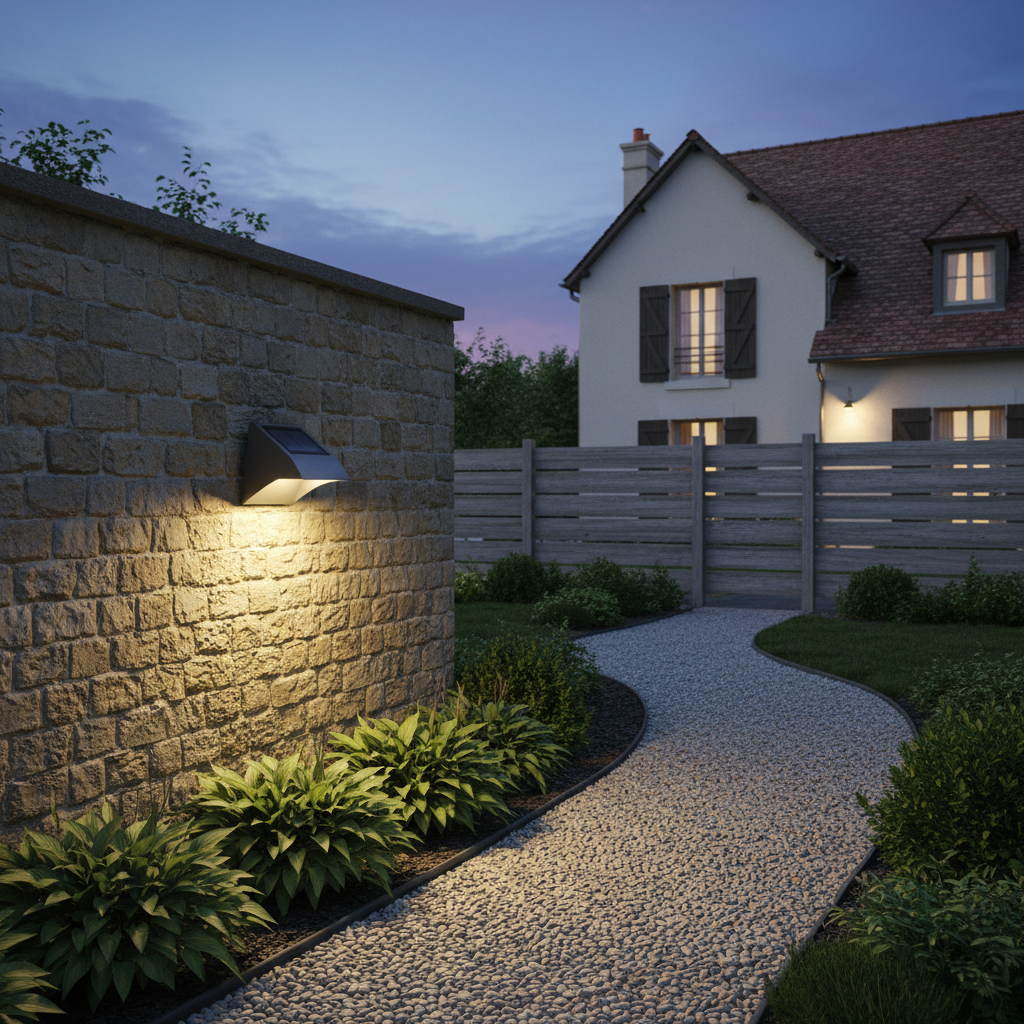
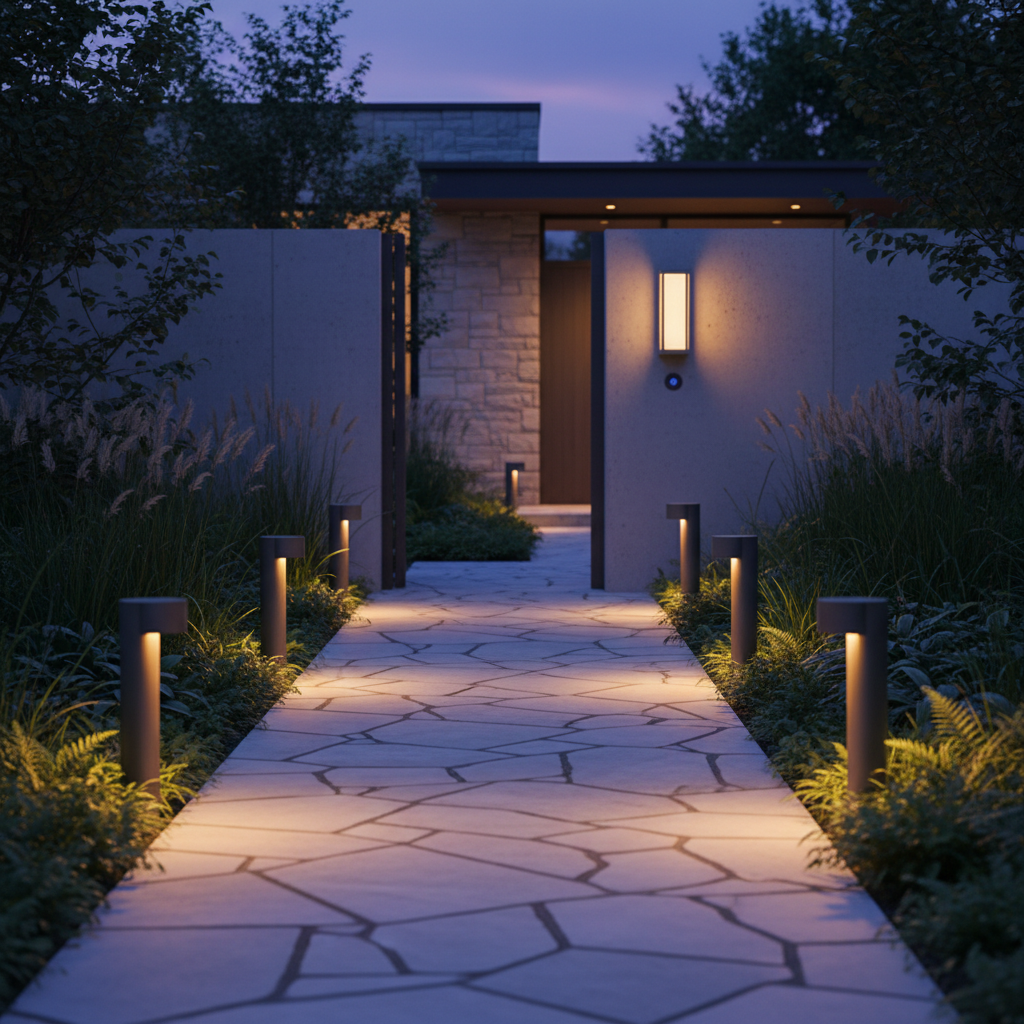
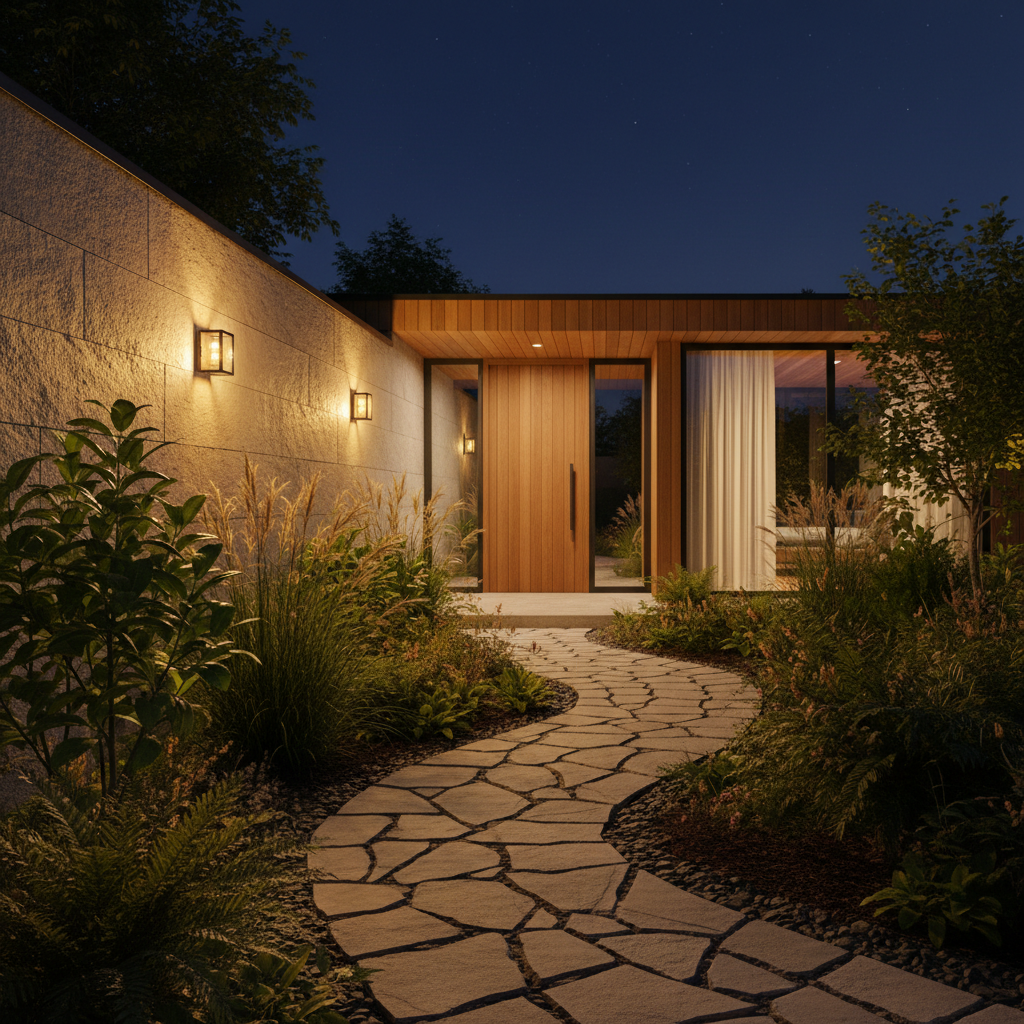
Driveways are one of the most common use cases for wireless outdoor lighting. The goal is twofold: safety (preventing falls at night) and aesthetics (highlighting the garden). Solar path lights or solar wall sconces are well-suited for this use.
If you want ideas for lighting your driveway with autonomous solutions, our article on solar garden path lights will give you the benchmarks for choosing.
Patio and Outdoor Living Spaces
On a patio, needs vary depending on the time and use. In the evening for meals, you want warm, soft ambient light. For safety (detecting an arrival, avoiding tripping), you prefer powerful, automatically triggered light.
Both can coexist: solar string lights or rechargeable table lamps for ambiance, and a solar wall light with a motion sensor for safety. For more detailed ideas, our article on wireless patio lighting explores different configurations.
Gate, Garage, and House Entrance
These areas require higher light output and true reliability. A dark gate when you come home late is uncomfortable—and potentially a security issue. A powerful solar wall light with a motion sensor addresses this need exactly: it only turns on when needed, conserves battery life, and guarantees lighting even in winter if properly sized.
Solar Lighting with Motion Detection: The Game-Changing Combination
Why Combine Solar and Motion Sensor?
Motion detection solves a fundamental problem of solar lighting: the battery is limited. If the lamp stays on all night, it drains in a few hours. With a motion sensor, it only consumes power when you pass by—which can multiply battery life by five or ten depending on usage habits.
The result: a lamp that can last several weeks in detection mode where it would last a few hours continuously. And for security, a light that suddenly turns on when someone approaches is often more deterrent than a permanent light that people eventually ignore. To understand everything about this combination, our guide on solar lighting with motion detection goes further.
Detection Range and Angle: What to Check
Not all motion sensors are created equal. The range can vary from 10 to 33 feet (3 to 10 meters) depending on the model, and the detection angle varies between 90° and 270°. For a gate or garage, a range of 26 feet (8 meters) with a 180° angle is generally sufficient. For a large driveway or exposed patio, a dual sensor with 180° on each side can make a difference.
Lumic's SolarGlow: Designed for Winter, Not Just Summer
Most solar lamps are sized to work from May to September. The problem is that winter is often when we need good outdoor lighting the most—nights fall early, mornings are dark.
The SolarGlow was designed to address this specific problem. Its solar panel is three times larger than what's found on low-end alternatives, and its battery is four times larger. In practice, this translates to 20 days of autonomy without solar recharge in detection mode—even in cloudy winter. Its two motion sensors cover 180° each, with a range of about 26 feet (8 meters). And with 1200 lumens and an IP65 certification, it's as comfortable in the rain as in the snow.
If you're looking for autonomous outdoor lighting that truly works year-round, without cables, trenches, or electricians, this is the type of product to consider. The SolarGlow is available on trylumic.com with a 5-year warranty and a 90-day satisfaction guarantee. If you want to compare solar options for more directional needs, our guide on how to choose an outdoor solar floodlight can help you.
Installing Your Wireless Outdoor Lighting: What You Need to Know Before You Start
Do You Need an Electrician?
For cordless solar or rechargeable lighting, the answer is no. There's no electrical connection to make. Installation usually involves mounting the lamp on a wall or post using anchors and screws, or sometimes industrial adhesive. Most reputable models provide mounting hardware.
However, if you want wired outdoor lighting (buried cable, floodlight connected to the electrical panel), then yes, a qualified electrician is essential—and mandatory for any connection to the main electrical system according to US/Canadian standards.
Where to Position the Solar Panel for Maximum Efficiency?
For a solar lamp, panel orientation is crucial. The ideal is south-facing exposure, tilted at about 30-45°. Avoid areas shaded by a tree, awning, or building for most of the day—even partial shade significantly reduces solar production.
If the panel is integrated into the lamp, choose the mounting location based on sun exposure rather than just aesthetics. On some models, the panel is separable and can be positioned independently of the lamp—a real advantage when the area to be lit isn't well-exposed.
Can a Solar Lamp Be Installed on Any Surface?
Most solar wall lights attach to any solid surface: concrete, brick, cinder block, wood. Simply drill two holes and insert the provided anchors. For hollow or friable surfaces, use anchors suitable for the material.
Avoid placing a lamp on a permanently damp surface (moss, infiltration)—this is not good for long-term fastening, even if the lamp is IP65 rated.
What People Forget When Buying Wireless Outdoor Lighting
Here are some rarely mentioned points that make the difference between a lamp you love and one you take down after two weeks.
- Color Temperature: Outdoors, a too-cold white (6000K) gives an unpleasant "parking lot" look. A neutral white (4000K) is often the best compromise between visibility and visual comfort.
- Timer Adjustment: How many seconds does the lamp stay on after detection? Some models are not adjustable. Others allow adjustment between 10 seconds and 5 minutes. This is an important practical criterion.
- Distance Between Panel and Lamp: If you need to place the lamp in a less sunny spot, a cable separating the panel and light source gives you much greater installation flexibility.
- Mounting Quality: A lamp that moves or falls after the first gust of wind is frustrating. Check the type of mounting and materials.
If you want to learn more about high-power wireless outdoor lighting solutions, our guide on powerful wireless outdoor lighting compares different options in detail.
Key Takeaways for Choosing Your Wireless Outdoor Lighting
If you take away only one thing from this article, it's this: for permanent outdoor use, solar is the only truly autonomous wireless technology. Rechargeable requires regular maintenance. Batteries deteriorate with cold and humidity. Solar, when properly sized, works on its own—in summer and winter.
Before buying, check three things: battery size (to last through sunless days), panel surface area (to recharge even on cloudy days), and IP rating (to withstand rain and frost). Everything else is secondary.
For specific applications like facades or walls, our guide on outdoor solar wall lights will help you refine your choice based on your specific context.