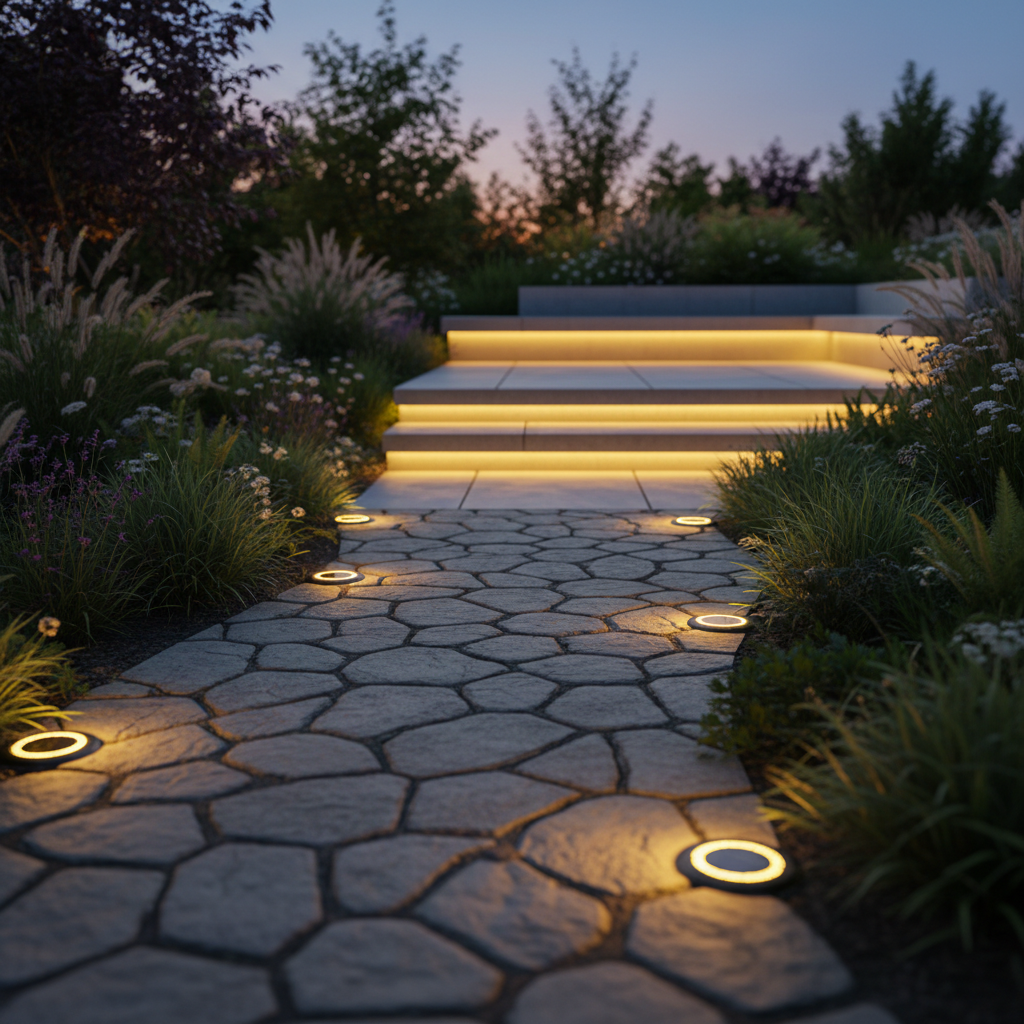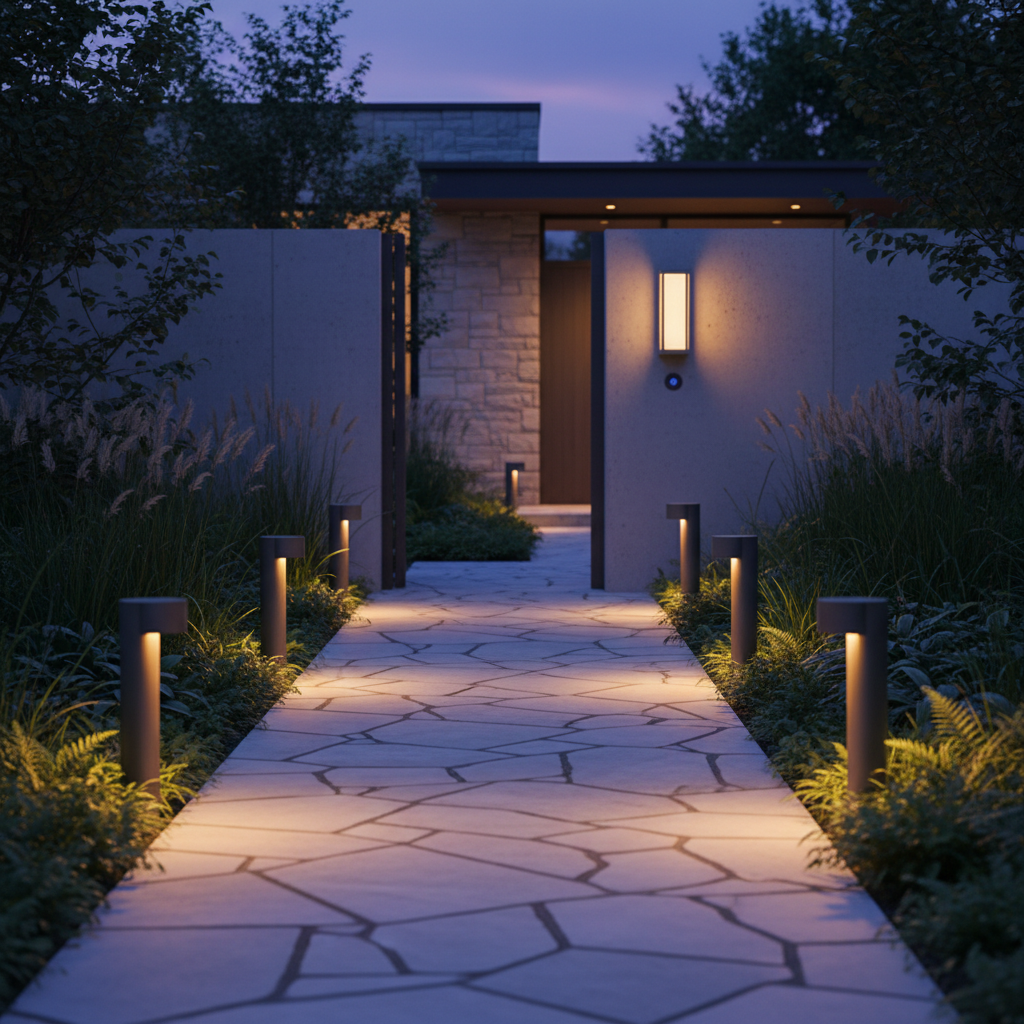
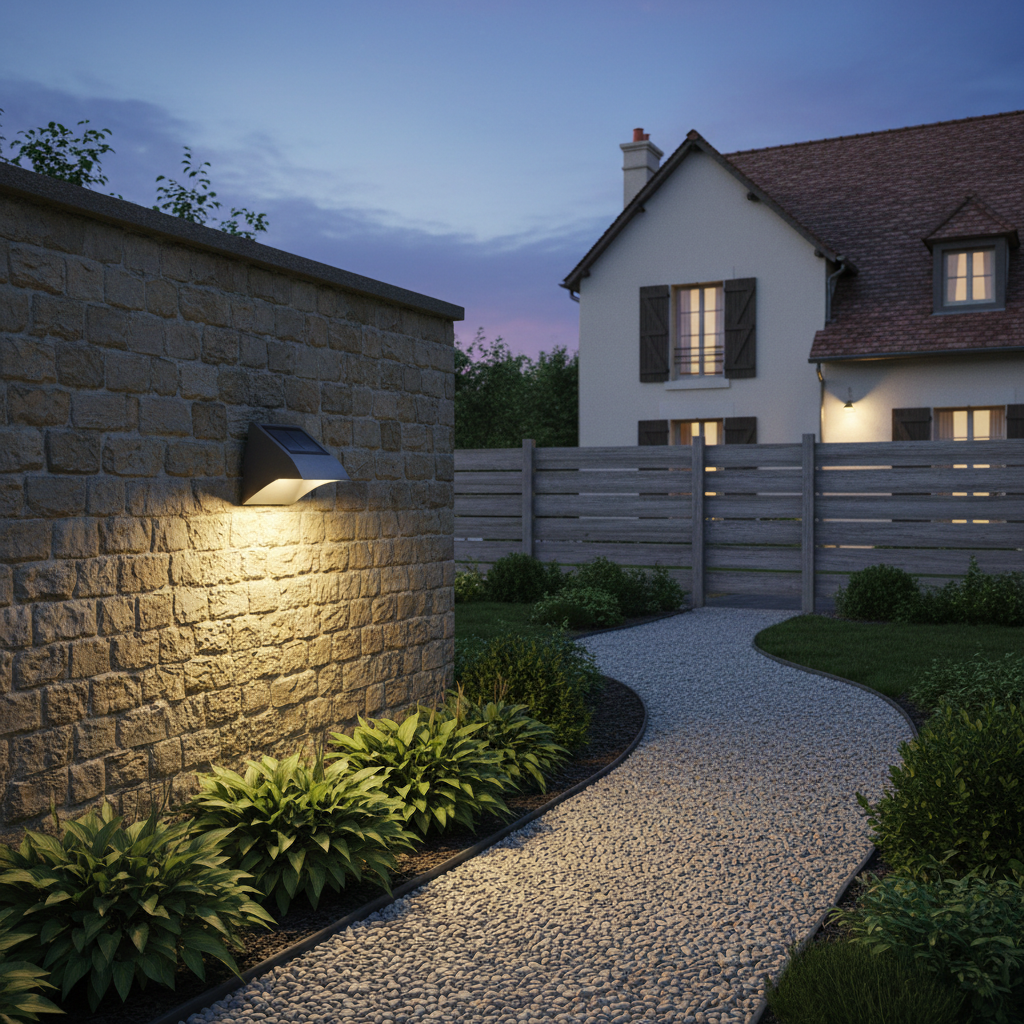
You bought a 5-star rated solar light on Amazon, advertised at 2000 lumens. It lasted three weeks, then started flickering before dying the first winter. Result: your patio is still dark, and you're looking to try again — but this time knowing what you're buying.
This guide won't sell you a dream. It gives you the tools to read between the lines of product descriptions and choose a powerful outdoor solar light that truly delivers — summer and winter, for your driveway, gate, or patio.
Why Most "Powerful" Solar Lights Disappoint
The problem isn't solar technology itself. It works very well. The problem is a market flooded with products that exploit ambiguous numbers.
The Peak Lumens Trick
The vast majority of entry-level solar lights display their lumens in "peak" mode: this is the theoretical maximum brightness, measured during the first two seconds after activation. After this peak, brightness often drops by 40% to 60%. What you see daily is this stabilized brightness — what we call real lumens, or lumens measured after 30 minutes of operation.
A light advertised at 2000 peak lumens might only emit 700 to 900 lumens under normal conditions. This isn't necessarily fraudulent legally, but it's misleading in practice.
What are "Powerful" Real Lumens?
To put the numbers in perspective, here's a simple scale:
- Less than 200 lumens: Decorative night light. Pleasant to the eye, useless for security.
- 300 to 600 lumens: Functional lighting for a small area. Sufficient for a garden path or infrequently used passageway.
- 600 to 900 lumens: Decent lighting for a driveway or home entrance.
- 1000 lumens and above: Security lighting threshold. Real deterrence, clear visibility, suitable for large areas.
It's from 1000 real lumens that we start talking about a powerful solar light in the practical sense — not the marketing sense.
The 3 Numbers to Check BEFORE Buying
No need to become an electronics engineer. Just check three specific data points on the product sheet. If they're not listed, that's information in itself.
1. Real Lumens (Not Peak Lumens)
Look in the description for phrases like "stabilized lumens," "real lumens," or "lumens measured after 30 minutes." If it doesn't, assume the displayed number is the peak. Some reputable manufacturers state this clearly — it's a sign of transparency that deserves your trust (and your purchase).
2. Battery Capacity in mAh
This is your light's energy reservoir. An 800 mAh battery can power a modest light for one night. But if you want a powerful solar light that lasts several days without sun — in case of bad weather — you need at least 2000 mAh, ideally more. Products that avoid mentioning this data often have a good reason.
3. Solar Panel Surface Area in square inches (cm²)
A panel that's too small cannot recharge a large battery efficiently. And in cloudy weather, a small panel is almost useless. Entry-level solar lights often cut costs on the panel — which explains why they work well in July but become anemic in November. Look for panel dimensions, not just theoretical wattage.
To learn more about this, our guide on battery technology for solar lights details why these specs change everything in use.
Why "High-End" Solar Isn't Just About Price
There's a very simple correlation in this sector: a brand that guarantees its product for 5 years is a brand that believes enough in its components to commit to their lifespan. A brand offering a 6-month warranty knows perfectly well that the product probably won't last much longer.
The True Cost Over 3 Years
Imagine two scenarios:
- Light A at a low price, 6-month warranty: you buy a new one on average once a year. Over 3 years, you've spent three times the initial price, thrown away two devices, and your yard is still poorly lit during replacement periods.
- Light B, more expensive, 5-year warranty: a single purchase over 3 years, a single installation, a single learning curve. The total cost is often lower — not to mention lost time and frustration.
"More expensive upfront" doesn't mean "more expensive in the long run." For outdoor solar lighting, it's almost always the opposite.
The Problem with Fake 3000 Lumens
On some marketplaces, you'll find lights claiming 3000, or even 5000 lumens for around $20. These numbers are physically impossible to achieve with the integrated batteries and panels at that price. This isn't an opinion — it's a matter of energy arithmetic. One lumen of light consumes energy. This energy must come from somewhere. And at that price, it cannot come from a sufficiently sized battery or a large enough panel.
When a brand advertises 1200 real lumens and offers a 5-year warranty, it's because they know their product will last. When an Amazon brand promises 3000 lumens with a 6-month warranty... you know why.
Solar Spot, Floodlight, or Lamp: Which Form for Which Use?
Light intensity isn't the only criterion. The shape of the light beam changes the entire experience.
Solar Spotlights for Accent Lighting
A solar garden spotlight projects a directional beam, often between 30° and 60° angle. It's perfect for illuminating a tree, a flowerbed, a home entrance, or highlighting a garden sculpture. However, its lateral coverage is limited: it illuminates where you point it, not around it.
Solar Floodlights for Large Area Coverage
A solar floodlight has a wider beam angle — sometimes 120° or more. This is the right choice for a driveway, a large patio, or a security zone. It sacrifices concentrated intensity for coverage. Both uses are legitimate, provided you choose the right format for the right space.
If you're hesitating between several formats, our guide on how to choose an outdoor solar floodlight will help clarify your needs.
Motion Sensor Light: Efficiency and Savings
This is probably the smartest configuration for a 1000-lumen solar light or more. By remaining off when there's no movement, it preserves the battery — allowing it to function even after several cloudy days. It activates at full power when someone approaches, which also has an obvious deterrent effect. To understand in detail how this type of system works, consult our guide on motion sensor solar lighting.
How to Optimize Installation for Maximum Power
Even the best powerful outdoor solar light will underperform if poorly installed. A few simple rules make a real difference.
Solar Panel Orientation
In the US/Canada, the ideal orientation is due south, with a tilt between 30° and 45°. An east-west oriented panel easily loses 20% to 30% of its daily recharging capacity. For a product with an integrated panel (non-separable), the light's orientation directly affects recharging — which can constrain your placement choice.
Shadows: The Invisible Enemy
A partially shaded panel — even by a leaf — sees its output drop disproportionately. It's not linear: 10% shade can mean 40% loss of recharge depending on the technology used. Check for shaded areas at different times of day before finalizing placement.
Winter: The Real Test
It's in November, December, and January that you see the difference between a serious solar light and a summer product. Days shorten, the sun is low, panels receive less energy. If you want powerful solar lighting all year round, you need a large panel and a generous battery — not just a big lumen claim. To go further on this point, our guide on solar lights that work even in winter is essential.
What We Look For in Lumic's SolarGlow
Among the options available on the US/Canadian market, Lumic's SolarGlow stands out on a few concrete points: 1200 real lumens, two 180° motion sensors with a range of about 26 feet (8 meters), an IP65 certification (resistance to rain, snow, and frost), and an advertised battery life of 20 days without solar recharge in detection mode.
What truly sets it apart from the entry-level market: a solar panel three times larger and a battery four times more generous than low-end alternatives — these are the two variables that explain why it continues to work in January when others fail. And the 5-year warranty + 90-day satisfaction guarantee is the brand committing to its product's lifespan.
It's not the only valid option on the market. But if you're looking for a minimum of 1000 real lumens with a serious long-term commitment, it's one of the rare references that ticks all the boxes without pretense.
If you want to compare all your available options based on your space, our guide on how to choose a powerful solar light for the garden will give you a complete framework.
Summary: What to Remember Before Buying
Before finalizing your choice of powerful outdoor solar light, check these points in under two minutes:
- Are the lumens real or peak lumens? If the product sheet doesn't specify, assume it's peak.
- Is battery capacity indicated in mAh? Below 2000 mAh, expect limitations in winter or cloudy weather.
- Are the panel dimensions mentioned? A small panel = slow recharge = light that dims before dawn.
- What is the warranty duration? 6 months = not confident in lifespan. 5 years = the brand is committed.
- Is there a motion detection mode? This preserves the battery and optimizes available power when you need it.
Quality solar exists. It just requires knowing where to look on the product sheet — and not being blinded by artificially inflated lumen numbers.