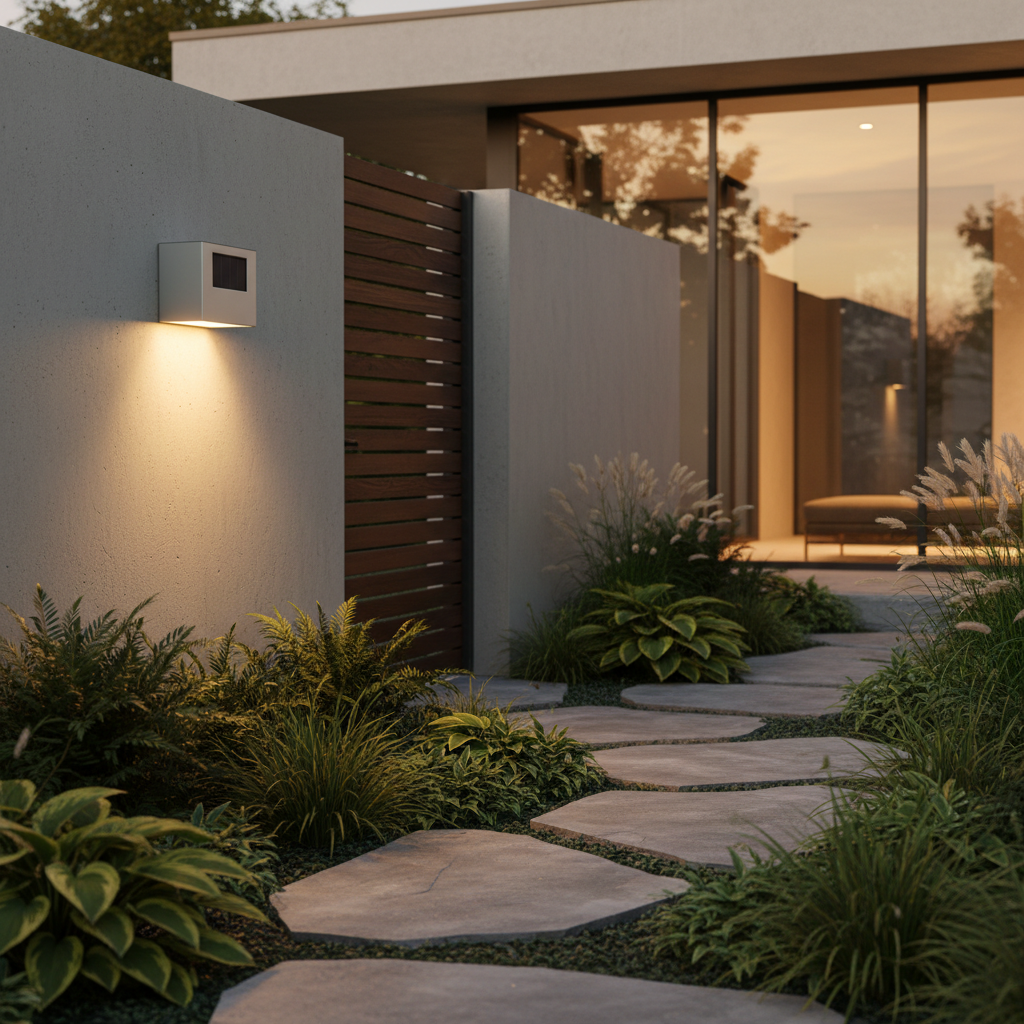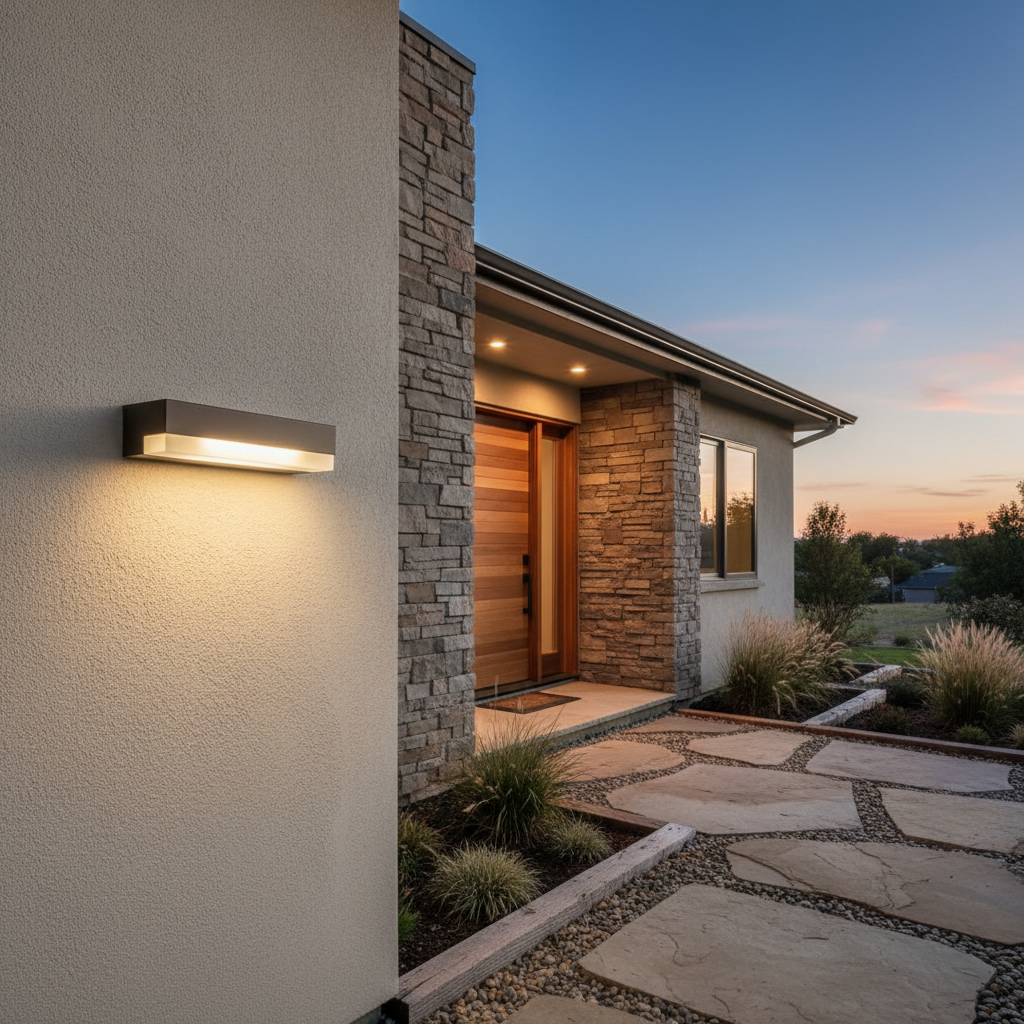
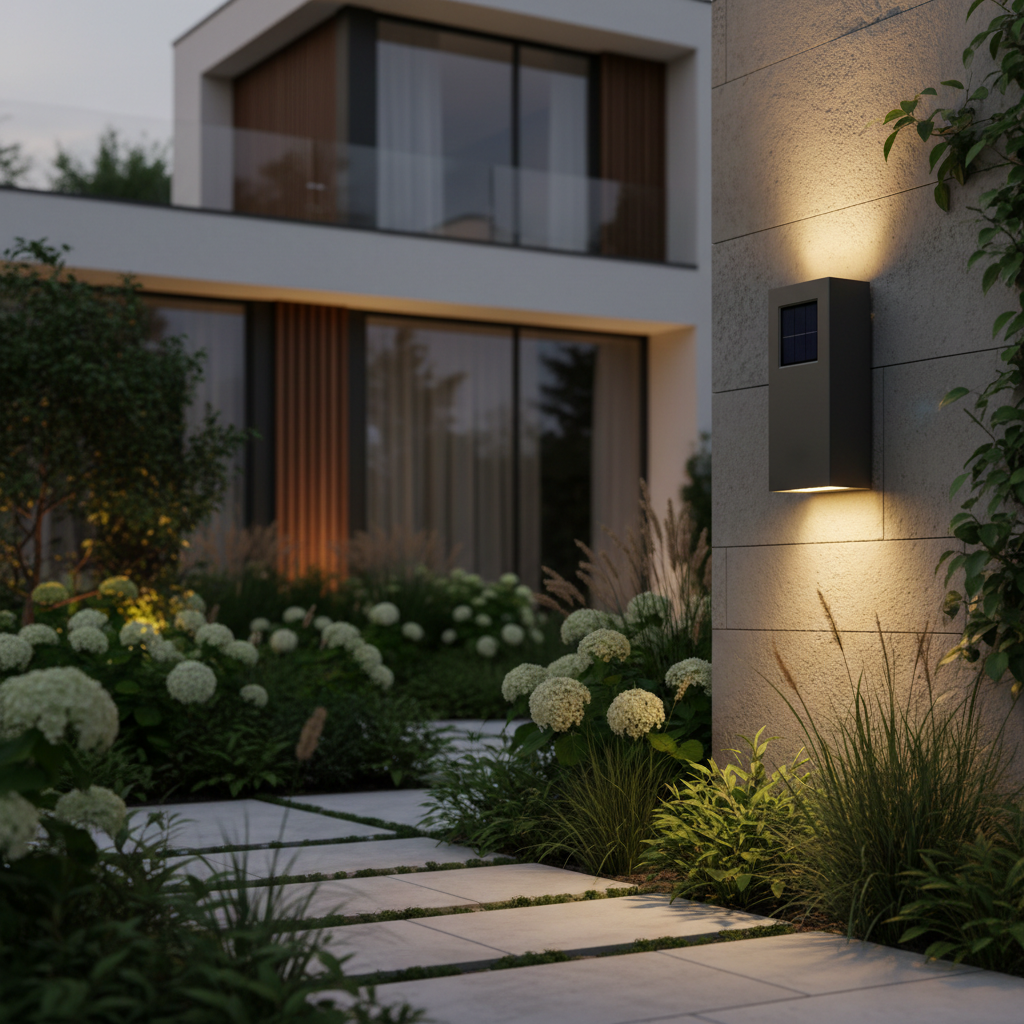
Outdoor lighting that works on its own, no cables, no outlets, no hassle. You install it, forget about it, and it keeps working weeks later. That's the promise of solar-powered autonomous lighting — provided you choose the right solution.
Because not all solutions are created equal. There's a huge gap between a $12 solar light that dies after the first winter and a quality solution built to last. This guide helps you understand different levels of autonomy, identify what truly matters when choosing, and avoid common mistakes.
Autonomy: A Word That Means Different Things to Different People
When we talk about autonomous outdoor lighting, we need to distinguish three distinct levels. Autonomy is a spectrum, not a checkbox.
Level 1: Semi-Autonomous (Battery Replacement Needed)
This is the entry-level. You install a battery-powered light, it turns on automatically with a motion sensor, and it's convenient at first. But after a few weeks, the batteries die. You climb a ladder, dismantle the light, search for the right batteries in a drawer... Autonomy ends exactly where manual work begins.
This type of solution is suitable for occasional use or easily accessible areas. But it's not true autonomy — it just postpones the chore.
Level 2: Autonomous with Monthly USB Recharging
A step up: USB rechargeable LED strip lights, like Lumic's Movement 3.0. You install them in seconds (magnetic attachment, adhesive, no-drill), and you don't touch them for 4 to 6 weeks, depending on the model. About once a month, you recharge via USB — it takes 10 minutes, no more.
This offers true autonomy for indoor spaces: closets, hallways, kitchens, dressing rooms. But for outdoor use, especially in hard-to-reach areas, it remains a recurring chore. A month passes quickly.
Level 3: Fully Autonomous (Solar, Zero Intervention)
This is the holy grail. A solar-powered outdoor light recharges itself during the day and turns on automatically at night or when you pass by. You install it once. You never think about it again.
No cables. No batteries. No USB recharging. No electricity bill. This is the only type of lighting that literally requires nothing from you after installation.
What Truly Differentiates a Good Solar Light from a Bad One
The market is flooded with cheap solar lights. Most look similar in photos but perform very differently. For truly reliable off-grid outdoor lighting, here's what matters.
Solar Panel Size
A tiny solar panel charges a tiny battery. In winter, with fewer daylight hours, this type of light becomes useless after a few cloudy days. A significantly larger panel stores more energy even in overcast weather, ensuring long-lasting autonomy.
This is one of the first things to check. Low-end models hide it; good models display it clearly.
Battery Capacity
The battery is the reservoir. The larger it is, the longer the light can last without sun. A quality solar light battery makes the difference between a light that lasts 20 days without recharging and one that dies after 3 days of rain.
Entry-level lights use low-capacity cells that degrade quickly. After 6 to 12 months, they only last a few hours. That's why true autonomy is tested over time, not just at purchase.
Motion Sensor: Key to Smart Autonomy
A light that stays on all night consumes much more than one that only turns on when you pass by. Motion sensor solar lighting combines the best of both worlds: you don't miss anything, but the battery is preserved as much as possible.
It's also a security advantage: a light that suddenly turns on is far more deterrent than a constant light that people eventually ignore.
Weather Resistance
An outdoor light will face rain, snow, and frost. An IP65 rating guarantees serious waterproofing against water splashes and dust. Below that, you risk real issues, especially in fall and winter.
Where to Install Autonomous Solar Lighting Around Your Home
Wireless lighting opens up possibilities that wired solutions make impossible or very expensive. Here are the areas that benefit most.
Walkways and Garden Entrances
This is the most common — and logical — use. An unlit walkway is a fall hazard at night and an unwelcoming entrance. Installing wired lighting here requires digging trenches or running cables for dozens of feet. With a solar light, you install it in 5 minutes, and the walkway is lit tonight.
Gates and Garages
These areas are often far from the electrical panel. Wiring a light to a gate can cost hundreds of dollars in electrician labor. A solar light with a motion sensor fulfills this role exactly, with no work, and no subscription fees.
Patios and Outdoor Living Areas
A lit patio is a patio used twice as long during the year. Again, solar eliminates the need for extension cords and outdoor power strips. You place your light where you need it, not where there's an outlet.
Isolated Garden Areas
Garden sheds, pool houses, vegetable gardens, BBQ areas: these are spots where running a cable is often impossible without major work. Solar-powered autonomous lighting is perfect for these.
Limitations to Know Before Buying
Let's be honest: solar isn't suitable for all configurations. It would be misleading not to say so.
North-Facing Exposure: The Real Watch-Out
A north-facing facade receives very little direct sunlight, especially in winter. In this case, the solar panel recharges slowly, and a low-end light may struggle to remain operational for more than a few consecutive cloudy days.
The solution: choose a light with a large solar panel and a generous battery, which can accumulate enough energy even in overcast weather. Quality models are designed for this. To learn more about performance in difficult conditions, check our guide on solar lights that work in winter.
Completely Shaded Areas
If the intended location never sees the sun — under a deep awning, in a covered hallway, in permanent shade from a building — a solar light cannot function correctly. In this case, a USB rechargeable strip light remains the best option. Honesty is better than post-purchase disappointment.
Material Quality Makes All the Difference
$10-$15 solar lights don't deliver on their promises long-term. Photos look identical, but internal components (solar cell, battery, electronics) differ. A product sold with a 5-year warranty speaks volumes about the manufacturer's confidence in its technology.
How to Choose Your Autonomous Solar Lighting: Key Criteria
Before buying, ask yourself these questions in order.
| Criterion | What to Check | Quality Indicator |
|---|---|---|
| Solar Exposure | South, East, West, or North? | Large panel, generous battery for North/winter |
| Required Brightness | Presence lighting or truly functional? | Minimum 800-1000+ lumens for a walkway or gate |
| Motion Sensor | Detection range and angle | 180° minimum, 20-26 feet (6-8 meters) range |
| Water Resistance | Displayed IP rating | IP65 minimum for outdoor use |
| Autonomy without Sun | How many days without recharging? | 15-20 days minimum in detection mode |
| Warranty | Duration and conditions | 5 years = sign of real reliability |
To go further in choosing according to your specific needs, consult our guide to choosing your outdoor solar light.
Solar Lighting vs. Other Wireless Solutions: An Honest Comparison
If you're looking for outdoor lighting without electricity, you have several options. Solar isn't always the only answer — though it's often the best for outdoors.
Solar vs. Batteries: The Long-Term Gap
Batteries are cheap to buy, but they add up. A regularly used outdoor light can consume two to three sets of batteries per year. Over 5 years, the cost is significant, not to mention the environmental impact. Solar costs nothing to operate and generates no waste.
Solar vs. USB Rechargeable: Depending on Location
For indoor use (closet, hallway, kitchen), a USB rechargeable strip light is often more suitable: no dependence on the sun, usable in windowless areas. For outdoors, as long as you have minimal sun exposure, solar is clearly superior in real autonomy.
Solar vs. Wired: When Wired Remains Relevant
For permanent architectural lighting (facade, pool lit all night continuously), wired remains powerful. But for 80% of common outdoor lighting needs for single-family homes — walkways, patios, gates, circulation areas — solar offers flexibility and simplicity that wired cannot match.
For an overview of all options, consult our article on lighting solutions without electricity.
SolarGlow: An Example of Autonomous Solar Lighting Built to Last
Looking for a concrete product that embodies this Level 3 autonomy? Lumic's SolarGlow is designed exactly for that.
What it does: it recharges all day thanks to its solar panel, turns on automatically when motion is detected by its two 180° motion sensors, and turns off by itself. Zero intervention after installation.
What sets it apart technically:
- 1200 lumens — enough to light a walkway, gate, or patio
- Two 180° motion sensors with a range of about 26 feet (8 meters)
- IP65: it resists rain, snow, and frost
- 20 days of autonomy without any sunlight in detection mode — covering extended cloudy periods
- 5-year warranty — because lighting you install once should last
The promise is simple: install it, forget it. It handles the rest.
It's also a good example of what a quality outdoor solar fixture should be: reliable long-term, not just pretty in a product photo.
Lumic also boasts a 4.5/5 rating on Trustpilot with over 2200 reviews, a 90-day satisfaction guarantee, and customer support based in the US that responds within 24 hours if you have any questions after purchase.
Key Takeaways Before Making Your Choice
Autonomous solar lighting is the most consistent solution for your home's exterior if you want a lasting, hassle-free result. Here's the essential:
- There are three levels of autonomy: battery (needs changing), USB (monthly recharging), solar (zero intervention).
- Solar with motion detection is the most autonomous: it recharges itself, turns on itself, turns off itself.
- The quality of the panel and battery makes all the difference between a light that lasts and one that disappoints.
- North-facing exposure or permanent shade are the two real limitations of solar — consider these honestly before buying.
- A 5-year warranty is the best indicator of confidence a manufacturer can offer for this type of product.
If you're still hesitating between different types of wireless outdoor lighting, our comparison on wireless outdoor lighting will help you decide based on your situation. And if you want to explore the idea of a truly hassle-free autonomous outdoor light, that's the way to go.
The goal is simple: lighting you install once, and it does its job without you ever thinking about it again. It's possible, provided you choose wisely.