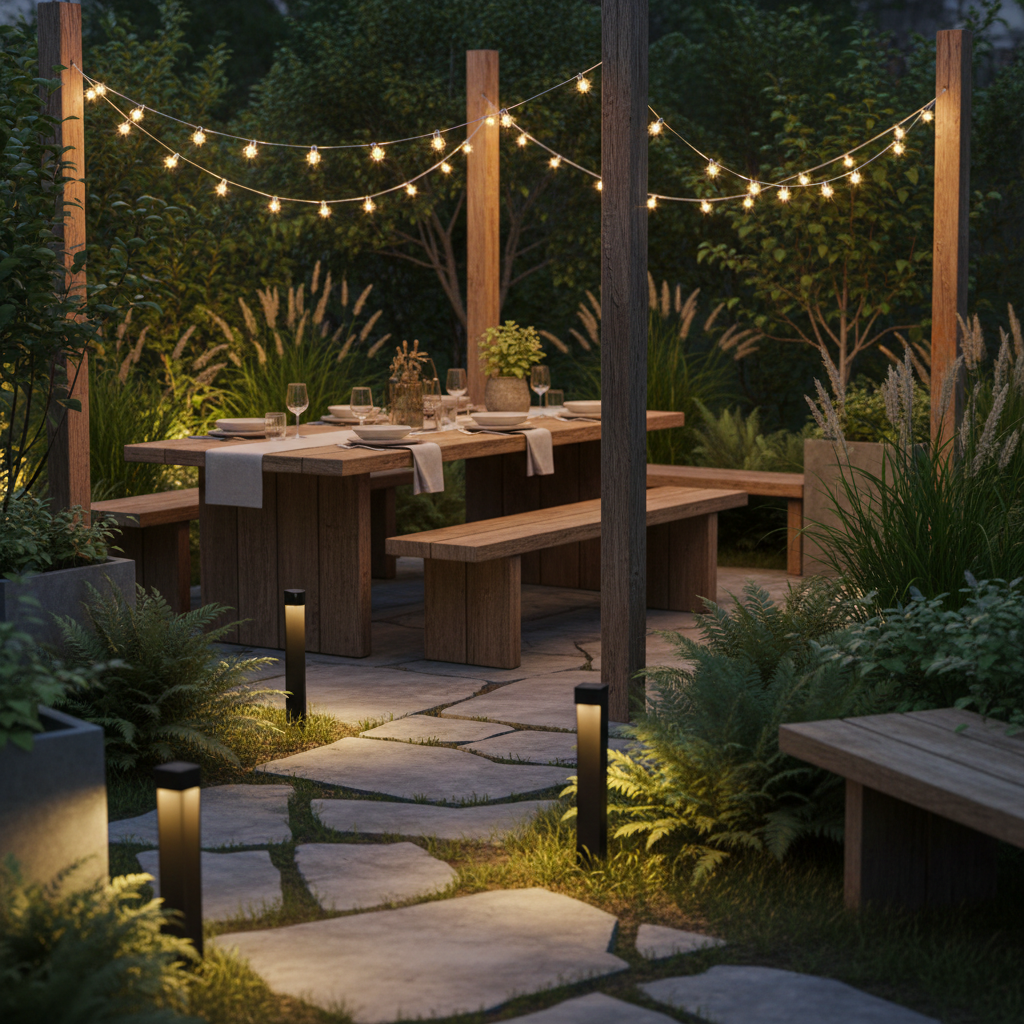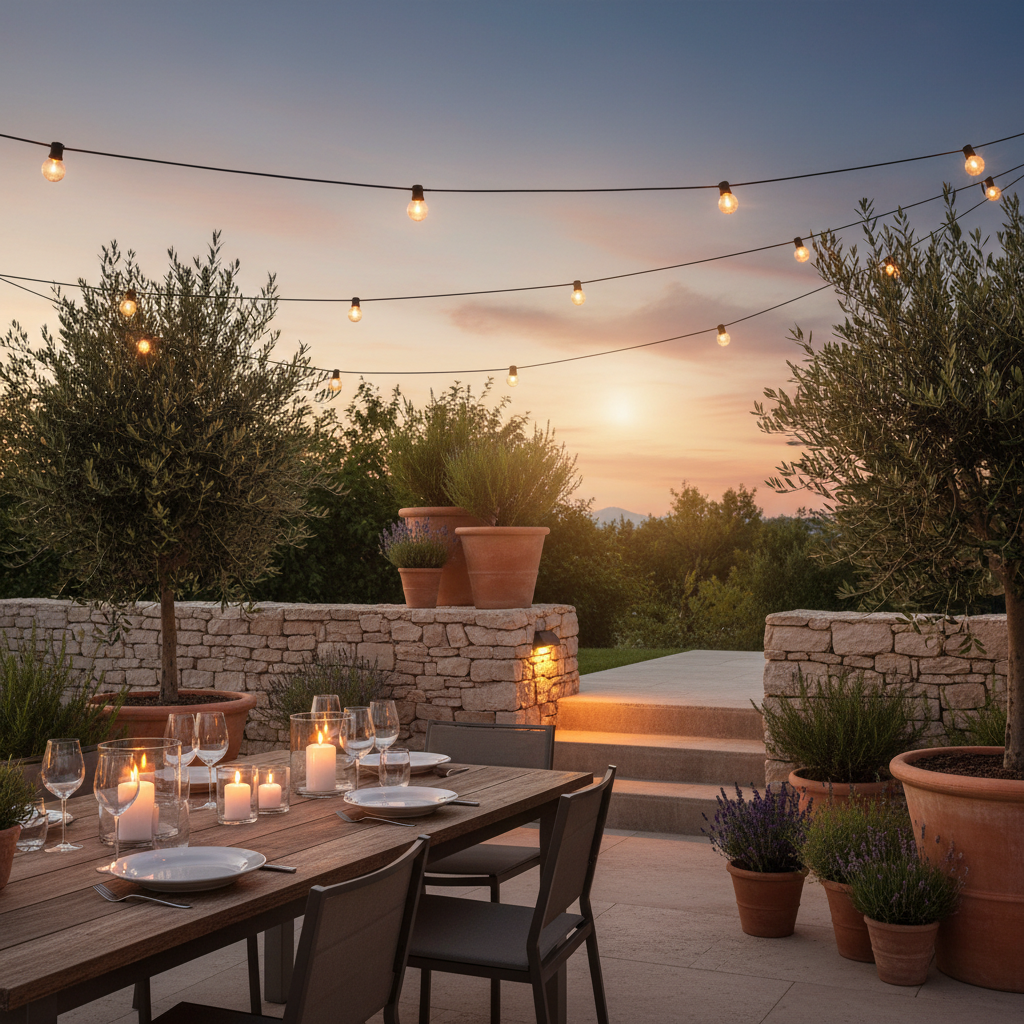
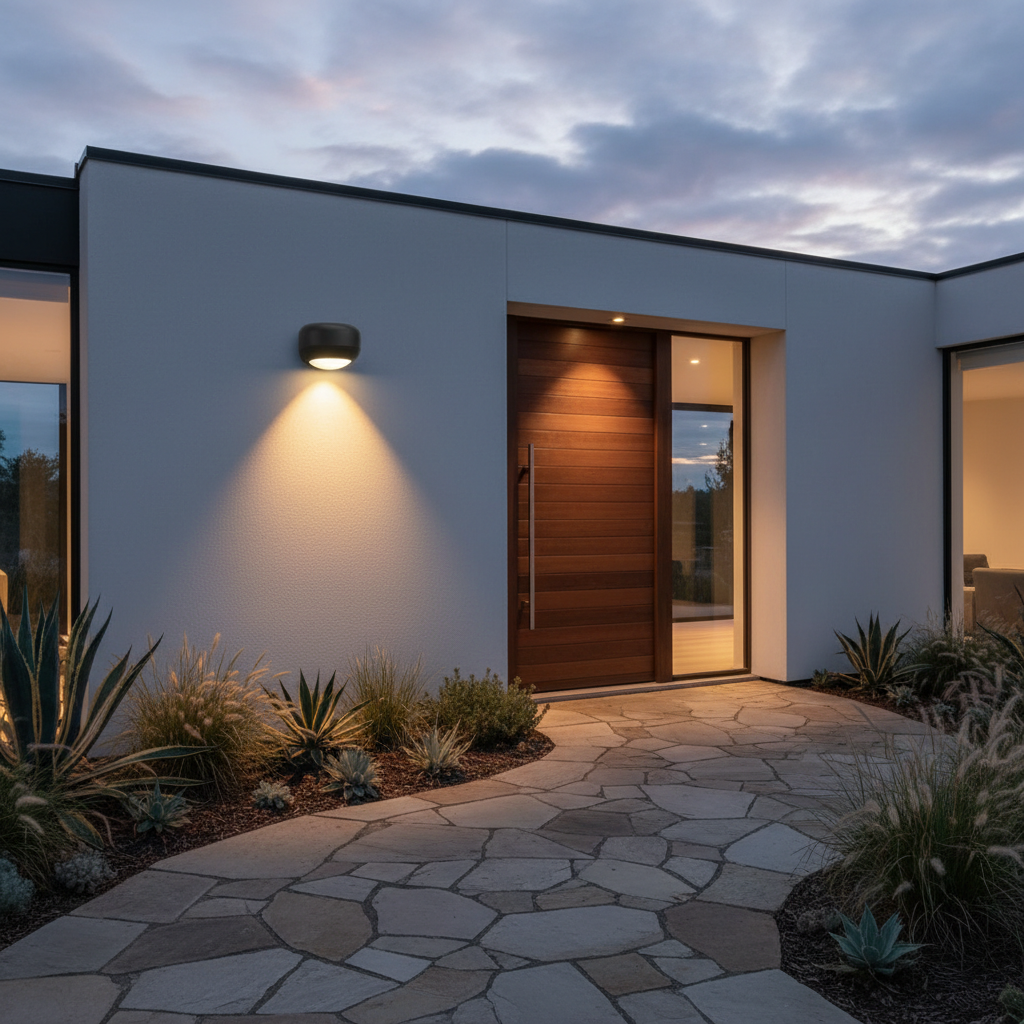
The Game-Changing Trio: Solar, Motion Sensor, Outdoor
Want to light up your outdoor space without running wires, fumbling for switches in the dark, or watching your electricity bill skyrocket? That's exactly what solar motion sensor outdoor lighting delivers. It combines three key benefits that, together, create a truly autonomous solution.
Each element of the trio plays a crucial role. The solar panel recharges the battery during the day. The motion sensor activates the light only when someone passes by. And since it's designed for outdoor use, it withstands rain, frost, and temperature fluctuations. None of these components work as effectively without the other two.
In this article, we'll explain why this combination is the smartest choice for outdoor use, how to select the right one, and what to truly look for before buying.
Why Solar Only Makes Sense with a Motion Sensor
A solar light without a motion sensor is problematic. It turns on at dusk and stays on until dawn. The result: a dead battery before midnight in winter, when nights are long and sunlight is scarce. You end up with no light precisely when you need it most.
Motion detection changes everything. The light remains in standby mode, consuming almost no power. It turns on for 20, 30, or 60 seconds with each detection, then turns off. Over a full night with realistic triggers, power consumption is 10 to 20 times lower than continuous mode. This allows for weeks of autonomy instead of just a few hours.
The Ambient Light Sensor: The Often-Overlooked Detail
Good solar motion sensor lights also include an ambient light sensor. This prevents the light from turning on during the day, even if someone passes by. It's logical: if the sun is shining, you don't need artificial light. This sensor conserves battery life by avoiding unnecessary triggers during daylight hours.
If you buy a light without this sensor, it might turn on every time someone passes during the day — draining the battery without you realizing it. This is a crucial feature to check. To learn more about this mechanism, our article on how motion sensors work explains the details.
What to Really Look for Before Buying
The market is flooded with solar motion sensor lights sold for $15-$25 online. They often last a few weeks before the battery degrades or the sensor becomes unreliable. Here are the criteria that truly make a difference.
Solar Panel Size and Battery Capacity
This is the number one factor for winter performance. A small, low-quality solar panel recharges adequately in June but collects too little energy in December. The result: the light stops working during the periods you need it most.
A larger panel captures more energy, even on cloudy days. Combined with a sufficient battery capacity, it stores enough power to cover several days without sun. The combination of panel and battery determines actual autonomy, not one or the other alone.
Lumen Output: Verify the Numbers
For purely functional use—like seeing where you're stepping on a pathway or detecting presence—400 to 600 lumens are often sufficient. But if you want to secure a gate, illuminate a large patio, or genuinely deter intruders, aim for 1000 lumens or more.
Cheap lights often claim 2000 or 3000 lumens on the packaging. These figures rarely match the actual output. Trust verified customer reviews over marketing claims. To understand what "powerful" truly means in this context, our article on powerful solar outdoor lighting is a useful read before buying.
IP Rating: What the Numbers Really Mean
IP65 means the light is protected against water jets from all directions. This is the minimum for outdoor use in the US/Canada, where rain and frost are common. IP44 or lower is insufficient for permanent year-round installation.
The IP rating consists of two digits: the first indicates protection against solids (6 = totally dust-tight), the second against water (5 = water jets, 7 = short immersion). For outdoor use, IP65 is the acceptable standard. Our article on IP65 rating explains in detail what this practically means.
Sensor Range and Detection Angle
A PIR (passive infrared) motion sensor detects moving body heat. Its range typically varies between 16 and 40 feet (5 and 12 meters) depending on the model. The detection angle determines the covered area: 90° for a narrow hallway, 180° for an entryway or facade.
For a driveway, front door, or gate, a 180° angle with a range of at least 26 feet (8 meters) is a good benchmark. Below this, you risk blind spots where someone can pass without triggering the light. If you're unsure about your specific needs, our guide on choosing a solar motion sensor provides a clear framework for decision-making.
Comparison Table: Entry-Level vs. Serious Solar Motion Sensor Lights
| Criterion | Entry-Level ($15-$25) | Serious Use ($40+) |
|---|---|---|
| Autonomy in Motion Mode | 3 to 5 days (summer) | 2 to 4 weeks |
| Winter Performance | Unreliable | Reliable (large panel) |
| Ambient Light Sensor | Often absent | Integrated |
| IP Rating | IP44 or unspecified | IP65 minimum |
| Actual Lumen Output | 100-300 effective lumens | 800-1200 effective lumens |
| Realistic Lifespan | 6-18 months | 3-5 years |
This table illustrates a common reality seen in customer reviews: a $20 light that stops working after one winter ultimately costs more than a reliable model from the start.
Where to Install a Solar Motion Sensor Light?
Placement impacts both the efficiency of the solar panel and the effectiveness of the sensor. These choices are not independent.
Solar Exposure: The Underestimated Constraint
The solar panel needs several hours of direct sunlight daily to recharge properly. Under a north-facing eaves, behind a hedge, or in a constantly shaded area, even the best panel won't compensate for lack of light.
Before buying, identify where you want to install the light and observe how many hours of direct sunlight it receives, especially in fall and winter. This determines if you'll have enough stored energy for long nights. Some lights have a separate solar panel, allowing it to be oriented independently of the light fixture.
Mounting Height and Detection Angle
For a facade PIR sensor, the ideal height is generally between 8.2 and 11.5 feet (2.5 and 3.5 meters). Too low, and the detection zone is reduced. Too high, and you'll detect tree branches moving in the wind rather than people.
The mounting angle also influences the effective range. A sensor slightly tilted downwards at 8.2 feet (2.5 meters) covers the ground in front of the entrance better than a perfectly horizontal sensor. It's a simple adjustment that significantly improves daily experience.
Common Outdoor Uses
Solar motion sensor outdoor lighting adapts to various scenarios:
- Driveway and Gate: Light turns on when you return home, guides guests, deters intruders.
- Front Door and Porch: See the lock without fumbling for keys in the dark, secure access.
- Patio: Supplemental lighting for late evenings without running wires.
- Outdoor Garage: Lights up when you drive in, turns off automatically afterward.
- Garden or Secondary Path: Discreet illumination that consumes no power when no one is passing.
For each of these uses, lumen requirements vary. A secondary garden path might be fine with 400-600 lumens. A gate or large facade benefits from 1000 lumens or more. If you want to explore other wireless scenarios, our article on autonomous outdoor lighting offers a broader view of available options.
Common Questions (and Direct Answers)
Does a solar motion sensor light really work in winter?
Yes, if the solar panel is large enough. In winter, days are short and often cloudy, but a quality panel captures even diffuse light. Motion detection is essential then: it saves battery for actual nighttime use rather than wasting energy continuously.
Entry-level lights with small panels often struggle to last through 14-hour nights in December. This is the main pitfall of budget models.
How long does the battery last between solar recharges?
It depends on usage mode and battery size. In motion detection mode with realistic use (a few triggers per night), serious models typically last several weeks. In continuous mode, autonomy is reduced to a few hours. That's why motion detection is the only mode that truly makes sense for year-round solar use.
Can you adjust the light duration after each detection?
On most quality lights, yes. The illumination duration after triggering is often adjustable between 10 seconds and a few minutes. For a driveway where you just need to see your steps, 20 seconds is enough. For a patio where you're unloading groceries, 60 seconds is more comfortable. This is a one-time adjustment during installation, and then you don't have to think about it again.
The True Cost of Wired Alternatives
When comparing a solar motion sensor light to a wired installation, the discussion often stops at product price. But wired installation involves more.
Having wired outdoor lighting installed by an electrician, with trenching, buried cable, and a connection panel, typically costs between $300 and $600, depending on project complexity. If you own your home and want something clean and permanent, it might be justified. But if you rent, want to avoid construction, or need something operational in an hour, it's a different logic.
A solar motion sensor outdoor light installs without wires, trenching, or an electrician. For renters, it's often the only realistic option to improve their outdoor space without altering existing installations. Consult our guide to powerful wireless outdoor lighting for a complete overview of what this category offers today.
Lumic's SolarGlow: Why It Checks All the Boxes
If you're looking for solar motion sensor outdoor lighting that truly combines power, autonomy, and reliability, the Lumic SolarGlow deserves to be on your list.
It produces 1200 actual lumens, sufficient to effectively illuminate a facade, gate, or driveway. It features two 180° PIR sensors with an approximate range of 26 feet (8 meters), covering a wide area without blind spots. It's UL listed IP65, meaning it withstands rain, snow, and frost.
What truly sets it apart from entry-level lights: its solar panel is 3 times larger than average, and its battery is 4 times larger than budget alternatives. These two elements allow it to last up to 20 days without solar recharge in motion detection mode. In winter, this makes the difference between a light that works and one that quits.
Installation is wireless. You position the light, orient it, adjust sensitivity and illumination duration. It comes with a 5-year warranty and a 90-day satisfaction guarantee. On Trustpilot, it's rated 4.5/5 based on over 2200 reviews. It's a light you install and forget about.
To compare options and see if it fits your setup, check out our detailed article on how to choose your solar motion sensor light.
Recap: Key Points Before Buying
A solar motion sensor outdoor light is an autonomous, low-maintenance solution, provided you choose the right model. Here's what to check:
- Motion detection is mandatory for real solar autonomy, especially in winter.
- Ambient light sensor to prevent unnecessary triggers during the day.
- Large solar panel + large battery to perform in cloudy weather or winter.
- IP65 minimum for year-round outdoor use in the US/Canada.
- 1000 lumens or more for truly effective lighting (not just symbolic).
- Minimum 26 feet (8 meters) range, 180° angle for effective detection on facades or gates.
- Accessible settings: illumination duration, sensitivity, operating mode.
Solar motion sensor lighting remains one of the smartest solutions for securing and illuminating outdoor spaces without major work. With the right criteria in mind, choosing becomes simple.