Looking for a solar light with remote control to adjust your outdoor lighting from your couch or patio? It sounds appealing: turn it on, turn it off, dim it without moving. But before you buy, there are a few things to know — because a remote control isn't always the most useful feature on an outdoor solar light.
This guide honestly explains what a remote control does, when it's truly beneficial, and when a good motion sensor does a better job — automatically, without you having to think about it.
What a Remote Control Actually Does on a Solar Light
A remote-controlled solar light typically lets you do three things remotely: manually turn the light on or off, adjust brightness in steps, and switch between modes (motion detection, continuous, standby). That's it.
On, Off, Adjust: Standard Functions
Most solar floodlights with remote control operate on a radio frequency or infrared. The actual range varies by model, and with infrared, you often need to point directly at the sensor. In cloudy weather or at long distances, it can become less reliable.
The functions accessible from the remote mimic what you can already do from the physical button on the light — but without getting up. For a light installed high up or in a hard-to-reach spot, this is indeed practical.
Change Modes Remotely: The Real Advantage
The most concrete benefit of a solar light with remote control remains the ability to change modes. During an evening on the patio, you might want continuous, low-intensity lighting rather than the light turning on every time someone moves. With a remote, you can do this without climbing to reach the light.
This is a real use case, and we won't tell you otherwise. But there's a practical problem nobody really mentions.
The Problem Nobody Talks About with Remote Controls
The remote seems indispensable for the first few days. Then it ends up in a drawer. Then you can't remember which drawer. After three weeks, you're using your light in a fixed mode because you can't find how to change the settings anymore.
A Remote Gets Lost — A Sensor Never Does
This is the core issue. A remote control is an extra physical item to manage. It can fall, get misplaced, end up inside when you're outside, or have a dead battery the night you need it. An integrated motion sensor, however, is never lost because it's built directly into the light.
To delve deeper into this topic, the article Outdoor Motion Sensor Lighting: The 2026 Guide details all available options and criteria to consider.
The Remote Does What a Good Sensor Does Alone
Turning on when you arrive, turning off when you leave, adjusting brightness according to context — a motion sensor coupled with an ambient light sensor does all this automatically. Without any intervention from you. True autonomy means never having to think about it, not adjusting it remotely every evening.
If you're interested in a solar floodlight with a sensor, our article on Solar Floodlights with Sensor: How to Choose Wisely helps you pick the right model for your setup.
When a Remote Control is Truly Useful
It would be dishonest to say that a remote control is useless. There are specific use cases where it provides real convenience.
Extended Outdoor Gatherings
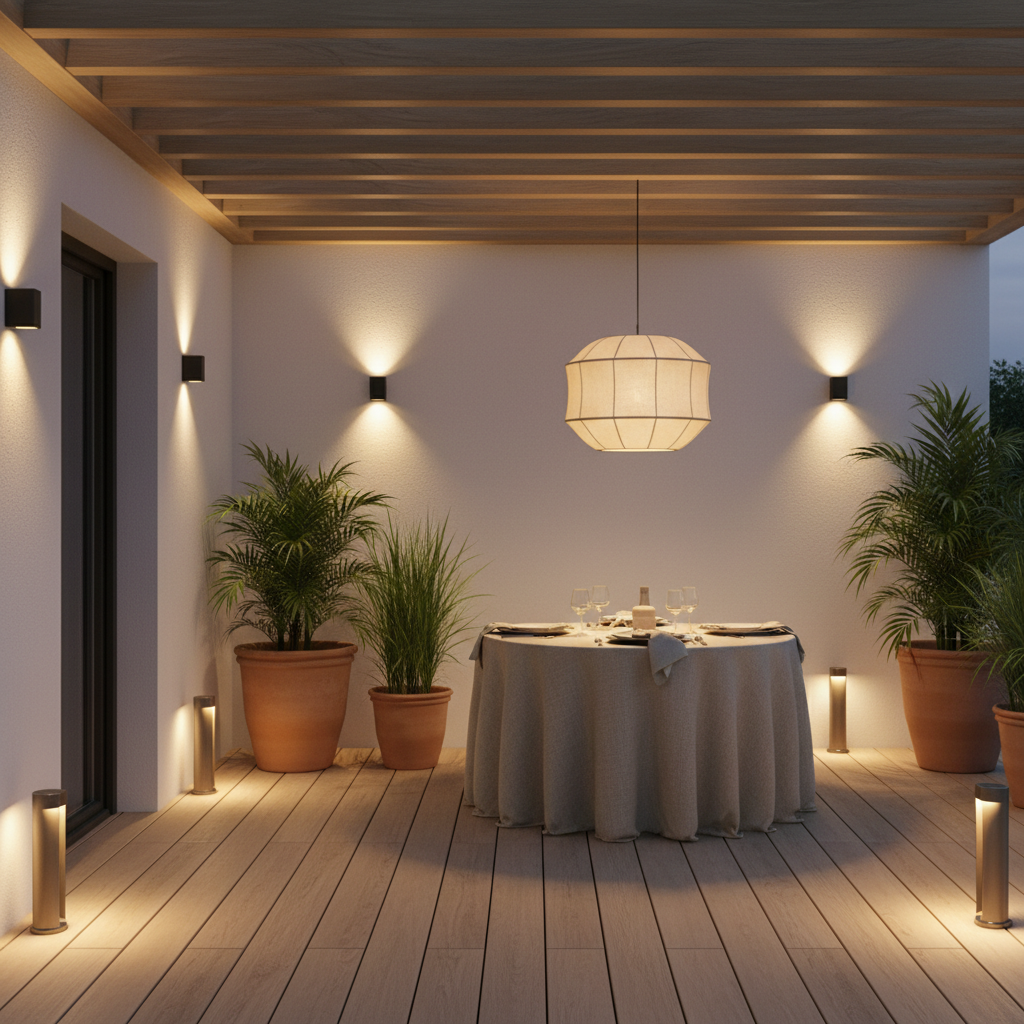
When you have guests on the patio for several hours, you don't want the light turning on and off every thirty seconds as people move around. Switching to continuous, low-brightness mode via remote is practical in this specific case. A remote gives you this control without getting up.
Lights Installed High Up or in Hard-to-Reach Areas
If your outdoor solar light with remote control is mounted over 10 feet (3 meters) high or in a spot where you can't easily reach the physical button, the remote makes perfect sense for occasional adjustments. Changing the mode or dimming the light without a ladder is a definite plus.
Individuals with Reduced Mobility
For someone who cannot easily move to the light or operate an outdoor switch, a remote control is a real help. This is a case where the function has clear and lasting utility.
How to Choose a Good Adjustable Solar Light
Whether you opt for a light with or without a remote, certain criteria are non-negotiable for effective outdoor solar lighting, even in winter.
Solar Panel and Battery Size
This is the number one criterion. Many cheap solar lights have small panels and tiny batteries. Result: they stop working properly as soon as sunlight decreases, which is exactly when you need them most. Prioritize a light with a generous solar panel and a battery that offers several days of autonomy without recharging.
To understand the difference between wired and solar options on this point, the article Outdoor Detector Light: Wired or Solar? provides a comprehensive and objective perspective.
Motion Sensor Quality
Detection angle, range, adjustable sensitivity: a good motion sensor must cover the area you want to illuminate without false triggers. Low-end models have unreliable sensors that turn on for a cat or completely miss a passing person.
A 180° angle with a range of at least 26 feet (8 meters) is a good benchmark for a driveway, patio, or gate. If you want to explore this criterion further, check out our selection of Solar Motion Sensors: How to Choose Wisely in 2026 with the features to verify.
Weather Resistance
An outdoor light must withstand all conditions. Check the IP rating: a minimum IP65 guarantees protection against rain, snow, and frost. Without this, the light risks failing after the first wet winter.
Actual Lumen Output
Manufacturers of low-end lights sometimes display lumen figures that don't match reality at full charge. For a driveway or gate, 800 to 1200 lumens provide a good basis for effective lighting. Below that, the light may be disappointing for outdoor security.
Comparison Table: Remote Control vs. Automatic Sensor
| Criterion | Solar Light with Remote Control | Solar Light with Automatic Sensor |
|---|---|---|
| Operating Autonomy | User-dependent | 100% automatic |
| Item to Manage | Yes (remote control) | No |
| Manual Control Possible | Yes | Initial settings only |
| Extended Patio Evenings | Increased convenience | Less flexible |
| Daily Use Without Intervention | Less suitable | Ideal |
| Risk of Accessory-Related Failure | Yes (battery, loss) | None |
| Initial Installation and Setup | Similar | Similar |
Alternatives to Remote Control for Adjusting Your Solar Light
If the goal is to have adjustable and practical solar lighting, there are several approaches that avoid the drawbacks of a remote control.
Pre-set Modes Directly on the Light
Most good solar lights allow you to configure the mode (detection, continuous, standby) and sensitivity directly via a physical button during installation. Once set, the light operates independently for weeks. You only intervene if you want to change its use — which rarely happens.
Smartphone App (on some models)
Some high-end models offer Bluetooth or Wi-Fi connectivity with a mobile app. This is more reliable than a physical remote because you always have your phone with you. The app allows you to change settings, view consumption data, and sometimes see activity history.
Properly Adjusted Motion Sensor from the Start
The most effective option is to take the time to properly configure the sensor once and for all during installation. Angle, sensitivity, illumination duration, ambient light threshold — with 10 minutes of initial adjustment, you get a light that behaves exactly as you want, without ever needing to pick up a remote.
Our Complete Guide to Solar Motion Detection Lighting details all these adjustment options and how to get the most out of a well-configured sensor.
The SolarGlow: When Automatic Replaces the Remote
If you came here looking for a solar light with remote control, it's likely because you want easy control over your outdoor lighting. That's a legitimate goal. The question is whether a remote control is the best tool to achieve it.
The SolarGlow by Lumic takes a different approach: a dual-sensor motion detector with 180° coverage and a 26-foot (8-meter) range. It turns on when someone arrives, turns off when no one is there, and adjusts its operation based on ambient light. No remote to find, no batteries to change, no settings to re-do every evening.
Its solar panel and battery are sized to last up to 20 days without solar recharge in motion detection mode, making it reliable even during cloudy periods. It is UL listed IP65, resistant to rain, snow, and frost, and installs without any cables. It comes with a 5-year warranty and a 90-day satisfaction guarantee.
For those looking to enhance their outdoor lighting beyond simple functionality, our article on how to Choose a Reliable Outdoor Solar Luminaire explores aesthetic and durable criteria to consider.
Key Takeaways Before Buying
An adjustable solar light with remote control makes sense in specific situations: high-mounted lights, extended patio evenings, or for individuals with reduced mobility. In these cases, the remote provides real convenience.
But for standard daily use — securing a driveway, lighting a gate, illuminating an entrance — a good motion sensor does a better job, fully automatically, without an extra item to manage. The remote is never lost when it doesn't exist.
Before finalizing your choice, check three things: the size of the solar panel (larger = more reliable in winter), the quality of the motion sensor (angle, range, sensitivity), and the IP rating (minimum IP65 for long-term durability). The rest, including the presence or absence of a remote, comes after.
If you're still undecided between the various wireless outdoor lighting solutions available on the market, our comparison of cable-free options helps you see clearly based on your usage and budget.