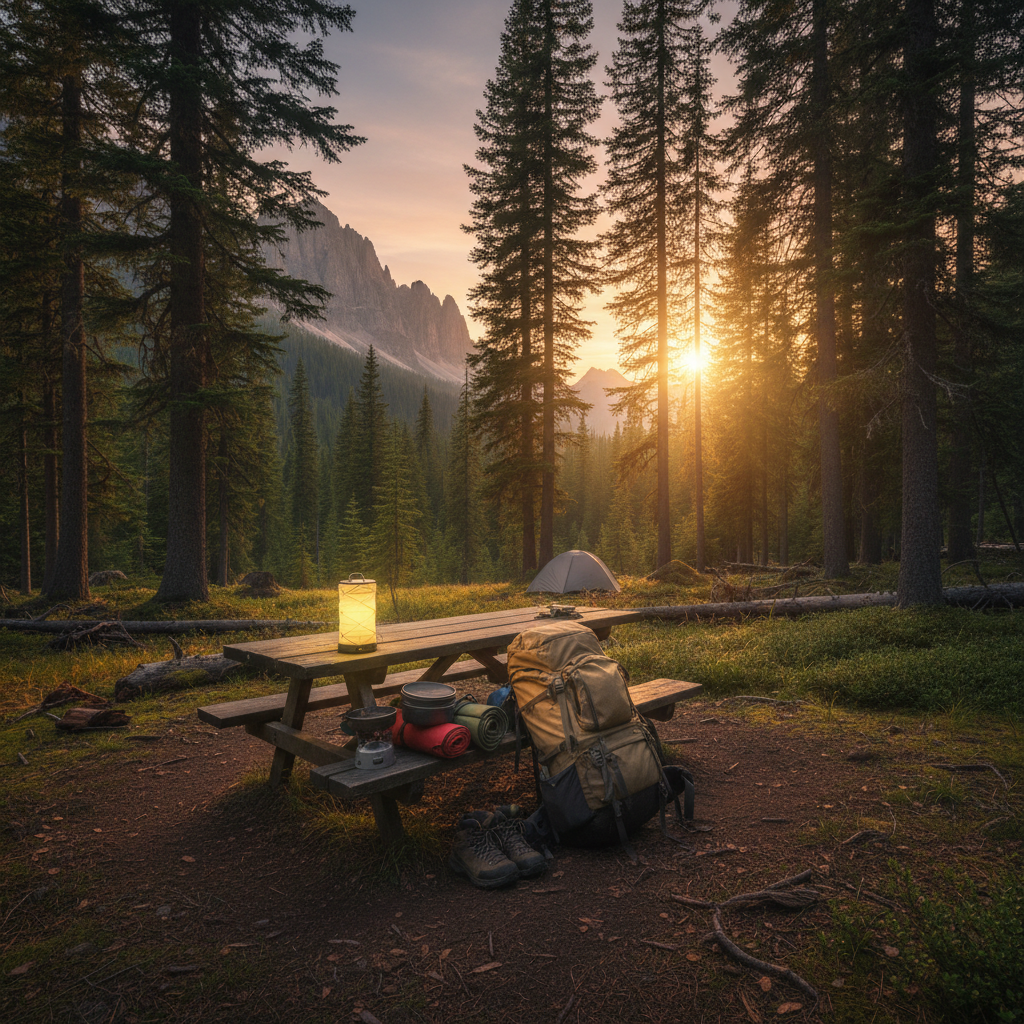
You're heading out for a three-day bivouac. No outlets, no recharging, and only one lamp in your pack. If it dies at 10 PM, you'll be fumbling in the dark the next morning. That's why choosing a solar camping lamp deserves real attention, not just clicking on the first $8 Amazon offer.
This guide covers what truly matters: weight, battery life, durability, charging time, and lamp types based on your use. Lightweight hiking, family camping, or long-term bivouac: needs vary greatly.
Why Choose a Solar Lamp for Camping?
A solar camping lamp solves a simple problem: no need to carry batteries or search for an outlet. You place it in the sun during the day, and it lights your night. It's self-sufficient, silent, and adds no extra weight to your pack if you choose the right model.
Is Solar Battery Life Reliable?
Yes, provided you don't get stuck under three days of cloud cover without a backup. Under normal conditions, a lamp exposed to 4 to 6 hours of direct sunlight offers several hours of illumination. Some models combine solar and USB charging, providing a valuable Plan B. If you want to delve deeper into selection criteria for this, our article on rechargeable solar lamps details the key elements to compare.
What are the Advantages Over a Battery-Powered Lamp?
Zero battery purchases, zero waste, zero surprises when your stock runs out. A good solar camping lamp can last several seasons with minimal maintenance. On a 5-day trek, the weight difference with a spare set of batteries is significant. And if you're concerned about multi-day battery life, our guide on off-grid solar lighting is a useful complementary read.
Key Criteria for a Camping Lamp
Before looking at lumens or price, four fundamental criteria must be considered. If a product fails on any of these, the rest won't compensate.
Weight and Bulk
Every ounce counts when hiking. A lamp weighing 10.5 oz (300g) with its battery might seem light at home, but you'll feel it after 9 miles (15 km). The best portable solar lamps for hiking range from 2.8 to 5.3 oz (80 to 150g). Look for a flat or foldable design that slips into a backpack side pocket.
Shock and Water Resistance
Camping isn't an apartment. Your lamp will fall, get wet, and end up at the bottom of your pack with rocks. A minimum IPX4 waterproof rating is recommended for splash resistance. For intensive outdoor use, aim for IPX6 or IPX7. The robustness of the casing (reinforced ABS plastic or rubber) is also a point to check.
Actual Battery Life, Not Just Spec Sheet Numbers
Manufacturers often advertise battery life in minimal light mode. In practice, at medium brightness, you can often divide that by two. Plan for 4 to 5 hours of actual use per night: this is the benchmark for a standard bivouac. A lamp that lasts 3 nights without additional recharging offers minimum comfort for a 2-3 day hike.
Solar Charging Time
4 to 6 hours of direct sunlight for a full charge is the acceptable norm. Some cheaper models take 10-12 hours, which is prohibitive if you're hiking all day and the sun sets at 8 PM. Prioritize lamps with a good-sized solar panel or those that also accept USB charging as an alternative.
Different Types of Solar Camping Lamps
There isn't one single type of solar lamp for camping. The ideal format changes depending on your use (light hiking, family camping, technical bivouac).
Foldable or Collapsible Lantern
This is the most popular format for camping. The lamp folds flat for transport, then expands to diffuse a soft 360° light. Some models are inflatable, ultra-light, and fit in the palm of your hand when deflated. Perfect for lighting the inside of a tent or a picnic table. The light output is diffused, making it less harsh than directional light.
Solar Headlamp
A hybrid between a classic headlamp and an integrated solar panel, this type is rarer but exists. Useful for hands-free operation, but the integrated panel remains small, so charging is slow. Often combined with USB charging to compensate for this drawback. Ideal for trail runners or hikers who move a lot.
Solar Panel + External Battery Kit
Not a lamp itself, but a complete system: a small flexible solar panel attaches to your backpack while hiking, recharges an external battery, which then powers your lamp or any other device. This is the most versatile solution for long expeditions, but also the heaviest and most expensive. To explore this approach in detail, our guide on wireless outdoor lighting provides a useful overview of available options.
Comparison Table: Which Lamp Type for Your Use?
| Lamp Type | Estimated Weight | Format | Ideal Use | USB Rechargeable |
|---|---|---|---|---|
| Foldable / Inflatable Lantern | 2.8-5.3 oz (80-150g) | Very Compact | Tent, Bivouac, Family Camping | Often Yes |
| Solar Headlamp | 3.5-7 oz (100-200g) | Compact | Trail Running, Technical Hiking | Generally Yes |
| Panel + Battery Kit | 10.5-21 oz (300-600g) | Bulky | Long-Term Expedition | Yes (Input/Output) |
| Fixed Solar Wall Sconce (SolarGlow) | N/A | Wall-Mounted | Shed, Permanent Shelter, Residential Camping | No |
What a Solar Camping Lamp CANNOT Do
We need to be honest about this, as many buyers end up disappointed.
Not Bright Enough to Light Everything
A compact solar bivouac lamp rarely produces more than 150 to 200 lumens in practice. This is sufficient for reading, finding items in your tent, or marking a nearby perimeter. But it won't illuminate an entire campsite. If you want powerful lighting for an open space, a more robust solution is necessary. Our article on powerful solar lamps provides useful benchmarks for what "powerful" truly means in terms of lumens.
Not Suitable for Long-Term Fixed Use
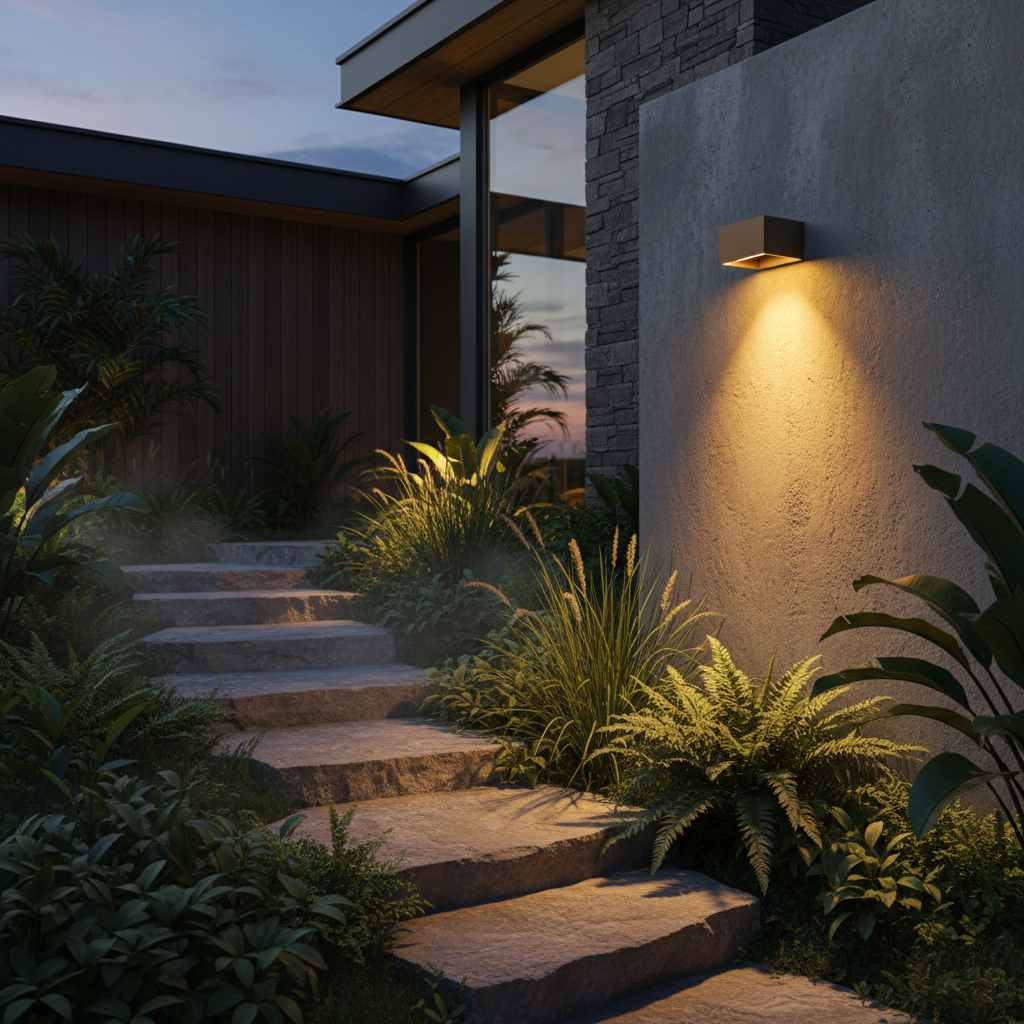
If you have a garden shed, a permanent construction shelter, or a fixed campsite with an available wall, a portable solar lamp is not the best tool. For this type of fixed use, a solar wall sconce like the Lumic SolarGlow is much more suitable: you install it once, it recharges itself, and automatically turns on when motion is detected. 1200 lumens, IP65, two 180° motion sensors with a range of approximately 26 feet (8 meters). But clearly, this is not a product to take hiking. These are two completely different uses.
Dependent on Sunlight
Three days of continuous rain in the mountains? Your solar lamp won't recharge. This is the Achilles' heel of any 100% solar solution without a backup. That's why dual solar + USB charging is often the best compromise for camping.
Mistakes to Avoid When Buying a Solar Camping Lamp
We regularly see the same mistakes in customer reviews for this type of product.
Relying Solely on Advertised Lumens
Manufacturers often measure peak lumens on a single component, not on the lamp in actual use. A model advertising 500 lumens might deliver only 200 under normal conditions once the battery is at 50%. Look for real user tests and reviews with photos, rather than just comparing spec sheets.
Ignoring Solar Panel Quality
Not all panels are created equal. A small, poor-quality panel will take 12 hours to recharge what a good panel does in 5 hours. Check the panel's surface area and, if possible, the cell type (monocrystalline = better efficiency). In a bivouac without a Plan B, this can make all the difference.
Choosing a Model Without an IPX Rating
A rechargeable camping lamp without a waterproof rating is risky. A downpour, morning dew, a fall into a stream: water is everywhere outdoors. IPX4 minimum, IPX6 if you're going to the mountains or wet terrain.
Underestimating Light Needs
Many hikers bring only one 100-lumen lamp for a 2-person tent. This is barely enough, especially if you're reading, cooking, or playing cards. Plan for slightly more power than you think you'll need, or a second backup light source.
What Users Truly Appreciate (and What Disappoints)
Reading feedback from hikers and campers on this type of product reveals some clear trends.
What People Like
- Versatility: A lamp that functions as a lantern + headlamp + phone charger is three devices in one.
- Silence: Unlike a generator, zero noise. Crucial for respecting the tranquility of a bivouac.
- Independence: No longer relying on campground restrooms or outlets truly changes the way you travel.
What Disappoints
- Actual battery life is lower than marketing promises.
- Durability of entry-level models that fail after a few outings.
- Charging time is too long on models with small panels.
How to Properly Use Your Solar Lamp While Camping
Having the right gear is good. Knowing how to use it correctly is better.
Optimize Charging While Hiking
If your lamp or its panel can be attached to the outside of your pack, do it. A day's hike easily provides 6 to 8 hours of exposure. You'll arrive at camp with a full lamp without having sacrificed a minute waiting.
Use Power-Saving Mode
Most lamps offer multiple brightness levels. For reading in a tent, 30% power is often enough. Reserving full power for truly necessary situations can easily triple actual battery life.
Protect the Solar Panel
A scratched or dirty panel charges much less efficiently. Keep it in a separate soft pouch during transport. Wipe it quickly before exposing it if you've hiked in the rain.
Summary: How to Choose Your Solar Camping Lamp
Here are the essential points to keep in mind before buying:
- Weight: Aim for less than 5.3 oz (150g) for hiking; more acceptable for car camping.
- Battery Life: Minimum 4 to 5 hours of actual illumination at medium power.
- Charging: Solar + USB = the ideal combo to avoid being stranded by weather.
- Waterproof Rating: IPX4 minimum, IPX6 for harsh conditions.
- Format: Foldable or inflatable for hiking, classic lantern for family camping.
If your needs are different, for example, lighting a fixed space like a garden shed, a cabin, or a garage, a solution like the SolarGlow (wall-mounted, 1200 lumens, IP65) is much more suitable. But for bivouacking or hiking, portability takes precedence over everything else.
Take the time to read real user reviews of what you're considering, compare advertised battery life with what people actually experience, and don't skimp on waterproofing. Your solar camping lamp should be a reliable tool, not a source of stress when the sun goes down.