Ever bought a solar light that looked great in the online photos, only to end up with a gray plastic casing that turned yellow in two seasons? That's the number one problem with cheap solar. And that's exactly what we're going to unpack here.
A truly worthy outdoor solar light combines the design you genuinely want in your yard or on your facade with reliability that survives harsh winters. Spoiler: they exist, and they've completely changed in recent years.
Why the Solar Lighting Market Has Finally Matured
For a long time, garden solar lights fell into two camps: decorative models unusable by November, and ugly but effective construction floodlights. That's no longer the case.
What's Changed in Garden Solar Lights in 2025-2026
Serious manufacturers finally understand that outdoor lighting buyers aren't just looking for light — they're looking for something that integrates with their home. Three trends are clearly emerging this season:
- Matte black has become the go-to finish. It pairs with aluminum, wood, and polished concrete. It ages well. It doesn't show fingerprints.
- Architectural minimalism replaces busy designs. Fewer details, clean lines, a discretion that lets the lighting ambiance speak for itself.
- Aluminum and stainless steel have replaced plastic in premium ranges. The difference is visible, tangible, and measurable in durability.
This movement towards thoughtful design isn't just aesthetic. An aluminum casing dissipates heat better, resists UV rays more effectively, and retains its color over time. It's as functional as it is beautiful.
The "Solar = Temporary" Preconception Is Dying
Many people still hesitate to invest in garden solar lighting because they associate it with something transient, imprecise. This perception comes from the first generations of $15 products sold in big box stores.
The reality in 2026: a good outdoor solar light installs once, without wires, without an electrician, and operates autonomously for years. To give you an idea of the economic context: a wired outdoor lighting installation by an electrician costs, on average, 5 to 10 times more than a high-performance solar light. Not to mention the excavation work if you want to run power to the back of your yard.
Criteria Distinguishing a Designer Solar Light from a Gadget
Before discussing ambiance and trends, you need to know how to read a product sheet. Here's what truly matters when comparing outdoor solar lights.
Materials: The Primary Indicator of Quality
The fixture's body speaks volumes about its longevity. In order of preference:
- Anodized or brushed aluminum: resists corrosion, handles heat, impeccable finish over time. This is the material of professional architectural lighting.
- 304 or 316 stainless steel: for coastal or very humid environments. Heavier, but virtually indestructible.
- UV-treated ABS: acceptable in mid-range products if the treatment is serious. Avoid in low-end versions without UV certification.
- Generic plastic: the clearest indicator of a product that won't last three winters.
The finish matters as much as the material. A well-applied matte black on aluminum won't chip or yellow. A single coat of black paint on plastic will.
Battery and Solar Panel: The Invisible Heart of the Product
An outdoor solar light can be beautiful and utterly useless if the battery is too small to last through a cloudy week in January. This is where many designer products fail: they prioritize appearance and neglect real autonomy.
What to look for:
- A solar panel sized adequately to recharge on a cloudy day, not just in bright sunshine.
- A battery capacity that allows for at least 10 to 15 days of autonomy in motion sensor mode without solar recharge — the best models offer 20 days or more.
- An automatic operating mode with an ambient light sensor to avoid wasting accumulated charge during the day.
IP Rating: Non-Negotiable for Outdoors
IP65 is the minimum for outdoor use. This means: total protection against dust and resistance to water jets (rain, melting snow). A wall-mounted or garden solar light without an IP65 rating is not designed for outdoor use — it might last one summer but rarely longer.
IP67 or IP68 are useful for very exposed areas like pool surrounds or very rainy regions, but IP65 largely covers the vast majority of residential uses.
Lumens: How Many Do You Really Need?
For a garden solar light used for ambiance or security, 800 to 1200 lumens cover most needs. Below 400 lumens, it's purely decorative — visually pleasing but not truly functional for lighting a pathway or marking a gate.
Above 1500 lumens, you're entering floodlight territory — useful for securing a large area, less suitable for a patio ambiance.
Wall-Mounted Solar Light: What Your Wall Says About Your Choice
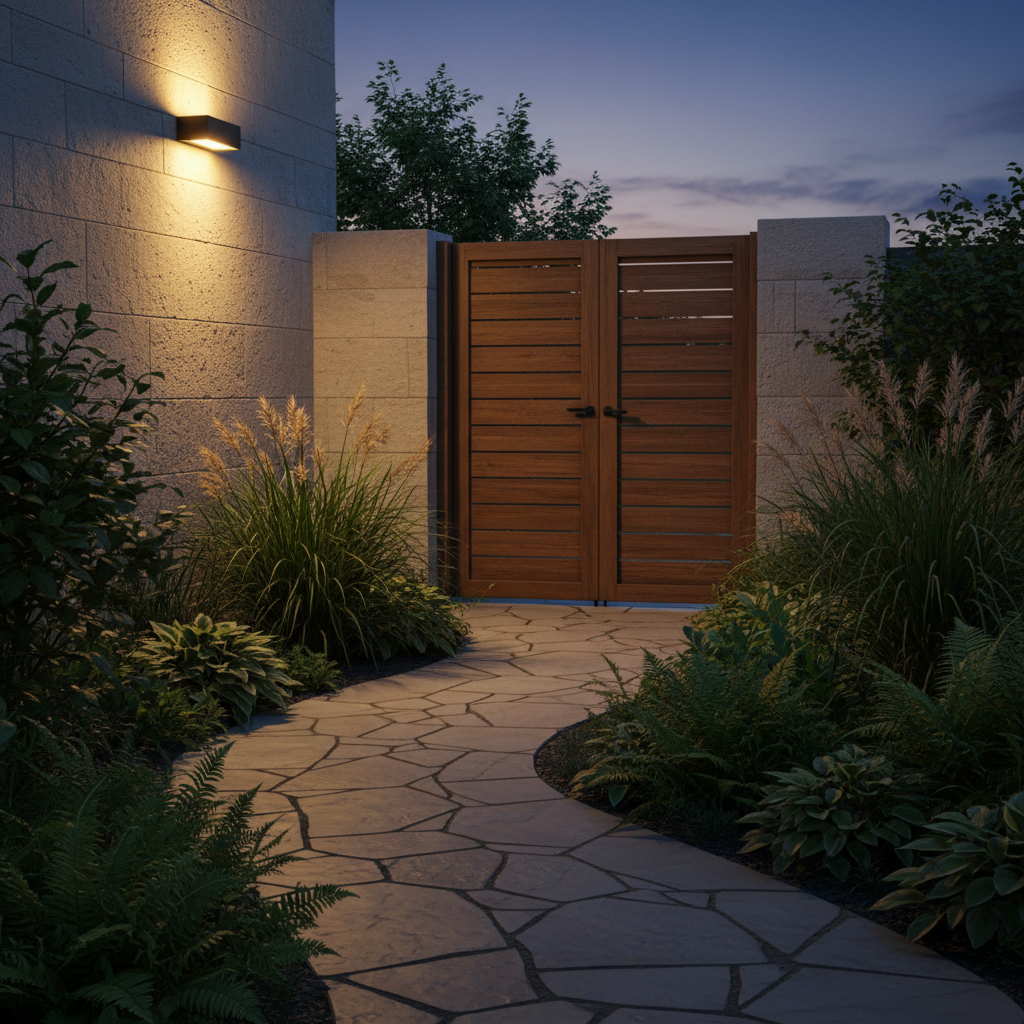
The wall-mounted solar light is probably the category that requires the most thought regarding architectural integration. It will coexist with your facade color, shutter style, and stucco texture. It should blend in, not stick out.
Which Finish to Choose Based on Facade Style?
Some combinations that work well in practice:
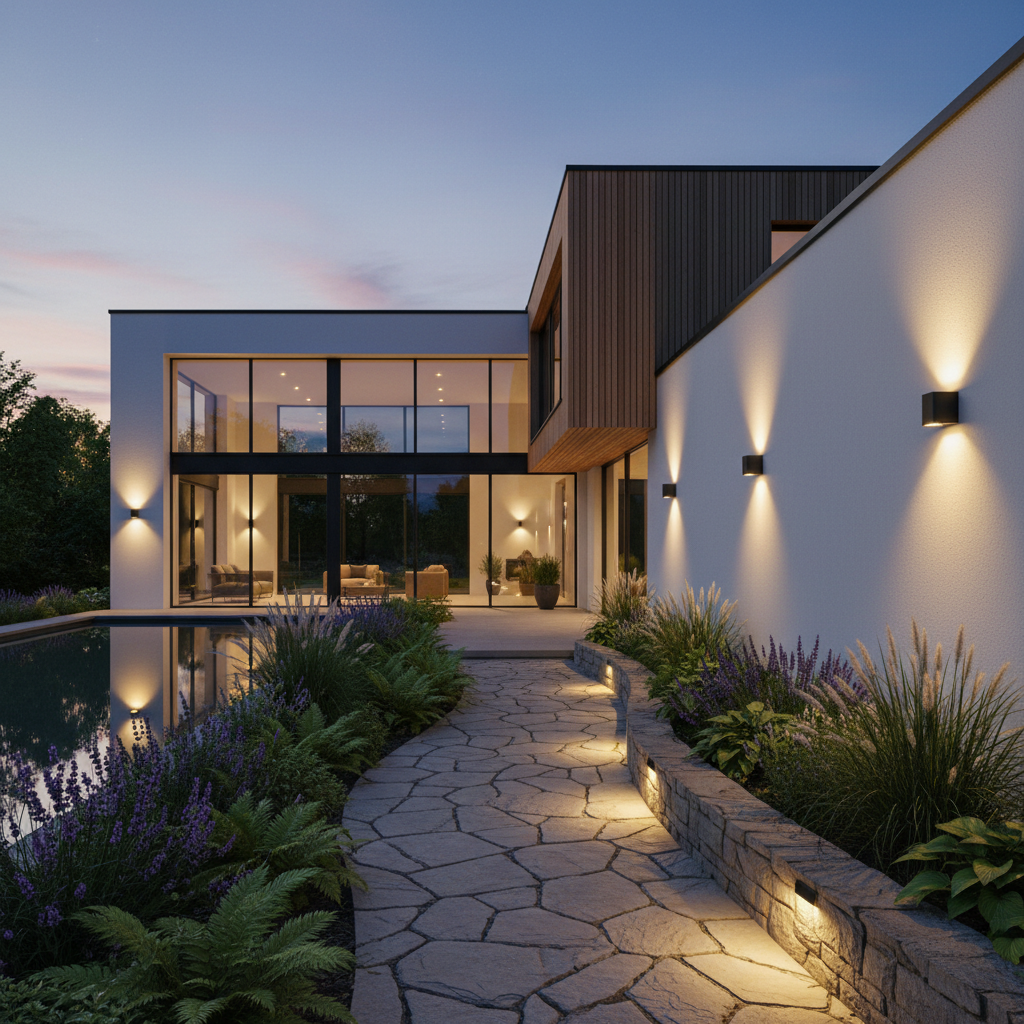
- White or light gray stucco facade: matte black or charcoal. The contrast is clean and architectural.
- Natural stone or ochre plaster facade: brushed stainless steel or sand-colored aluminum. The warm metal integrates without being harsh.
- Contemporary house with wood siding or concrete: absolute matte black. Tonal continuity is ideal.
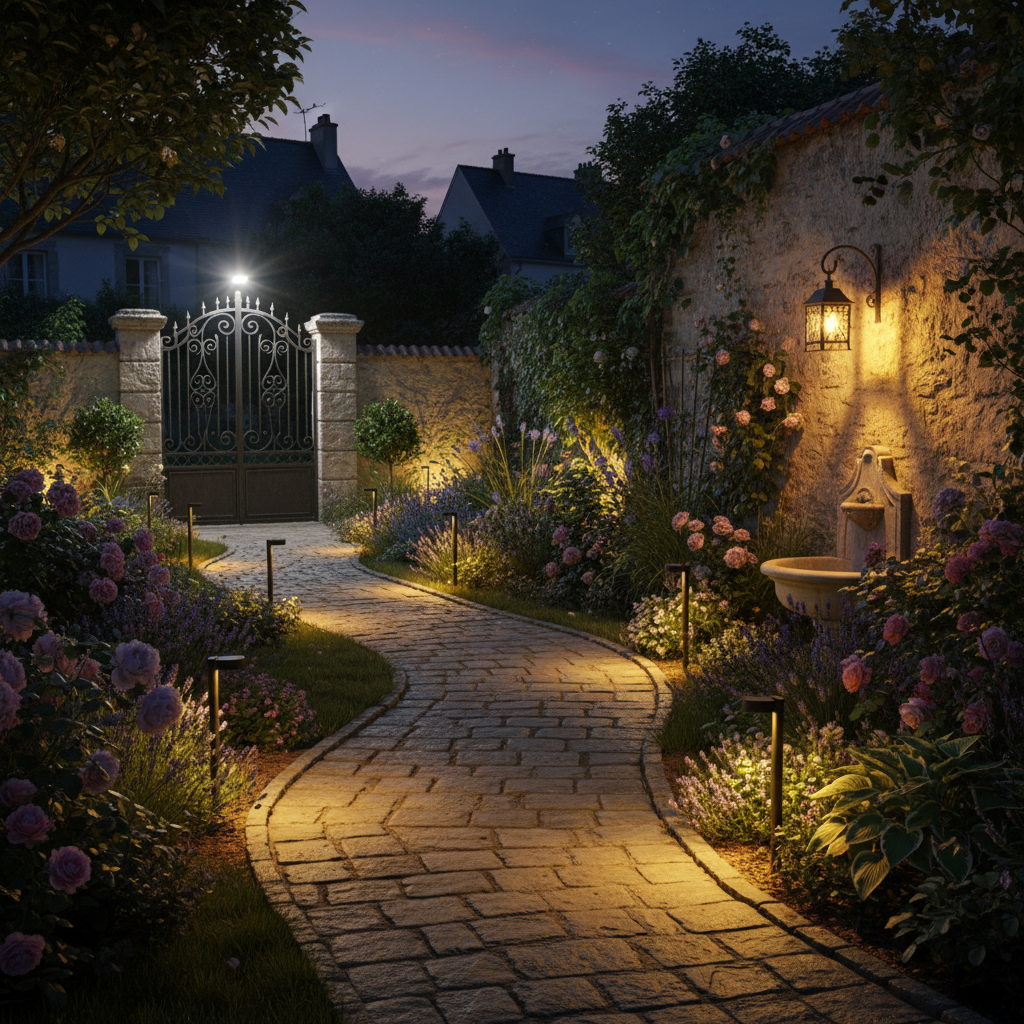
- Old house, exposed stone: be careful with overly industrial designs. Prefer more discreet shapes, or even minimalist lanterns.
Where to Position a Wall-Mounted Solar Light for Optimal Results?
Mounting height changes everything, both for aesthetics and motion sensor effectiveness. Between 6.5 and 8 feet (2 and 2.5 meters) from the ground, you get an effective detection angle (typically 26 to 33 feet / 8 to 10 meters range on good models) and natural downward light diffusion.
For the integrated solar panel, orientation is key: ideally south-facing, with no shadows from a tree or roof overhang between 10 AM and 3 PM. Even the best solar panels won't recharge properly if their exposure is partial.
To delve deeper into this specific topic, our guide on wall-mounted solar lights details selection criteria based on exposure and facade type.
Garden Solar Lighting: Think Zones, Not Just Light Points
A well-lit garden doesn't look like a parking lot with spotlights everywhere. The logic is one of light layers: high light for security and orientation, low light for ambiance and highlighting plants.
Which Areas Benefit Most from Solar Lighting?
In order of visual and practical impact:
- The entrance pathway: a priority security zone. A motion sensor here is a real plus — it signals presence and guides without glare.
- Around the patio: lighting that transforms a patio into an evening living space. Prefer warm light (2700-3000K) directed downwards.
- Planting areas: bollards or spotlights aimed at vegetation. The effect is spectacular, even with low lumens.
- The gate and fence corners: natural deterrent zones. A well-calibrated motion-sensing solar light is sufficient.
To structure coherent solar garden lighting by zone, we've written a comprehensive guide on solar garden lighting adapted to each space — with concrete recommendations based on surface area and use.
How Many Solar Lights for a Standard-Sized Garden?
For a yard of 500 to 1500 sq ft (50 to 150 m²), a combination of 3 to 5 well-placed lights is usually enough to create functional and visually coherent lighting. The classic mistake is to use too many: you lose the ambient effect and create a flat uniformity that isn't pleasant.
Think in terms of focal points: one or two strong points (gate, patio entrance), a few secondary accents (plants, corners). The rest can remain in natural shadow — this creates contrast and atmosphere.
Designer Solar Lighting: Trends That Truly Last
Outdoor lighting trends evolve slower than interior decor — which is good news when you invest in something permanently installed.
What Stays Modern Years After Purchase
Choices that age well:
- Matte black on aluminum. Timeless, architectural, discreet in the best sense of the word.
- Simple geometric shapes: rectangles, cylinders, clean volumes. Nothing that looks like a flea market find.
- Warm light (2700-3000K) for ambiance, neutral light (4000K) for pathways. Never cool white for residential exteriors — it creates a gas station vibe.
What quickly looks dated:
- Overly ornate lanterns (spikes, complex ironwork).
- Imitation copper or bronze in metallic plastic.
- Anything that flashes, changes color, or has colored LED effects.
Can Designer Solar Lighting Really Replace Wired Lighting?
For ambient and secondary security areas: yes, absolutely. For intensive work lighting (outdoor workshop, construction lighting), no — that's not the target use.
The great strength of a designer wireless outdoor light in 2026 is installation freedom. You can light a corner of your yard 100 feet (30 meters) from the house without trenching or buried cables. What would have taken an electrician a day's work can be done in 15 minutes with a screwdriver.
To explore all options beyond solar, our comparison of wireless outdoor lighting presents the different technologies available based on needs.
The True Luxury in Solar: Never Having to Think About It
There's an elegance to a system that works on its own. The light turns on when you pass, turns off by itself, recharges itself. You don't change batteries. You don't have aging cables. You don't call an electrician every five years.
This exact logic guided the design of Lumic's SolarGlow. Not a disguised construction floodlight, not a decorative gadget powerless in winter. An outdoor solar light designed to work in real-world conditions: gray winters, periods without direct sun, frost.
Its distinguishing features: 1200 lumens, two motion sensors covering 180° with a 26-foot (8-meter) range, IP65 rating, and 20 days of autonomy without solar recharge in detection mode. This last point is a game-changer for regions where November to February isn't the sunniest season.
If you're also wondering how to integrate a security feature into your lighting, our guide on motion-sensing solar lighting explains the subtleties of adjustment to avoid false triggers and maintain a beautiful ambiance at night.
5-year warranty, 90-day satisfaction guarantee, US-based customer support. Reassurance matters, especially when you invest in something that will stay on your facade for years.
How to Choose Between Different Types of Outdoor Solar Lights
A practical summary to help you decide based on your project.
| Usage | Recommended Type | Lumens Needed | Design Priority? |
|---|---|---|---|
| Entrance Pathway | Wall-mounted with motion sensor | 800-1200 lm | High (main facade) |
| Patio / Ambiance | Wall-mounted or low bollard | 300-800 lm | Very High |
| Gate / Security | Strong motion-sensing wall light | 1000-1500 lm | Medium |
| Plant Accent Lighting | Adjustable ground spotlight | 200-500 lm | High |
| Garage / Work Area | Solar floodlight | 1500 lm and up | Low |
If your primary need is raw power rather than ambiance, our article on powerful garden solar lights will guide you to the right selection criteria.
What Customer Reviews Really Say
On Trustpilot, Lumic's SolarGlow has over 2200 reviews with a 4.5/5 rating. What comes up most often in positive comments isn't the design — though it's frequently mentioned — it's the surprise of seeing the product still working correctly in the middle of winter. This is telling: customers expected it less than the aesthetics.
The few negative reviews generally concern miscalibrated expectations (use in a completely shaded area all year, or the need for very powerful continuous work lighting). These are real limitations of solar technology in general, not product defects.
In Summary: How to Choose Your Outdoor Solar Light
A few key takeaways before making your decision:
- Material makes the difference: aluminum over plastic, no hesitation.
- Winter autonomy is the most underestimated criterion. Look for a minimum of 15 days without recharge, 20 days is comfortable.
- IP65 minimum for any outdoor use.
- Color temperature dictates the ambiance: warm (2700-3000K) for patios, neutral (4000K) for pathways.
- Think architectural integration before thinking power: a well-chosen aesthetic light blends into the landscape — which is exactly the desired effect.
- The real savings aren't on the purchase price, but on the absence of electrical work, cables, and maintenance.
A well-chosen outdoor solar light isn't a compromise between beauty and functionality. It's both, or it's not the right product.