Your basement is dark, you have no electrical outlets, and you don't want to tear down walls to run a cable. This is a very common situation — whether it's a pantry, wine cellar, crawl space, or simply a basement storage area. The good news: today, there are truly effective, durable, and easy-to-install solutions for basement lighting without electricity.
This guide helps you choose the right option based on your usage, your basement's configuration, and your practical constraints. We'll go from the simplest to the most suitable, without drowning you in technical jargon.
Why Basement Lighting Without Electricity Is Often More Complex Than It Seems
A basement is a unique space. It combines several constraints rarely found elsewhere: no easy access to the electrical grid, sometimes high humidity, a complete lack of natural light, and walls that make drilling difficult (stone, concrete, old brick). Add to that the fact that you only go there occasionally, and you understand why a standalone solution often makes more sense than traditional wired lighting.
Basements Most Affected by Lack of Light
Not all basements are alike. The issues differ depending on the use:
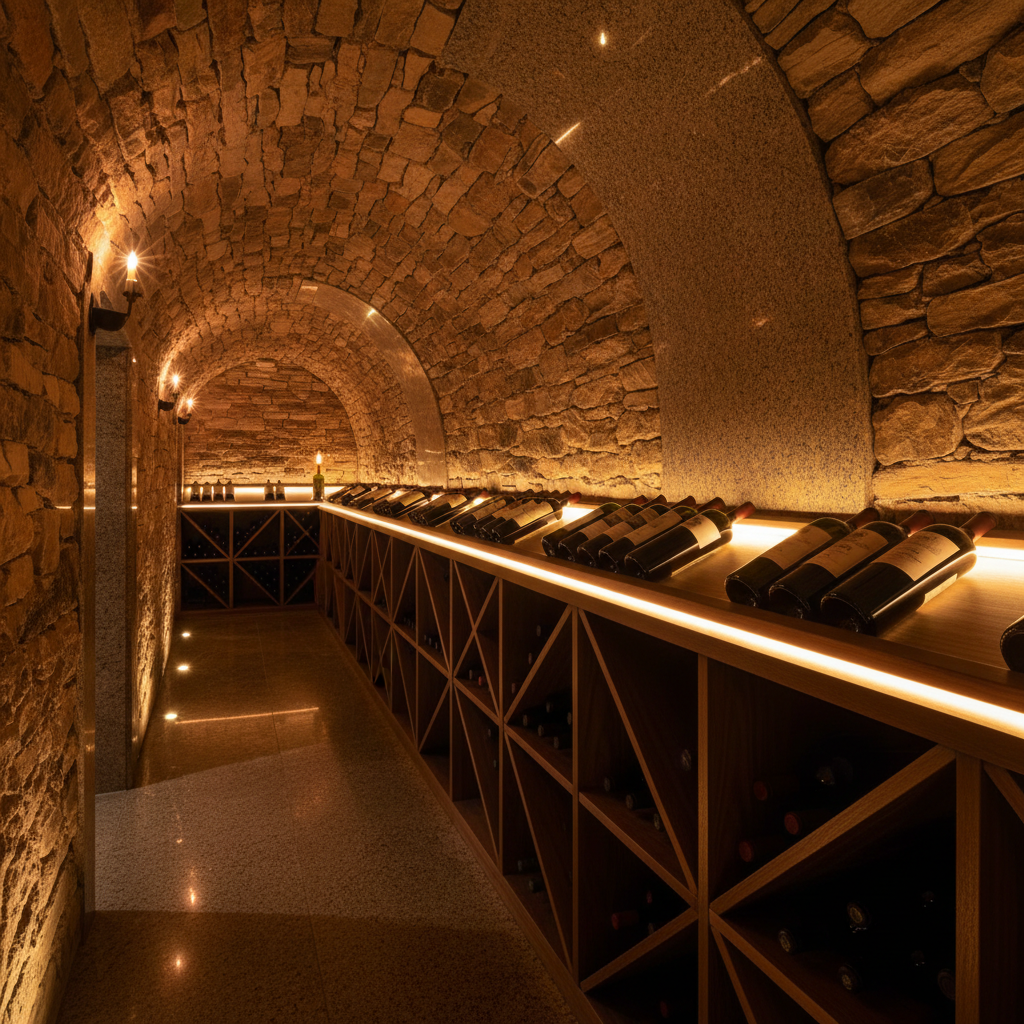
- Wine Cellar or Pantry: You need soft, non-aggressive light for bottles, which you turn on occasionally to find a bottle.
- Storage Basement: You want to see where you're stepping and find your belongings, without necessarily leaving the light on for long.
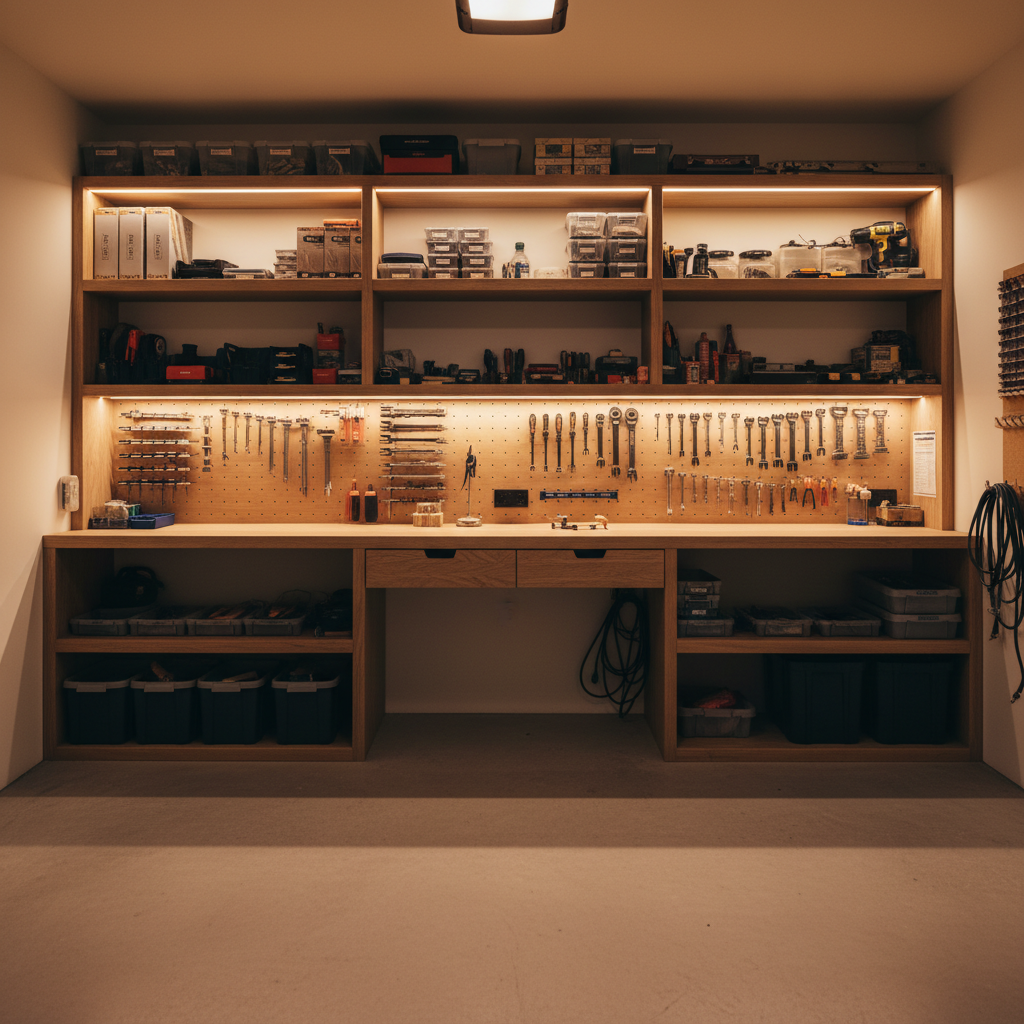
- Workshop or DIY Basement: Here, you need a more powerful light output and longer usage time.
- Access Hallway or Basement Stairs: Safety is paramount — automatic lighting that turns on when you approach is ideal.
Traditional Electrical Installation: Why It's Often the Wrong Option
Installing wired lighting in an unequipped basement means running a cable from the electrical panel, drilling through walls, installing conduits, and often hiring an electrician. For renters, it's almost impossible. Even for homeowners, the cost and work can quickly be discouraging — especially if the basement is underground or in an old building. This is where rechargeable LED lighting or solar power makes perfect sense.
Basement Lighting Solutions Without Electricity: A Comprehensive Overview
There isn't one single best solution, but several complementary approaches depending on your situation. Here are the main options available today.
Rechargeable LED Light Bars with Motion Sensor
This is the most versatile solution for a basement without an electrical outlet. A rechargeable LED light bar runs on an integrated battery, recharges via USB (like a phone), and installs in less than a minute on a clean surface using adhesive or a magnetic mount. No cables, no drilling.
The motion sensor changes everything: the light turns on automatically when you enter the basement and turns off by itself after a few seconds. As a result, you won't risk leaving the light on for hours — which preserves battery charge.
The main selection criterion? Battery life in detection mode. A good light bar can last several weeks between charges if you use it intermittently. This is exactly the typical use case for a basement where you spend a few minutes a week. To learn more about this topic, our article on rechargeable LED lighting and its lifespan will give you all the benchmarks.
The Lumic Movement 3.0 is designed for this type of use. It comes in 9 inches (~150 lumens) and 16 inches (~320 lumens). Its 3000 mAh battery — 3 times larger than most models found in big box stores — allows it to last up to 4 weeks in detection mode for the 9-inch model, and up to 5 to 6 weeks for the 16-inch model. It recharges via USB, installs with industrial adhesive or magnetic mounting, and holds without drilling any walls.
Portable and Rechargeable LED Lamps
If you need something truly flexible — a light you can move from one place to another, place on a shelf, hang on a hook, or carry by hand — rechargeable portable LED lamps are an interesting option. They generally don't illuminate as effectively as a light bar fixed to the ceiling or under a shelf, but their flexibility largely compensates for small spaces or occasional use.
Solar Lamps with Remote Panel
If your basement has access to a window or an opening to the outside — even a small skylight — you can consider solar lighting. The principle: a solar panel placed where light reaches, connected by a cable to a lamp inside. No electrical outlet needed, no manual battery recharging.
This solution is particularly suitable for pantries attached to an exterior wall, or basements with a window well. However, in a completely underground basement without any opening, solar power will not be directly practical. For basements with minimal exposure, our guide on motion sensor solar lighting details the options available in 2026.
Battery-Powered Lamps: Practical but Limited
Battery-powered lamps have been around for a long time and remain readily available. They have the advantage of being inexpensive to purchase. But in practice, they have several drawbacks: batteries drain quickly, replacing them regularly becomes cumbersome and costly, and entry-level models are often not very bright. For occasional emergency use, they might suffice. For reliable long-term basement lighting, rechargeable solutions are clearly superior.
How to Choose Your Basement Lighting Without Electrical Connection
Before buying anything, a few simple questions will guide your choice. Here are the criteria that really matter.
How Much Light Do You Need in a Basement?
It depends on what you do in your basement. For a wine cellar or pantry where you're just looking for a bottle, 150 lumens are more than enough. It's discreet, non-aggressive for bottles, and battery life will be maximized. For a storage basement or workshop, aim for 300 lumens or more for true visual comfort over a wider area. Large basements often require several distributed light points rather than a single powerful centralized source.
What Color Temperature to Choose for a Basement?
Color temperature (measured in Kelvin) determines whether the light appears warm or cool. For a wine cellar, warm white (3000K) is recommended: it creates a soft ambiance and does not disturb bottle preservation. For a storage or DIY space, neutral white (4000K) or cool white (6000K) offer better contrast and make it easier to read labels or inspect the condition of your boxes. The Movement 3.0 offers all three temperatures to choose from, which is rare in this price range.
How Long Will You Stay in Your Basement During Each Visit?
If your visits last less than a minute (finding a bottle, grabbing a box), motion detection mode is perfect. The light turns on when you enter and turns off by itself — you don't have to do anything. If you spend hours organizing or working in your basement, you might need a model with continuous mode, or several lights, to last without having to move in front of the sensor every thirty seconds. Consult our guide on LED light bar battery life to understand how battery endurance is truly calculated based on usage.
Humidity: A Factor Not to Be Overlooked
Basements can be humid, especially in winter. Before buying a rechargeable lamp for your basement, check that the product mentions some resistance to humidity. It's not necessarily an IP65 rating like for outdoor use, but a product with an aluminum casing like the Movement 3.0 will resist much better than a basic plastic model. Avoid placing a lamp directly against a seeping wall.
Comparative Table of Basement Lighting Solutions Without Electricity
| Solution | Installation | Battery Life | Brightness | Ideal For | Main Drawback |
|---|---|---|---|---|---|
| Rechargeable LED Light Bar (e.g., Movement 3.0) | Adhesive or magnetic, < 1 min | 4 to 6 weeks (detection mode) | 150 to 320 lumens | Wine cellar, storage, hallway | Requires USB recharging |
| Portable Rechargeable LED Lamp | None (placed or hung) | Varies by model | Variable | Occasional and flexible use | Less practical if forgotten elsewhere |
| Solar Lighting with Remote Panel | Panel near window/skylight | Autonomous if sufficient sunlight | Variable | Basement with exterior opening | Requires a skylight or window |
| Battery-Powered Lamp | Immediate | Short, depends on batteries | Low to medium | Occasional emergency use | Long-term battery cost |
Wine Cellar Lighting: Specifics to Know
A wine cellar deserves special attention. Light can affect wine preservation, especially UV bulbs which accelerate oxidation. For a pantry or wine cellar, several rules apply:
What Light to Choose to Avoid Damaging Wine?
Modern LEDs do not emit UV radiation, unlike older generation halogen or fluorescent lamps. This is a natural advantage of current rechargeable LED solutions. Additionally, favor a warm white (3000K) rather than a cool white: the light will be less aggressive for labels and create a more authentic ambiance in your cellar. The ideal is also for the light to be intermittent rather than constantly on — which the motion sensor allows.
Should You Light the Entire Cellar or Only Passageways?
In a well-organized wine cellar, you don't need to flood the entire room with light. A few targeted light points are sufficient: lighting at the entrance to orient yourself, and possibly lighting above your main rack if you need to read labels. This is more discreet for bottles and more economical for battery life.
Practical Installation: How to Install an LED Light Bar in a Basement
If you opt for a rechargeable LED light bar, installation is a few simple steps, even in a basement with challenging walls.
Step 1: Choose the Right Location
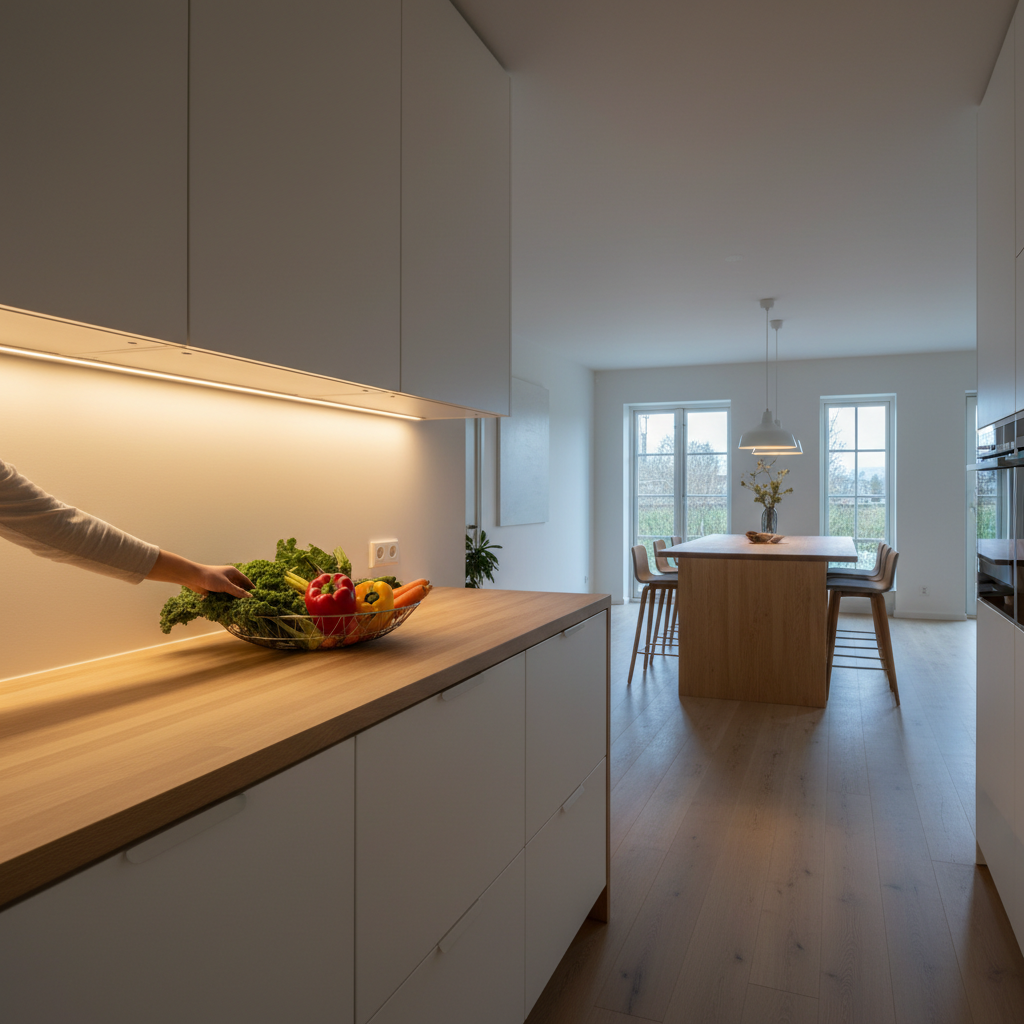
Before fixing anything, test the lighting by hand in different places. A light bar under a shelf illuminates better than a light bar on the ceiling of a small basement, as it directs the light flow directly to the useful area. If you want to cover the entire basement, several small distributed light bars are often more effective than a single large central source.
Step 2: Prepare the Surface
Industrial adhesive holds perfectly on smooth concrete, wood, metal, or rigid plastic. On rough stone or a rough, damp wall, magnetic mounting with a screwed bracket will be more reliable. Always clean the surface with a dry cloth before sticking — even in a basement, dust is the primary enemy of adhesive.
Step 3: Fix and Calibrate the Sensor
Orient the motion sensor towards the entrance area, not towards a fixed wall. Some models allow you to adjust the sensor's sensitivity and the turn-off delay. For a basement, a delay of 20 to 30 seconds is generally sufficient — long enough so you don't find yourself in the dark in the middle of a search, short enough to save battery life.
Step 4: Recharge Before Installation
A practical tip often overlooked: fully charge your light bar before installing it. It's easier to do this before it's fixed to your basement ceiling. Then, depending on your usage, you'll only need to unhook it every 4 to 6 weeks for a few hours of USB recharging.
Common Problems People Encounter with Basement Lighting
Here are the most common mistakes, and how to avoid them.
Buying a Lamp Too Weak for the Area to Be Lit
A 50-lumen lamp is enough for a small closet. In an 86 sq ft (8 m²) basement, it's insufficient. If you're unsure of the power you need, always aim for a model with adjustable brightness — you can start strong and then reduce it according to your actual needs, which also extends battery life.
Sticking a Light Bar to a Damp Wall
Humidity is the number one enemy of adhesives. If your basement walls are slightly damp, the light bar will eventually fall off after a few weeks. In this case, opt for magnetic mounting with a screwed bracket in a dry corner, or hang the lamp from an existing shelf.
Forgetting to Recharge the Battery Regularly
A rechargeable light bar requires periodic recharging. This is its only maintenance, but you have to remember it. A simple trick: when you notice the light is dimmer than usual, it's a signal that the battery is nearing its end. Some models include a charging indicator light, which makes it easier. Otherwise, a monthly reminder on your phone will do the trick. Issues related to lighting without an outlet are comparable to those encountered in a garage: if you want to delve deeper, our guide to lighting a garage without an electrical outlet covers very similar solutions.
Neglecting Lighting on Access Stairs
The stairs leading to your basement are often the most dangerous point. This is where automatic lighting with a motion sensor lamp truly makes a difference: you go down with your hands full, and the light turns on by itself without you needing to search for a switch in the dark.
What You Need to Remember for Lighting Your Basement Without Electricity
Basement lighting without electricity is no longer a constraint — it's true freedom. Current solutions are reliable, easy to install, and adapt to most configurations, from vaulted stone cellars to modern concrete basements.
Summary of key points:
- For a wine cellar or pantry: prefer warm white (3000K), intermittent light via motion sensor, and solid no-drill mounting.
- For a storage basement: aim for 300 lumens or more, with a continuous mode if you spend time there.
- For an access staircase or hallway: a motion sensor is essential for safety.
- Battery life directly depends on battery size and frequency of use — always check the mAh capacity before buying.
- On a damp or rough surface, magnetic mounting + screwed bracket will be more reliable than adhesive alone.
If you want a ready-to-use solution, designed to last and easy to maintain, the Lumic Movement 3.0 is a solid option: 5-year warranty, 90-day money-back guarantee, and premium European customer support that responds in less than 24 hours if you have any questions. Rated 4.5/5 by over 2200 customers on Trustpilot, it has clearly proven itself in contexts similar to yours.