Introduction: Why Calculate Your LED Strip Light Energy Savings?
In 2025, with the continuous rise in electricity costs across the US ($0.17/kWh on average), accurately calculating the savings from an LED strip light becomes essential for any homeowner focused on managing their energy bill. A modern LED strip light can reduce your lighting consumption by 70 to 85% compared to traditional solutions, but how exactly do you quantify these savings?
In this expert guide, we provide you with precise calculation methods and practical tools to assess the profitability of your LED strip light investment. Whether you want to illuminate your kitchen, closets, or hallways, these calculations will enable you to make informed decisions.
Power Consumption: LED Strip Light vs. Traditional Lighting Comparison
To understand the impact of an energy-saving LED strip light, let's start by analyzing the actual consumption based on lighting technologies:
| Lighting Type | Power (W) | Brightness (lumens) | Efficiency (lm/W) | Lifespan (h) |
|---|---|---|---|---|
| Modern LED Strip Light | 8-15W | 800-1500 | 100-120 | 50,000 |
| Fluorescent Tube T8 | 36W | 2500 | 70 | 20,000 |
| Linear Halogen | 60-120W | 1000-2000 | 15-20 | 2,000 |
| Incandescent | 75-100W | 800-1200 | 10-15 | 1,000 |
Concrete example: To light a 6.5-foot (2-meter) kitchen countertop, you would need:
- 12W LED Strip Light (1200 lumens) - Modern solution
- 36W Fluorescent Tube - Classic solution
- 3x40W Halogen Spots = 120W - Traditional solution
The consumption difference is striking: 12W versus 120W, which is 10 times less energy for equivalent lighting.
Detailed Annual Savings Calculation: Step-by-Step Method
Step 1: Calculate Annual Consumption in kWh
The basic formula for calculating electricity consumption:
Consumption (kWh) = Power (W) × Usage Duration (h) ÷ 1000
Let's take the example of kitchen lighting used 4 hours per day:
- 12W LED Strip Light: 12W × 4h × 365 days ÷ 1000 = 17.5 kWh/year
- 36W Fluorescent Tube: 36W × 4h × 365 days ÷ 1000 = 52.6 kWh/year
- 120W Halogen Spots: 120W × 4h × 365 days ÷ 1000 = 175.2 kWh/year
Step 2: Convert to Annual Electricity Cost
Using the average US electricity rate of $0.17/kWh (equivalent to 0,2516 €/kWh rate used in French example):
- LED Strip Light: 17.5 kWh × $0.17 = $2.98/year
- Fluorescent Tube: 52.6 kWh × $0.17 = $8.94/year
- Halogen Spots: 175.2 kWh × $0.17 = $29.78/year
Step 3: Calculate Actual Savings
Compared to fluorescent: $8.94 - $2.98 = $5.96 in savings/year
Compared to halogen: $29.78 - $2.98 = $26.80 in savings/year
These calculations do not yet account for the impact of motion sensors, which can reduce consumption by an additional 40 to 60% depending on usage.
Impact of Motion Sensors on Profitability
LED strip lights with motion sensors, like Lumic's Mouvement 3.0, add an extra dimension of energy saving. Let's analyze their real impact:
Reduction in Effective Usage Time
In a traditional kitchen, lighting often stays on "just in case." With a motion sensor:
- Theoretical usage: 4h/day of lighting
- Actual usage with sensor: 1.5 to 2h/day of effective lighting
- Average reduction: 60% of ON time
New Calculation with Motion Sensor
Let's re-examine our 12W LED strip light with a 60% usage reduction:
Optimized consumption: 17.5 kWh × 0.4 = 7 kWh/year
Electricity cost: 7 kWh × $0.17 = $1.19/year
The savings then become:
- VS fluorescent: $8.94 - $1.19 = $7.75/year
- VS halogen: $29.78 - $1.19 = $28.59/year
The motion sensor therefore adds $1.79 in additional savings per year in this example.
Return on Investment: Complete Profitability Analysis
Acquisition and Installation Costs
For a complete energy-saving LED strip light installation:
| Solution | Purchase Price | Installation | Total Cost |
|---|---|---|---|
| Basic LED Strip Light | $30-$50 | $60-$100 (electrician) | $90-$150 |
| Wireless LED Strip Light (Lumic) | $99-$149 | $0 (magnetic installation) | $99-$149 |
| Fluorescent Tube | $20-$30 | $70-$110 (electrician) | $90-$140 |
Calculating Payback Period
With our previous example (saving $7.75/year vs. fluorescent):
ROI for classic LED strip light: $150 ÷ $7.75 = 19.4 years (based on max range)
ROI for Lumic LED strip light: $149 ÷ $7.75 = 19.2 years (based on max range)
However, this analysis must integrate the superior lifespan of LEDs:
- LED Strip Light: 50,000h = 34 years at 4h/day
- Fluorescent Tube: 20,000h = 13.7 years at 4h/day
Savings Over Full Lifespan
Over 15 years of use (minimum LED lifespan):
- Electricity savings: $7.75 × 15 = $116.25
- Replacement savings: 1 fluorescent tube change = $30
- Installation savings: 1 electrician visit = $80
Total savings over 15 years: $226.25
Net profit: $226.25 - $149 = $77.25 in actual savings
Practical Calculation Tools and Simulators
Quick Savings Calculator
To quickly estimate your potential savings, use this simplified formula:
Annual Savings = (Old Power - New LED Power) × Hours/day × 365 × $0.17 ÷ 1000
Usage/Savings Correspondence Table
| Daily Usage | Annual Savings vs. Fluorescent | Annual Savings vs. Halogen |
|---|---|---|
| 2h/day | $2.98 | $13.40 |
| 4h/day | $5.96 | $26.80 |
| 6h/day | $8.94 | $40.20 |
| 8h/day | $11.92 | $53.60 |
Factors to Integrate into Your Calculations
For an accurate estimate, don't forget:
- Electricity price evolution: +3 to 5% per year on average
- Actual usage frequency: variable depending on rooms
- Maintenance costs: almost zero for LEDs
- Environmental impact: 70% reduction in CO2 emissions
Case Studies: Calculations for Different Rooms in Your Home
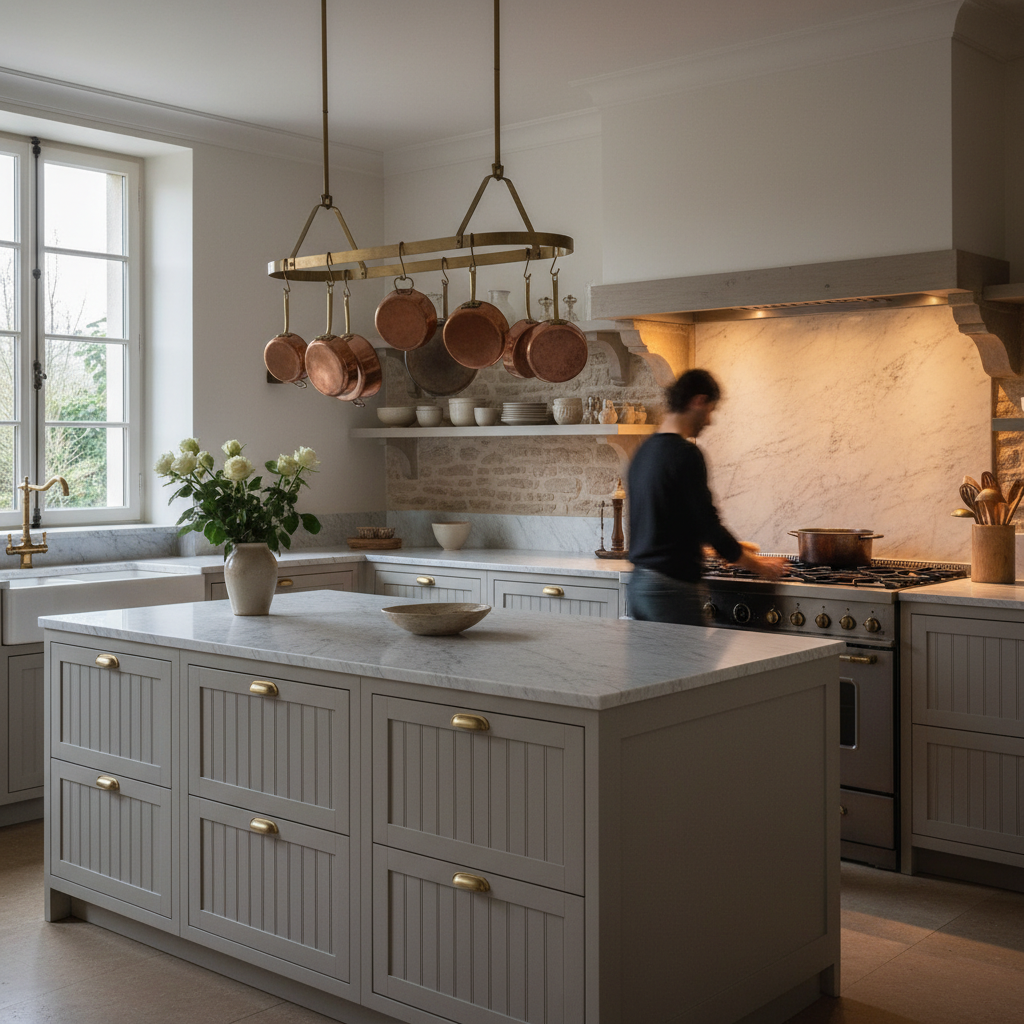
Kitchen: Countertop and Central Island
Typical configuration: 9.8 linear feet (3 meters) of lighting, 5h/day usage
- LED solution: 2 x 15W strip lights = 30W total
- Annual consumption: 54.75 kWh
- Electricity cost: $9.31/year
- With sensor (-50%): $4.65/year
Savings vs. halogen (180W): $153.84 - $4.65 = $149.19/year
Closet and Wardrobes: Automatic Lighting
Configuration: 4 short 8W strip lights, 30min/day use with sensor
- Total power: 32W
- Optimized usage: 0.5h/day
- Consumption: 5.84 kWh/year
- Cost: $0.99/year
Compared to 4 x 20W halogen spots without automation (2h/day): $18.78 in savings/year
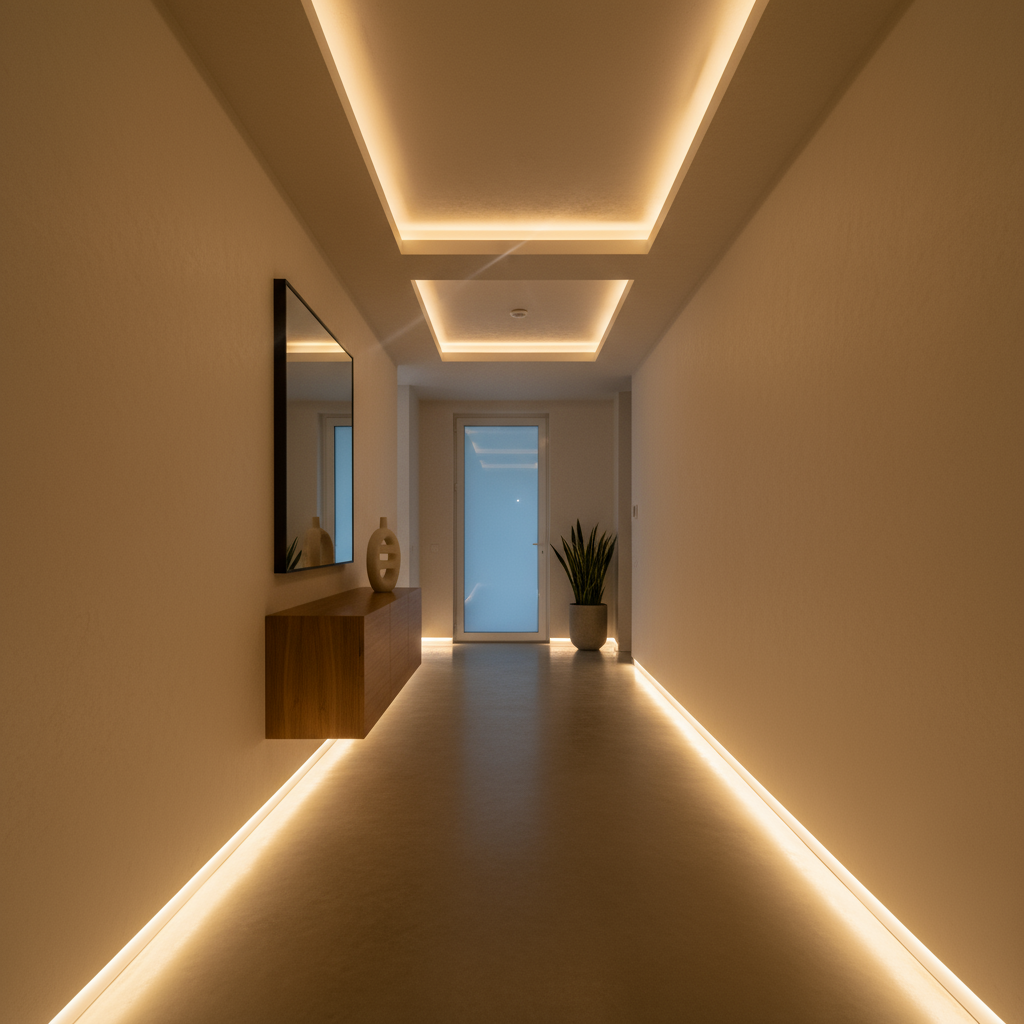
Hallways and Staircases: Safety and Savings
For optimal automatic hallway lighting:
- 2 x 10W LED strip lights with high-sensitivity sensor
- Actual usage: 45min/day (occasional passages)
- Annual cost: $1.43
Alternative traditional spots (100W, often left on 3h/day): $17.59 in savings/year
Advanced Optimization: Maximizing Your Energy Savings
Optimal Motion Sensor Settings
The motion sensor sensitivity directly impacts consumption:
- Too high sensitivity: unnecessary triggers (+20% consumption)
- Optimal sensitivity: precise detection, quick switch-off
- Short timeout: 30-60 seconds depending on usage
Choosing Color Temperature for Efficiency
Energy efficiency varies slightly by temperature:
- 3000K (warm white): standard efficiency, cozy ambiance
- 4000K (neutral white): optimal efficiency +5%, versatile
- 6000K (cool white): maximum efficiency +8%, technical areas
Programming and Smart Home Integration
Smart home integration can bring an additional 10-15% in savings:
- Scheduled programming: automatic night-time switch-off
- Light sensor: adaptation to natural light
- Geolocation: switch-off during prolonged absence
Conclusion: Investing in LED Energy Efficiency
The calculations clearly demonstrate that investing in an energy-saving LED strip light is profitable from the first year in most configurations. With average savings of $6 to $27 per year depending on usage, and a lifespan of 15 to 25 years, the return on investment is guaranteed.
LED strip lights with motion sensors like the Mouvement 3.0 further optimize these savings by reducing energy waste by 40 to 60%. Wireless installation eliminates electrician fees, improving immediate profitability.
Beyond the financial aspect, you contribute to reducing your carbon footprint by 70% on lighting, a significant gesture for the environment. With the continuous increase in electricity costs, these savings will only amplify in the years to come.
To go further in your LED lighting project, consult our complete guide to kitchen LED strip lights or discover how to install an LED strip light without drilling for immediate implementation.