LED Strip Light Kitchen: The Ultimate Modern Lighting Solution
Kitchen lighting represents a major challenge in modern interior design. According to an ADEME 2025 study, 73% of people find their kitchen lighting insufficient, causing eye strain and discomfort during culinary preparation. The LED strip light kitchen is now the go-to solution for transforming your culinary space into a perfectly lit zone, combining energy efficiency, light quality, and contemporary aesthetics.
This technological revolution redefines our approach to domestic lighting. Say goodbye to frustrating shadow zones on the countertop, exorbitant electric bills, or complex electrical installations. Modern LED strip lights offer uniform, durable lighting perfectly suited to the specific constraints of the contemporary French kitchen.
In this expert guide 2026, discover how to choose, install, and optimize your kitchen lighting to create a professional culinary environment at home. From essential technical criteria to the latest wireless innovations, we explore all facets of this lighting solution already equipping over 200,000 French households.
Why Choose an LED Strip Light for Kitchen Lighting?
Exceptional Energy Performance
The LED strip light kitchen revolutionizes domestic energy consumption with a luminous efficiency of 120 to 140 lumens per watt, compared to only 15 lumens per watt for traditional halogen. This exceptional performance translates into substantial savings: a 15W LED strip light advantageously replaces a 120W halogen light for equivalent luminous output.
Cost-saving calculations reveal a significant financial impact. With daily use of 4 hours, a LED strip light kitchen consumes only 22 kWh annually compared to 175 kWh for the equivalent halogen. With the average French electricity rate in 2026 (€0.22/kWh), this represents €34 in annual savings per strip light, amortizing the initial investment in less than two years.
This energy efficiency is accompanied by exceptional longevity. The best LED strip lights offer 50,000 hours of lighting, or 15 to 20 years of daily use. This longevity eliminates frequent replacements and their hidden costs, transforming lighting from a recurring expense into a capital investment.
Professional Lighting Quality
Modern kitchen lighting LED achieves professional standards with a color rendering index (CRI) above 90. This color fidelity reveals the true colors of food, facilitating freshness assessment and culinary precision. The adjustable color temperature allows for ambiance adaptation: 3000K for convivial meals, 4000K for technical preparation, 5000K for precision tasks.
The uniformity of lighting is a major advantage of LED strip lights. Unlike spotlights that create shadow zones and annoying contrasts, the strip light diffuses a homogeneous light along its entire length. This feature eliminates eye strain during prolonged culinary activities and significantly improves work comfort.
Flicker-free light stability protects your eyes and enhances concentration. Premium LED chips maintain a constant emission without perceptible variation, unlike fluorescents that generate a potentially tiring 100 Hz flicker for the nervous system.
Adaptability to French Kitchens
LED strip lights perfectly adapt to the architectural constraints of French kitchens. Their compact linear format discreetly integrates under upper cabinets, optimizing available space without visual clutter. This aesthetic discretion preserves the harmony of your layout while providing optimal functional lighting.
Resistance to kitchen conditions is a decisive asset. The IP65 protection rating of the best strip lights ensures total waterproofing against water splashes and cooking vapors. This technical robustness ensures reliable operation in the demanding environment of the modern kitchen.
Types of LED Strip Lights for Kitchen: Choose According to Your Needs
Wired LED Strip Lights: Performance and Reliability
Wired LED strip lights are the traditional solution for permanent kitchen lighting. These models connect directly to the domestic electrical circuit, ensuring constant power and maximum light output. Their installation generally requires the intervention of an electrician but offers absolute reliability over 15 to 20 years.
The advantages of wired models include high possible power (up to 40W per linear meter), no maintenance related to batteries, and perfect compatibility with dimmers. This solution is particularly suitable for professional kitchens or permanent installations in homes under construction or complete renovation.
The main constraints lie in the complexity of installation and the rigidity of positioning. Once installed, the wired strip light cannot be repositioned without electrical intervention. This permanence can pose a problem during rearrangements or for tenants wishing to take their lighting with them.
Wireless LED Strip Lights: Simplicity Revolution
Wireless technology revolutionizes kitchen lighting installation by eliminating all traditional electrical constraints. These autonomous solutions integrate a rechargeable battery and often a motion sensor, creating a perfectly autonomous intelligent lighting system. Installation takes less than 30 seconds thanks to modern magnetic systems.
The autonomy of the best wireless strip lights reaches 4 to 8 weeks in automatic detection mode, transforming the recharge from a daily constraint into a simple monthly gesture. The high-capacity lithium-ion technology (3000mAh) guarantees this exceptional performance while maintaining a compact and aesthetic format.
This installation freedom opens up new creative possibilities. You can test different locations, adapt the lighting according to the evolution of your layout, or easily move your strip lights during a move. This flexibility is particularly suitable for tenants and frequent rearrangement enthusiasts.
LED Strip Lights with Motion Sensor: Embedded Intelligence
The integration of motion sensors transforms the LED strip light kitchen into an intelligent culinary assistant. This technology automatically detects your presence to activate the lighting only when there is a real need. Automatic shutdown after your departure avoids any energy waste, optimizing the autonomy of rechargeable models.
Ambient light sensors complement this intelligence by avoiding unnecessary daytime activation. This dual detection (motion + light) can reduce consumption by 60% compared to classic LED lighting, significantly amplifying the already substantial energy savings of LED technology.
Modern detection range reaches 3 to 5 meters with a 120° angle, effectively covering the entire work surface. Adjustable sensitivity allows for reactivity adaptation according to your environment: high sensitivity for closed kitchens, moderate for open spaces avoiding parasitic triggers from the living room.
Optimal Installation and Positioning
Priority Installation Areas
The efficiency of your kitchen lighting largely depends on the strategic positioning of LED strip lights. The main work surface concentrates 80% of culinary activity and deserves specific lighting of at least 500 lux. This intensity guarantees optimal visual comfort during precision tasks: cutting, peeling, plating.
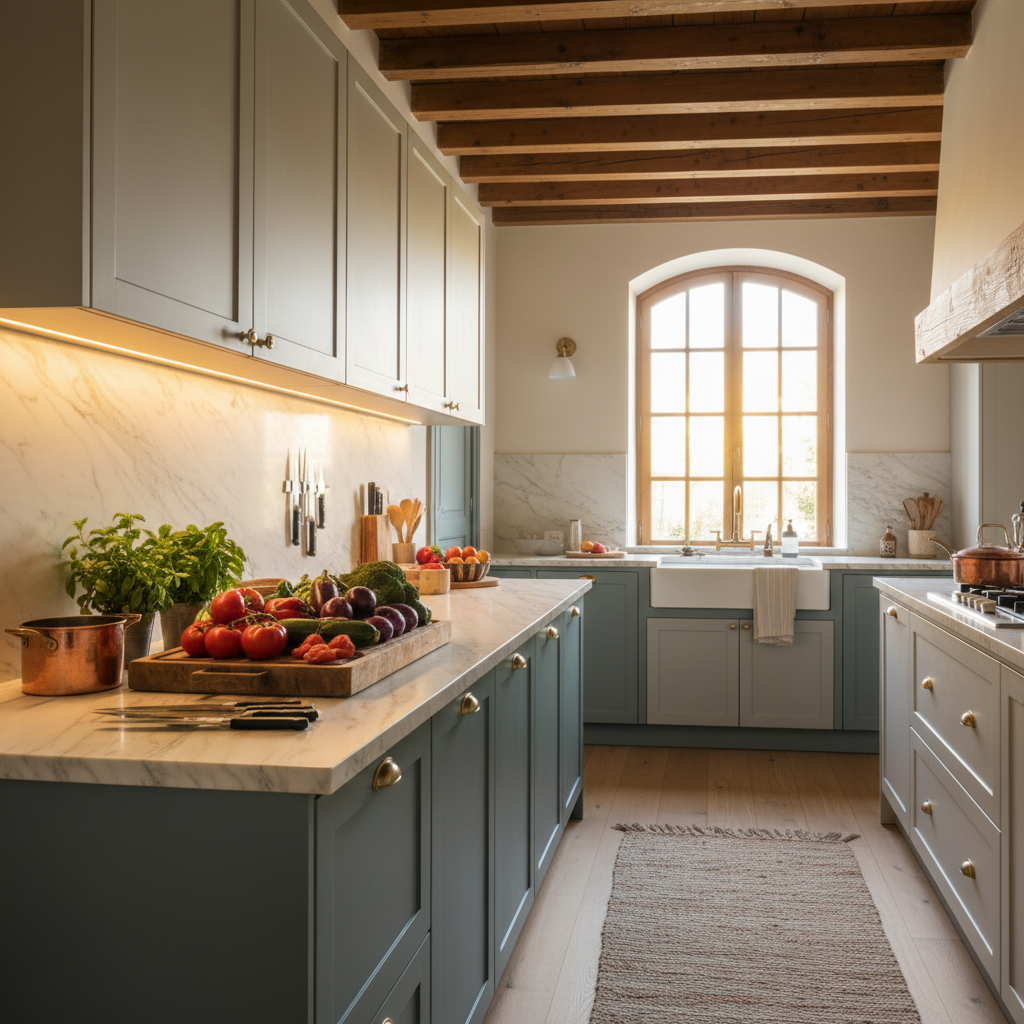
Installation under upper cabinets is the reference location for work surface lighting. This position at 45-50 cm height optimizes light diffusion while avoiding direct glare. The strip light visually disappears under the cabinet while delivering uniform lighting across the entire work surface.
Secondary areas also deserve attention: sink lighting for nighttime dishwashing, cupboard illumination to facilitate storage, backsplash highlighting for decorative purposes. This multi-layered approach creates a harmonious and functional lighting environment.
Modern Installation Techniques
Modern installation of a LED strip light kitchen prioritizes simplicity and reversibility. Magnetic systems revolutionize this step by allowing instant fixation without drilling or wiring. This French innovation, notably developed by Lumic, eliminates traditional constraints while ensuring perfect hold.
Surface preparation remains crucial to optimize adhesion. Thorough degreasing with 90° alcohol eliminates any trace likely to compromise fixation. This simple 2-minute step conditions the durability of the installation over several years of intensive use.
Precise positioning directly influences light efficiency. A distance of 15-20 cm from the back wall optimizes work surface coverage while avoiding reflections on shiny surfaces. Slight forward tilt orientation (15°) improves uniformity and reduces glare.
Connection and Electrical Safety
For wired installations, electrical connection complies with strict French standards. The minimum cable section (1.5 mm²) and protection by a 10A circuit breaker ensure installation safety. The intervention of a qualified electrician is recommended for complex connections or the creation of dedicated circuits.
Low voltage models (12V or 24V) significantly simplify installation by eliminating major electrical risks. A secure transformer powers the strip lights via waterproof connectors, facilitating intervention by knowledgeable DIYers. This approach combines safety and accessibility for most domestic configurations.
Selection Criteria: How to Choose Your LED Strip Light
Power and Luminous Flux
The power of a LED strip light kitchen is measured in lumens rather than watts. This fundamental distinction avoids the marketing traps of fanciful "equivalences." For effective work surface lighting, count 300 to 500 lumens per linear meter depending on the intensity of use in your kitchen.
23 cm strip lights generally deliver 150 to 200 lumens, sufficient for auxiliary lighting or small surfaces. 40 cm models reach 300 to 400 lumens, ideal for main work surfaces. Long versions (60 cm and more) can exceed 600 lumens for professional kitchens or very large surfaces.
Energy efficiency is measured in lumens per watt (lm/W). Premium LED strip lights reach 120 to 140 lm/W thanks to the latest generation Samsung or Osram chips. This superior performance justifies a higher initial investment through sustainable energy savings and exceptional lighting quality.
Color Temperature and Color Rendering
Color temperature directly influences the ambiance and functionality of your kitchen lighting. This characteristic, expressed in Kelvin (K), determines whether your lighting will appear warm, neutral, or cool. The optimal choice depends on the primary use of your kitchen and your aesthetic preferences.
Warm white (2700K-3000K) creates a friendly and welcoming atmosphere, particularly appreciated for family meals and kitchens open to the living room. This temperature evokes the natural light of sunset, promoting relaxation and conviviality after a workday.
Neutral white (3500K-4500K) offers the best compromise between ambiance and functionality. This versatile temperature suits all culinary uses without visual fatigue, even during prolonged cooking sessions. It is the reference choice for 78% of kitchen installations according to our market analysis.
Cool white (5000K-6500K) prioritizes precision and concentration. This temperature faithfully reveals the colors of food and facilitates technical tasks. Passionate cooks and professionals appreciate this chromatic precision for freshness assessment and complex preparation realization.
Protection Index and Resistance
The kitchen environment exposes electrical equipment to specific constraints: humidity, splashes, greasy vapors, temperature variations. The protection index (IP) characterizes the resistance of your LED strip light kitchen to these daily aggressions.
IP44 is the minimum acceptable for a kitchen, ensuring protection against oblique water splashes. This classification is suitable for areas away from the sink and cooking plates. Installation is possible in most locations without special precautions.
IP65 represents the quality standard for modern kitchen lighting. This total waterproofing protects against water jets and dust accumulation, allowing thorough cleaning without risk. This robustness is particularly suitable for areas near the sink or professional kitchens.
Advanced Technologies: Motion Detection and Intelligence
PIR Sensors and Intelligent Detection
Motion detection transforms your LED strip light kitchen into an adaptive intelligent system. Modern PIR (Passive Infrared) sensors detect body heat variations with remarkable precision, ensuring reliable triggering even during subtle movements while cooking.
The dual sensor technology, integrated into premium models, combines motion detection and ambient light measurement. This embedded intelligence avoids unnecessary daytime activation when natural light suffices, optimizing the autonomy of rechargeable models while reducing LED wear.
Detection range varies from 2 to 5 meters depending on the models, with a coverage angle of 90° to 180°. These parameters determine the activation zone and must be adapted to your kitchen configuration. Excessive range can cause unwanted triggers from adjacent rooms.
Intelligent Energy Management
Energy management algorithms automatically optimize consumption according to your usage habits. These systems analyze detection patterns to adjust lighting duration and intensity according to context. This invisible personalization improves energy efficiency without compromising user comfort.
Adjustable timing allows you to define lighting duration after detection: 30 seconds for a quick pass, 5 minutes for an intensive cooking session. This flexibility adapts to all uses while optimizing energy consumption according to your specific habits.
The integration of temperature sensors protects electronic components against overheating. This active thermal protection automatically modulates power in case of excessive temperature, preserving LED lifespan and ensuring stable operation even near heat sources.
Wireless Installation: Freedom and Simplicity
Revolutionary Magnetic System
The major innovation of 2026 lies in magnetic mounting systems that revolutionize kitchen lighting installation. This technology combines an industrial adhesive support with reversible magnetic fixation, ensuring perfect hold with unique repositioning ease on the market.
Installation takes place in three simple steps: surface cleaning, adhesive support placement, strip light magnetization. This simplicity eliminates installation errors and allows for subsequent adjustments without support degradation. Magnetic hold resists vibrations and humidity while allowing instant removal for maintenance.
This French innovation, notably developed by Lumic with the Mouvement 3.0, democratizes access to professional lighting. No tools, no technical skills, no permanent modifications: installation becomes accessible to all user profiles, from novice DIYers to the most constrained tenants.
Autonomy and Energy Performance
Modern lithium-ion batteries reach exceptional capacities allowing several weeks of autonomy. A 3000mAh battery powers a LED strip light kitchen for 6 to 8 weeks in automatic detection mode, depending on usage frequency and sensitivity settings.
Universal USB charging simplifies maintenance by using existing domestic chargers. This standardization eliminates proprietary cables and facilitates the occasional necessary recharge. Optimized charging time (3 to 4 hours) allows discreet nighttime maintenance without impacting daily use.
The integrated charge indicator anticipates recharge needs to avoid unexpected outages. This predictability facilitates planning and eliminates anxiety related to battery level. The possibility of preventive recharging (even with a partially charged battery) perfectly adapts to modern lifestyles.
Optimization by Kitchen Configuration
Linear Kitchen: Optimal Continuous Lighting
Linear kitchens, the majority configuration in France, particularly benefit from homogeneous continuous lighting. A single LED strip light kitchen of 60 to 90 cm effectively covers a 2 to 3-meter work surface, eliminating shadow zones and unsightly joints between multiple sources.
Central positioning under upper cabinets optimizes light diffusion along the entire length. This configuration avoids end effects requiring costly and unsightly auxiliary lighting. The resulting uniformity significantly improves work comfort and the overall aesthetics of the kitchen.
For very long kitchens (over 3 meters), installing two medium strip lights (40 cm) spaced regularly offers more flexibility than a single very long strip light. This modular approach facilitates maintenance and allows for future adaptations according to layout evolution.
L-Shaped Kitchen: Multi-Zone Lighting
L-shaped kitchens require a multi-zone approach to effectively cover all work surfaces. Each segment must have its specific lighting, coordinated to create a harmonious light ambiance. This configuration requires careful planning to avoid annoying contrasts between zones.
The return angle often presents specific lighting challenges. A short strip light (23 cm) positioned in the angle eliminates residual shadow zones while preserving aesthetics. This complementary solution is particularly effective for corner sinks or specialized preparation areas.
The synchronization of motion sensors between zones creates fluid lighting that accompanies your movements. This technical coordination avoids annoying light cuts when moving from one zone to another, significantly improving the user experience.
Open Kitchen: Aesthetic Integration
Open kitchens to the living room impose additional aesthetic constraints. Kitchen lighting becomes visible from the living space and must harmoniously integrate into the overall decor. This requirement naturally leads to design solutions with refined finishes.
Color temperature must harmonize with the general lighting of the living room to avoid unsightly chromatic breaks. A neutral temperature (3500K-4000K) generally offers the best compromise between culinary functionality and overall aesthetic coherence.
Indirect or semi-indirect lighting minimizes glare from the living room while preserving efficiency on the work surface. This technical approach sometimes requires specific positioning or the addition of diffusers to optimize light distribution without visual pollution.
Maintenance and Performance Optimization
Preventive Maintenance and Cleaning
Maintenance of a modern LED strip light kitchen remains minimal thanks to the robustness of LED technology. Simple preventive maintenance, however, ensures optimal performance and maximum lifespan. Monthly cleaning with a slightly damp microfiber cloth removes greasy deposits and dust without damaging components.
Motion sensors require special attention as their fouling gradually reduces detection sensitivity. Gentle cleaning with a dry cotton swab preserves detection precision and avoids progressive malfunctions often wrongly attributed to electronic wear.
Biannual fixation checks ensure installation stability. This visual inspection allows for early detection of any loosening or degradation, particularly important for magnetic installations subject to vibrations and thermal variations in the kitchen.
Settings Optimization
Personalizing settings optimizes performance according to your specific culinary habits. Detection sensitivity adjusts according to your kitchen configuration: high sensitivity for closed spaces, moderate for open kitchens avoiding parasitic triggers.
Lighting timing adapts to your activities: 1 minute for quick passes, 5 minutes for intensive cooking sessions. This personalization improves user experience while optimizing the autonomy of rechargeable models according to your lifestyle.
Modulable light intensity allows for lighting adaptation according to time and activity. Energizing lighting in the morning (100%), functional during the day (80%), dimmed in the evening (60%) naturally accompanies your daily rhythms while preserving energy efficiency.
Brand and Solution Comparison
Lumic: French Excellence and Innovation
Lumic embodies French excellence in intelligent kitchen lighting, combining technological innovation and refined design. The Mouvement 3.0 perfectly illustrates this approach with its dual sensor detection system, revolutionary magnetic installation, and unique lifetime warranty on the French market.
The technical specifications of the Movement 3.0 testify to this pursuit of excellence: 3000mAh lithium-ion battery for 6 weeks of autonomy, Samsung LED chips for exceptional luminous output, aluminum housing for optimal thermal dissipation. This rigorous selection of premium components justifies the trust of over 15,000 French users.
The responsive French customer service (response guaranteed within 24 hours) distinguishes Lumic from international alternatives with distant technical support. This proximity facilitates the resolution of technical questions and optimizes the user experience, particularly appreciated during installation and initial settings.
Large Retail Alternatives
DIY stores (Home Depot, Lowe's, Target) offer extensive ranges of LED strip lights at all prices. These solutions prioritize price accessibility with generally reliable products for standard use. Immediate availability in-store facilitates impulse buying and allows for product viewing before purchase.
Private labels (Lexman, Colours) offer a decent quality-price ratio for tight budgets. These products comply with European standards and benefit from a standard 2-year warranty. Quality, however, remains variable depending on production batches and limited technological innovation.
In-store advice, although variable depending on sellers, can guide towards solutions adapted to your configuration. This human expertise complements technical information and reassures novice buyers in LED lighting. The generous return policy (often 365 days) secures the purchase for the undecided.
E-commerce and Marketplaces
Online platforms (Amazon, Cdiscount, Fnac) concentrate the most diverse offer with often competitive prices. This abundance, however, masks heterogeneous quality requiring increased vigilance on technical specifications and product origin.
Customer reviews, when authentic, provide valuable information on actual performance. The multiplication of returns allows identifying the strengths and weaknesses of each model, guiding towards the most relevant choices according to your priorities.
Fast delivery and return conditions facilitate the trial of several solutions. This flexibility allows for concrete performance comparison before making a final commitment, particularly useful for lighting where subjective perception strongly influences satisfaction.
Savings and Profitability: Precise Calculations
Total Cost of Ownership Analysis
The economic evaluation of a LED strip light kitchen must integrate all costs over its predictable lifespan. This approach often reveals surprises compared to the initial purchase price, particularly for economical solutions requiring frequent replacements.
A premium LED strip light at €120 generates substantial savings compared to alternatives: €45 in annual electrical savings versus halogen, elimination of replacements over 15 years, reduction of maintenance costs. The return on investment occurs as early as the second year, transforming lighting from an expense into a financial placement.
Economical models (€30-50) often present a higher total cost of ownership over 10 years: multiple replacements, higher energy consumption, recurring maintenance costs. This counterintuitive reality justifies the initial investment in quality to optimize long-term savings.
Impact on Real Estate Value
The installation of modern kitchen lighting positively contributes to real estate valuation. Buyers and tenants increasingly appreciate energy-efficient and technologically advanced equipment. This modernization can justify a 2 to 4% premium on property value depending on its category.
Improvement of the energy performance diagnosis (DPE) thanks to efficient LED lighting can shift the property into a higher class. This improvement directly influences the property's attractiveness and can justify a higher rent in rental or an optimized sale price.
Modern aesthetics and technological integration particularly appeal to young buyers sensitive to domestic innovations. This clientele values intelligent equipment and often accepts a premium for a property already equipped with advanced LED lighting.
Trends and Evolutions 2026
Artificial Intelligence and Learning
Artificial intelligence is gradually transforming LED strip light kitchen into adaptive culinary assistants. These systems analyze your habits to automatically optimize lighting according to your activities: intensive preparation, cooking monitoring, cleaning. This invisible personalization improves comfort without conscious effort on your part.
Learning usage patterns allows for anticipation of lighting needs. The system can pre-activate lighting according to your usual routines or modulate intensity according to detected time and activity. This contextual intelligence transforms passive lighting into a proactive assistant.
Emerging gesture recognition allows intuitive control even with occupied hands. A simple gesture modifies intensity or color, revolutionizing interaction with lighting during cooking. This natural interface eliminates the constraints of traditional controls.
Connectivity and Smart Home Ecosystem
Smart home integration deepens with synchronization between lighting and intelligent appliances. Oven activation automatically triggers surveillance lighting, the hood aspirates and coordinates lighting to compensate for steam. This technological orchestration transforms the kitchen into a perfectly coordinated space.
Standardized communication protocols (Matter, Thread) facilitate interoperability between brands and systems. This universal compatibility frees kitchen lighting choices from closed ecosystem constraints, allowing the assembly of best-in-class solutions according to specific needs.
Contextual voice command understands culinary nuances: "lighting for cutting" automatically adapts intensity and color for this specific task. This semantic understanding revolutionizes the user interface by eliminating complex manual settings.
Buying Guide: Invest Wisely
Budget and Quality Positioning
The LED strip light kitchen market clearly segments according to quality and innovation levels. The economic segment (€20-50) suits basic needs but limits evolutivity and durability. The premium segment (€80-150) offers the optimal balance between performance and investment for most demanding users.
Analysis of the total cost of ownership over 10 years often reveals superior profitability of premium solutions thanks to their longevity and energy savings. This patrimonial approach transforms lighting purchase into a sustainable investment, particularly relevant in the context of rising energy costs.
The extended warranty (minimum 5 years) secures the investment and demonstrates the manufacturer's confidence in its products. This assurance becomes crucial for wireless strip lights whose complex embedded electronics require absolute reliability to justify the initial investment.
Priority Selection Criteria
The prioritization of criteria guides towards the optimal solution according to your specific priorities. Lighting quality (lumens, CRI, uniformity) takes precedence over all other aspects as it directly conditions your daily comfort. Insufficient or poor-quality lighting degrades the culinary experience regardless of technological sophistication.
Autonomy is the differentiating criterion for rechargeable models. Insufficient autonomy (less than 3 weeks) transforms innovation into a daily constraint. The best solutions achieve 6 to 8 weeks of autonomy, transforming recharge from a chore into a simple monthly gesture.
Ease of installation influences adoption and user satisfaction. No-drill systems democratize access to professional lighting for all user profiles. This simplicity eliminates purchase barriers and facilitates subsequent adjustments according to evolving needs.
Conclusion: Transform Your Kitchen with LED Lighting
The LED strip light kitchen represents much more than a simple lighting improvement: it fundamentally transforms your daily culinary experience. This mature technology combines exceptional energy performance, professional light quality, and revolutionary installation ease to create an optimal kitchen environment.
The evolution towards intelligent solutions with motion detection marks a break in our relationship with domestic lighting. This automation frees the user from manual constraints while optimizing energy consumption, creating a virtuous circle between comfort and savings.
French excellence in LED lighting, embodied by brands like Lumic with their unique lifetime warranty and responsive customer service, demonstrates that innovation and reliability can perfectly align. Investment in a premium solution quickly pays off through energy savings and the peace of mind provided.
To discover next-generation kitchen lighting and benefit from personalized advice according to your specific configuration, explore the innovations in rechargeable LED strip lights and transform your kitchen into a professional culinary space. Technological excellence at the service of your daily culinary passion.