How This Comparison Was Built
There are hundreds of solar lights on the market. Amazon offers thousands, Home Depot fills its aisles, Lowe's has its own brands. So how do you choose the best outdoor solar light without making a mistake?
This comparison is organized by use case — because a wall sconce with a motion sensor has different requirements than a path light for a driveway or a floodlight for illuminating a garage. Each category has a winner, with honest strengths and weaknesses. And no, the same light doesn't win every category.
The criteria used: actual light output (not just what's written on the box), autonomy without sun, weather resistance, ease of installation, warranty, and long-term value for money — not just the purchase price.
The 4 Types of Outdoor Solar Lights You Need to Know
Before comparing models, you need to know what you're looking for. A good outdoor solar light meets a specific need: security, decoration, functional lighting, or ambiance. These four uses correspond to four distinct product types.
Motion Sensor Wall Sconce
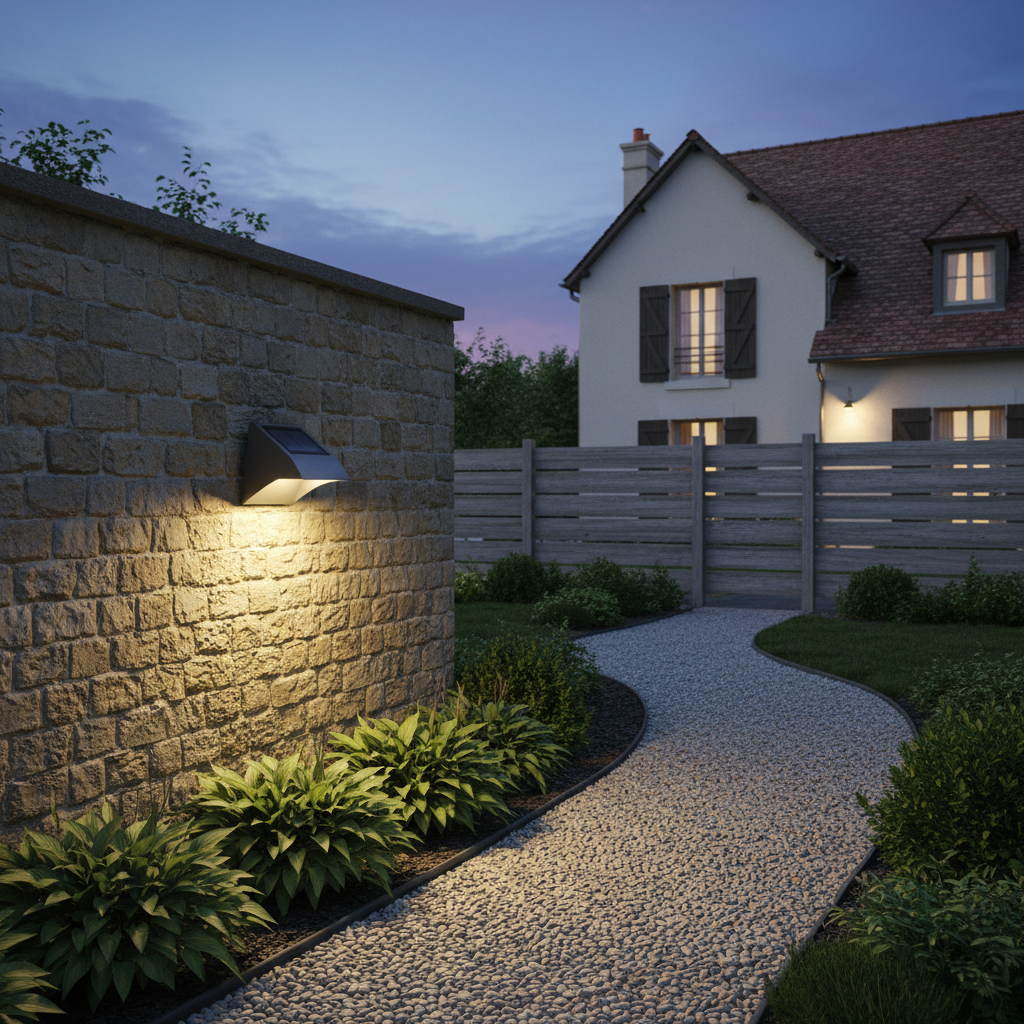
This is the most requested category. It mounts on a wall, turns on when someone passes by, and stays off otherwise. Ideal for an entryway, garage, service door, or patio corner. The motion sensor is what allows the battery to last several weeks without solar recharging — a point often underestimated during purchase.
To understand how this type of product works in detail, our guide on motion sensor solar lighting explains the different modes and pitfalls to avoid.
Solar Path Light for Driveway or Garden
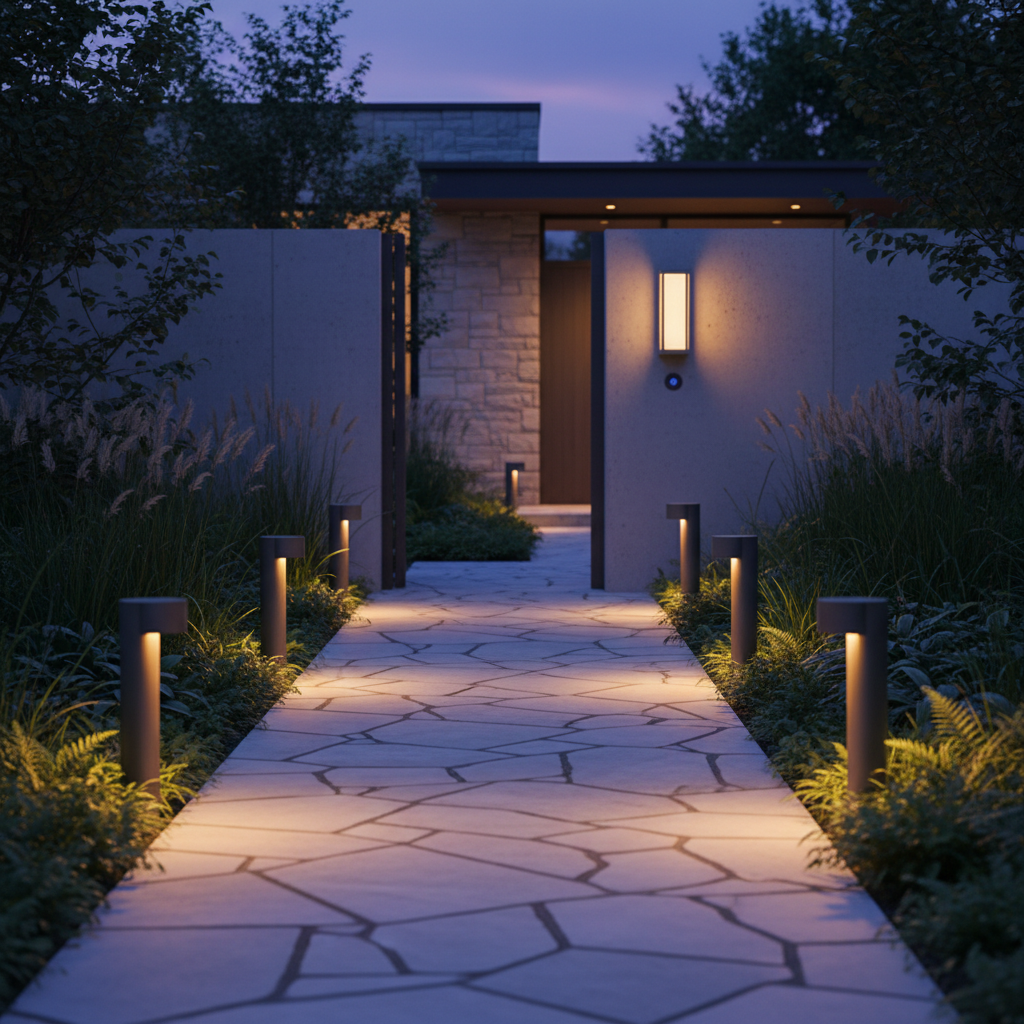
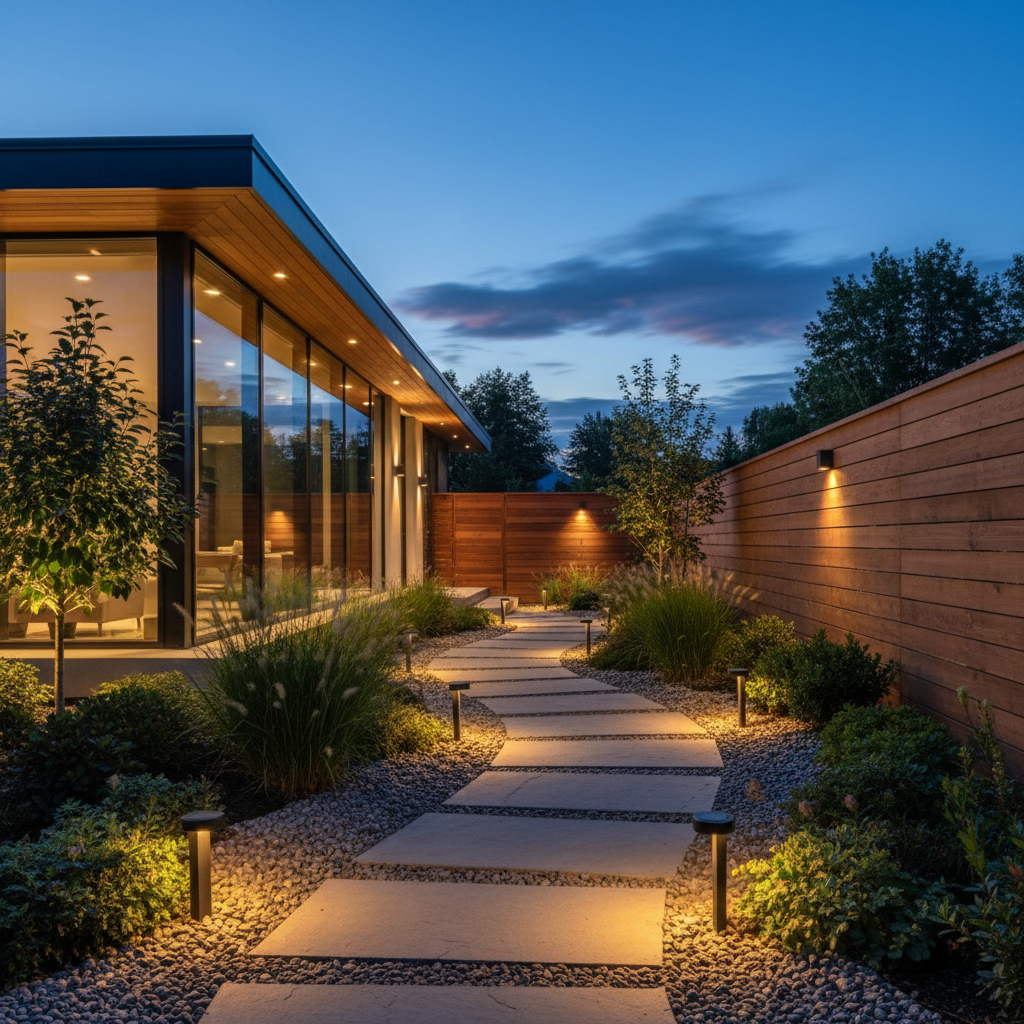
Staked into the ground, it outlines a driveway, defines a lawn, or creates ambiance in a garden. Light output isn't its priority: aesthetics and consistent all-night illumination are what matter. Most path lights stay on continuously from dusk, which requires a generous battery.
Solar Floodlight
When you need to illuminate a large area — a facade, parking lot, barn, or sports field — the floodlight is the only suitable format. It concentrates light on a specific area with high power. If you're torn between models, our article on outdoor solar floodlights details the technical criteria to check before buying.
Decorative Sconce or Lantern
Less power, more style. These lights aren't really for seeing where you're going, but for creating an atmosphere on a patio, balcony, or deck. They work well in summer, much less so in winter when sunlight decreases.
Selection Criteria: What Really Matters
Solar light marketing is misleading. A manufacturer announcing "2000 lumens" without specifying conditions is useless information. Here's what to look for to make an honest comparison.
Actual Light Output
Lumens displayed on boxes are often measured under ideal conditions: full sun panel, full battery, max mode. In real-world use, the number is often much lower. To properly evaluate a light, look for independent tests or reviews that concretely mention if the light is sufficient in their context.
Autonomy Without Sun
This is the criterion that distinguishes a reliable solar light from one that dies after three cloudy days. In many regions, especially between November and February, a week without good sunshine is entirely possible. A light that lasts 3 to 5 days in continuous mode is borderline. Twenty days in detection mode is a different story.
Battery size and solar panel quality make all the difference here. To learn more about this specific topic, our article on high-performance winter solar lights is a good starting point.
IP Rating
An outdoor light must withstand rain, snow, and frost. An IP65 rating guarantees protection against water jets from all directions. Below that, it's a risk. IP44 (splashes) may suffice in a sheltered location, but for an exposed facade, IP65 is the minimum recommended.
Battery Quality
A good capacity lithium battery is the difference between a light that lasts 18 months and one that loses 40% of its performance after one winter. The type of battery for solar lights is a topic most comparisons ignore, yet it determines the product's actual lifespan.
Warranty and Customer Support
A $15 light with no warranty that fails after a year is more expensive than a $50 light with a 5-year warranty. The math is simple, but rarely done. Customer support also matters: a return with no response for 3 weeks often happens with no-name Amazon brands.
Category Comparison: The Best Models
Here's a summary table before detailing each category. The models cited are representative of their segment — not necessarily the only ones available, but those that best illustrate the differences.
| Criterion | Powerful Motion Sensor Sconce (SolarGlow) | Entry-Level Solar Floodlight | Decorative Path Light | Decorative Sconce |
|---|---|---|---|---|
| Light Output | 1200 lumens | 600-800 lumens advertised | 30-80 lumens | 80-200 lumens |
| Autonomy without Sun | 20 days (detection mode) | 3-5 days | 1-2 nights | 2-4 nights |
| Resistance | IP65 | IP44-IP65 depending on model | Variable | Often IP44 |
| Installation | Wireless | Wireless | Stake-in | Screws or adhesive |
| Warranty | 5 years | 6 months - 1 year often | 6 months - 1 year | Not specified |
| Customer Support | US-based, <24h | Variable (often non-existent) | Variable | Variable |
Winner Motion Sensor Wall Sconce: SolarGlow (Lumic)
For this category, the SolarGlow stands out on the criteria that truly matter in daily use. 1200 lumens is sufficient to properly illuminate a 26-foot (8-meter) driveway or a garage entrance. The motion sensor covers 180° with a range of about 26 feet (8 meters), avoiding blind spots common in less well-designed models.
What truly makes a difference is the autonomy: 20 days without solar recharging in detection mode. In practice, this means even a week of cloudy skies in November won't leave you in the dark. The solar panel and battery are sized to compensate for winter periods, where most entry-level models fail after 3-4 cloudy days.
The IP65 rating meets US weather conditions: rain, frost, snow. Nothing to fear from the weather.
What the SolarGlow doesn't do: it's not stylistically discreet. It's a functional sconce, not a decorative piece. If aesthetics are more important than efficiency, other options are better. And if you need to illuminate a very large area (parking lot, entire facade), a dedicated floodlight will be more suitable.
The 5-year warranty changes the financial calculation. A $15-$20 light with no warranty that breaks after one winter means starting over every season. Over 3 years, the total cost of a low-end solution without customer support often exceeds that of a guaranteed product. And when you have a problem at 10 PM on a Sunday, US-based customer support that responds within 24 hours has real value.
To explore how to position this type of light on a facade or exterior wall, our guide on outdoor solar wall lights details the best mounting points and angles.
Solar Floodlights: Market Options
To illuminate a large area, solar floodlights have improved in recent years. Models found at Home Depot or on Amazon in the $30-$60 range display impressive numbers (often 1500 to 3000 lumens), but these values are regularly exaggerated compared to real-world use.
Models from established brands like Philips or Home Depot's references in the $50-$80 range offer better consistency between advertised and actual performance. But the warranty often remains limited to 1-2 years, and customer support involves sometimes lengthy return procedures.
Strengths: high light output to cover large areas, adjustable format.
Weaknesses: often limited autonomy (3 to 7 days without sun depending on models), performance drops in winter if the battery is undersized.
Who it's for: homeowners who need to illuminate a parking lot, courtyard, or barn. Not suitable for a typical house entrance where a sconce is sufficient.
Our dedicated article on outdoor solar floodlights details how to evaluate the true technical criteria before deciding.
Solar Path Lights for Driveways: Aesthetics First
Solar path lights for gardens and driveways are in a separate category. They're not there for you to see, they're there for the house to be seen. The light output is low (rarely more than 50-80 lumens in real use), but that's not the goal.
IKEA references (SOLARVET, SUNNAN) or kits available at garden centers are decent options for this decorative use. Affordable price, visually pleasing, installed in seconds. However, they don't hold up well in winter if they don't get a minimum of sunlight.
Strengths: low price, tool-free installation, beautiful visual effect in summer.
Weaknesses: insufficient power for functional use, poor winter performance, often limited lifespan.
Who it's for: homeowners looking for decorative garden lighting, without strong functional expectations.
Decorative Sconces: For Ambiance, Not Security
The market is flooded with decorative solar wall sconces under $20. They look good in product photos, much less so in the reality of an autumn evening.
These products have their place on a sheltered balcony, an exposed south-facing patio, or a gate in a sunny geographic area. But they don't replace functional lighting.
Who it's for: for creating ambiance on a patio, not for securing an entryway.
If you're looking for something more powerful for your garden, our guide on powerful garden solar lights compares serious options.
What No One Tells You About Cheap Solar Lights
Why Advertised Lumens Mean Nothing
Most low-end manufacturers measure their lumens in laboratory conditions — full sun panel, 100% charged battery, LED pushed to maximum. In real-world use, with a half-charged battery after a cloudy day, the number can be divided by two or three. There's no mandatory measurement standard for consumer products, so each brand does as it pleases.
The only way to get a reliable idea: read reviews that describe concrete use. "I can clearly see my 20-foot (6-meter) driveway" is better than "1500 lumens" without context.
Read the Warranty Before Buying
A 6-month warranty often covers only the good season. If the light breaks down in January, you're out of warranty. Read the conditions before buying, check if returns are free, and ask yourself if an unanswered email is really customer support.
Small Solar Panels Saturate Quickly
A small solar panel integrated into a compact light charges well in July. In October, the sun is lower, days are shorter, and the panel receives a fraction of the energy available in summer. That's why panel size and battery capacity are critical data for winter months.
The True Cost Calculation Over 3 Years
This is where many people make a mistake. They see a $12 light and a $60 light, and they buy the cheaper one. Let's see what that looks like over 36 months.
| Scenario | Entry-Level Light ($12-$15) | Quality Light ($50-$70, 5-year warranty) |
|---|---|---|
| Purchase Price | $12-$15 | $50-$70 |
| Estimated Lifespan | 12-18 months (frequent returns) | 5 years minimum |
| Replacements over 3 years | 2 to 3 times | 0 |
| Total Cost over 3 years | $36-$45 | $50-$70 |
| Time Lost (returns, re-installations) | 2-3 hours | 0 hours |
| Customer Support in case of failure | Non-existent or lengthy procedure | US-based, response <24h |
Over three years, the price difference often reverses. And we're not even talking about the time spent searching for a new model, ordering, waiting, and reinstalling. This calculation completely changes the perspective.
Our Recommendation Based on Your Profile
You Want to Secure an Entryway, Garage, or Outdoor Hallway
A motion sensor sconce is what you need. The SolarGlow offers the best balance of power/autonomy/warranty in this category. 1200 lumens with 20 days of autonomy without sun, IP65, 5-year warranty, and US-based customer support with a 24-hour response — this is the combo that distinguishes a serious product from the multitude of no-name brands. 90-day satisfaction guarantee or your money back if it doesn't fit your situation.
You Want to Illuminate a Large Area (Parking Lot, Entire Facade)
A dedicated solar floodlight is more suitable. Compare models based on advertised autonomy without sun, IP rating, and actual warranty. Our guide on outdoor solar floodlights lists the criteria to check point by point.
You're Looking for Garden or Patio Decoration
Decorative path lights and sconces have their place for creating ambiance. IKEA, local garden center brands, or multi-light kits are reasonable options if the goal is aesthetic and you're in a well-lit area. Don't expect winter performance from these products.
You're a Renter and Can't Drill
Most solar lights install without electrical wiring, but some still require screwing into a wall. Look for a model with adhesive mounting or a clip-on bracket. The SolarGlow installs wirelessly but requires light wall mounting.
Key Takeaways from This Comparison
The best outdoor solar light doesn't universally exist — it depends on your use. But some principles apply everywhere: be wary of inflated lumens, calculate the cost over 3 years not just the purchase price, and read the warranty before ordering.
For motion sensor wall sconces, Lumic's SolarGlow is the most solid choice on the market in this category: real power, long autonomy, weather resistance, and a warranty that truly protects. For other uses, recommendations vary — and honesty on this point is what allows for an informed choice.
If you're still unsure about motion detection technology and how to use it to its full potential, our complete guide on motion sensor solar lighting answers the most frequent questions.