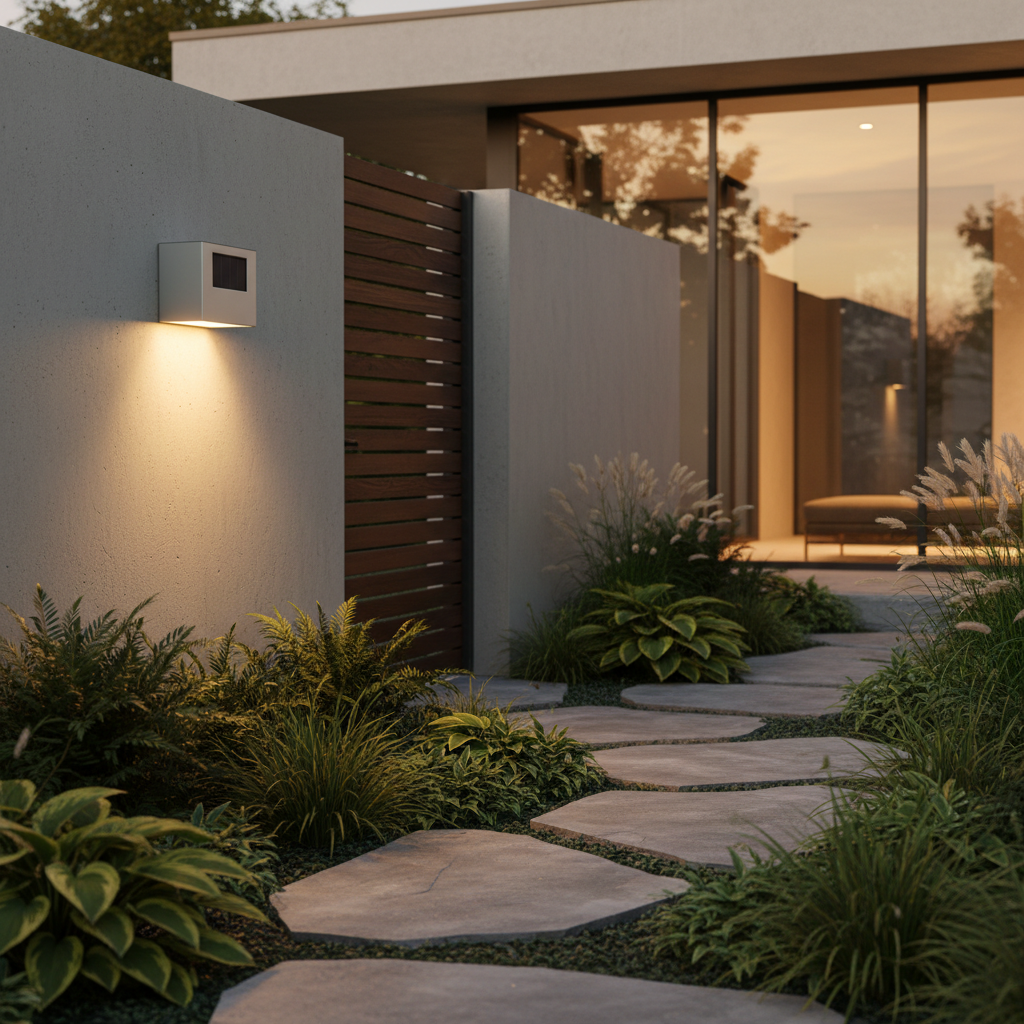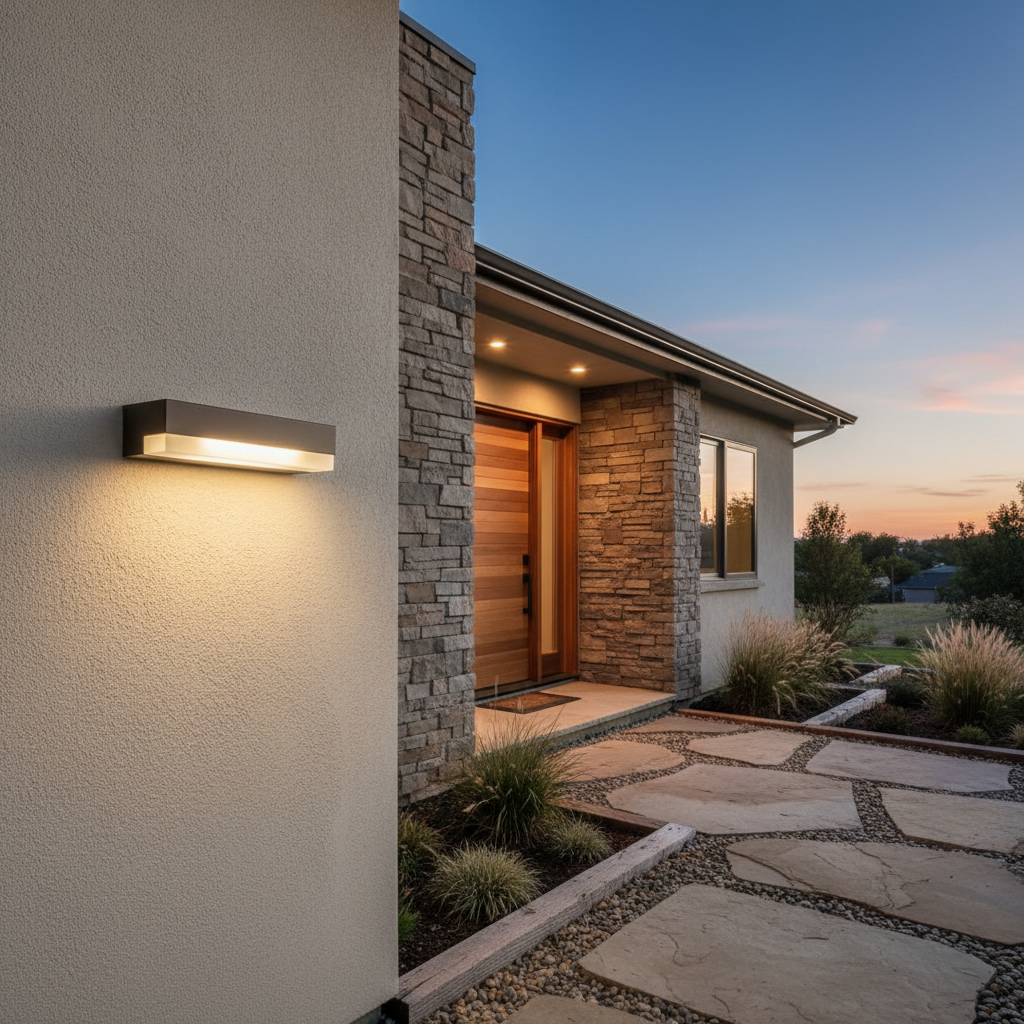
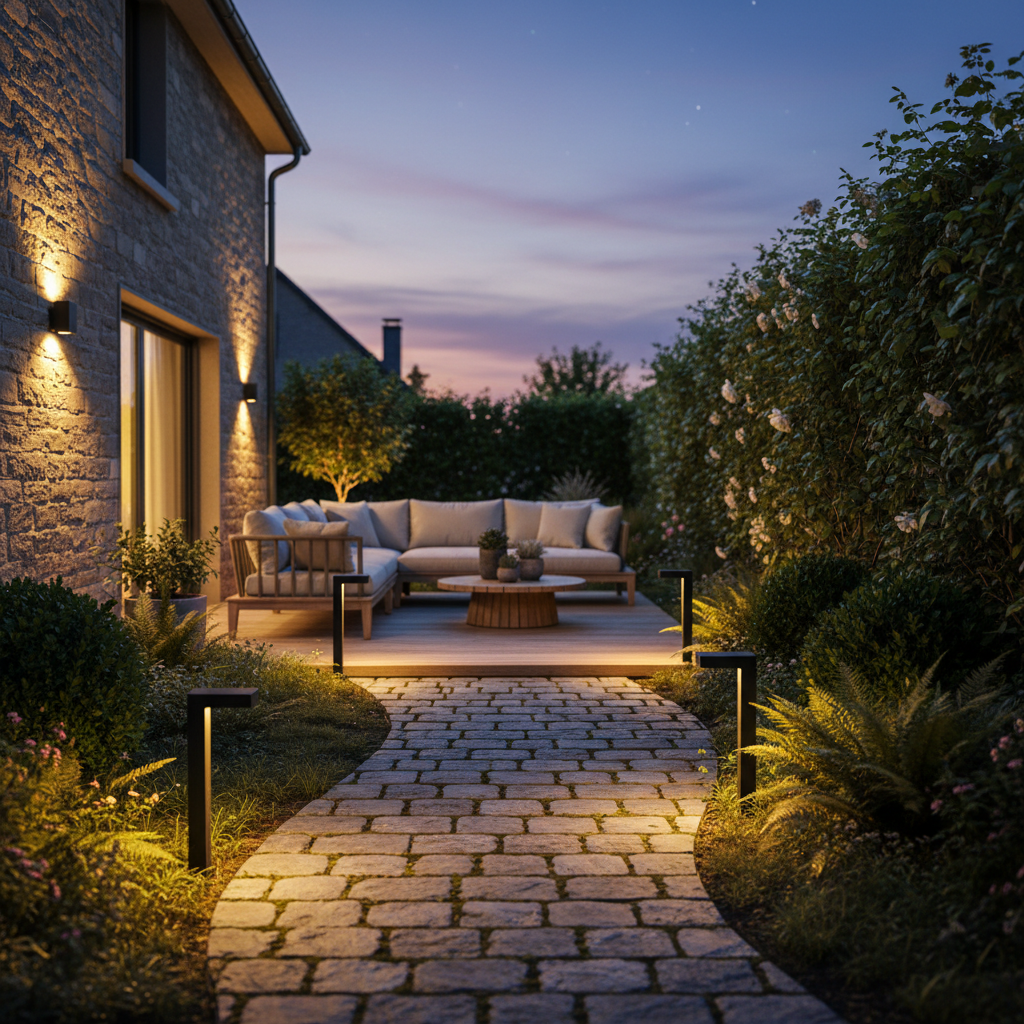
Wiring a garden often means digging trenches, hiring an electrician, and a bill quickly exceeding $1,000. For a simple entrance light or a few path lights, it makes no sense. Fortunately, wireless garden lighting has evolved significantly: current solutions are year-round durable, weather-resistant, and install in minutes without tools.
This guide explains how to organize your wireless outdoor lighting zone by zone, which technology to choose for each use, and when solar clearly outperforms USB rechargeable.
USB Rechargeable vs. Solar: What's the Difference for Your Garden?
For indoor use, USB charging is convenient. For outdoor use, it quickly becomes a hassle. Garden lighting without electricity relies on two product families, and they are not equally suitable depending on where you install them.
USB Rechargeable: Convenient but Requires Attention
USB rechargeable lights work great for a patio where you use light in the evening during summer. You charge the table lamp once a week or month, and you're good to go. However, for a fixed light you want to forget about all year, it quickly becomes restrictive. You have to remember to recharge, bring the lamp inside in winter, or run an extension cord outside to plug it in. That's not truly wireless.
Solar: True Outdoor Autonomy
Solar garden lighting requires no intervention once installed. The solar panel recharges the battery during the day, and the light turns on automatically at night or upon motion detection. The result: zero cables, zero manual recharges, zero extra cost per light point.
The difference between a cheap solar light and a serious solution lies in the size of the solar panel and battery capacity. In winter, with less sunlight, a small cell isn't enough to charge properly. To better understand what makes the difference between models, check out our article on powerful outdoor solar lights.
For a garden, solar almost always wins: no forgotten recharges, waterproof, autonomous 365 days a year. The rest of this guide focuses on solar solutions by zone, with a mention for rechargeable where it makes sense.
Organizing Your Garden by Zone: The Most Effective Approach
Before buying anything, identify your actual needs. A garden is generally divided into three or four distinct zones with different requirements. An entrance doesn't need the same lighting as a pathway or a patio.
Which Garden Zones Need Wireless Lighting?
Here are the most common zones and their primary uses:
- Entrance and Gate: Security and visibility. You want the light to turn on automatically when someone arrives, without staying on all night.
- Main Pathway: Guidance and aesthetics. Low-height path lights or spotlights are enough to define the path without blinding.
- Patio: Ambiance and comfort. This is where you'll mix sources: fixed ambient lighting and portable table lamps.
- Backyard, Shed, or Garage: Occasional use. Motion-activated lighting is perfectly sufficient; no need for continuous illumination.
Each zone has its priorities. The entrance needs responsiveness and power. The patio needs softness and flexibility. The pathway needs discretion and durability.
Entrance and Gate: Prioritize Motion Detection
This is the zone where wireless lighting adds the most value. Running a cable to a gate or property entrance often means a trench 30 to 100 feet (10 to 30 meters) long, sometimes more. With a solar motion-sensing solution, you install the light on the wall or pillar in 10 minutes.
Why is a Motion Sensor Essential at the Entrance?
Without a sensor, the light stays on all night. This drains the battery unnecessarily and doesn't truly enhance security, as the eye gets used to it. With a motion sensor, the light comes on at the right moment: someone enters, the light turns on. It's more psychologically effective and much more energy-efficient.
The best for this zone is a wireless garden light with two wide-angle motion sensors to cover corners, and sufficient range to detect before the person is already at the doorstep.
Lumic's SolarGlow for the Entrance
For this specific zone, Lumic's SolarGlow meets the requirements well. It delivers 1,200 lumens, providing truly powerful lighting (not the faint glow of some entry-level solar lights). It features two 180° sensors with a range of about 26 feet (8 meters), effectively covering a driveway or gate. It's IP65 certified, meaning it's waterproof against rain, snow, and frost.
What truly sets it apart from cheaper alternatives: its solar panel and battery are oversized to function even in winter. It boasts 20 days of autonomy without solar recharge in detection mode. For those curious, more details on choosing an outdoor solar floodlight.
5-year warranty, 90-day satisfaction guarantee. Rated 4.5/5 on Trustpilot (over 2,200 reviews).
Pathway: Low-Height Path Lights and Spotlights Without Trenching
Creating pathway lighting with buried cables is like domestic civil engineering. Trenching, conduit, low-voltage cable, waterproof connections, panel hookup... For aesthetic reasons, many give up. Wireless truly changes the game here.
What Types of Wireless Lights for Garden Pathways?
Low-height solar path lights (12 to 24 inches / 30 to 60 cm) are the most suitable. They stake directly into the ground; no wall mounting needed. Their role is not to illuminate intensely but to define the path and create ambiance. A soft, downward-facing light is perfectly sufficient.
For a pathway, a few points to check before buying:
- Stability: A path light that tips over at the first gust of wind or mower is frustrating. Models with long stakes and heavy materials (aluminum, steel) hold up better.
- Winter Autonomy: In November-January, sunlight significantly decreases. A small solar cell may not recharge sufficiently in 6 to 8 hours of diffuse light.
- IP Rating: At least IP44 for outdoor use, IP65 if you are in an area with heavy rain or frequent frost.
For an average 33-foot (10-meter) pathway, 4 to 6 path lights spaced 5 to 6.5 feet (1.5 to 2 meters) apart provide a balanced look. Our guide on solar garden lighting by zone details configurations based on pathway length.
Patio: Ambiance First, Functionality Second
The patio is where you spend time. Lighting should create an atmosphere, not just allow you to see your feet. This is also where USB rechargeable lights regain their appeal, alongside fixed solar options.
How to Combine Wireless Lighting Sources on a Patio?
A well-lit patio uses layered lighting. The idea: never a single strong source on the ceiling or wall, but multiple soft sources at different heights.
- High Lighting (Solar Wall Sconce): Mounted on the house wall or fence, it provides basic light. Continuous or motion-activated mode depending on your preference.
- Mid-Level Lighting (Solar String Lights or LED Strip): Strung between two points, it creates an evening ambiance. Very effective for long summer gatherings.
- Low Lighting (Lantern or Rechargeable Table Lamp): For coffee tables, LED candles, or small portable lanterns. This is where USB rechargeable shines: you use the lamp in the evening, it recharges during the day, and you can bring it inside in winter.
To explore concrete ideas for different ambiances, find our suggestions in the article dedicated to wireless patio lighting.
What Light Temperature to Choose for a Garden Patio?
This is a common question, and the answer depends on the use. For a patio where you entertain in the evening and want a warm ambiance, opt for warm white (2700 to 3000K). For an outdoor kitchen patio where you cook and need clear visibility, a neutral white (4000K) is more comfortable. Cool white (6000K) should be avoided for ambiance: it's parking lot lighting, not for a summer patio.
Backyard, Shed, and Garage: On-Demand Lighting
For these occasional-use areas, there's no need for a complex solution. The principle is simple: light turns on when you need it, not before. A sufficiently powerful motion-sensing solar floodlight covers this need without any cables.
Does Solar Lighting Really Last All Year in These Areas?
Yes, provided the solar panel is well-positioned. This is often the number one mistake: installing the light facing south but with vegetation that casts shade in the afternoon. The solar panel must receive maximum direct sunlight between 10 AM and 4 PM, even in winter. If this isn't possible on the shed's facade, some models have a remote solar panel connected by cable, allowing it to be oriented separately from the light.
For the garage, a motion-sensing solar light with a range of 16 to 26 feet (5 to 8 meters) and a power of at least 800 to 1,000 lumens covers most configurations. Below that, the light will be too dim to be truly useful at night.
Comparison Table: Solar vs. USB Rechargeable by Zone
| Zone | Best Option | Why | Avoid |
|---|---|---|---|
| Entrance / Gate | Motion-Sensing Solar | Autonomous, responsive, no cables | Rechargeable (easy to forget) |
| Pathway | Solar Path Lights | No trenching, clean aesthetic | Wired (cost + labor) |
| Patio (ambiance) | Mix Solar + USB | Flexibility + warm feel | Single overhead source |
| Shed / Garage | Motion-Sensing Solar Floodlight | Occasional use, zero maintenance | Low-power light |
| Patio Table Lamp | USB Rechargeable | Portable, easily brought inside | Solar (ineffective if shaded) |
What to Check Before Buying a Wireless Garden Light
The market for wireless outdoor lights is vast, and quality differences are huge. Between an $8 light from a marketplace and a serious solution, the difference isn't visible in product photos but in real-world use after 3 months of winter.
The 5 Criteria That Really Matter
- IP Rating: At least IP44 for rain. IP65 if you are in an area with frost or heavy precipitation. Below that, the light won't survive its first winter.
- Battery Capacity: A small battery means a light that stops working in November. For solar, ensure the battery allows several days of autonomy without sun.
- Solar Panel Size: A tiny panel cannot properly recharge a battery in winter, when days are short and skies are cloudy. Serious models have oversized panels to compensate.
- Light Output (Lumens): For an entrance or garage, you need at least 800 to 1,200 lumens. For pathway ambiance, 100 to 300 lumens per path light are sufficient. Beware of products that claim peak lumens without specifying the actual value in normal operation.
- Warranty: An outdoor light exposed to the elements should have a minimum 2-year warranty, ideally 5 years. This indicates confidence in product durability.
For more in-depth selection criteria, our article on choosing a wireless light covers technical points in detail.
Avoid the Pitfalls of Cheap Solar Lights
Solar lights under $15 exist, and some buy them in bulk to light a pathway. In summer, they work. From October onwards, the feedback is consistently the same: the light lasts 2 hours maximum, then turns off. The panel doesn't recharge enough, the battery is insufficient, and sometimes the waterproofing is inadequate.
It's not a matter of luck. It's a matter of components. A battery that ages quickly in the cold, a solar panel of a few square inches, basic seals: these are manufacturing choices that explain low prices. The real cost of these lights is replacing them every spring.
Find all compared solutions in our outdoor solar lighting guide to choose according to your use and budget.
In Summary: How to Start Your Wireless Garden Lighting Project
Lighting your garden without cables or trenching is feasible and often smarter than traditional wiring. The cost of professional garden wiring (trench, cable, electrician, outdoor panel) easily exceeds $1,000 to $3,000 depending on the area. Each wireless light point is a direct cost saving on installation.
The three steps to get started:
- Map your zones: entrance, pathway, patio, backyard. Each zone has its needs and its adapted solution.
- Prioritize solar for fixed areas: entrance, pathway, shed. Zero maintenance, autonomous all year round, provided you choose a model with a serious battery and panel.
- Reserve USB rechargeable for flexible areas: patio table lamps, decorative lanterns that you bring inside in winter.
For further comparison of technologies, the article on wireless outdoor lighting solutions details selection criteria for each usage profile.
Wireless garden lighting is no longer a compromise: it has become the simplest, most cost-effective to install, and most maintainable solution over time. Technology has caught up with the constraints. It's up to you to choose the right zones first.