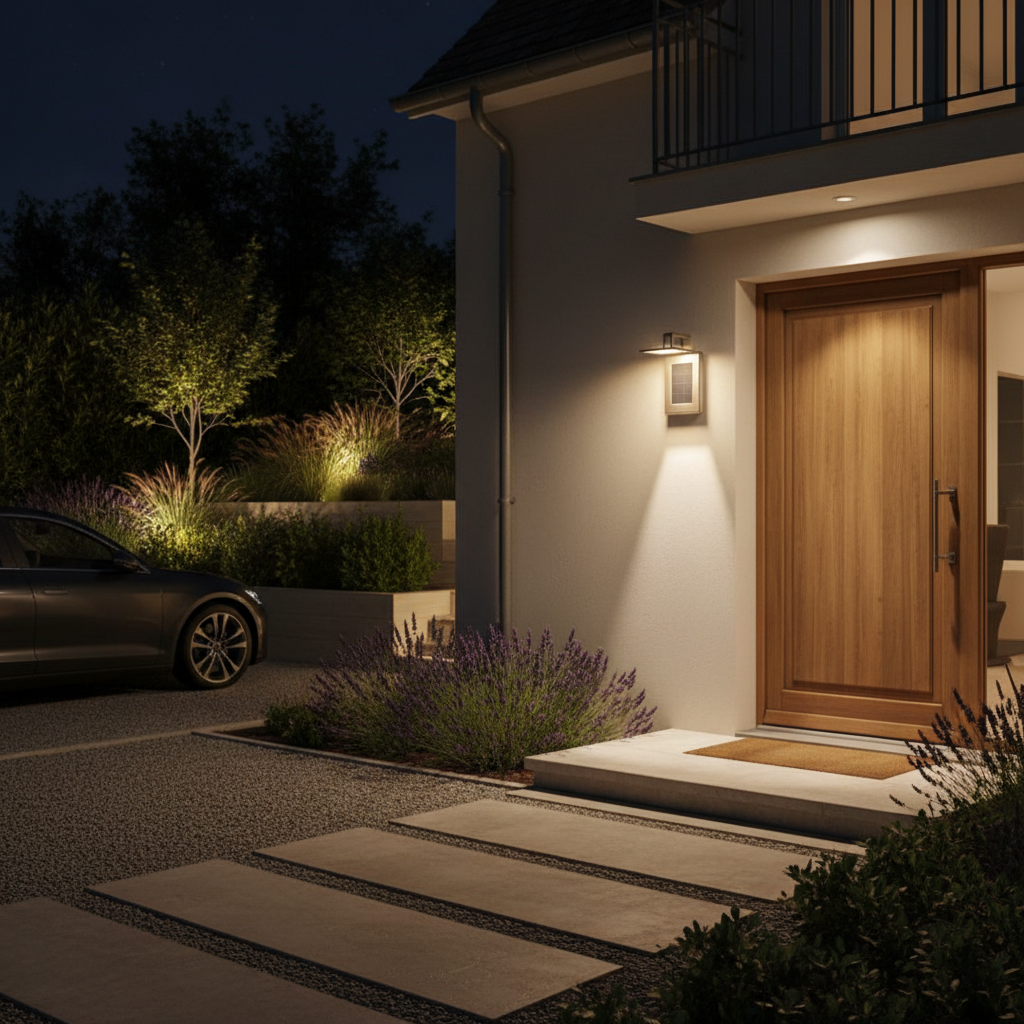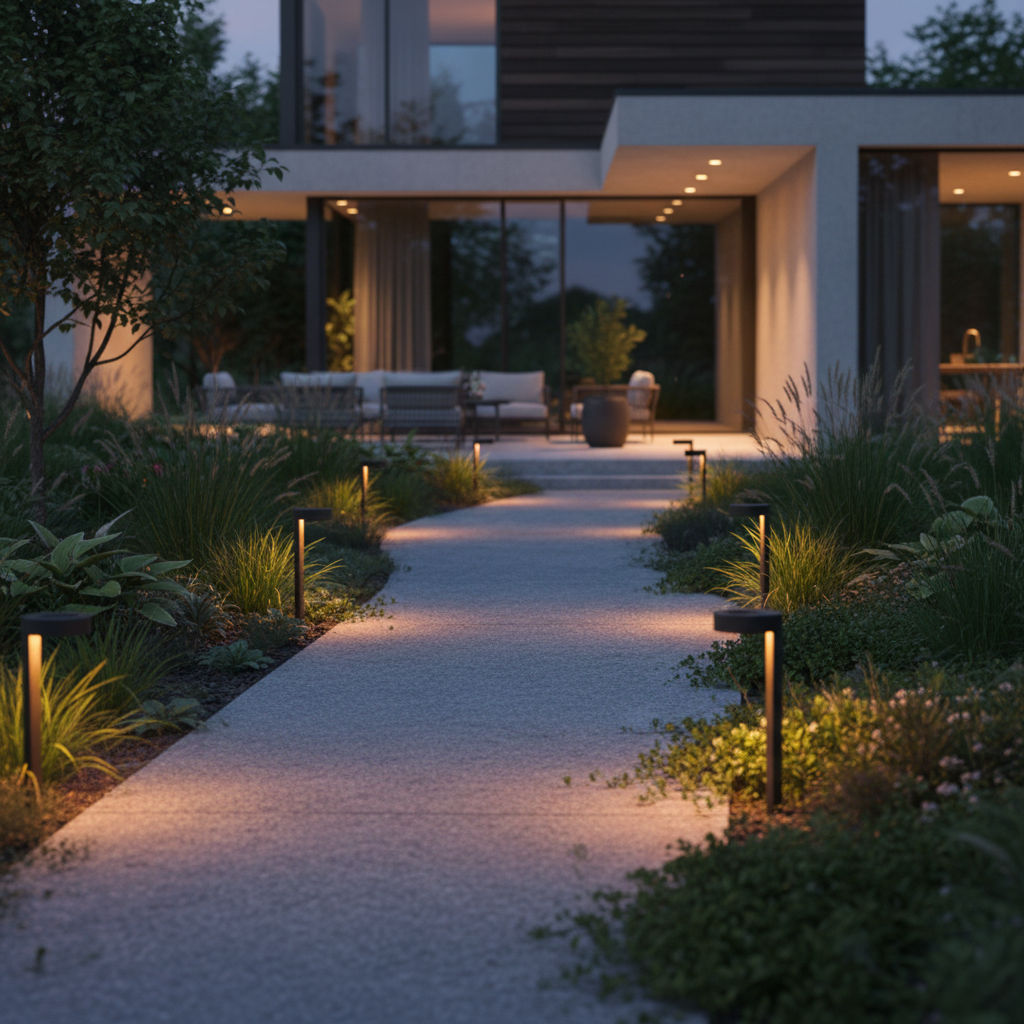
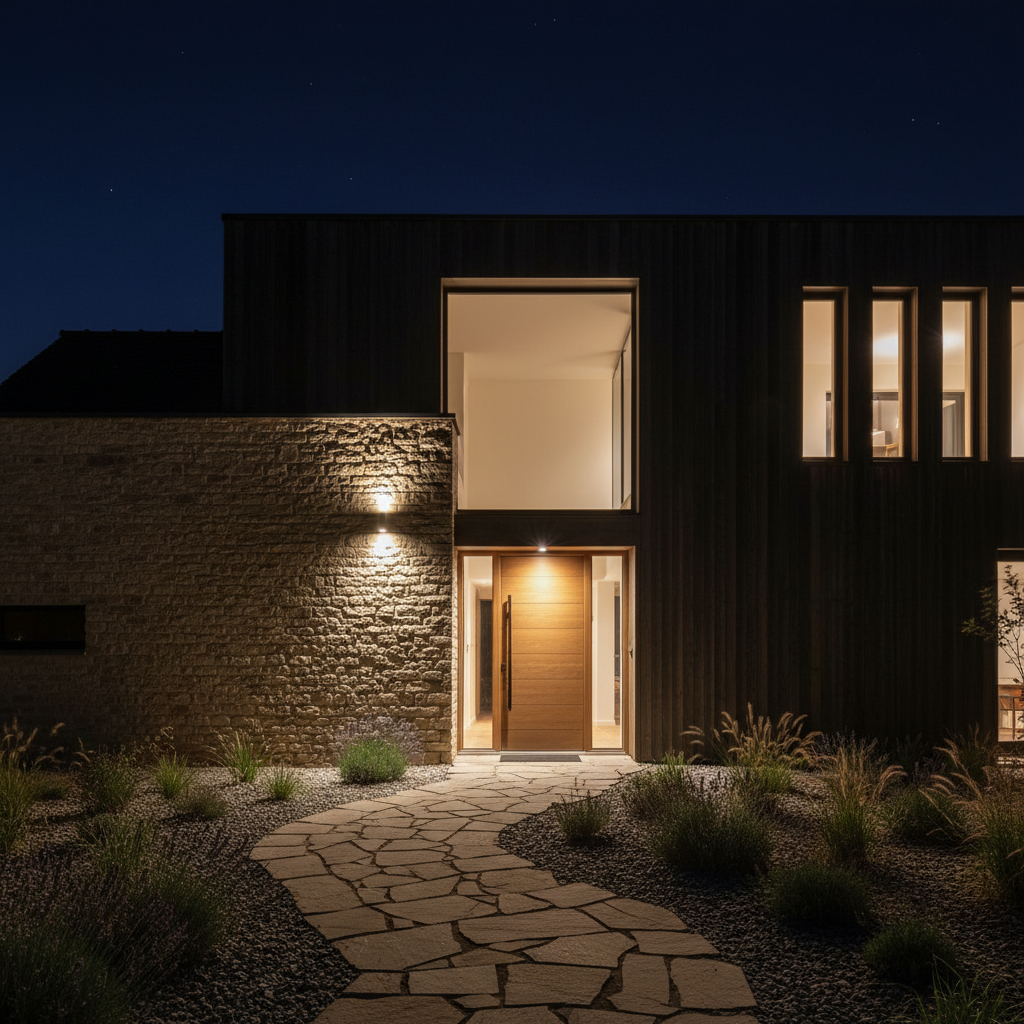
Ever fumbled for your keys in complete darkness, trying to find the keyhole for 30 seconds? Or walked down your driveway at night, hoping not to trip over anything? An outdoor solar motion sensor light solves these problems without wires, electricians, or modifying your home.
But not all solar lights with sensors are created equal. There's a crucial factor most people overlook when buying — and it explains why some lights trigger for a sparrow, while others miss a person walking 6 feet away. This factor is the type and configuration of the sensor. This guide tells you everything you need to know before choosing.
Why a Solar Motion Sensor Light Is a Game-Changer
An outdoor solar light that only turns on when you approach is both practical and energy-efficient. No need to fumble with a switch, no need to leave a light on all night unnecessarily.
How It Works in a Nutshell
The light combines two independent sensors: a PIR (Passive Infrared) sensor that detects moving human heat, and an ambient light sensor (photodetector) that prevents the light from activating during the day. The result: it only turns on at night or in a dark area, and only if someone (or something warm) moves within its detection zone.
The PIR sensor doesn't react to wind, falling leaves, or a distant passing car — it picks up infrared variations emitted by a warm, moving body. This is what sets it apart from a generic motion sensor. To understand in detail how this type of sensor works, check out our article on how motion sensors for lighting really work.
Solar vs. Wired for Outdoor Use
A wired outdoor motion sensor often requires an electrician, trenching or conduit, and a budget that can quickly reach $200 to $500 depending on the setup. A solar light, however, mounts in minutes to a wall, post, or fence. No wires to pull. And no wires to cut either, which eliminates an often-forgotten physical vulnerability.
The #1 Criterion: Number of PIR Sensors
This is the point most product descriptions on Amazon or at Home Depot don't clearly explain. The difference between a light with one sensor and a light with two PIR sensors is significant.
Single PIR Sensor: Partial Coverage
With a single sensor positioned at the center of the light, the detection zone resembles a cone. This cone has a blind spot: people approaching from the sides or below (if the light is mounted high) can pass without triggering the light. This is frustrating when you approach your home from the side. It's also a limitation for security use.
The range of a single sensor typically varies between 10 and 16 feet for entry-level models. This is sufficient for a small outdoor hallway or a narrow doorway, but not for covering a standard driveway or patio.
Dual 180° PIR Sensors: Zero Dead Zones
Two PIR sensors positioned on either side of the light provide uninterrupted 180° coverage. The dead zone disappears. Someone approaching from the left side triggers the left sensor. Someone walking straight ahead triggers both. The range extends up to 23 or 26 feet depending on the model, covering a standard driveway or an entire facade.
In practice, the difference is immediately noticeable: no more awkward moments where you walk past your own light without it turning on. And for applications where reliable detection is critical (garage, gate, main entrance), dual sensors are not a luxury; they're the reasonable minimum. To learn more about this, our complete guide to solar motion sensor lighting details these configurations in depth.
Detection Angle: 90°, 120°, 180° – What's the Difference?
The detection angle is the width of the cone the sensor covers. A 90° angle is quite narrow: perfect for monitoring a straight path or a front door facing the light. A 120° angle starts to cover a wider area. At 180°, you cover the entire width of the facade in front of the light. Combined with good range (20 to 26 feet), a 180° angle with dual sensors is the most comprehensive setup for real outdoor use.
Other Technical Criteria to Check Before Buying
The sensor is the main criterion, but other factors differentiate a reliable light from one that disappoints after six months.
Light Output: Lumens and Real-World Use
Lumens indicate the amount of light emitted. For purely functional use — lighting your way home or illuminating a pathway — 400 to 600 lumens are sufficient in most cases. Above 800 lumens, you get brightness that truly illuminates a large area and can have a strong deterrent effect on uninvited guests.
Beware of models that claim very high numbers (1500, 2000 lumens) without providing details on LED quality or battery capacity. Actual intensity also depends on how long that intensity is maintained. A 1200-lumen light with a solid battery that lasts is better than a 2000-lumen light that dims after the second sunless night.
Weather Resistance: The IP Rating
An outdoor light will endure rain, frost, and possibly snow. The IP (Ingress Protection) rating tells you how well it's protected. IP65 is the serious minimum standard for outdoor use: complete protection against dust and water jets from all directions. Below IP65, be wary for winter use in colder climates.
Battery Life: Battery and Solar Panel
A solar light depends on two things: the quality of its panel to recharge the battery, and the battery's capacity to last several consecutive sunless nights. In many regions, especially during fall and winter, you can have 3 or 4 consecutive cloudy days. A low-capacity battery combined with a small panel will result in a light that stops working after two gray nights — exactly when you need it most.
A generous solar panel and a high-capacity battery can last 15 to 20 days without solar recharge in motion detection mode, depending on usage. This is a decisive factor for less sunny regions and for reliable winter use. To properly evaluate this point for your specific case, consult our article on choosing an outdoor solar wall light.
Available Operating Modes
A good solar light with a sensor offers at least two modes:
- Motion Detection Mode: The light turns on only when someone passes, for an adjustable duration (often 10 to 30 seconds). This mode best preserves battery life.
- Continuous Lighting Mode: The light stays on constantly, useful if you're hosting an outdoor party or want to illuminate an area for an extended period. This mode consumes significantly more — think hours, not weeks, for battery life.
Some models also offer a mixed mode: a dim nightlight constantly on + full power activation upon motion. Practical for marking an area without draining the battery.
Where to Install Your Outdoor Solar Motion Sensor Light
Placement directly impacts your light's effectiveness. Two common mistakes are installing the light too low (it triggers for animals and children, not adults) or installing it in the shade (the solar panel doesn't recharge properly).
Optimal Mounting Height
For a PIR sensor, the recommended height is generally between 8 and 11.5 feet. At this height, the detection cone sweeps the area at human walking level. Too low (under 6.5 feet), the light reacts to everything that passes — cats, dogs, playing children. Too high (over 13 feet), the sensor might miss people directly underneath.
Solar Panel Orientation
The panel should receive maximum direct sunlight. A south or southwest exposure is ideal. Avoid areas shaded by gutters, trees, or awnings. Even 1 or 2 hours of direct sun per day are sufficient for models with a large panel, but this minimum must be guaranteed long-term. If your planned installation lacks direct exposure in winter, reconsider the location or choose a model with a remote panel.
Most Relevant Locations
Areas where a solar motion sensor light adds the most daily value:
- Main house entrance (gate, front door)
- Garage and pedestrian access
- Garden pathways between the street and the house
- Unlit patios and outdoor spaces
- Outdoor storage areas (shed, bike storage)
For each location, ensure the sensor can cover the primary direction of passage. A light placed to the side of traffic flow will be less effective than one placed facing it.
What Low-End Solar Lights Really Deliver
There's a noticeable difference between what product descriptions promise for $8 or $12 lights on marketplaces and what's observed in real-world use. The most frequent customer feedback for this price segment includes:
- Battery life that drops sharply after the second winter as the battery degrades.
- Sensors that trigger for false movements (wind, reflections, small animals) due to poor PIR calibration.
- Insufficient waterproofing after a few months, with leaks around the panel or connectors.
- Actual brightness significantly lower than advertised lumens, especially after several charge/discharge cycles.
This isn't about brand, but component quality — battery, solar cell, LED chip. A model with quality components has a higher manufacturing cost, reflected in the final price. To avoid repurchasing every two years, it's better to invest once in a durable model.
If you want to compare selection criteria in detail, our article on selecting a solar light with a motion sensor lists the points to check before buying.
Lumic's SolarGlow: What It Actually Offers
We've mentioned several criteria throughout this guide. Here's what Lumic's SolarGlow offers based on those same criteria, without marketing fluff.
It features two 180° PIR sensors, each with a 26-foot range. In practice, this means no dead zones in front of it — someone approaching from the left, right, or directly in front of the light triggers it with the same reliability. The solar panel is sized to recharge even in winter conditions, and the battery can last up to 20 days without solar recharge in motion detection mode.
It's UL listed, IP65 certified, and withstands rain, snow, and frost. Installation is wireless, no-drill, directly on a wall or outdoor surface. It comes with a 5-year warranty and a 90-day satisfaction guarantee — so you can install it, test it in your real-world setup, and decide.
For those who want to go further with sensor adjustment and optimization after installation, we have a dedicated article on optimal motion sensor settings covering sensitivity, illumination time, and adjustments based on location.
Summary: How to Choose Your Solar Motion Sensor Light
Before buying, ask yourself these questions in order:
| Criterion | Entry-Level | Good Quality |
|---|---|---|
| Number of PIR Sensors | 1 sensor | 2 sensors |
| Detection Angle | 90-120° | 180° (per sensor) |
| Detection Range | 10-16 feet | 20-26 feet |
| IP Rating | IP44 or unspecified | IP65 minimum |
| Battery Life (no sun) | 2-5 days | 15-20 days |
| Warranty | 1 year or none | 5 years |
If your budget pushes you towards a cheaper light, at least check these two non-negotiable points: IP65 rating and detection range. A light that doesn't detect far enough or leaks in winter is useless.
For other decision parameters related to wireless outdoor lighting, our article on wireless outdoor lighting solutions will help you compare different approaches.
An outdoor solar motion sensor light remains one of the easiest outdoor installations to implement with a real daily impact. The key is choosing a model with a truly capable sensor.