You've probably bought a solar garden light before. It shined for two weeks, then died at the first sign of fall. Or worse: it never really lit up—just flickered faintly along a path, leaving you unable to see anything two feet in front of you.
The problem is rarely the solar technology itself. It's that most lights sold as "powerful" simply aren't. Understanding why will finally help you make the right purchase—one you won't regret in six months.
In this article, we'll talk about powerful solar garden lights: what that really means, how to identify one before buying, and what separates a solar light that truly works from one that just looks pretty.
Why Most Solar Garden Lights Don't Light Up Well
The short answer: the advertised lumens don't match what you actually get. And the internal components don't live up to marketing promises.
The Lumens Problem: What Really Matters?
A lumen measures the total light output from a source. It's the basic unit for comparing the actual light power of two lamps. A candle produces about 12 lumens. A living room LED bulb is around 800 to 1000 lumens. With this scale in mind, you quickly realize what 100, 150, or even 300-lumen solar garden lights are worth: they mark a path, create ambiance, or highlight a lawn edge. But they don't truly illuminate.
To see comfortably in a garden at night—to recognize a silhouette, identify who's entering your property, work on a patio, or read there—you need at least 800 lumens, ideally 1000 to 1500 lumens. This is where the line between decorative marker and functional lighting becomes clear.
What Manufacturers Don't Tell You About Advertised Lumens
The number on the box often corresponds to peak power: the theoretical maximum value measured in a lab under ideal conditions. In real-world conditions—battery at 80%, panel partially dirty, late night after 8 hours of darkness—the actual light output can be significantly lower.
Some cheap lights advertise 800 or 1000 lumens on their packaging but deliver much less in practice, because the battery is too small to maintain that level for long, or the solar panel doesn't provide enough energy to charge properly.
Decorative Light vs. Functional Lighting: Two Distinct Uses
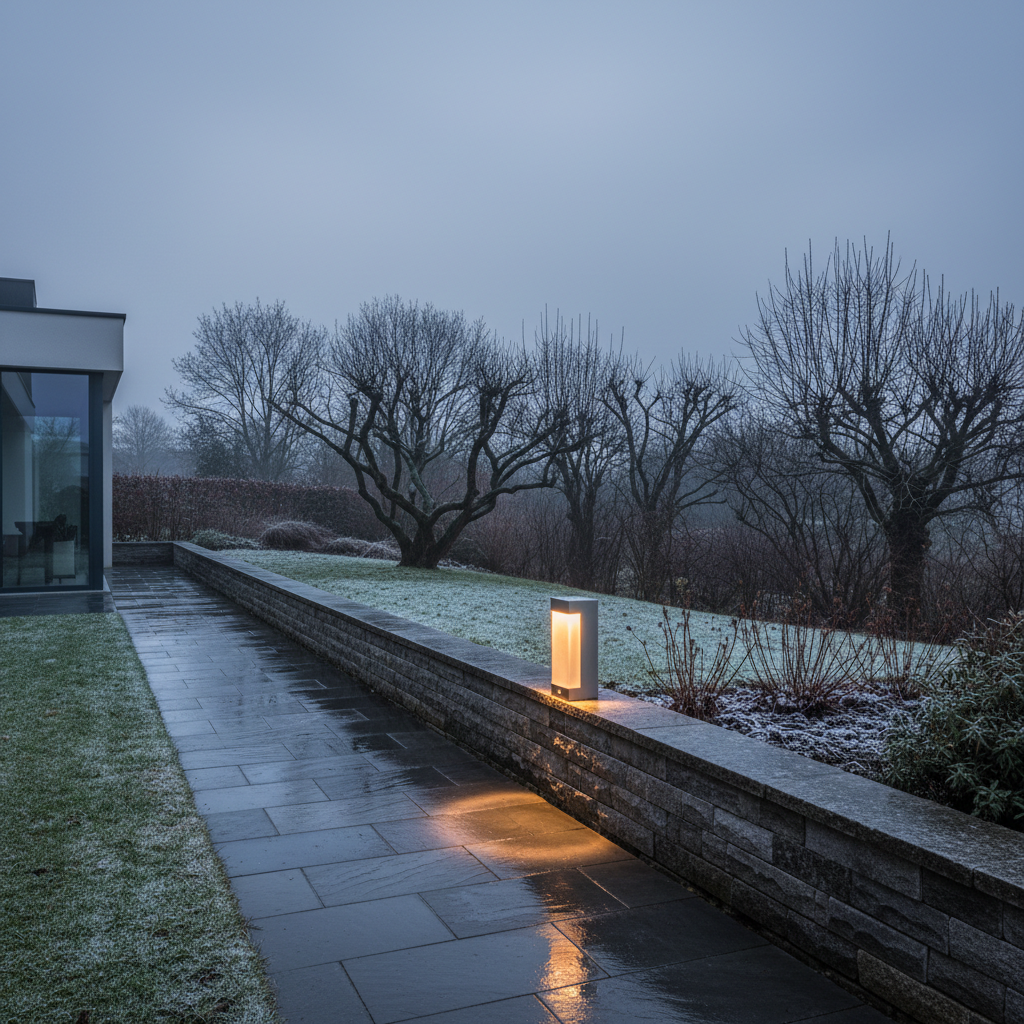
Let's be honest: small 50 or 80-lumen solar path lights have their place. They define a pathway, provide a soft ambiance on a summer evening, or visually mark a space without consuming any power. Nothing wrong with that—it's just not what you're looking for if you want powerful garden lighting that truly lets you see.
When we talk about functional outdoor lighting, we mean a light capable of activating its sensor at 26 feet (8 meters), flooding an area with useful light, and lasting all night without dimming. These are two very different product categories.
The 3 Components That Determine a Solar Garden Spot's Real Power
Before looking at the lumen count on a product sheet, it's better to understand what truly produces that power. Three elements are crucial.
The Quality and Size of the Solar Panel
The solar panel is the engine of the entire system. The larger it is, the more energy it captures—even on cloudy days or short autumn days. An undersized panel never fully charges the battery, which directly results in a light that turns off or dims in the middle of the night.
Cheap lights come with tiny panels, sometimes the size of a credit card. For powerful garden lighting that works even in November, you need a significantly larger panel. This is often the difference between a light that "works in summer" and one that lasts all year. To understand how weather conditions affect performance, our guide on solar light performance in winter details the mechanisms involved.
The Battery's Real Capacity
The battery stores energy captured during the day to release it at night. The larger its capacity (expressed in mAh), the longer the light can maintain a high light output. A 1000 mAh battery with an energy-intensive LED: you might get 2-3 hours of decent lighting, then residual light all night. A battery 4 times larger: you maintain power for full nights, even several days without sun.
This is where "cheap" lights show their limits fastest: they skimp on the battery, and it's noticeable as soon as nights get longer.
The Motion Sensor and Lighting Management
A powerful solar garden spot with a poor sensor is frustrating. Either it turns on for no reason (a cat, a leaf), or it doesn't detect at the right distance, or its coverage area is too narrow. A good sensor covers 180° with a range of about 26 feet (8 meters)—enough to secure an entrance, a pathway, or an entire facade.
Intelligent energy management also matters: the light should only turn on when it's dark and when there's movement, to avoid draining the battery unnecessarily. This combination of motion sensor + ambient light sensor allows a light to last weeks without solar recharging in standby mode. To learn more about this topic, our guide on motion-activated solar lighting covers all the parameters to check.
How to Read a Solar Garden Light Product Sheet Without Getting Fooled
You now know what constitutes real power. Here's how to apply that when browsing a product sheet.
Information to Prioritize
| Criterion | Good Sign | Warning Sign |
|---|---|---|
| Advertised Lumens | 800 lumens and up | Less than 500 lumens |
| Battery Capacity | Clearly stated (e.g., 3000 mAh+) | Not mentioned or vague |
| Panel Size | Large visible surface, mentioned | "High-performance panel" without details |
| Sensor Range | 20 to 33 feet (6 to 10 meters) | "Ultra-sensitive" without a number |
| Detection Angle | 120° to 180° | Not mentioned |
| IP Rating (Waterproof) | IP65 or higher | "Rain resistant" without certification |
| Warranty | 3 years or more | 6 months or short "satisfaction guarantee" |
Marketing Formulas to Ignore
"Super bright," "ultra powerful," "high performance": these terms mean nothing without numbers behind them. If a product sheet doesn't mention real lumens, battery capacity, or panel size, it's often because that data isn't favorable to the seller.
Also, beware of photos showing a light flooding an entire patio: this is often a graphic simulation, not a real night photo. Look for real buyer video tests on YouTube or detailed Trustpilot reviews.
Why Price Alone Isn't a Reliable Criterion
There are $15 lights that illuminate better than some $40 ones. And $30 lights that die after one winter. Price gives a range indication, not intrinsic quality. What matters is the combination of battery + panel + real lumens + long-term durability. To compare specific models, our solar light comparison includes honest analyses of products available at Home Depot/Lowe's.
Calculating the Real Cost Over 3 Years: The True Savings
It's not the purchase price that matters, it's the total cost over time. And on this point, low-end solar lights often lose the battle.
The Scenario of Three $30 Lights
Common scenario: you buy a solar garden light for $30. It lasts one summer, performance degrades in the fall, and it dies by the second winter. You buy another one. Same pattern. In three years, you've bought two or three: $60 to $90, sometimes more, for consistently disappointing results. Plus the time spent installing, returning, and replacing them.
Why buy three $30 lights that die every winter when a single light with a proper panel and battery lasts five years? The math is simple.
Durability Criteria to Check
A powerful, long-lasting solar garden light is recognizable by a few details: a casing made of UV-resistant materials (otherwise the plastic yellows and cracks), a minimum IP65 waterproof rating (protects against rain, snow, frost), a quality battery that withstands hundreds of charge cycles without losing capacity, and a warranty that truly commits the manufacturer to longevity.
If you're looking for options with even more power or wider coverage, it might be helpful to know how to choose an outdoor solar floodlight suited to your specific needs.
Lumic's SolarGlow: What It Actually Does
We waited until now to discuss it, and that's intentional: understanding what you're looking for before seeing a product changes how you evaluate it.
The SolarGlow is Lumic's answer to disappointing solar lights. It delivers 1200 real lumens—which is at the high end of what you can expect from functional garden lighting. Its solar panel is three times larger than those of low-end alternatives, and its battery has four times the capacity. In practice: it works in winter, lasts all night without dimming, and can last up to 20 days without solar recharging in detection mode.
Its two motion sensors cover 180° with a range of approximately 26 feet (8 meters). It's IP65 certified: rain, snow, frost. Wireless, no-drill installation. 5-year warranty with a 90-day satisfaction guarantee. On Trustpilot, Lumic has a 4.5/5 rating from over 2,200 reviews—from people who had the same disappointing experience before and are now comparing.
It's not the only option on the market. But if you're looking for a powerful solar garden light that checks all the boxes—real lumens, durability, autonomy, waterproof—it's a solid benchmark to compare with what you'll find elsewhere. If you're weighing different outdoor lighting solutions, our article on powerful wireless outdoor lighting solutions will help you refine your decision.
Which Type of Light to Choose Based on Your Garden?
Not all gardens are alike, and neither are all lighting needs. Here are some practical guidelines.
For a Pathway or Access Road
You want to see where you're walking, not just visually mark the path. You need at least 800 lumens with sufficient detection range to activate well before you reach the light. A 120° to 180° angle avoids blind spots. Plan for one light every 13 to 20 feet (4 to 6 meters) if your path is long, or a well-positioned high-power light at a central point.
To Secure an Entrance or Facade
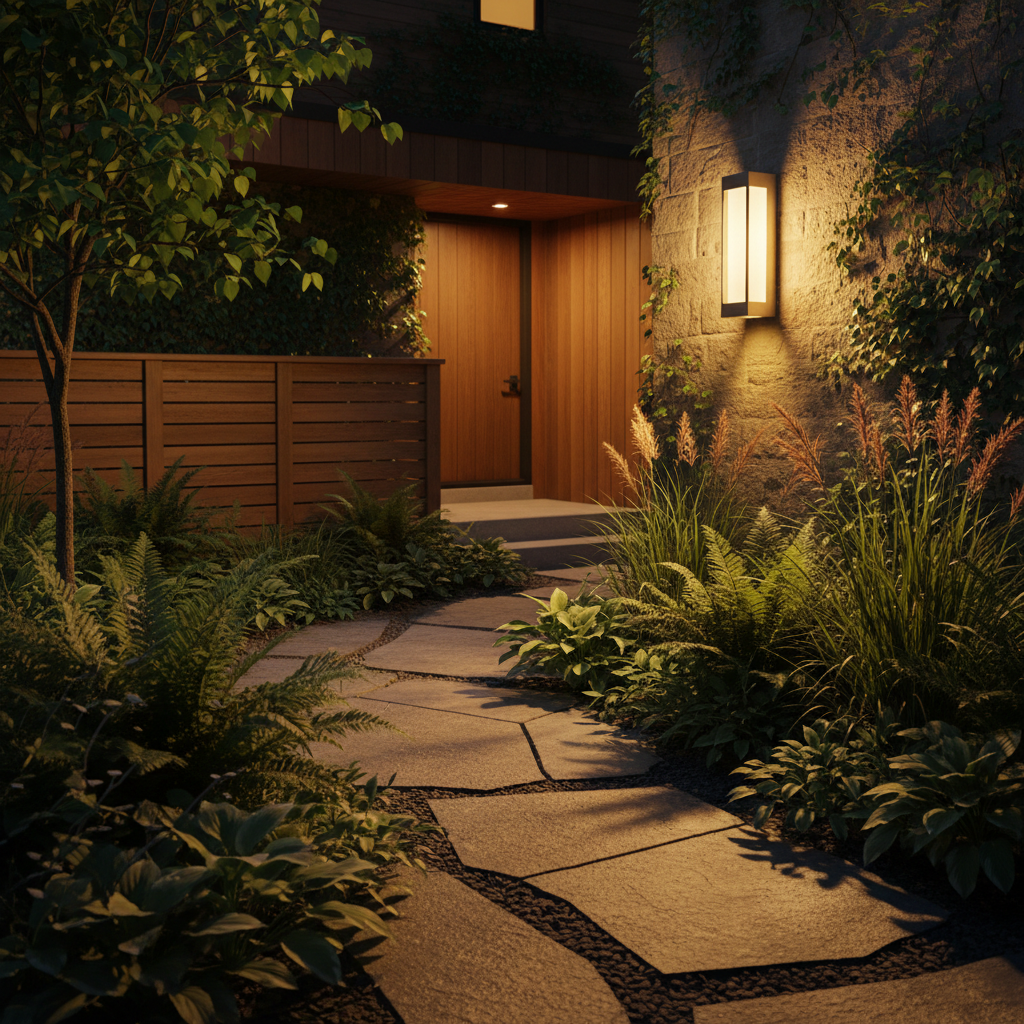
This is where power matters most. An active 1000-1200 lumen light deters and allows you to identify who's at the door. The sensor's range must cover the entire approach area. A 180° angle is essential to avoid blind spots on the sides. A single, well-positioned light can be enough for a standard entrance.
For a Patio or Outdoor Living Space
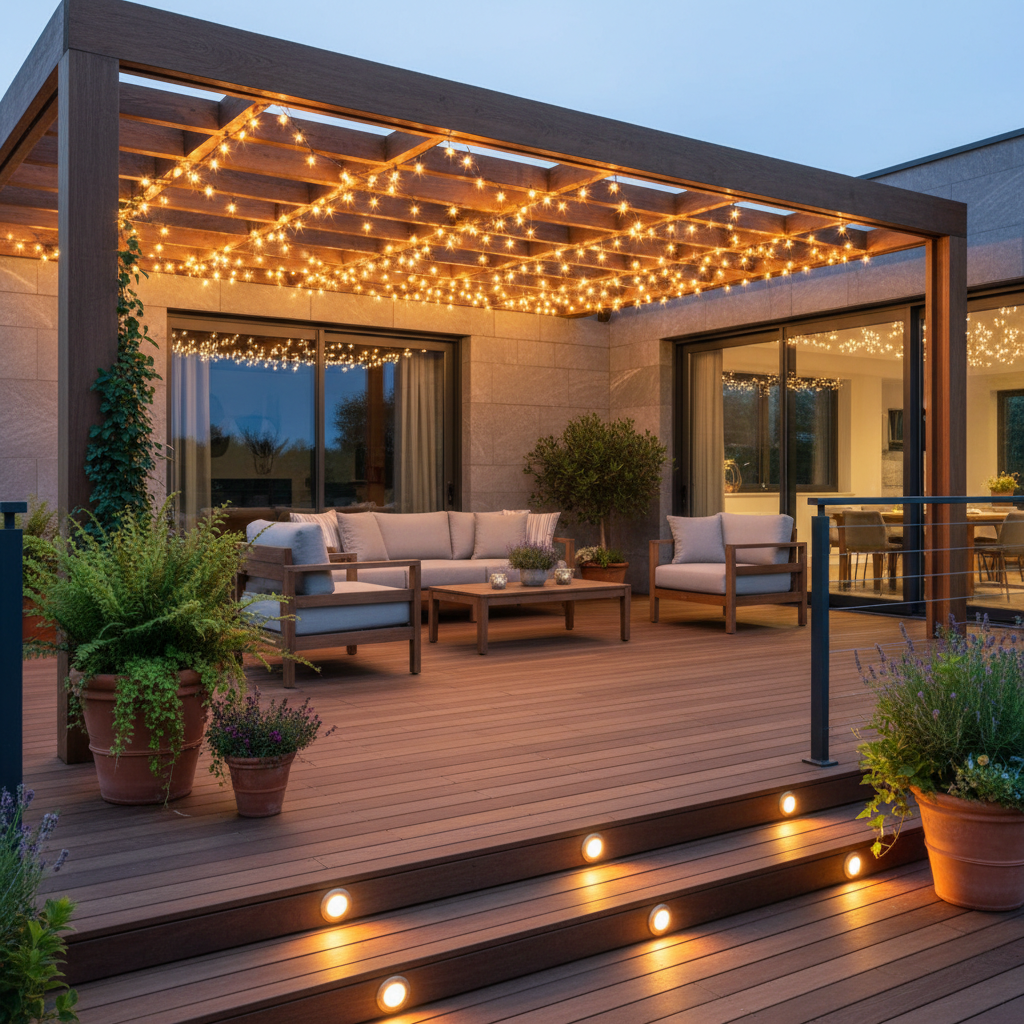
Here, the choice depends on the use: ambient lighting for outdoor dining, or real power to see clearly? If you want both, combine a powerful motion-activated light (for security and automatic activation) with softer ambient lighting (string lights, bollards, etc.). The powerful solar light can also be configured for continuous mode for evenings—some models offer this option.
For a Garage or Outdoor Shed
Often overlooked, but this is where functional lighting is most useful. You need to see what you're doing. A minimum of 1000 lumens, a short sensor range (10 to 16 feet / 3 to 5 meters is sufficient in an enclosed space), and simple, no-wire installation. To learn more about wall-mount options suitable for this type of space, you can consult our guide on how to choose your outdoor solar wall light.
Recap: What to Remember Before Buying
Choosing a powerful solar garden light means knowing how to read beyond the marketing. Here are the essential points to keep in mind:
- Minimum 800 lumens for functional lighting. Below that, it's just marking.
- The solar panel must be sized to properly charge the battery, including in fall and winter.
- Battery capacity determines how long the light maintains its power. Don't ignore it.
- The sensor must cover at least 120°, ideally 180°, with a range of 20 to 26 feet (6 to 8 meters).
- IP65 waterproof rating is the minimum to survive US/Canadian winters.
- The warranty commits the manufacturer. Less than 2 years for an outdoor light is a negative signal.
- Calculate the cost over 3 years, not just the purchase price. The smart buy is often the cheapest in the long run.
The solar garden light market is saturated with products that promise more than they deliver. But good products do exist. You just need to know what to look for—and now you do.