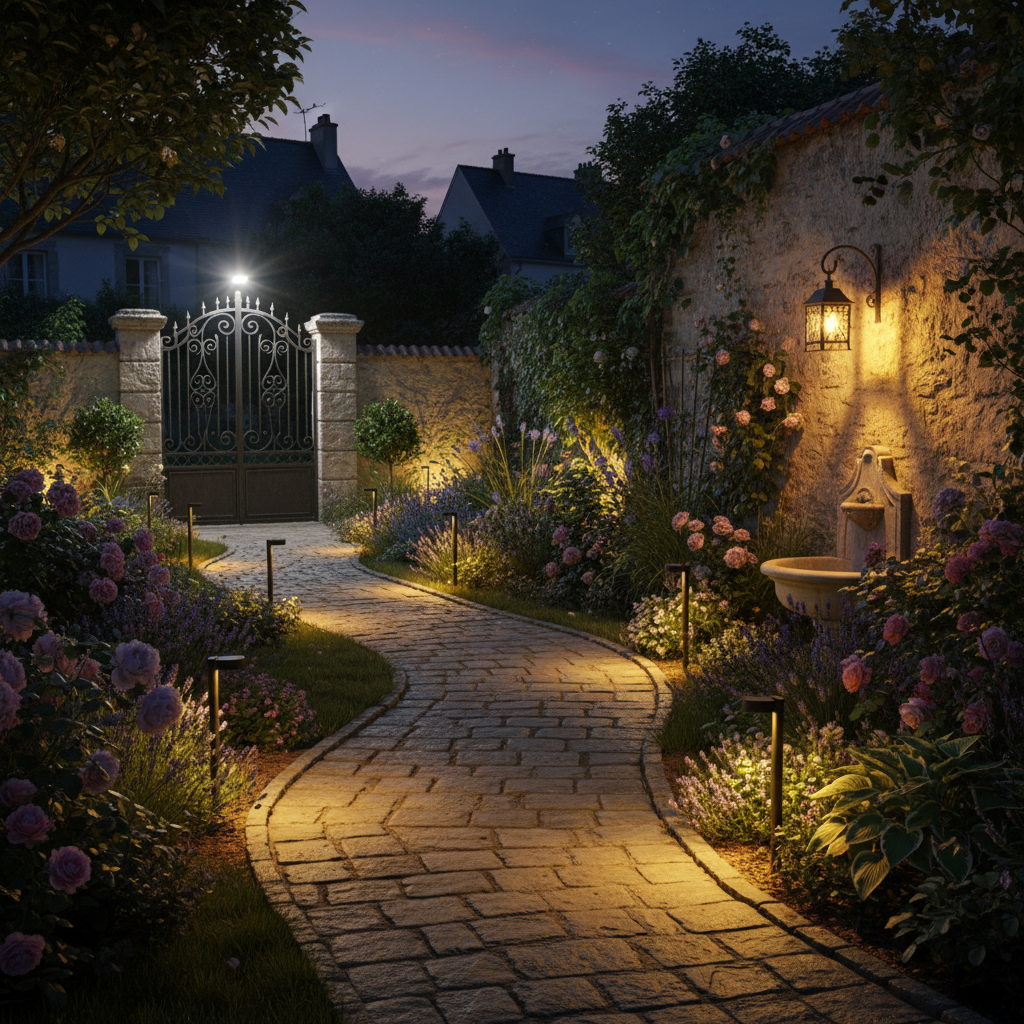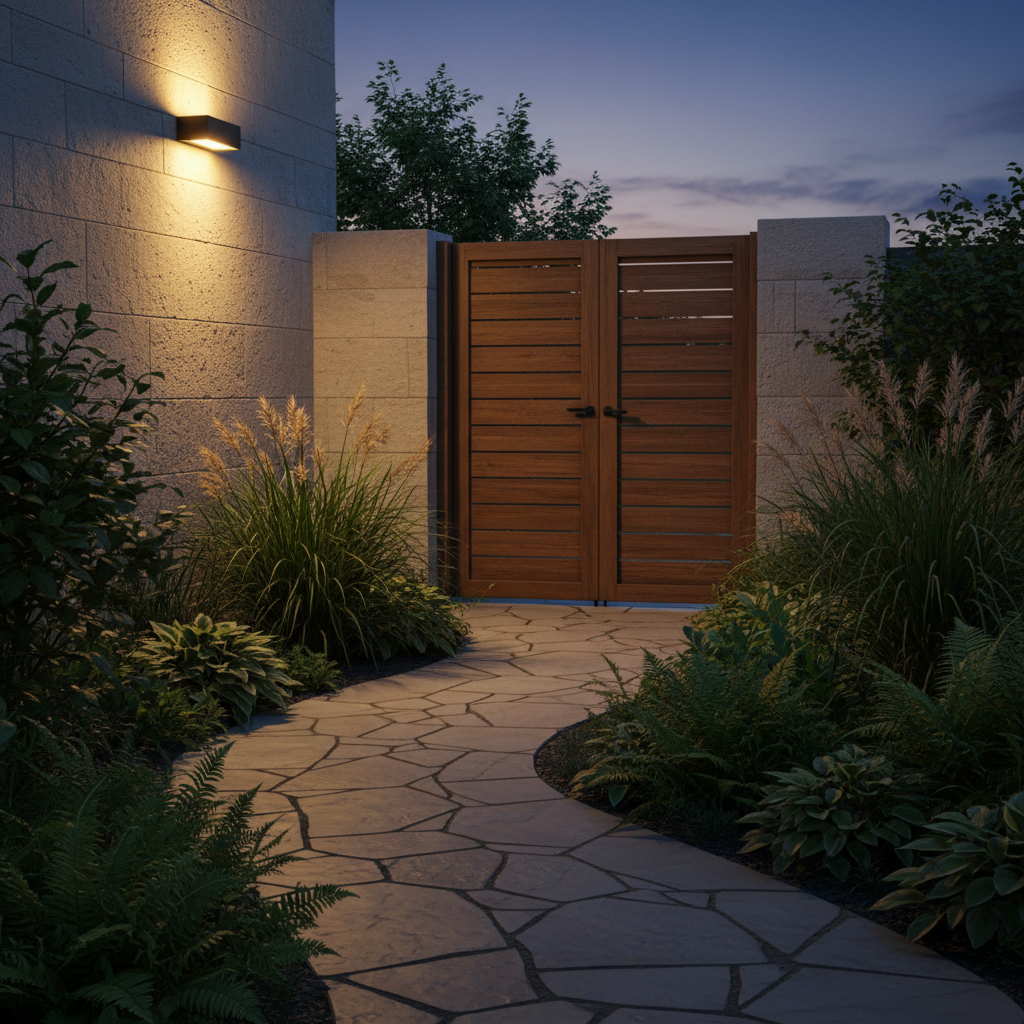
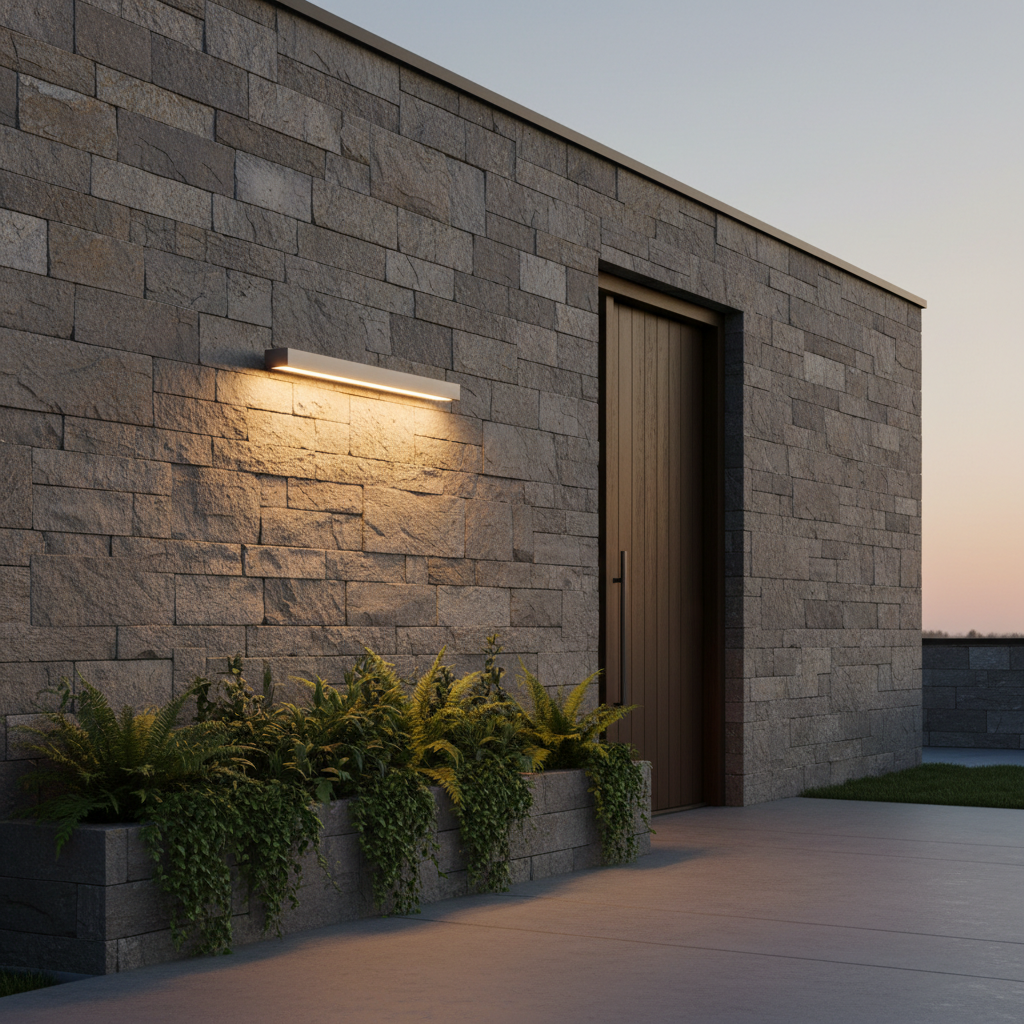
Want to light up your outdoor wall without hiring an electrician or tearing into your siding? An outdoor solar wall light is probably what you need. But not all are created equal, and there are a few pitfalls to avoid before buying.
This guide gives you concrete criteria to choose the right solar wall light, know where to place it, at what height, and most importantly: how to avoid the mistake 80% of people make, ending up returning their lamp because it doesn't charge correctly.
Why Choose a Solar Wall Light Over a Wired One?
The short answer: because installing a wired light often means an electrician, trenching in the yard, or visible cables along the wall. The result: a bill that easily exceeds $300 to $600, not counting the work.
A solar wall light means two screws in the wall, ten minutes of installation, and you're done. No cables to run, no conduits to bury, no inflated electricity bill. It's also the ideal solution if you're a renter: just unscrew it when you leave, and the wall remains intact.
Is Solar Lighting Really Effective?
That depends entirely on your expectations. For path lighting, securing an entrance, or creating ambiance on a patio, yes, a good outdoor solar wall lamp does the job very well. To replace a 50W wired floodlight on a warehouse, no.
The real parameters to look at are light output (in lumens) and solar panel size. These two criteria determine if the light will be self-sufficient daily or if it will leave you in the dark after two cloudy days.
If you're still hesitating between a wired and solar solution, check out our article on wired or solar outdoor motion sensor lights to objectively compare both options.
What are the Real Savings Compared to Wired?
It's hard to give an exact figure without knowing your current consumption. But generally, a motion-sensing solar wall light consumes zero kilowatt-hours from your electrical grid. For a pathway lit several hours a night, the savings on the annual bill are real, even if modest.
The real gain is in installation: no electrician fees, no materials. You recoup your purchase from the moment of installation.
Top 4 Places to Install Your Solar Wall Light
Before ordering, ask yourself: what do I really need this light for? Usage dictates placement, and placement dictates selection criteria.
Home Entrance: Welcome and Comfort
This is the most common and logical placement. An outdoor solar wall light at the entrance is a great alternative to a wired gate lamp. It turns on when you arrive, turns off by itself, and adds a polished touch to your facade.
For this use, opt for warm light (around 3000K): it's more welcoming than a cool white. Motion detection is a plus, but not mandatory if you just want permanent ambient lighting in the evening.
Garage: Security First
For a garage, priority is power and responsiveness. You want the light to turn on as soon as you approach in your car, not two seconds after you've parked. The motion sensor range is therefore a key criterion.
For a garage with side access or double doors, a model with two 180° sensors is much more practical. It covers blind spots you might not see from inside.
Patio: Ambiance and Versatility
On a patio, aesthetics matter as much as functionality. A well-chosen solar wall fixture can effectively replace a decorative wired sconce. Just make sure the panel receives enough light during the day to function in the evening.
Continuous mode (without detection) is often preferable on a patio where you spend the evening sitting. Check the battery life in continuous mode before buying: this is often where entry-level models disappoint.
Fence: Path Lighting and Deterrence
A long fence may require several lights. In this case, value for money becomes crucial. But don't skimp on panel size: a light that turns off after two hours due to low battery is worse than an unlit fence in terms of deterrence.
What Height to Install a Solar Wall Light?
The ideal height for an outdoor wall light is between 6.5 and 8 feet (2 and 2.5 meters) from the ground. This range best combines three parameters: motion sensor range, lighting angle, and out of reach of curious hands.
Why at Least 6.5 Feet (2 Meters)?
Below 6.5 feet (2 meters), the detection cone is too short. The light turns on when you're already at the door, not when you're approaching down the path. Plus, you lose light coverage: the light illuminates the ground directly in front of the lamp rather than the entire area.
Above 8 feet (2.5 meters), the motion sensor may struggle to detect someone walking along the wall. Unless the model has a wide detection angle (180° or more), stick to the recommended range.
Which Direction Should the Solar Panel Face?
This is where most people go wrong, and why their solar light disappoints. The number one mistake: facing the panel north. A panel facing due north receives very little direct sunlight in the US/Canada, even in summer. The result: poorly charged battery, insufficient lighting duration, quick disappointment.
Ideally, face it due south, or slightly southeast/southwest. But not everyone is lucky enough to have their entrance wall facing the right direction. This is where panel size comes in.
The Hidden Criterion No One Tells You: Panel Size
Here's something product descriptions never highlight: the larger the solar panel, the more forgiving it is of poor orientation. A small panel facing due east or partial north will charge almost nothing. A large panel in the same situation will capture enough diffuse light to properly power the battery.
In practice: if your wall faces east, west, or even slightly north, a model with a standard-sized panel is likely to disappoint. You need a larger-than-average panel to compensate.
How to Evaluate the Panel Size of a Solar Wall Light?
Beware of incomplete product descriptions. Entry-level brands often only communicate light output in lumens, not actual charging capacity. To compare honestly, look for panel dimensions or battery capacity in milliampere-hours (mAh). A larger battery = more reserve for cloudy days and long winter nights.
Lumic's SolarGlow, for example, features a panel 3 times larger and a battery 4 times larger than entry-level models. This isn't empty marketing: it significantly changes the situations where the light works. You don't need a south-facing wall for it to function. An east or partial north wall often works, where a standard model would fail.
What Happens in Winter with a Solar Wall Light?
In winter, days are short and the sun is low. Even when facing due south, your panel captures less energy than in July. A model with a large battery capacity can store enough energy on sunny days to last several days of cloudy weather.
For this entire topic, we've written a comprehensive guide on solar lights that work in winter: it's a useful read before buying if you live in a frequently cloudy region.
Essential Criteria for Choosing Your Outdoor Solar Wall Light
Here's what you really need to look for, in order of importance:
| Criterion | What it Changes | What to Look For |
|---|---|---|
| Light Output | Covered area, visual comfort | 800 lumens minimum for an entrance, 1200+ for security |
| Panel Size | Charges even in cloudy weather or poor orientation | Larger than average = more tolerance |
| Battery Capacity (mAh) | Battery life on long nights or cloudy days | The larger, the more resilient |
| Ingress Protection (IP) Rating | Resistance to rain, snow, frost | IP65 minimum for outdoor use in the US/Canada |
| Motion Sensor | Range, angle, responsiveness | 2 x 180° sensors for maximum coverage |
| Lighting Modes | Adaptability to usage | Detection mode + continuous mode at minimum |
Is the IP Rating Really Important?
Yes, and it's often underestimated. The IP (Ingress Protection) rating indicates a device's resistance to dust and water. For an outdoor solar wall light in the US/Canada, IP65 is the minimum acceptable. It guarantees resistance to water jets from all directions, covering rain, showers, and hose cleaning.
Below IP65, you risk your light failing after a few autumn rains.
Do You Really Need Two Motion Sensors?
Not always, but it's a real plus in certain configurations. With a single sensor, the light covers a fixed detection area. If your driveway approaches the side of your house rather than straight on, you might end up in the sensor's blind spot.
Two 180° sensors can cover almost 360° by orienting them differently. For an L-shaped driveway, a garage with side access, or an angled patio, it's clearly useful. To learn more about how motion sensors for lighting really work, we have a dedicated article.
How to Install a Solar Wall Light in 10 Minutes
It really is that simple. Here's how to do it correctly:
Step 1: Choose the Right Location
Before drilling anything, check two things: height (between 6.5 and 8 feet / 2 and 2.5 meters), and solar panel orientation. The panel must receive light for a good part of the day. Avoid areas in permanent shade from a tree, an overhanging eaves, or an adjacent wall.
If your wall faces north or east, opt for a model with a large panel to compensate.
Step 2: Drill and Install Anchors
Most solar wall lights come with a drilling template. Use it to mark the two mounting points. Drill to the correct dimensions according to the material (concrete, brick, stucco), using anchors included in quality kits.
Step 3: Screw and Orient
Mount the fixing plate, screw in the two screws, then attach the light. Most modern models allow independent orientation of the panel and the light head. Take the time to properly orient the panel towards the south or the best-exposed area.
Step 4: Configure and Test
Adjust the motion sensor sensitivity and desired lighting mode. Walk in front of the light to check the detection zone. Cover the panel for a few seconds to simulate night and verify the light turns on. That's it.
For an overview of powerful wireless outdoor lighting options, we also have a comprehensive guide that details alternatives beyond wall lights.
Lumic's SolarGlow: Who Is It For?
The SolarGlow is designed for people with a not-perfectly-oriented wall, cloudy winters, or who have been disappointed by a cheap solar light that died after an hour. With 1,200 lumens, two 180° motion sensors with a range of about 26 feet (8 meters), and an IP65 rating, it's sized for serious daily use.
The main selling point is resilience: a panel 3 times larger and a battery 4 times larger than entry-level models. In practice, this means it lasts up to 20 days without solar recharge in detection mode. For renters, it's also a good option: wireless installation, fully reversible.
It comes with a 5-year warranty and a 90-day satisfaction guarantee. Customer support is based in the US, with a 24-hour response time. For customer reviews, Lumic boasts a 4.5/5 rating on over 2,200 Trustpilot reviews.
If you want to compare this light with other market options, check out our comparison of the best outdoor solar lights.
Key Takeaways Before Buying
Choosing an outdoor solar wall light isn't just about comparing lumens or price. The real criteria are panel size (which determines tolerance to poor orientation), battery capacity (which determines resilience in cloudy weather), and IP rating (which guarantees durability in all weather).
- Install between 6.5 and 8 feet (2 and 2.5 meters) high for optimal detection
- Orient the panel as far south as possible, but a large panel tolerates east or partial north exposures
- IP65 minimum for outdoor use in the US/Canada
- Two motion sensors for angled configurations
- Check battery life in continuous mode, not just detection mode
- Allow 10 minutes for installation, no more, for a wireless wall mount
And if you want to delve deeper into the topic of motion-sensing solar lighting as a whole, we have a comprehensive guide covering technical details and practical use cases.