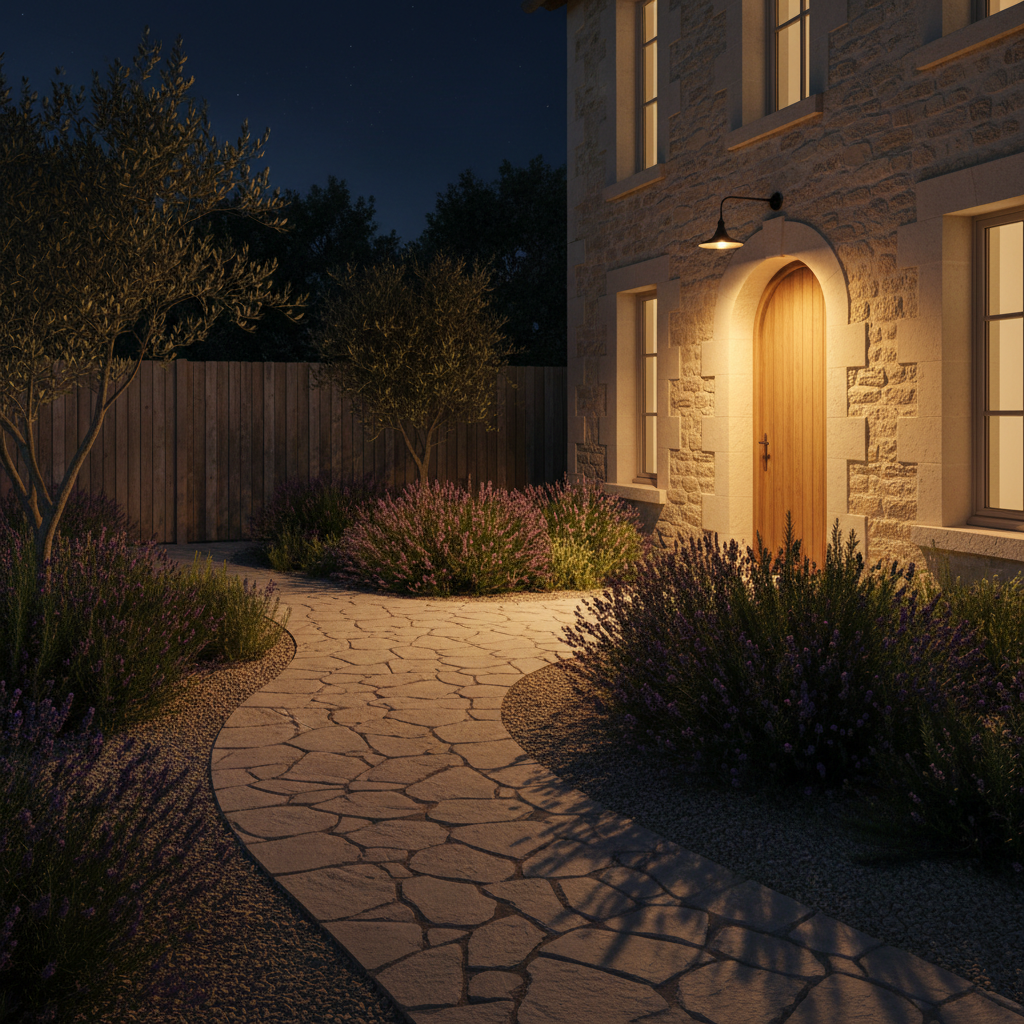
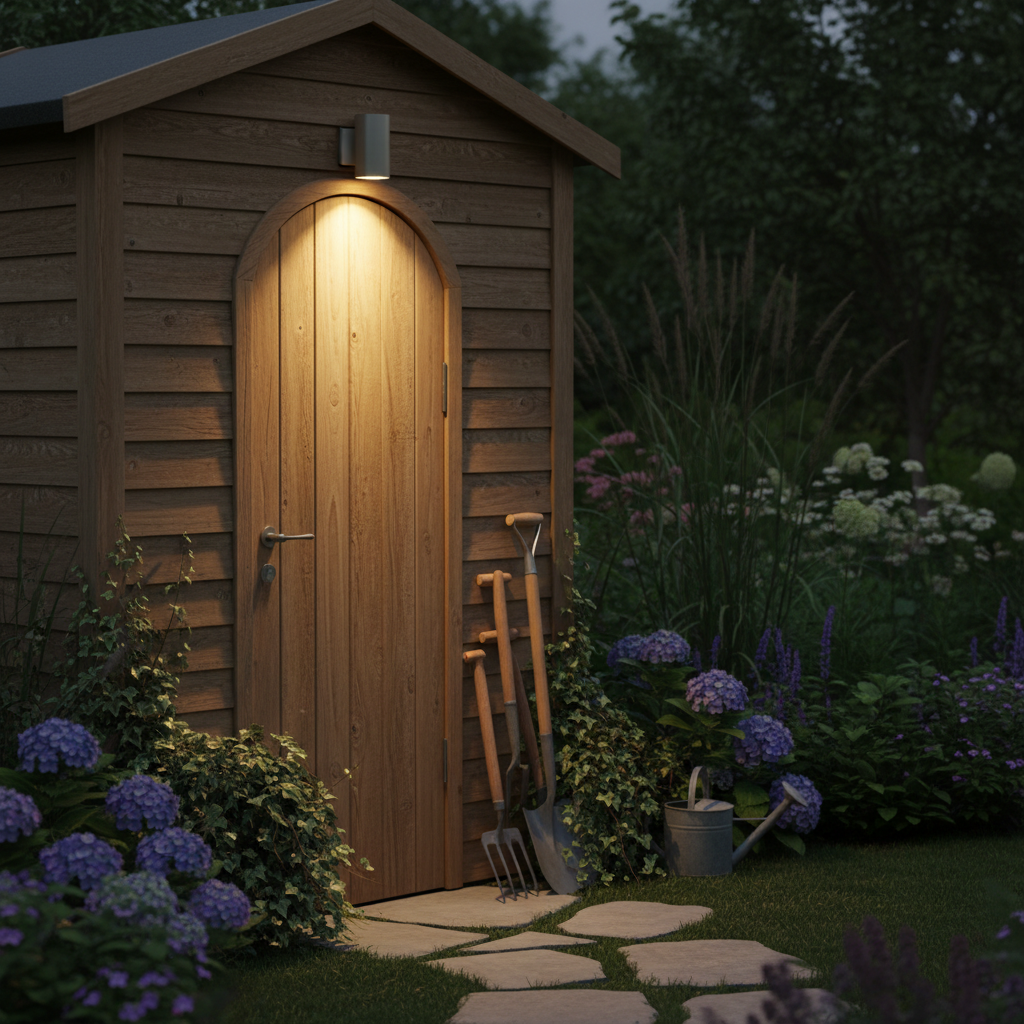
Want to light up your garden shed, but there's no electricity inside? Running a cable from the house can easily cost between $500 and $2,000 if you hire an electrician. For a shed where you store tools or garden equipment, it often doesn't make sense.
Solar lighting for sheds is the perfect answer to this practical problem. No cables to run, no trenches to dig, no electrician to call. But not all solar solutions are equal, depending on how you use your shed.
This guide helps you choose the right approach based on a simple question: do you need lighting outside the shed (entrance, door, access) or inside (for working, finding equipment)? The answer changes everything.
Why Solar Lighting is the Best Option for a Shed Without Electricity
A garden shed is often located at the back of the yard, far from the house's electrical panel. Connecting electricity means digging a trench, laying conduit, installing a dedicated circuit breaker, and hiring a certified electrician. Estimated cost: between $500 and $2,000, depending on distance and project complexity.
Solar lighting bypasses all of that. The panel captures sunlight, charges the integrated battery, and the light turns on as needed. Zero connections, zero extra electricity bills, zero construction work.
What are the Concrete Benefits of Solar for a Garden Shed?
The first benefit is complete autonomy. You don't need the power grid or an outlet nearby. The light operates independently, which is exactly what you need for an isolated space at the back of the yard.
The second benefit is easy installation. An outdoor solar wall light installs with two screws on the shed wall. Ten minutes, maximum. No need to drill the roof, no cables to run inside.
The third benefit: maintenance is almost zero. Modern solar lights are designed to withstand weather (rain, frost, snow) and operate for several years without intervention.
Does Solar Lighting Work Even if the Shed is Shaded Part of the Day?
This is the real question to ask before buying. A solar panel needs direct sun exposure to charge properly. If your shed is entirely in the shade (under a dense tree, against a north-facing wall), a cheap solar light will be disappointing.
The solution: choose a light with a large panel and a generous battery that can store several days of power. To learn more about winter performance, check out our guide on effective solar lights even in winter. Good equipment performs well even with reduced sunlight.
Two Types of Solar Lighting for Sheds: Which to Choose?
Before looking at products, clarify your needs. The two most common situations require very different solutions.
Option 1: Lighting the Shed Access and Entrance (Outdoor Use)
You approach your shed in the evening with a watering can in hand, and you want the light to turn on automatically so you can find the door, grab your tool, or simply see where you're stepping. In this case, a solar wall light with a motion sensor is the ideal solution.
It mounts directly on the exterior wall of the shed. The solar panel is integrated or oriented towards the sky. No cables, no roof drilling, no wires to run inside. Installation involves simply screwing two anchors into the wall.
Motion detection is a real plus here: the light only turns on when you approach, which preserves battery life. No need to remember to turn it on or off.
Option 2: Lighting the Shed Interior (for Working, DIY, Storage)
If you want to light the interior of the shed to work at a workbench, find a specific tool, or organize properly, the logic changes. You need light directed indoors, which is more complex with a simple outdoor wall light.
The best solution for interior lighting is a solar kit with a remote panel: the panel is placed on the roof or nearby (where it gets good sun exposure), and a short cable brings power to a light installed inside. This setup requires a bit more installation (running the cable, mounting the panel on the roof) but provides truly functional indoor lighting.
To explore all possible options in this type of configuration, our article on lighting solutions without electricity for an isolated garage covers very similar cases.
Criteria for Choosing the Right Solar Light for Your Shed
Once you know your intended use, it's time to choose the right product. Here are the criteria that truly matter.
Light Output: How Many Lumens for a Shed?
For access and entrance lighting (outdoor use, motion detection), a minimum of 600 to 800 lumens is recommended. Below that, you'll see the light turn on, but the illumination won't be truly useful on cloudy days or from a distance.
For security lighting capable of deterring intrusions or illuminating a large area around the shed, aim for 1,000 lumens or more. This is the category for quality solar wall lights for regular use.
Weather Resistance: Which IP Rating to Choose?
Your garden shed is outdoors, exposed to rain, winter frost, and summer dust. A light designed for this use must have an IP65 minimum certification. This standard guarantees complete protection against dust and water jets from all directions.
A light without IP certification (or with a lower standard like IP44) risks malfunctioning after a few months, or even failing after the first winter.
Battery Life: How Many Days Can the Light Last Without Sun?
This criterion is often underestimated. In fall and winter, there can be several days without enough sun to recharge the panel. A light with a small battery will quickly run out.
Prioritize models that clearly state their battery life in detection mode (not just continuous mode). A battery life of 15 to 20 days without solar recharge is a good indicator of quality. For year-round use, it's essential.
Comparison Table: Solar Lighting Solutions for Sheds
| Solution | Main Use | Installation | Interior Lighting? | Strengths |
|---|---|---|---|---|
| Solar Wall Light | Entrance, Access, Security | 2 screws, 10 minutes | No (limited) | Simple, Reliable, Wireless |
| Solar Kit with Remote Panel | Interior Lighting | Cable routing, Roof panel mount | Yes | Functional Indoor Light |
| USB Rechargeable Light | Occasional Use | Zero Installation | Yes (occasional) | Portable, No Solar Dependence |
| Electrical Connection | Permanent Lighting | Trenching, Electrician | Yes | Unlimited Power |
For a deeper comparison of available options, check out our comparison of the best outdoor solar lights, which categorizes models by different usage criteria.
How to Position and Install a Solar Light on Your Shed
Where to Mount the Solar Wall Light on the Shed Wall?
The ideal position is above the door, about 6.5 to 8 feet (2 to 2.5 meters) high. This position maximizes the range of the motion sensor (which typically operates at a 120 to 180-degree angle) and directs light to the access area.
Ensure the solar panel faces the sky, with maximum sun exposure throughout the day. For most sheds, the south or southwest-facing wall is the best choice. If your only option is a north-facing wall, a kit with a remote panel will be more effective.
What Precautions for Installation on a Wooden Shed?
Most garden sheds are made of wood. A few points to check before screwing:
- Use screws appropriate for wood (not for hollow walls).
- Verify that the board is thick and sturdy enough to support the light's weight.
- If you want to avoid any drilling (rental shed or one you want to keep intact), some models offer industrial adhesive mounts strong enough to support a wall light.
- Clean the surface before mounting to maximize adhesion.
Installing a solar wall light is accessible without special DIY skills. For more complex setups (interior with cable), our article on off-grid solar lighting details different approaches.
Motion Detection: Why It's Essential for a Garden Shed
A garden shed isn't a place where you spend hours. You spend a few minutes grabbing a tool, watering plants, or tidying up after gardening. Permanent lighting would be a waste of solar energy.
The motion sensor is therefore a key feature for this type of use. The light remains in standby (zero or very low consumption), then automatically turns on when you approach. Result: well-preserved battery life, even during periods of low sunlight.
How Does Motion Detection Work on a Solar Light?
Solar lights with motion sensors combine two sensors: a passive infrared (PIR) sensor that detects heat variations associated with human movement, and an ambient light sensor (photoresistor) that deactivates detection during daylight hours. The light only turns on at night or in low light conditions.
Typical range is 16 to 33 feet (5 to 10 meters) depending on the model. For a garden shed, an 26-foot (8-meter) range with a 180-degree detection angle amply covers the access area. Our guide to motion-sensing solar lighting explains in detail how to optimize these settings.
Can a Solar Light with a Motion Sensor Also Serve as a Security System?
Partially, yes. A light that suddenly turns on when someone approaches is recognized as a deterrent. The sudden light draws attention and signals a presence, discouraging opportunistic intrusions.
To enhance this effect, choose a bright light (1,000 lumens or more) with an adjustable shut-off delay (30 seconds to 5 minutes) to illuminate long enough to be visible from the house if needed.
The SolarGlow for Lighting Your Shed Entrance
If you're looking for a reliable solar wall light for your shed access, the Lumic SolarGlow meets this need perfectly. It mounts directly on your shed's exterior wall with two screws. The 180-degree motion sensor with a 26-foot (8-meter) range turns on when you approach, tools in hand. No switch to fumble for in the dark.
What sets it apart from low-end models: a larger solar panel and a significantly more generous battery, allowing it to last up to 20 days without solar recharge in detection mode. In practice, this makes all the difference during cloudy fall periods or rainy winter days. Its IP65 certification protects it against all weather conditions.
With 1,200 lumens, it truly illuminates the access area, not just a diffused halo. And with a 5-year warranty and 90-day satisfaction guarantee, you can try it risk-free. Customer reviews on Trustpilot (4.5/5 from over 2,200 reviews) confirm its long-term reliability.
Reminder: if you want interior shed lighting for working, the SolarGlow is not the right solution. In that case, a kit with a remote panel will be more appropriate, as explained earlier in this guide.
Key Takeaways for Choosing Your Shed Solar Lighting
The answer depends on your use. To light the entrance, door, and access to your shed without electricity, a solar wall light with a motion sensor is the simplest and most effective solution: two screws, ten minutes, and it's operational.
For functional interior lighting, consider a kit with a remote panel on the roof. More installation work, but a suitable result if you spend time working inside.
In all cases, avoid overly cheap models: insufficient battery and too small a panel will yield poor results as soon as clouds appear. The quality of solar lighting for sheds depends primarily on the energy the system can store, not just its maximum light output.
To further your thinking on all lighting approaches in spaces without grid access, our guide on lighting without electricity lists all available options according to the constraints of each space.