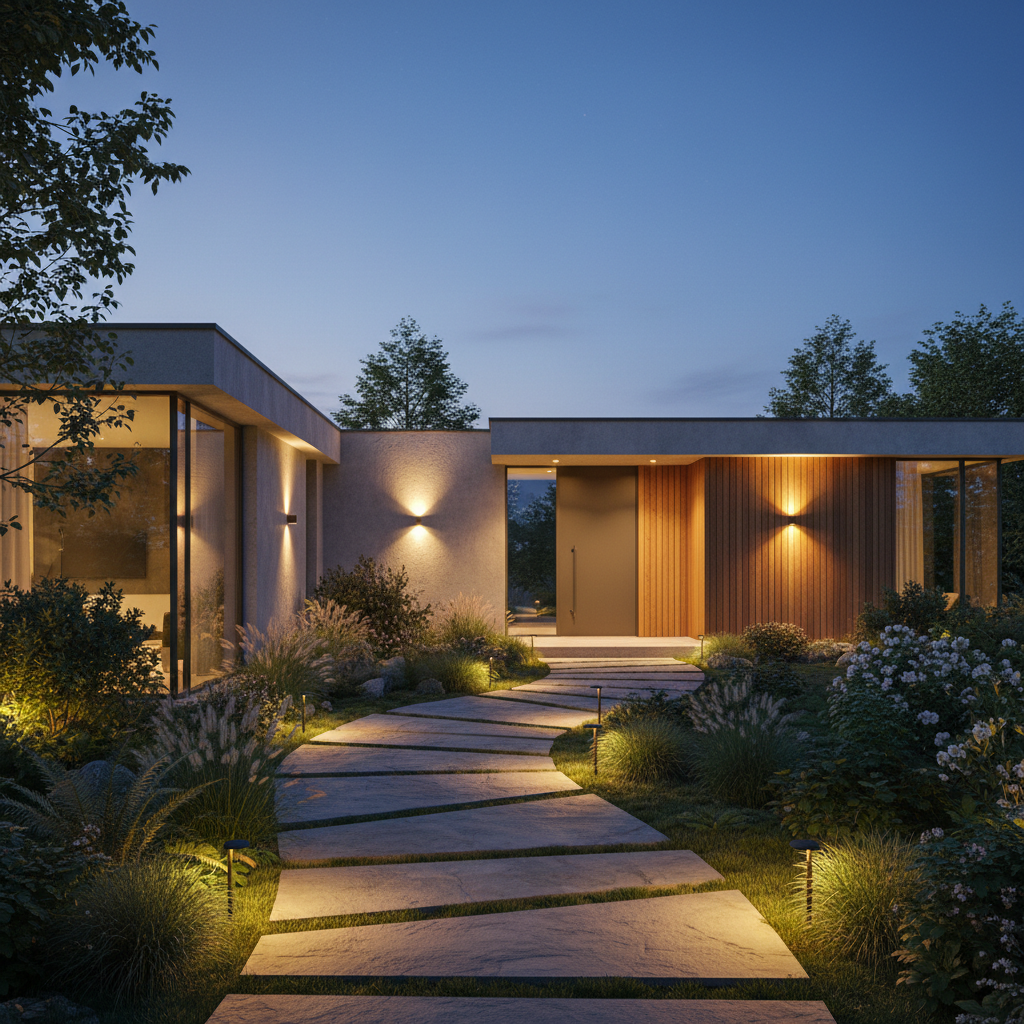
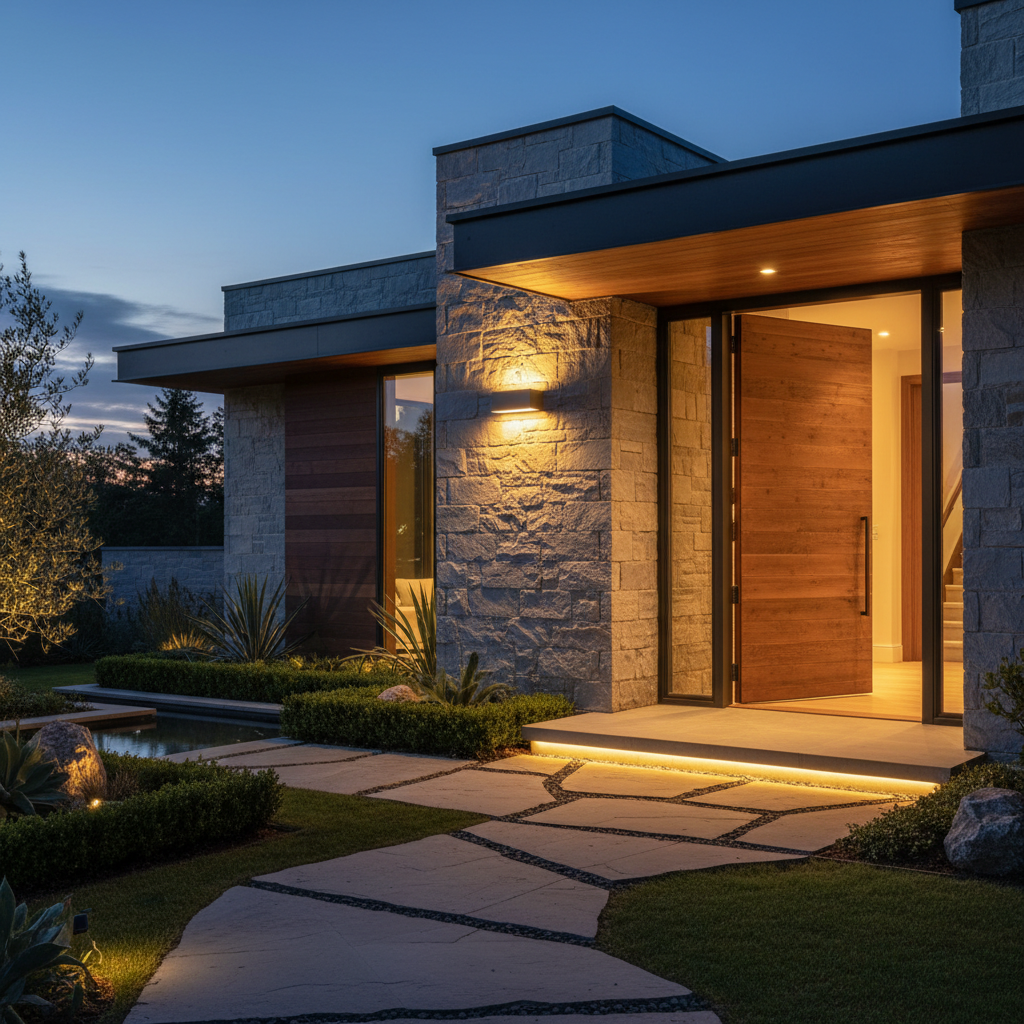
Want to light up your entryway, patio, or facade without calling an electrician? A solar wall sconce is probably the simplest solution out there — provided you avoid common pitfalls. Because a poorly chosen or installed sconce means a light that dies in winter or an unsightly fixture that ruins your facade.
In this guide, we'll cover placement, orientation, aesthetics, and real-world performance. Everything you need to know before buying.
Why Choose a Solar Wall Sconce Over a Wired One?
It's a fair question. A wired sconce works well. But to install one from scratch — wall channeling, cable routing, patching, painting, and an electrician's visit — expect to pay between $300 and $600, depending on the situation. And that's not even counting the visual damage to a stucco or stone facade.
An outdoor solar sconce, on the other hand, installs in minutes. No cables, no trenching, no tradesmen. It captures solar energy during the day, stores it in its battery, and automatically turns on at night or when you approach. For renters, especially, this is a huge advantage: no structural drilling required in most cases.
It's not a replacement for complex electrical installations. But for lighting an entryway, pathway, garage, or patio, a solar wall sconce meets 90% of needs without the hassle of wiring.
Does a Solar Sconce Provide Enough Light?
It depends on the model. Low-end sconces on general marketplaces often boast unrealistic figures. In practice, what matters is the panel size (which determines charging) and battery capacity (which determines runtime).
A solar sconce with 1,200 lumens in motion sensor mode is more than enough to secure an entryway, illuminate steps, or deter intruders. For ambient patio lighting, 400 to 600 lumens suffice. Anticipate your use before buying.
Can a Solar Sconce Be Used in an Apartment?
If you have a balcony, loggia, or accessible exterior wall, yes. The solar panel simply needs to see the sky — directly or at a partial angle. However, a north-facing facade with no direct sunlight in winter will significantly limit performance. More on that below.
Where to Install Your Solar Wall Sconce: 4 Effective Locations
Before discussing orientation or models, consider the location. It dictates everything else.
Home Entryway: Security and Welcome
This is the most common, and often the most sensible, location. A solar wall sconce at the entrance serves two functions: it lights your way when you come home at night and deters unwanted visitors. A motion sensor is particularly useful here — the light turns on at the right moment, without waste.
The recommended height is between 6.5 and 8 feet (2 and 2.5 meters). Too low, the sensor will trigger for any passing cat. Too high, the detection cone won't adequately cover the area of interest.
Garage: Visibility and Convenience
Coming home at night with arms full of groceries and fumbling for your keys in the dark is a common experience. An outdoor solar sconce mounted above the garage door solves this problem without any electrical installation. A garage facade wall is often well-exposed, promoting good charging.
Patio: Ambiance and Step Safety
This is where aesthetics truly come into play. On a patio, you're not just looking for functional light — you want ambiance. A stylish solar sconce, with a sleek housing and warm white light, literally transforms a patio in the evening. Position it to illuminate steps or changes in level: that's where accidents happen.
Fence or Gate: Marking and Delimitation
On a fence, a solar wall sconce acts as a marker. It highlights the property entrance, visually defines the space, and creates an aesthetic line of light in the evening. For this use, opt for warm light (3,000 K) and a compact design that integrates without dominating the facade.
The #1 Mistake: North-Facing Panel Orientation
Let's be direct. Solar panel orientation is the criterion 80% of buyers ignore when purchasing. And it's often the main cause of disappointment: a sconce that dies after an hour, a battery that never truly recharges, or an anemic light in November.
In the Northern Hemisphere, the sun generally moves from southeast to southwest. A south-facing panel captures energy all day. An east or west-facing panel captures about 50-60% of maximum energy. A north-facing panel? Less than 20% in summer, almost nothing in winter.
If you have no choice of orientation — north-facing facade, shaded wall — there's a solution: choose a sconce with a large solar panel. Because how solar panels work for lighting relies on a simple logic: the larger the capture surface, the more acceptable the efficiency remains even with imperfect orientation.
Does a Solar Sconce Work on an East or West-Facing Facade?
Yes, with the right selection criteria. An east-facing facade captures good sunlight in the morning (until around noon), a west-facing facade in the afternoon. In summer, this is sufficient for a full charge. In winter, shorter days and a lower sun make it trickier — but not impossible if the battery is generous and the panel large. To learn more about this, check out our guide on solar light performance in winter.
What if I Only Have a North-Facing Wall?
In this case, prioritize panel size above all else. A large panel captures enough diffuse light (overcast sky, reflections) to maintain decent runtime in detection mode. A small panel on a north-facing wall in winter is a disaster scenario. It's not the sconce that's bad — it's choosing a model unsuited to the situation.
Aesthetics: Is a Stylish Solar Sconce Possible?
Just a few years ago, "solar" meant "cheap white plastic." Not anymore. The market has matured, and you can now find solar wall sconces with aluminum housings, anthracite or matte black finishes, and designs that truly integrate with modern or traditional facades.
What makes a visual difference:
- Material: Aluminum vs. plastic. The former ages well, the latter yellows and cracks.
- Light Color: Warm white (3,000 K) for a cozy, soothing ambiance; neutral white (4,000 K) for clear functional use. Avoid cool white (6,000 K) on a residential facade — it looks like a supermarket parking lot.
- Panel Discretion: Some sconces integrate the panel into the lamp body. Others have a visible panel on top. The first option is generally cleaner visually.
If you want to approach solar lighting for your outdoor space more holistically, take a look at the different types of outdoor solar lighting to see how to combine sconces, bollards, and spotlights for various areas.
What Housing Color Should I Choose to Match My Facade?
Simple rule: choose a color that contrasts slightly with your wall without being stark. On a light facade (white render, beige stucco), an anthracite or matte black housing provides a clean, contemporary look. On a dark facade (dark wood, slate), a silver or light gray housing creates a nice contrast. Avoid glossy white on an older facade — it looks out of place.
Key Technical Criteria to Really Look at Before Buying
Beyond design, a few technical features will truly differentiate between a sconce that delivers on its promises and one that disappoints after a few weeks.
The Battery: The Criterion Nobody Checks
Yet, it's the most crucial factor for real-world runtime of your sconce. A large battery stores more energy, handles successive cloudy days better, and maintains effective lighting longer. Low-end sconces skimp on battery capacity to cut costs — and that's exactly where the product disappoints in winter. To understand why this is so important, this article on the importance of the battery for solar lights is a useful read.
Ingress Protection Rating: IP65 Minimum for Outdoors
An outdoor solar wall sconce must be at least IP65 certified. This means it's protected against dust and water jets from all directions. Below that, you risk failure with the first autumn rains. IP65 amply covers rain, snow, and frost.
Motion Sensor Range and Angle
A motion sensor with a range of 26 feet (8 meters) and a 180° angle covers a pathway or entryway very satisfactorily. If the range is too short (10-13 feet / 3-4 meters), the light turns on too late — you're already at the door before it reacts. If the angle is too narrow, the sides of the entrance remain in shadow.
Continuous Mode vs. Motion Detection Mode
Two uses, two different responses. Detection mode saves battery — the light turns on when you pass and turns off a few seconds later. Perfect for an entryway or garage. Continuous mode keeps the light on constantly — useful for a patio during dinner, but it consumes power much faster. Check that your sconce offers both modes, and compare runtimes for each.
What the SolarGlow Specifically Offers in This Context
If you're looking for an outdoor solar sconce that truly works in imperfect orientation conditions — and in winter — the Lumic SolarGlow deserves special attention. It features a solar panel 3 times larger than typical low-end models, coupled with a battery 4 times more generous.
What this means in practice: even on an east-facing or partially shaded facade, the SolarGlow continues to recharge sufficiently to ensure useful runtime. You don't need a south-facing wall for it to work. It delivers 1,200 lumens with two 180° motion sensors for a 26-foot (8-meter) range, is IP65 certified (rain, snow, frost), and installs without cables or an electrician.
Runtime in detection mode reaches 20 days without solar recharge. In continuous mode, approximately 36 hours. It comes with a 5-year warranty and a 90-day money-back guarantee. To learn more about the advantages of autonomous solar lighting and understand how this technology truly changes your daily life, a dedicated guide awaits you.
If you first want to see how to install this type of sconce step-by-step, our guide on choosing and installing your solar sconce will guide you from A to Z.
Summary: What to Remember Before Buying
Choosing a solar wall sconce means finding the balance between three things: aesthetics (because it's on your facade), power (because you want to see something), and charging capacity (because winter days are short).
- Location: Entryway, garage, patio, fence — each area has its own requirements.
- Installation Height: Between 6.5 and 8 feet (2 and 2.5 meters) for an effective motion sensor.
- Orientation: South or east/west is acceptable. North = only with a large panel.
- Battery: This is the criterion that ensures the sconce lasts, especially in winter.
- IP Rating: IP65 minimum for outdoors.
- Design: Aluminum, matte finish, warm light — for successful integration on your facade.
A good outdoor solar wall sconce, well-placed and well-chosen, saves you $300 to $600 in electrical work and installs in under an hour. It's not a gadget — it's a real comfort and safety feature.