Why a Solar Motion Sensor Light is a Game Changer
Imagine a light that turns on automatically when you approach, with no wires to run, no electrician needed, and no extra electricity bills. The idea is simple, but not everyone has the same experience with these devices. Some are thrilled, others bought a cheap lamp that died after two weeks of rain. The difference? It often comes down to specific criteria that no one clearly explains.
This guide is here to help. We'll cover what truly matters when choosing a solar motion sensor light and what to avoid so you don't end up with a useless gadget screwed to your garage wall.
How a Solar Motion Sensor Light Works
Before comparing models, you need to understand the mechanics. A solar motion sensor light relies on three components that must work well together: the solar panel, the battery, and the motion sensor.
The Solar Panel: The Key to Performance
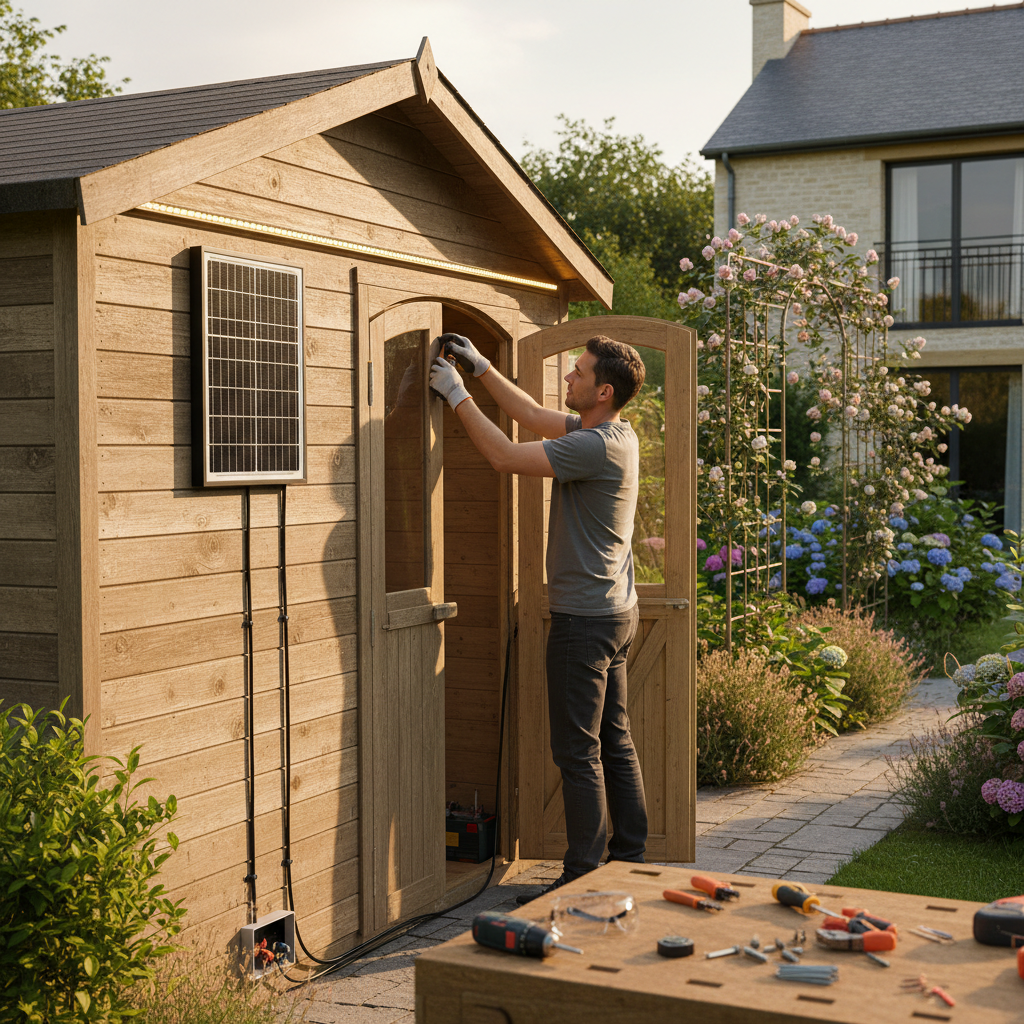
The panel converts daylight into energy stored in the battery. What's rarely clearly stated on packaging is that the panel's size directly impacts performance in winter, on cloudy days, or in less sunny regions. A panel that's too small won't charge enough during the day, and the battery will be dead before midnight.
Entry-level models often use tiny panels that barely perform under normal conditions. If it's cloudy for four days straight, you'll have no light. More serious floodlights feature significantly larger panels to ensure autonomy even in gloomy weather.
The Battery: The Unsung Hero
Everyone looks at lumens. Few look at battery capacity. Yet, it determines how long your light can function without sun. A battery that's too small, and your driveway will be plunged into darkness after two cloudy days. In practice, a good capacity battery typically lasts two to three weeks without solar recharge in motion detection mode, compared to two or three days for smaller batteries.
The Motion Sensor: Angle, Range, and Sensitivity
A motion sensor on a solar light almost always uses passive infrared (PIR) technology: it detects changes in body heat. For more details on how motion sensors for lighting work, we have a dedicated article. What's important here: detection angle and range are concrete specs to check, not just the lumen count.
A 180° angle with a 26-foot (8-meter) range covers most entrances, driveways, and patios. Below that, you risk not triggering the light early enough to illuminate your path.
Key Criteria Before Buying a Solar Motion Sensor Light
No need to pore over technical sheets for an hour. Here are the criteria that truly matter, in order of priority.
Weather Resistance (IP Rating)
An outdoor light will face rain, frost, snow, and sometimes humid fog. The IP (Ingress Protection) rating measures protection against solids and liquids. For outdoor use, you need at least an IP65 rating, which guarantees protection against water jets from all directions. Below that, the light risks moisture damage to electronic contacts and quick failure.
This is a non-negotiable criterion. Cheap models sometimes display IP44 or nothing at all: avoid these for year-round outdoor use.
Lumen Output: Not Too Little, Not Exaggerated
Lumens measure luminous flux, the actual amount of light emitted. To secure a driveway or patio, you generally want between 800 and 1500 lumens. Below 500 lumens, the light will be too dim to truly deter or allow comfortable movement.
Beware of ads that boast exaggerated figures without serious technical basis. A solar light claiming 5000 lumens with a credit card-sized panel is aggressive marketing. Stick to credible, verified values.
Autonomy in Motion Detection vs. Continuous Mode
Most solar motion sensor lights offer two modes: motion detection (light only turns on when motion is detected) and continuous mode (light stays on constantly). In motion detection mode, autonomy is much longer, as the light is only active for a few seconds with each trigger.
For optimal use, motion detection mode is recommended in most cases. It significantly extends battery life and avoids wasting stored energy to illuminate an empty driveway at 3 AM.
Available Settings: Sensitivity, Illumination Duration, Mode
A good solar motion sensor light should allow you to adjust at least: sensor sensitivity, illumination duration after detection, and switching between detection and continuous modes. Without these settings, you'll either be constantly annoyed by false triggers (moving leaves, animals) or the light will turn off too quickly before you reach your door.
For more on this topic, consult our guide on how to adjust your motion sensor's sensitivity: it truly improves daily user experience.
Optimal Placement for Your Solar Motion Sensor Light
Even the best light in the world will be useless if poorly positioned. Placement affects both solar performance and sensor coverage.
Orientation and Solar Exposure
The solar panel needs maximum direct sunlight, ideally facing south. A north-facing facade or a shaded spot will significantly reduce charging capacity. In practice, even east or west exposure can charge correctly if daily sunlight exceeds a few hours.
Avoid placing the light under a deep roof overhang or behind a wall that would shade the panel midday. Ideally, the panel should be unobstructed for at least 4 to 6 hours a day.
Mounting Height for the Sensor
The ideal height for a solar motion sensor light is generally between 8 and 13 feet (2.5 and 4 meters). Too low, the sensor can be triggered by animals or ground objects. Too high, the detection angle might miss people passing close to the wall. At 8 or 10 feet (2.5 or 3 meters), with a 180° angle, coverage is usually optimal for a driveway or entrance.
Common Installation Areas
- Driveways: Illuminating the path from the gate to the front door, nighttime security.
- Garage and Parking: Seeing where you step when returning, deterring intrusions.
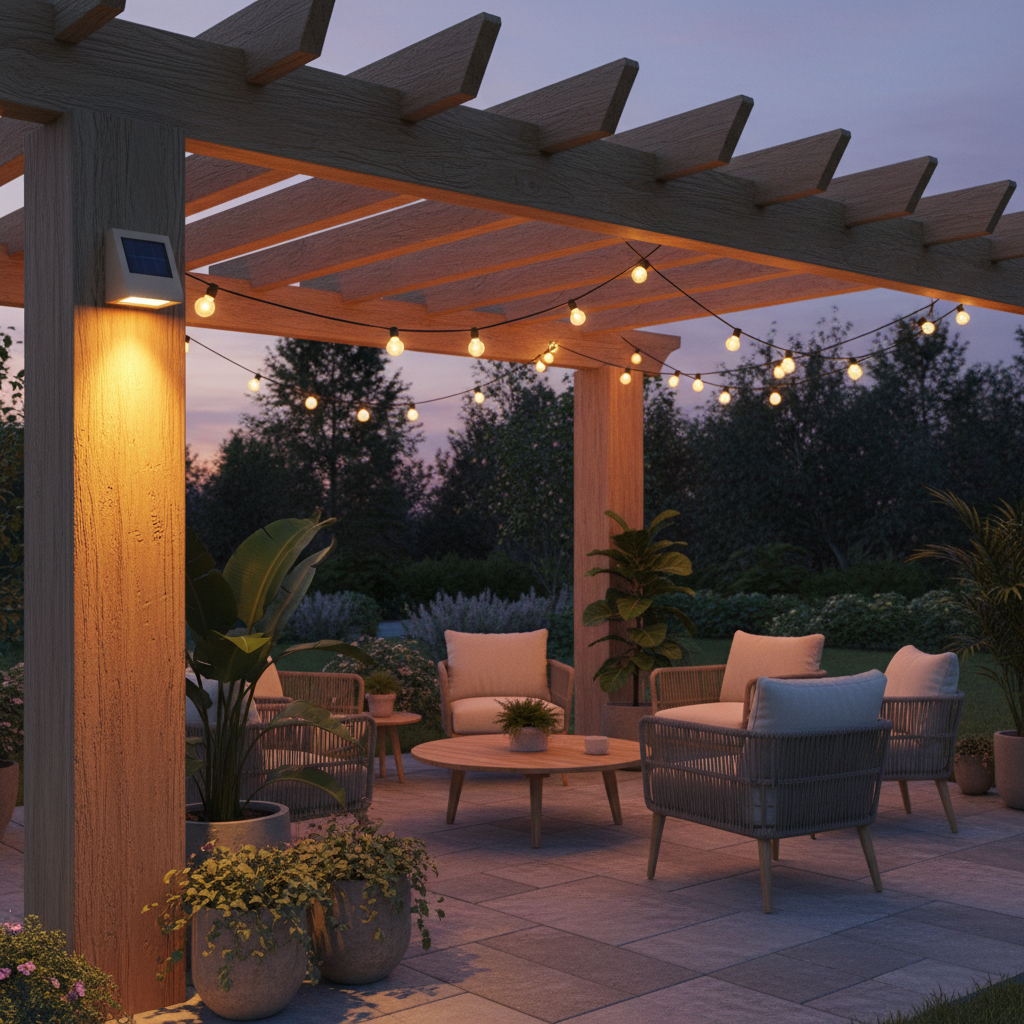
- Patio and BBQ Area: Functional evening light without running wires.
- Gate and Entrance: Strategic point for perimeter security.
- Rear or Side Facade: Often overlooked blind spots, but most exposed.
What Distinguishes a Good Solar Light from a Bad One
The market is saturated with options, from the most reliable to the most fragile. A few signs help quickly sort them out.
Signs of a Quality Model
A serious solar light typically offers at least a two-year warranty, an IP65 or higher rating, and clearly stated battery capacity in the technical specifications. Honest manufacturers readily communicate actual autonomy in detection mode rather than just highlighting maximum lumens.
Aluminum or UV-resistant engineered plastics are good signs for casing durability. A classic plastic casing yellows and weakens in a few years due to UV and freeze/thaw cycles.
Red Flags to Watch Out For
- Disproportionate lumens advertised compared to solar panel size
- Missing IP rating or below IP65
- No information on battery capacity
- Warranty less than one year (or non-existent)
- Very low price without technical justification
For a complete analysis of powerful solar light characteristics, we've detailed this topic in a dedicated guide.
Comparison of Available Options
To help you navigate, here's a table of essential criteria to compare across different categories of solar motion sensor lights:
| Criterion | Entry-Level | Mid-Range | High-End |
|---|---|---|---|
| Luminous Flux | 200-400 lm | 600-900 lm | 1000-1500 lm |
| IP Rating | IP44 or absent | IP65 | IP65 or higher |
| Autonomy without Sun (detection mode) | 2-4 days | 7-14 days | 20+ days |
| Detection Angle | 90-120° | 120-150° | 180° |
| Sensor Range | 10-16 ft (3-5 m) | 16-23 ft (5-7 m) | 26 ft (8 m) and up |
| Available Settings | None or minimal | Sensitivity, duration | Sensitivity, duration, mode |
| Warranty | 6-12 months | 1-2 years | 3-5 years |
This table clearly shows why price alone isn't a good indicator: some mid-range models offer excellent value and durability, while seemingly high-end models might not deliver long-term.
Lumic's SolarGlow: What It Offers
If you're looking for a reliable solar motion sensor light, here's what Lumic's SolarGlow offers, without exaggeration.
The SolarGlow emits 1200 lumens, sufficient to functionally illuminate a driveway, gate, or patio. It integrates two motion sensors with a 180° detection angle and a range of approximately 26 feet (8 meters). The IP65 rating ensures resistance to rain, snow, and frost, essential for year-round use.
Autonomy reaches 20 days without solar recharge in detection mode, thanks to a significantly larger battery than typically found in similar products. The solar panel is also oversized compared to entry-level options, allowing efficient charging even on cloudy days.
Installation requires no wiring or electrician. And if you have any doubts after purchase, it comes with a 5-year warranty, a 90-day satisfaction guarantee, and US-based customer support that responds in under 24 hours. These are conditions rarely found in this segment.
To learn more about solar motion sensor lighting and compare different options, our complete 2026 guide provides a broader perspective.
Common Mistakes to Avoid with a Solar Motion Sensor Light
Choosing Based Solely on Price
The initial price is often misleading. A $15 or $20 light that fails after one winter isn't a good deal, especially if you have to reinstall it and lose the warranty. User reviews consistently show that initial savings are quickly offset by premature replacement.
Poor Solar Panel Placement
This is the most common mistake. A light installed on a north-facing wall or under a deep awning will charge insufficiently. Take time to observe your facades' sun exposure before drilling the first hole. When in doubt, an east or west side is often better than direct exposure that's shaded midday.
Never Adjusting Settings After Installation
Most people install their light and never touch it again. In practice, adjusting sensor sensitivity and illumination duration reduces false alarms and conserves stored energy. A few minutes spent after installation to find the right settings can save weeks of frustration.
Ignoring Sensor Orientation
The sensor must be aimed at the area to be monitored, not at the sky or a reflective surface. Incorrect orientation can lead to constant triggers or a complete lack of detection in the critical area. During installation, test the trigger by walking through the target area before permanently mounting the device.
Summary: Key Points for Choosing Your Solar Motion Sensor Light
To choose a solar motion sensor light that will truly last, here are the key takeaways:
- Prioritize an IP65 minimum rating for weather resistance.
- Check battery capacity and advertised autonomy in detection mode.
- Prefer a 180° detection angle with a range of at least 20-26 feet (6-8 meters).
- Ensure settings are accessible: sensitivity, duration, mode.
- Choose a solar panel sized correctly for your exposure.
- Verify the warranty: at least two years for serious outdoor use.
- Test sensor and panel orientation before final mounting.
To further your analysis, our guide on criteria for choosing an outdoor solar light and another on how to choose your solar motion sensor lamp delve deeper into several points discussed here. A well-chosen, well-installed, and well-adjusted outdoor light is a solution that truly works, without surprises during the first winter.