You're looking for a powerful solar floodlight. Not a gadget that dies after 20 minutes, not a weak yellow light that "detects" at 6 feet (2 meters). You need something that truly illuminates, even in winter, even on long nights.
The problem is the market is flooded with lumen promises. 2000 lumens advertised on the box, 200 lumens in reality. And you only realize it once it's installed, on your roof, with a ladder.
This article helps you understand what truly makes a solar floodlight powerful, how to avoid common pitfalls, and which alternatives are actually worth it. For more in-depth information, you can also check out our guide on how to choose an outdoor solar floodlight suited for your needs.
Why Most "Powerful" Solar Floodlights Disappoint
The answer comes down to three points. Once you understand them, you'll never look at a product description the same way again.
Advertised Lumens Don't Match Real Lumens
This is the first and biggest problem. Regulations on lumen advertising for solar products are vague, and some manufacturers take full advantage. A floodlight might claim "1500 lumens" based on the theoretical maximum power of the LED, measured cold, in a lab, for 30 seconds.
In real-world conditions – with a draining battery, rising temperatures, and a panel receiving less than optimal sunlight – you often get only 30% to 50% of that value. An advertised "1500 lumens" might only give you 600 effective lumens in your driveway.
The rule of thumb: be wary of any claim over 1000 lumens on a product with a solar panel the size of a credit card. Physics doesn't lie.
The Solar Panel Is Too Small for the Job
A strong solar floodlight needs energy to operate reliably. That energy comes from the panel. An undersized panel is like trying to fill a swimming pool with a kitchen faucet.
A small integrated panel (less than 2 x 2 inches / 5 x 5 cm) won't capture enough solar energy to adequately charge a battery, especially in winter when days are 8 hours long and the sun stays low. Result: 3 to 4 days after a good sunny week, the battery is dead, and the light dims or shuts off.
What matters is the active surface area of the panel and its efficiency in converting diffuse light (overcast skies) into energy. If the manufacturer doesn't specify this, it's often a bad sign.
The Battery Is Too Small for Long Nights
In winter, a night can last 14 to 16 hours. If your floodlight operates in motion sensor mode with an 800 mAh battery, it won't last. And if you want continuous use for a few hours each evening, it's even more critical.
The basic rule: for motion detection mode, aim for at least 2000 mAh for reasonable mid-season autonomy. Below that, you risk nighttime failures at the worst possible moment – when someone comes home late, or you hear a noise in the yard.
To learn everything about winter performance, consult our guide on solar floodlight performance in winter: that's where most low-end products show their limitations.
The 4 Criteria for a Truly Powerful Solar Floodlight
If you remember only one section of this article, make it this one. These four criteria are what savvy buyers use to sort the good from the bad.
Minimum 800 Real Lumens for Security Use
For a security solar floodlight that genuinely deters or illuminates an access area, 800 real lumens is the reasonable baseline. Below that, the deterrent effect is limited, and the lighting is insufficient to clearly identify a person or obstacle.
A 1000 real lumen floodlight is what you aim for to cover a driveway, gate, or facade. Beyond 1200 real lumens, you're talking about lighting capable of illuminating a patio or a medium-sized parking area.
How to spot real lumens? Look for brands that provide independent test data, offer long warranties (a brand that cheats on lumens won't offer a 5-year warranty), and are transparent about measurement conditions.
Oversized Solar Panel Relative to the Battery
A good ratio: for a 2000 mAh battery, the panel should be able to recharge it in one day of average (not optimal) sunlight. Reputable manufacturers communicate this. Others conveniently omit it.
A "high-efficiency" or "monocrystalline" panel captures diffuse light better on cloudy days. If you live in a less sunny region or want reliable lighting in fall and winter, this is a non-negotiable criterion.
Minimum 2000 mAh Battery, Ideally 3000+ mAh
This is your light's energy reserve. The larger it is, the more leeway you have when the sun is scarce. In motion detection mode, a 2000 mAh battery gives you reasonable autonomy for 3 to 5 days without solar recharge, depending on trigger frequency.
With 3000 mAh or more, you're in a different league: capable of lasting a week without sun in detection mode, or several continuous hours each evening. This is what premium products aim for.
Motion Sensor with Real Range and Wide Angle
A 180° sensor with a 26-foot (8-meter) range truly covers an entrance or driveway. A 120° sensor at 16 feet (5 meters) is sufficient for a hallway but not for securing a gate. Always check these two values before buying.
Detection should also be coupled with an ambient light sensor: the floodlight only turns on at night, preserving battery life. Without this feature, the battery drains unnecessarily during the day. To delve deeper into this topic, our guide on motion-sensing solar lighting details everything you need to know.
Comparison: Types of Solar Floodlights Available on the Market
The market broadly divides into three categories. Here's an honest look at each.
| Category | Approx. Price | Real Lumens | Battery | Winter Reliability | Warranty |
|---|---|---|---|---|---|
| Entry-level (Amazon, generic) | < $20 | 100-400 real lumens | 500-1000 mAh | Low | 6-12 months |
| Mid-range (Home Depot, Lowe's, Philips, IKEA) | $20-60 | 300-700 real lumens | 1000-2000 mAh | Medium | 1-2 years |
| Premium (verified performance) | $60-120 | 800-1200 real lumens | 3000+ mAh | Good | 3-5 years |
Entry-level products have a structural problem: their manufacturing cost forces compromises on what matters most – the battery and the panel. You might buy three for the price of one good model, but you'll replace them three times as often.
Big box stores like Home Depot or Lowe's offer decent products for occasional use. But if you want reliable security lighting 365 days a year, their range is limited by insufficient batteries for winter.
Do You Really Need a "Floodlight" or a Powerful Wall Sconce?
This is a question few people ask before buying, and it should be asked more often.
What's the Concrete Difference Between a Floodlight and a Solar Wall Sconce?
A solar floodlight, strictly speaking, is adjustable on an arm or stand, often with its panel separated (independent panel mounted higher, adjustable light head). This format is effective for illuminating a precise area from a distance.
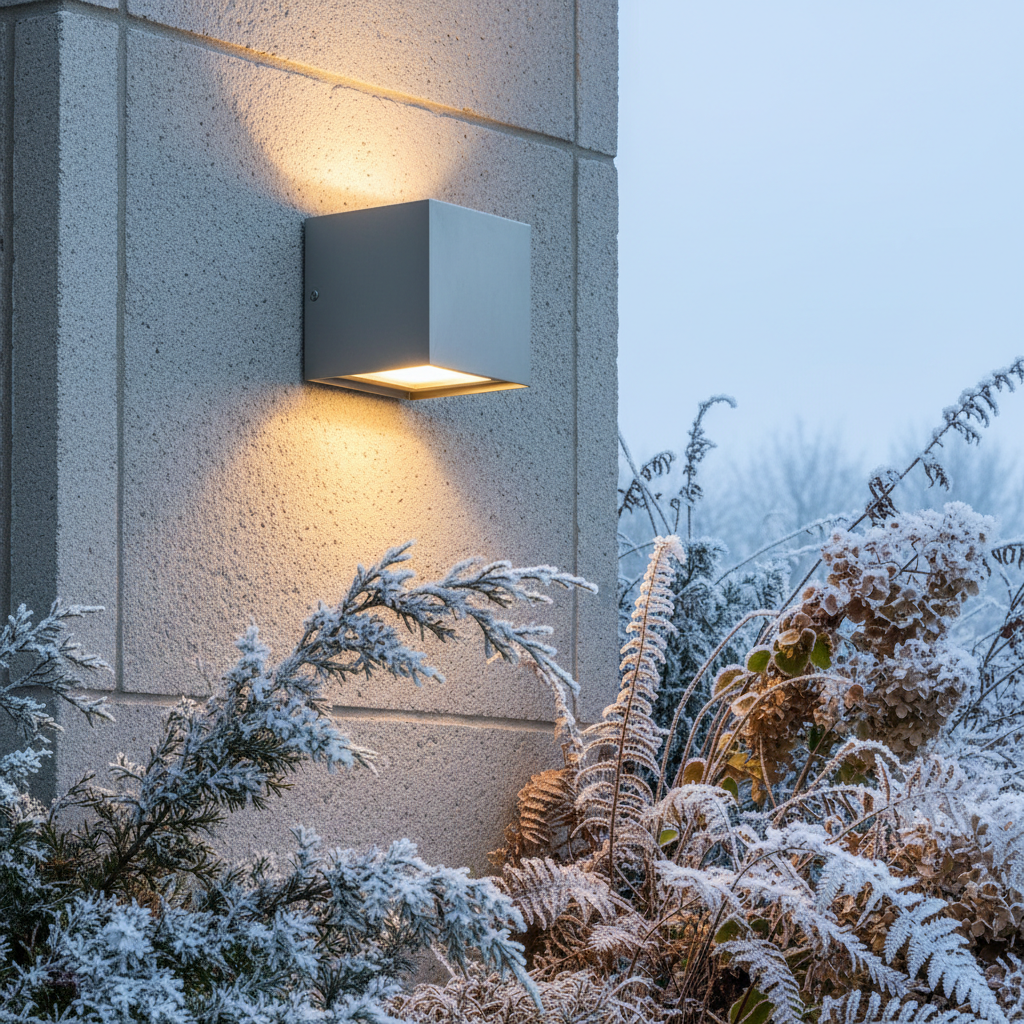
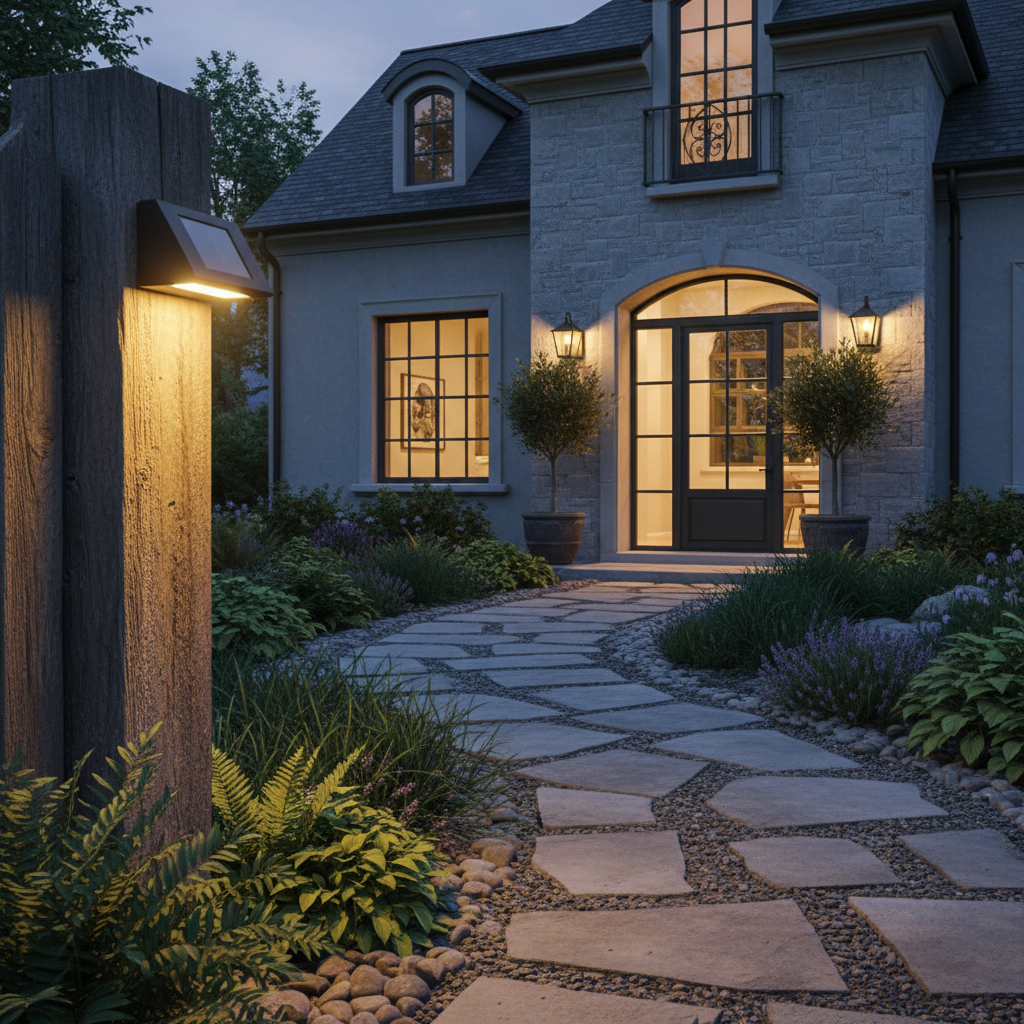
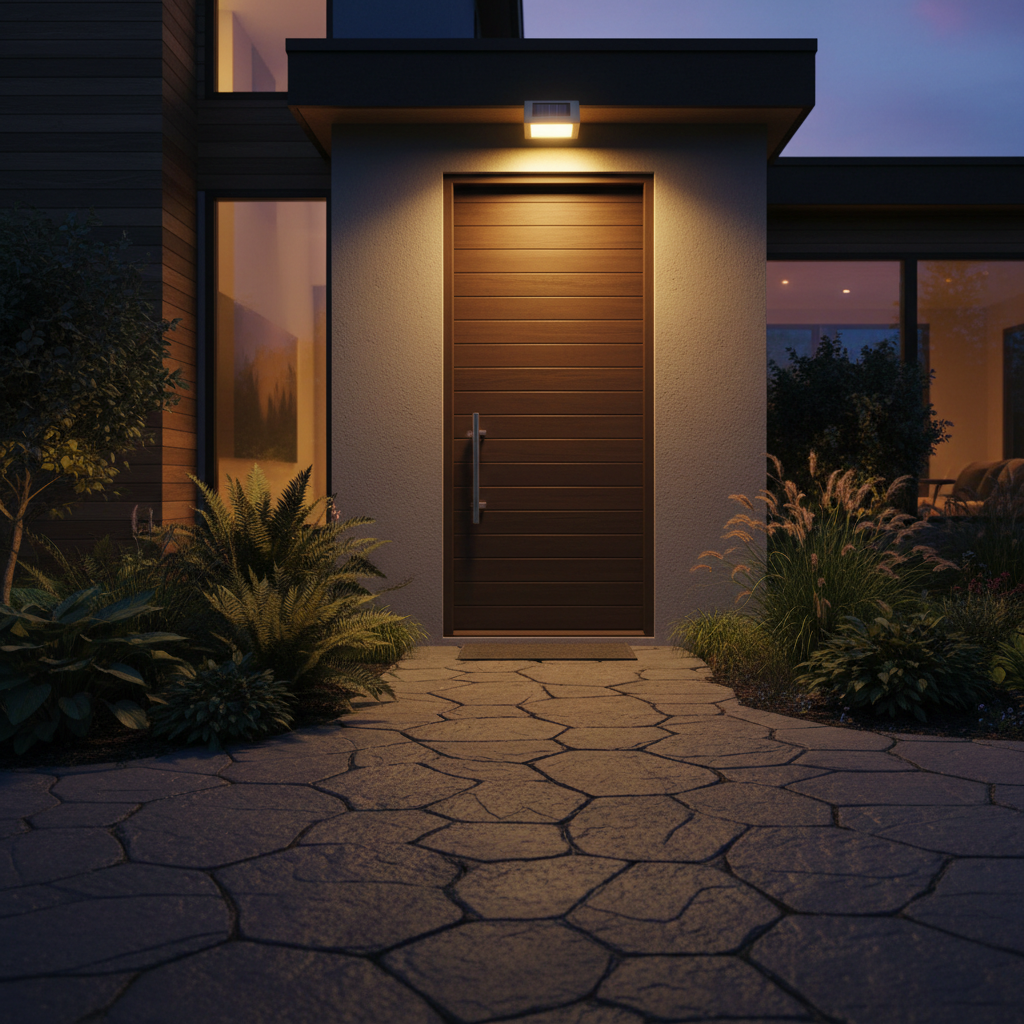
A solar wall sconce, on the other hand, mounts directly to a wall or facade. The panel and light source are integrated or close together. It illuminates downwards and sideways. For securing an entrance, gate, or driveway alongside a house, this format is often more suitable: fewer broken arms in freezing weather, fewer cables between panel and head, fewer vibrations that shift the orientation.
The light output can be identical, or even superior in some sconces, compared to many "floodlights" on the market.
When a Sconce Format Is Better Than a Classic Floodlight
If your goal is to illuminate an entrance, secure pedestrian access, or see clearly when returning home at night, a wall sconce with 1000 to 1200 real lumens does the exact same job as a floodlight, while being mechanically more robust and simpler to orient once and for all.
That's why products like Lumic's SolarGlow, which is a wall sconce and not strictly a floodlight, deserve to be in this comparison. With 1200 lumens, two 180° motion sensors, and a 26-foot (8-meter) range, it covers the uses most people aim for when they seek a powerful solar floodlight.
The format is different. The power is there. And when a brand advertises 1200 lumens with a 5-year warranty and a 90-day satisfaction guarantee, it's a clear signal they aren't inflating their numbers: a brand that cheats can't afford to refund you if you're not satisfied.
Lumic's SolarGlow: Honestly, Who Is It For?
The SolarGlow is not an adjustable stand-mounted floodlight. Let's be clear about that. If you're looking to illuminate a tree at the back of your yard from your patio, this isn't the right product.
However, if you want:
- Reliable year-round lighting for an entrance, gate, or driveway
- Security lighting that also works in winter thanks to an oversized panel and battery
- No-drill, no-wire installation, no electrician needed
- A product that lasts (IP65, resistant to rain, snow, frost)
Then yes, this is a serious option. 1200 real lumens, two 180° sensors with a 26-foot (8-meter) range, 20-day autonomy without sun in detection mode. For comparison, having a wired outdoor floodlight installed by an electrician costs between $300 and $600 just for installation, not including materials.
Trustpilot rating of 4.5/5 from over 2200 reviews. 5-year warranty. US-based customer support.
Honest Comparison: SolarGlow vs. Common Alternatives
| Criterion | Generic Amazon | Home Depot / Lowe's | SolarGlow (Lumic) |
|---|---|---|---|
| Advertised Lumens | 1000-3000 (often inflated) | 400-800 | 1200 (real) |
| Battery | 500-1500 mAh | 1000-2000 mAh | Large capacity (4x basic models) |
| Autonomy without sun (detection) | 3-7 days | 7-14 days | 20 days |
| Sensor Angle | 90-120° | 120° | 2 x 180° |
| Detection Range | 10-16 ft (3-5 m) | 16-23 ft (5-7 m) | 26 ft (8 m) |
| Weather Resistance | IP44-IP54 | IP44-IP65 | IP65 |
| Warranty | 6-12 months | 1-2 years | 5 years |
| Customer Support | Often offshore | In-store | US-based, response < 24h |
What No One Tells You Before Buying a Solar Floodlight
Panel Placement Is as Important as Power
A powerful solar floodlight poorly oriented is just a solar floodlight that drains quickly. The panel needs at least 4 to 6 hours of direct sunlight daily to efficiently recharge the battery. In practice, this means south or southwest exposure, with no shade from trees or roof overhangs between 10 AM and 4 PM.
If your wall faces north or east, no solar floodlight, no matter how powerful on paper, will be reliable in winter. In this case, powerful wireless outdoor lighting solutions with rechargeable batteries (AC powered) might be more suitable.
Frost Resistance Is Often Underestimated
IP65 means dust-tight and resistant to water jets. This is the minimum standard for outdoor use. Below that (IP44, IP54), the product might last in mild climates but will fail after two or three winters in colder regions.
Always check the IP rating before purchasing. An IP44 in an area with regular freezing temperatures is a long-term risk.
Wireless Installation Is Also a Matter of Safety
No cables, no conduits, no electrical work: for many homeowners (and all renters), this is a non-negotiable condition. Wired systems require a qualified electrician, often costing between $300 and $600 for complete installation. An autonomous solar product installs in less than 30 minutes with a drill and two screws, or even with industrial adhesive depending on the model.
If you're looking for other approaches to lighting without touching the electrical grid, our article on lighting solutions without electricity provides a comprehensive overview.
Verdict: How to Choose Your Powerful Solar Floodlight
Here's a practical summary to make the right choice.
If you have less than $30 to spend: Don't buy a generic "1500 lumens" product. Instead, buy an honest product with 400-600 real lumens from a brand that doesn't inflate its numbers. You'll be less disappointed.
If you want reliable year-round security lighting: Aim for a minimum of 800 real lumens, 2000 mAh+ battery, oversized panel, and IP65 rating. Realistic budget: between $50 and $120. Below that, you risk durability and actual power.
If your use is mixed (security + ambiance): A model with an adjustable continuous mode in addition to detection mode gives you more flexibility. Check the autonomy in continuous mode, which is often much shorter than detection mode.
If you're a renter or want to avoid drilling: A solar wall sconce like the SolarGlow installs without cables or electrical conduits, withstands all weather (IP65), and offers 1200 lumens of power with 20 days of autonomy without sun. It's a different format than an adjustable floodlight, but for most common uses, it gets the job done.
In summary: a truly powerful solar floodlight is recognized by its battery, the size of its panel, and the manufacturer's warranty. The rest is marketing.