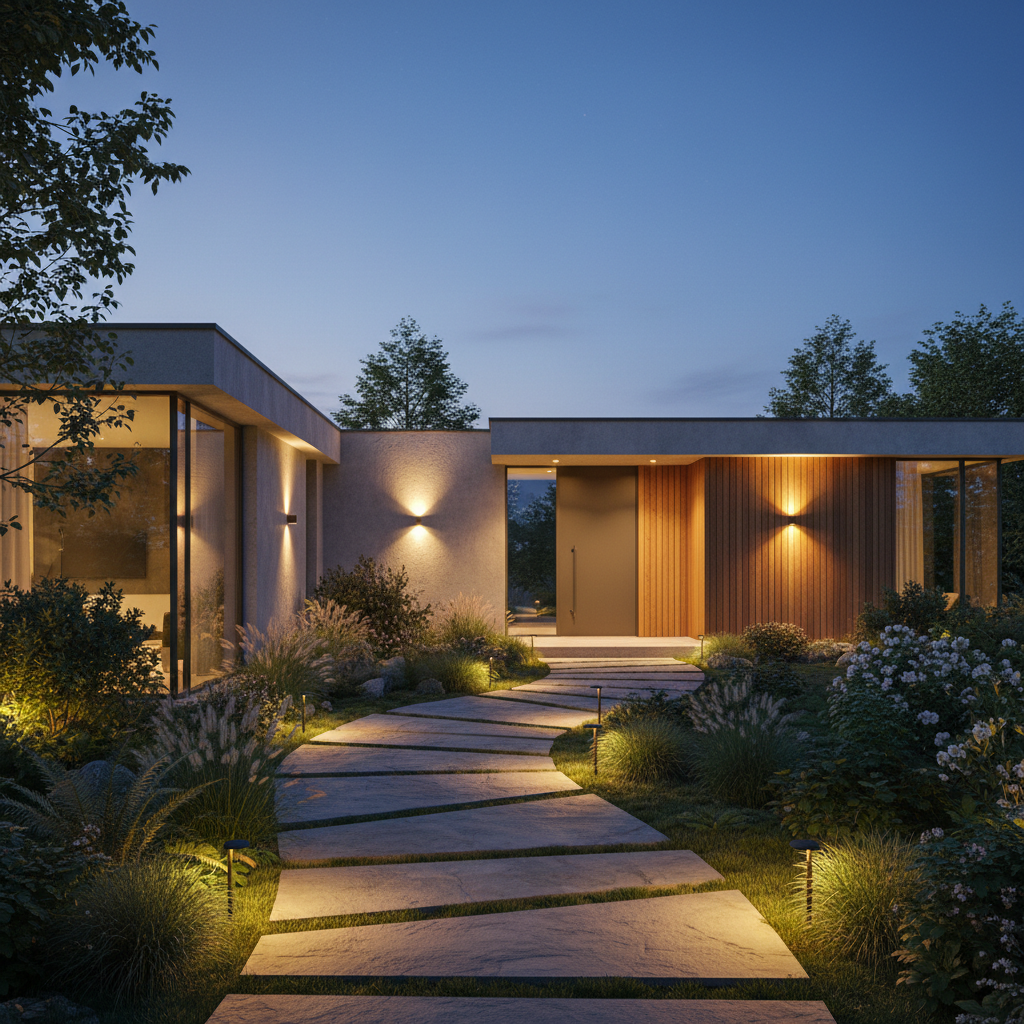
You look at your garden at night and think something's missing. A dark pathway, an uninviting entrance, a patio you avoid after 9 PM. Yet, good garden lighting isn't just about sticking in a few bollards and hoping it looks good. It's about organizing your outdoor garden lighting by zone, based on what each space truly needs.
This guide helps you plan your garden lighting logically, zone by zone, without going overboard or breaking the bank on installation.
Why Zone Your Garden Lighting?
Not all areas of a garden have the same lighting needs. The path to your door doesn't require the same light as the rhododendron bed you want to highlight. The patio where you dine in summer is different from the gate you want to secure at night.
This logic changes everything. Instead of buying six identical fixtures because "it looks neat," you choose the right tool for each purpose. The result: a truly illuminated garden, not just scattered light points that are useless once it gets really dark.
What's the First Zone to Light in a Garden?
The entrance. Without hesitation. It's the first impression visitors have of your home, and it's also the most vulnerable area for intrusion attempts. A well-lit entrance deters, reassures, and guides. It's the logical starting point before anything else.
Should You Wire Everything, or Can You Skip an Electrician?
This is the question everyone asks when planning garden lighting. Wired systems offer maximum reliability but involve trenching your lawn, laying conduits, and often hiring an electrician. For a fully wired garden, expect to pay between $1,000 and $2,000 for installation alone, excluding materials. Solar, on the other hand, installs point by point, no cables, no trenches, no installation fees. Both options have their place depending on the zones and needs.
Pathways: Guide Without Glare
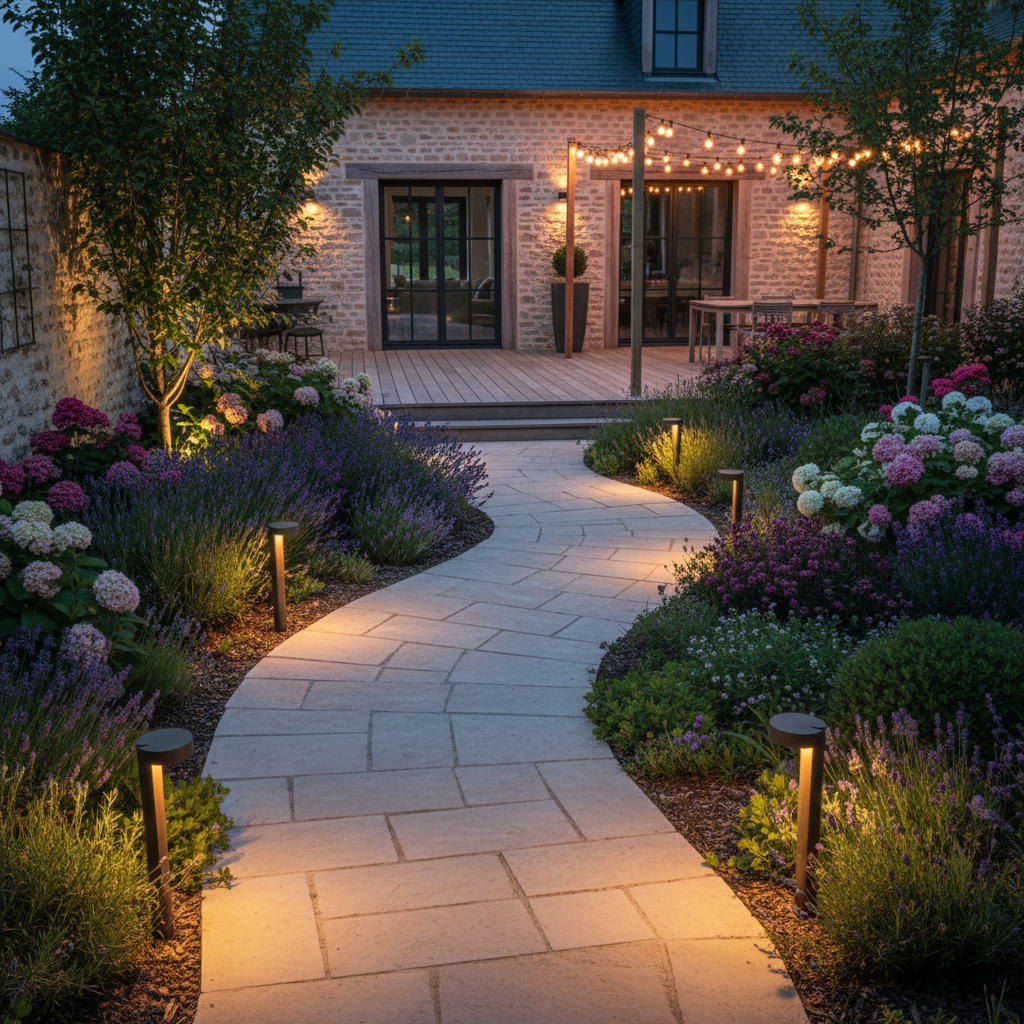
A well-lit pathway guides the eye and feet without blinding. The classic mistake is installing overly bright bollards, too close together, turning the path into an airport runway. What you want is discreet, consistent, and warm illumination.
What Height for Garden Pathway Bollards?
Pathway bollards are typically installed between 16 inches (40 cm) and 3 feet (1 meter) high. Below 16 inches (40 cm), the light illuminates the ground but not the path. Above 3 feet (1 meter), you risk creating unpleasant shadows and losing the guiding effect. For a standard pathway, a height between 20 and 28 inches (50 and 70 cm) provides a clean and functional look.
What Spacing Between Bollards?
For pathway lighting, a spacing of 6.5 to 10 feet (2 to 3 meters) between each bollard is usually sufficient. Beyond 10 feet (3 meters), dark areas between bollards become noticeable, reducing the sense of continuity. For a curved pathway, slightly reduce the spacing on turns to maintain path visibility.
To delve deeper into this topic, our article on garden pathway lighting details options and installation methods based on soil type and path length. For trench-free solutions, solar bollards for pathways are a serious alternative.
Flowerbeds and Garden: Stage Your Plants
This is where nighttime garden lighting becomes truly artistic. A spike spot directed at a trimmed shrub, grazing light on a hedge or pergola, and your garden takes on a whole new dimension after sunset. This is called accent lighting.
What Fixtures for Lighting Plant Beds?
Spike spotlights are best for lighting flowerbeds. They push directly into the ground, direct their beam where you want it, and don't visually clutter the garden during the day. For trees or tall hedges, an uplight projector creates a dramatic, much-appreciated effect. Important: choose a warm color temperature (around 2700-3000K) so foliage doesn't turn flashy yellow.
Should Flowerbed Lighting Stay On All Night?
Not necessarily, and it would be an unnecessary energy drain. For flowerbeds, two approaches work well: a programmed timer (on from 8 PM to midnight, then off) or a dusk-to-dawn sensor that automatically turns on at sunset. In solar mode, the best lamps already include this ambient light sensor. Before choosing, read our article to select your outdoor solar lamp for your specific use.
Entrance and Gate: Safety First
Your home's entrance deserves special attention. It's the primary zone for intrusion attempts, and it's also the first thing you see when you come home at night. Good entrance lighting serves three functions: deterring, reassuring, and providing enough light to find your keys without fumbling.
How Many Lumens for Home Entrance Lighting?
For an entrance or gate, you need at least 800 to 1000 lumens for truly effective lighting. Below that, the area remains in semi-darkness, which neither deters nor serves its purpose. A light fixture that's too dim gives the impression of a lit garden while leaving blind spots—the exact opposite of the desired effect.
Motion Sensor or Permanent Lighting for an Entrance?
A motion sensor is the best option for the entrance. It saves energy, but more importantly, it creates a deterrent surprise effect: a light that suddenly turns on when someone approaches attracts neighbors' attention and discourages ill-intentioned individuals. Permanent lighting eventually becomes "invisible"—everyone gets used to it and no one notices it anymore. To understand everything about this topic, our guide on outdoor motion sensor lights covers all use cases.
This is exactly why Lumic's SolarGlow was designed. 1,200 lumens, two motion sensors covering 180° each with a range of about 26 feet (8 meters), IP65 rating for all weather conditions, and zero cables to install. It attaches wherever you want, no trenching, no electrician. For an entrance or gate, it's exactly what you need: power, responsiveness, and 20 days of autonomy without solar recharge in detection mode. It comes with a 5-year warranty.
For more on wireless solutions for securing large areas, our article on powerful wireless outdoor lighting provides a comprehensive overview of current possibilities.
Patio: Ambiance First
The patio is your outdoor living space. What you're looking for here isn't security or raw functionality, it's ambiance. Light that's too cold or too strong kills the atmosphere of an outdoor meal. Light that's too dim makes the table unusable after 9 PM.
What Color Temperature for a Patio?
For a patio, stick to warm white: between 2700 and 3000K. This temperature range gives a golden, enveloping light, similar to a candle or an old-fashioned bulb. It enhances natural materials (wood, stone, textiles), flatters faces at the table, and creates a mental break from indoors. Neutral white (4000K) or cool white (6000K) should be avoided here: it gives office lighting, not patio lighting.
How to Combine Multiple Light Sources on a Patio?
The patio lends itself well to layering sources: string lights for general ambiance, a table lamp for close proximity, and possibly ground spots to define the space. This layered approach avoids flat, uniform light that flattens the space. It also allows you to adjust the lighting for different moments: brighter for a meal, dimmed to end the evening in conversation.
Pool Area: Safety and IP Rating
If you have a pool in your garden, lighting its perimeter follows a different logic: safety and moisture resistance are prioritized over aesthetics. A child running around an unlit pool at night is a real risk. Poolside lighting must be powerful enough to clearly see what's happening and reliable enough to function in a constantly humid environment.
What IP Rating for Pool Area Lighting?
Around a pool, electrical standards define safety zones. In the immediate periphery (more than 6.5 feet (2 meters) from the edge), a minimum IP65 rating is recommended for outdoor luminaires. This means total protection against dust and water jets. For installations in water or in direct contact with it, IP67 or IP68 is required. It's best not to cut corners on this point.
Solar or Wired Lamps for a Pool Area?
For a pool perimeter, both options are viable. Solar works very well for spike spotlights and edge lights, provided the area receives enough sun to charge the batteries. If your garden is shaded, a wired installation will be more reliable. In this case, yes, you need an electrician—proximity to water doesn't forgive DIY mistakes.
Solar or Wired: How to Decide Zone by Zone
This is often the question that stops everyone from taking action. The honest answer is that it depends on the zone and the use. Here's a table to help you clarify.
| Zone | Recommended Type | Why |
|---|---|---|
| Entrance / Gate | Solar with Motion Sensor | Power, autonomy, zero cables |
| Main Pathway | Solar (bollards) or Wired | Depends on pathway sun exposure |
| Flowerbeds / Plants | Solar (spike spotlights) | Flexible placement |
| Patio | Wired or Ambiance Solar | Needs consistency and ambiance |
| Pool Perimeter | Wired (IP65+) or Solar IP65 | Safety and reliability are mandatory |
What this table illustrates is that fully wired isn't always necessary. For an entrance, gate, or flowerbed spotlights, modern solar delivers comparable performance to wired, without the installation cost. Wiring an entire garden means trenches, conduits, and often $1,000 to $2,000 in labor and work alone. By going solar zone by zone, each light point costs nothing to install. The math adds up quickly.
To go further in choosing based on specific zones, our article on solar garden lighting by zone details selection criteria for each possible configuration. And if power is a central criterion for you, the article on powerful solar garden lamps will help you make the right choice.
Common Garden Lighting Mistakes
Even with the best intentions, some mistakes are common. Here they are, so you can avoid them.
Too Much Light Everywhere
An over-lit garden loses all its charm. Darkness is part of the nighttime garden: it creates depth, mystery, and contrast. Lighting every square inch is like lighting nothing at all. Choose your priority areas, and leave the rest in shadow—that's what makes the lit areas truly beautiful.
Neglecting Color Temperature
Mixing 3000K and 6000K lights in the same garden creates a visual cacophony. Try to stick to a consistent range: warm white (2700-3000K) for living and ambiance spaces, neutral white (4000K max) for functional areas like the entrance or gate.
Buying Underpowered Solar Lamps
The big trap of cheap outdoor garden lamps: the advertised lumens correspond to ideal lab conditions, not your garden's reality in winter. A solar lamp that claims 800 lumens on the box but delivers 200 lumens in real conditions is a guaranteed disappointment. The actual battery power and solar panel size are the true performance criteria. That's why solutions with large-capacity batteries and oversized solar panels are worth the long-term investment.
Forgetting Weather Conditions
A garden light fixture not rated at least IP65 in a rain-exposed garden is weeks away from its first problems. The IP rating isn't a luxury option for outdoors; it's a basic requirement. Always check it before buying.
Installing All Lights at Once
Start with the entrance. Observe. See what's still missing. Then move to the pathway, then the patio. Installing everything at once without testing often leads to regretting the placement of half the lights two weeks later. Gardens are built gradually, and so is lighting.
Where to Start Practically
If you're starting from scratch, here's the logical order to structure your nighttime garden lighting:
- Step 1: Start with the entrance and gate. Safety first. This is where the impact is most immediate.
- Step 2: Main pathway lighting. Both functional and aesthetic.
- Step 3: Accent spotlights on flowerbeds and notable plants. This is where your garden gains personality.
- Step 4: Patio lighting. Ambiance, comfort, daily use in summer.
- Step 5: Secondary areas (shed, pool perimeter, vegetable patch) if needed.
Each step can be done independently. No need to do everything at once, or wire everything at once. The advantage of solar is precisely this modularity: you add a light point when you need it, where you need it, without touching anything else.
For areas where you're still hesitating between several technologies, our guide on outdoor motion sensors will help you choose the right configuration for each location.
Key Takeaways
Thoughtful outdoor garden lighting is primarily about organizing by use, not aesthetics. The entrance demands power and responsiveness. The pathway needs consistent guidance. Flowerbeds call for staging. The patio seeks ambiance. The pool requires safety.
Solar isn't the universal solution, but for entrances, pathways, and flowerbed spotlights, it largely delivers on its promises today, provided you choose products with a real battery and a real panel. Wired remains relevant for areas where reliability is critical and light must remain constant all night.
Start with one zone. Do it well. Then move to the next. That's how a garden lit with intention ends up looking truly special.