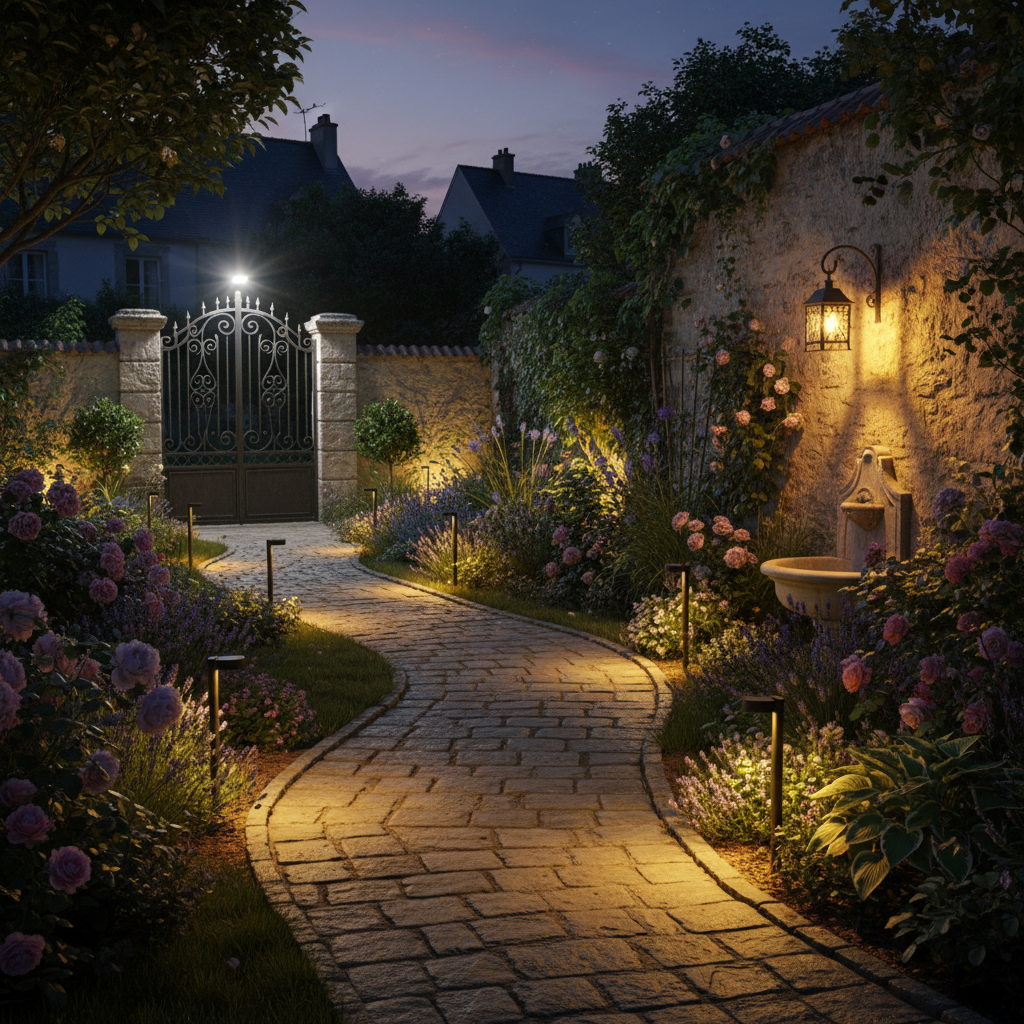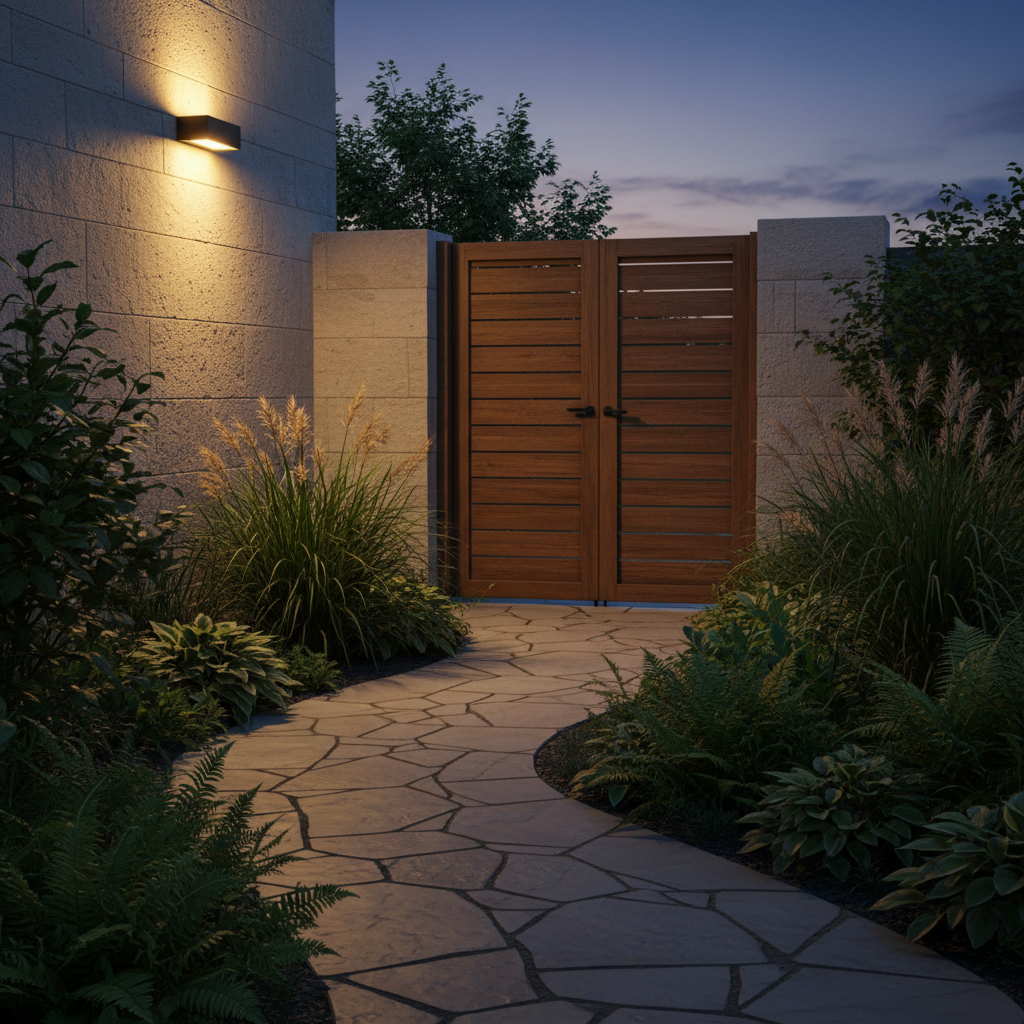
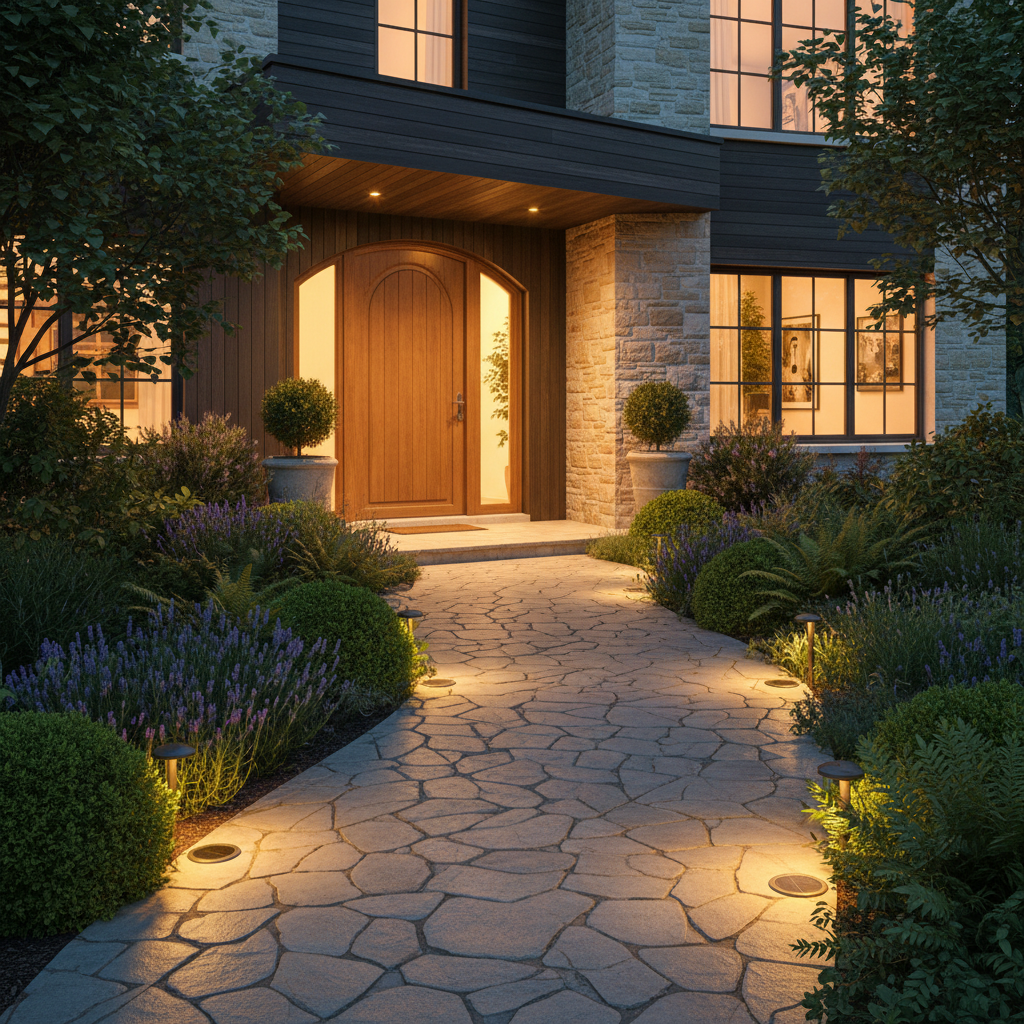
You've walked through the aisles at Home Depot or Lowe's, seen various solar light models lined up on the shelves, and wondered if they're worth it. That's a fair question. And it deserves an honest answer, not a sales pitch.
This comparison isn't meant to steer you away from Home Depot or Lowe's. These stores have real strengths. But there are questions you might not have asked yet, and the answers could change your choice. We'll ask them here.
What Home Depot / Lowe's Offers in Outdoor Solar Lights
The selection of outdoor solar lights at Home Depot and Lowe's is extensive. In-store, you'll mainly find house brands like Hampton Bay or Portfolio. Prices typically range from under $10 for small decorative models to around $50 for motion-sensing floodlights.
What Types of Solar Lights Can You Find at Home Depot / Lowe's?
The assortment covers various uses. You'll find solar path lights, string lights, in-ground spotlights, and especially motion-sensor floodlights. This latter format is the most popular and accounts for most online queries on the subject.
Products change regularly with seasons and restocks. The advantage of a physical store is seeing the product in person, comparing sizes, and sometimes even testing the light under artificial store lighting. That's a real plus that online ordering doesn't offer.
What Warranty Do Solar Lights from Home Depot / Lowe's Come With?
The standard warranty in the US is typically 1 year for most electronic products, and house brands usually meet this minimum. Some models might offer an identical contractual warranty. Returns are generally straightforward with a receipt. This is reassuring if you live near a store.
This point is important to consider when comparing with brands that offer longer warranties on solar products. The durability of a solar light heavily depends on its battery, and a short warranty might indicate an anticipated quicker replacement.
Key Questions to Ask Before Buying a Solar Light
Here's what the product description doesn't always tell you clearly. These three elements make all the difference between a solar light that lasts and one that ends up in a drawer after two winters.
What is the Battery Capacity?
This is the most crucial criterion, and it's often the least highlighted on packaging. A battery that's too small means the light will turn off early in the night, even in summer. In winter, with fewer daylight hours, low capacity can make the light almost useless.
Entry-level models at big box stores often have batteries around 600 to 1200 mAh. This is enough for very occasional use but fragile over time. A model designed to last for several weeks without recharging needs a significantly larger battery.
What is the Size of the Solar Panel?
A solar panel that's too small won't adequately recharge the battery on cloudy or short days in December and January. In many northern US/Canadian regions, winter sunlight is limited. An oversized panel relative to the battery ensures year-round reliability.
Entry-level models often prioritize the displayed price over panel surface area. This compromise is most noticeable in winter. To learn more about this, our guide to high-performance winter solar lights details this point precisely.
Does the Light Truly Withstand Outdoor Conditions?
An IP65 rating or higher guarantees resistance to water jets and harsh weather. This is the minimum recommended for permanent outdoor use. Check this rating on the product sheet before buying, regardless of where you purchase it.
Frost resistance is another point to check. Lithium batteries don't tolerate very low temperatures (below 32°F / 0°C) well over the long term. A model that handles this constraint will generally have a design intended for real-world outdoor conditions, not just on paper.
General Retailer vs. Specialist: Two Different Buying Philosophies
Buying a solar light at Home Depot/Lowe's or from a lighting specialist isn't the same promise. Both approaches have their logic. Let's look at them honestly.
What Home Depot / Lowe's Does Well
Immediate availability is a real advantage. You buy today, you install tonight. The store network is dense across the US/Canada, making returns or exchanges easy. Entry-level options are affordable, allowing you to test the concept of solar lighting without a significant investment.
For someone who wants to install a few decorative path lights, or test if a solar light meets their needs, a budget-friendly model bought in-store is a perfectly sensible option. Checking honest reviews and comparisons of Home Depot/Lowe's solar lights can also help you refine your choice based on available models.
Limitations of Big Box Store Models
Store brands are designed to meet a price specification. This sometimes involves compromises on the battery, panel, or long-term material quality. This isn't a criticism of the store; it's the economic reality of mass retail.
The product range evolves quickly, models change from season to season, and customer support for a discontinued product can become complicated. For security or functional lighting (entrance, gate, dark pathway), durability matters more than for garden decor.
For a broader comparison, you can also check our comparison with other big box stores, which follows a similar logic.
Key Criteria Comparison: Big Box Store vs. Specialist
Here's a table to visualize the main differences, based on characteristics generally observed in each category:
| Criterion | Big Box Store (Hampton Bay/Portfolio) | Specialist (e.g., SolarGlow) |
|---|---|---|
| Battery | 600 to 1200 mAh (typical) | 4x larger battery |
| Solar Panel | Standard size | 3x larger panel |
| Warranty | 1-2 years (standard) | 5 years |
| Immediate Availability | Yes (in-store) | 2-5 day shipping |
| Customer Support | In-store return | US-based support, < 24h response |
| Brightness (Motion Sensor) | Varies by model | 1200 lumens |
| Weather Resistance | Varies (check IP) | IP65 (rain, snow, frost) |
| Satisfaction Guarantee | Store policy (14-30 days typical) | 90 days |
What to Expect from a Motion-Sensor Solar Light?
Most people look for a motion-sensor solar light to secure an entrance, illuminate a gate, or avoid tripping on a pathway at night. This is the most common use. There are also dedicated guides if you want to delve deeper into this type of purchase, including our article on motion-sensor solar lighting.
What Detection Range is Truly Useful?
A range of 16-26 feet (5-8 meters) is sufficient for most residential uses. The detection angle is as important as the range: a sensor covering 180° or with two independent sensors avoids blind spots. This is a detail you can check on the technical specifications before buying.
How Long Does the Light Stay On After Detection?
Most models stay on for 20-60 seconds after detection. This is adjustable on some models. This duration directly impacts battery life: the longer it stays on, the faster the battery drains. A good balance depends on your actual use (frequent or occasional passage).
What Lumic's SolarGlow Offers in Comparison
To be honest in this comparison, here's what Lumic's SolarGlow offers, with verified data.
The model delivers 1200 lumens with two 180° motion sensors, and a range of about 26 feet (8 meters). It is IP65 certified, meaning it resists rain, snow, and frost. The battery and solar panel are significantly oversized compared to entry-level big box store models, resulting in 20 days of autonomy without solar recharge in detection mode, and about 36 hours of continuous lighting.
Installation requires no wiring, no electrician, no trenching. It comes with a 5-year warranty, and a 90-day satisfaction guarantee. Customer support is US-based with a response in under 24 hours. The brand boasts over 2200 reviews on Trustpilot with a 4.5/5 rating.
This isn't the same positioning as a low-cost model from a big box store. Nor is it the same promise of durability. If you want to compare even more broadly, our comparison of the best outdoor solar lights includes several brands and product types.
How to Choose Based on Your Actual Use?
The right solar light depends on what you truly need. Here's a simple guide to help you decide.
You Want to Test the Concept of Solar Lighting Without Spending Too Much
An entry-level model from Home Depot or Lowe's is a reasonable option. You'll see if the technology suits your use, chosen location, and habits. The investment is limited, and returns are easy. It's a good way to start before upgrading.
You Want Reliable Lighting, Year After Year, Without Thinking About It
In this case, battery, panel size, and warranty become critical criteria. A model designed to last through winter, withstand harsh weather, and not fail after 18 months justifies a slightly higher initial investment. If you want to explore this criterion further, our article on choosing a powerful garden solar light will help you refine your choice.
You're a Renter or Want a No-Drill Installation
Both options (big box store and specialist) generally offer models without wiring or drilling. This is a common advantage of solar technology. The difference will be more about durability and performance than the installation itself.
Honest Verdict: Home Depot / Lowe's or Specialist?
Home Depot and Lowe's are reputable retailers with a varied selection of solar lights and accessible prices. If you're looking for a decorative model, a first trial, or a quick, low-cost solution, their outdoor lighting aisle can meet your needs.
If you're looking for security or functional lighting, designed for durability, effective in winter, with a long-lasting battery and extended warranty: the technical criteria lean towards a specialist. Not because Home Depot or Lowe's are bad, but because the design priorities are different.
The question to ask yourself is simple: how soon do you want to have to buy another solar light? This answer determines which purchase is truly the most economical.