Ever seen those off-white plastic solar lights, lining a pathway, flickering in October and dying by January? That's not what we're talking about here.
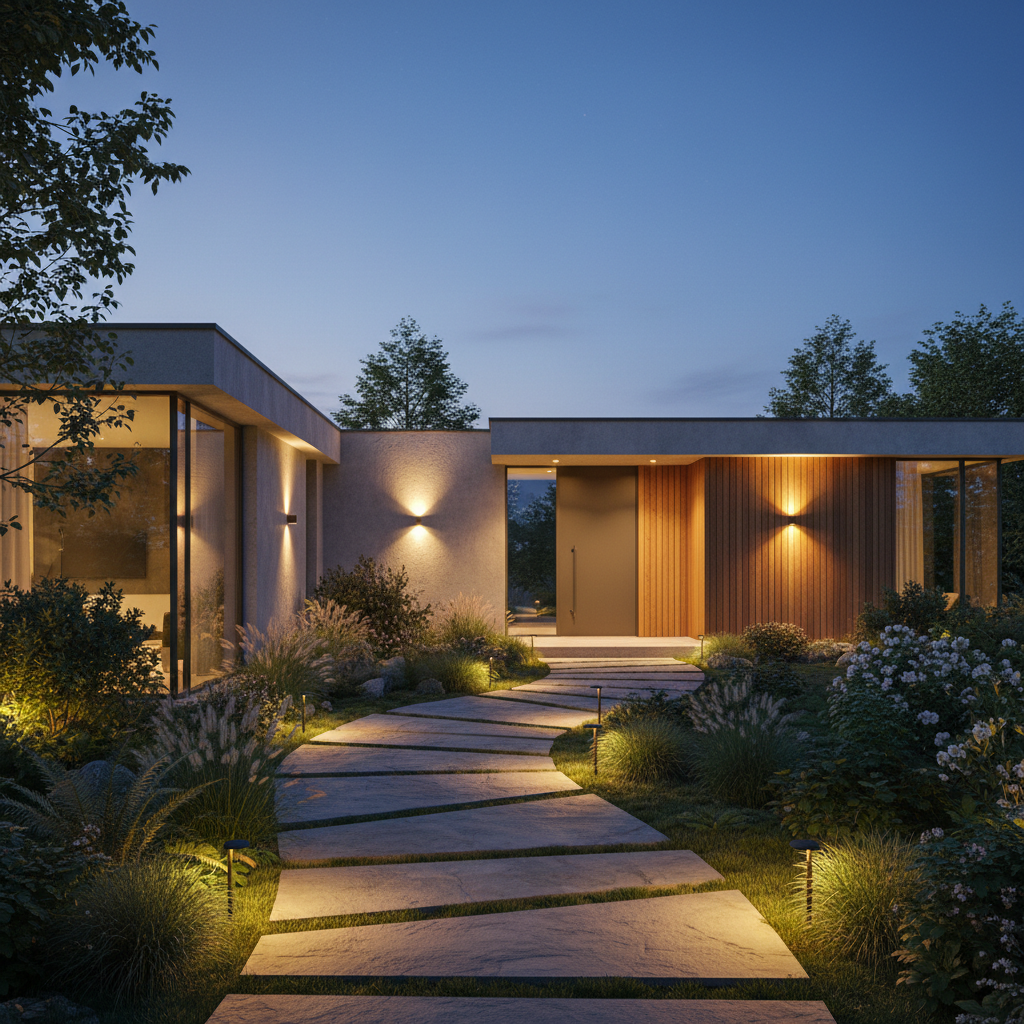
Solar garden lighting has evolved. The top models in 2026 feature brushed aluminum, matte black finishes, and sleek lines that integrate seamlessly into a contemporary garden, as if an architect designed them. And behind this design is technology that truly delivers.
This guide provides the criteria to choose solar garden lighting that is both beautiful and reliable. Because one without the other is a waste of money.
Why Solar No Longer Means Ugly Plastic
For a long time, solar garden lighting meant compromise. We accepted questionable design because there was no other choice. Those days are over.
Material Revolution
The difference between a low-end solar light and a premium model is immediately apparent in the material. Aluminum has replaced plastic in serious ranges, and that changes everything: resistance to frost, humidity, and impacts. Brushed stainless steel and tempered glass have also appeared on wall-mounted and bollard models, providing a truly premium finish.
Plastic hasn't disappeared, but it's now relegated to entry-level products. If you see a glossy ABS body for less than $20, expect to replace it within 18 months.
Finishes That Make a Difference in 2026
The dominant aesthetic trends for outdoor solar garden lighting in 2026 are clear: matte black, anthracite gray, milky off-white, and brushed stainless steel. These finishes age well, blend into both modern gardens and more classic exteriors, and don't show temperature variations like some painted plastics do.
Another strong trend: simple geometric shapes. Rectangles, cylinders, cuboids. The 2026 designer solar garden light no longer tries to imitate an old lantern—it embraces its modernity.
Landscape Integration: Thinking About Lighting in Context
A beautiful light in the wrong place is still a failure. Before choosing a model, ask yourself a simple question: will it blend with its surroundings? A matte black bollard in a contemporary garden with a composite wood deck makes sense. The same bollard in an English garden with antique roses might clash.
The right approach: look at the dominant materials and colors of your outdoor space (deck, fence, garden furniture) and seek lighting that fits this palette. You don't have to match everything—but basic coherence makes the result incomparably more polished.
For more on aesthetic choices based on garden style, our article on designer solar lights and the styles that make a difference will give you a complete overview.
Technical Criteria for Lasting Beauty
A solar garden light can have the design of a gallery piece. If it dies in February, it's useless. Lasting beauty is built on solid technical foundations.
The Battery: The Core of Winter Performance
This is the most overlooked criterion when buying and the most painful in use. Most entry-level solar lights use batteries whose capacity drops drastically when temperatures fall below 41°F (5°C). In practice, this means a light that stays on for two hours in January, compared to eight hours in August.
What to look for: a generous battery capacity and, ideally, an explicit mention of low-temperature performance in the specifications. The best current models advertise battery life measured under realistic conditions, not just in summer under optimal sun.
The Solar Panel: Size and Orientation
The surface area of the solar panel directly determines the amount of energy captured daily. A small panel on a low-end light will be insufficient by fall in many regions, when days shorten and the sun stays low on the horizon.
Serious models integrate panels sized for European latitudes, not just for the Asian market where they are often produced. The real test: check if the manufacturer communicates battery life in motion detection mode without solar recharge. That's the honest figure.
Ingress Protection Rating: IP65 Minimum for Outdoor Use
The IP rating measures resistance to intrusions (dust, water). For a solar garden light, IP65 is the minimum acceptable: total protection against dust, resistance to water jets. Below this, you risk failure after the first autumn rains.
IP66 or IP67 offer even higher protection, useful if the light is exposed to direct splashes (automatic sprinkler, very rainy area). For most standard uses, IP65 is more than sufficient.
Motion Sensor: Comfort and Savings
A powerful solar garden light with motion detection is a winning combination. The light stays off when no one is around—it preserves its battery and fully illuminates when you need it. A sensor with a wide detection angle (180° and beyond) avoids frustrating dead zones.
The ambient light sensor is another useful feature: the light won't turn on in broad daylight, even if someone passes by. This seems obvious, but some low-end models lack this filter.
If you want to understand how to adapt the type of lighting to each area of your garden, our guide on solar garden lighting and which light for each zone will be very helpful.
Types of Solar Garden Lights for Different Uses
The term "solar garden light" covers very different realities. A low bollard doesn't replace a wall sconce, and an adjustable spotlight isn't used the same way as decorative string lights. Here's an overview of the main categories.
Bollards and Posts: For Pathways and Flowerbeds
This is a garden classic. A solar bollard defines a pathway, secures a passage, or highlights a flowerbed. The 2026 designer models stand out for their simplicity: no more pseudo-rustic lanterns. We're talking cylinders, cuboids, matte black.
Key point: height. A bollard that's too low (8-12 inches / 20-30 cm) illuminates the ground but not much of the path. Models between 16 and 31 inches (40 and 80 cm) offer a better balance between aesthetics and functionality. Laterally diffused light also creates a softer ambiance than a downward-facing spotlight.
Wall Sconces: Security and Design on the Wall
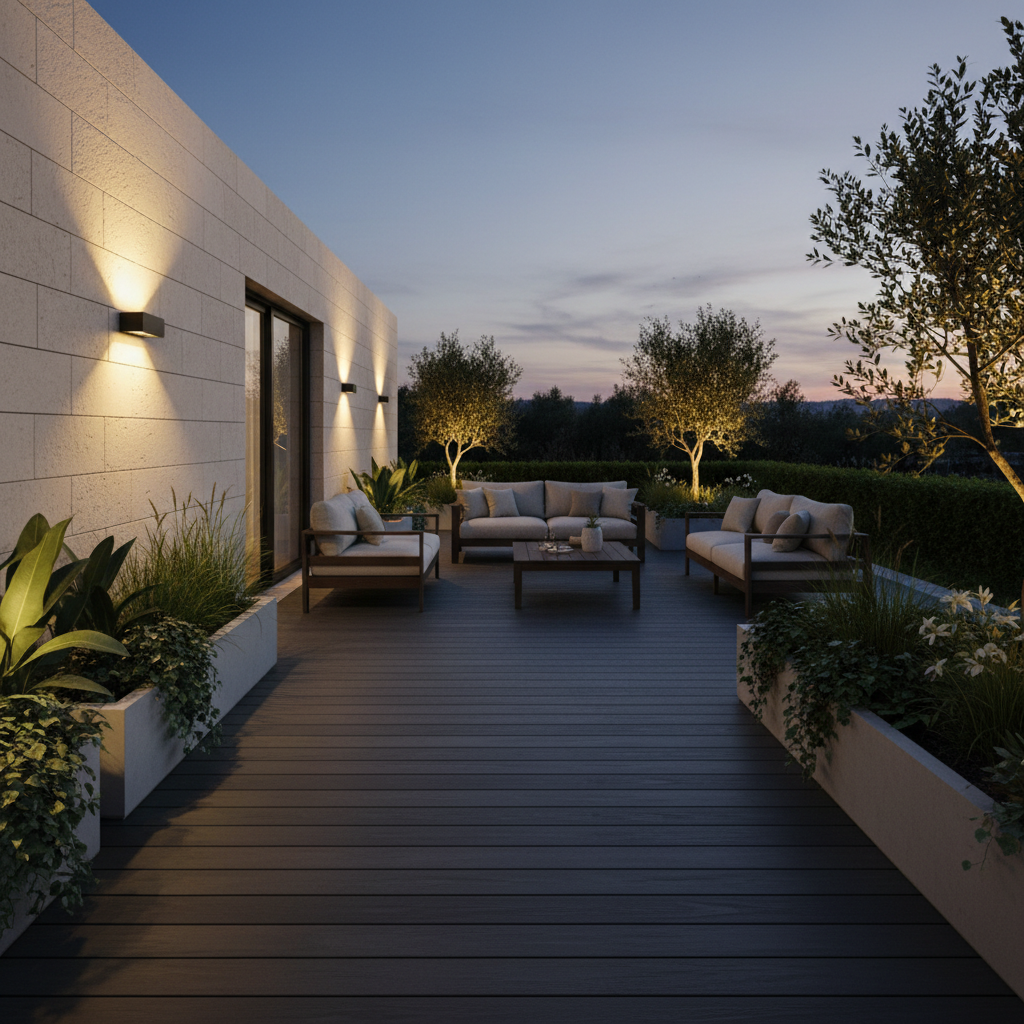
The solar wall sconce is ideal for entrances, gates, facades, and garages. It mounts to the wall and directs light downwards or sideways. Premium models feature cast aluminum housings and careful diffusion that prevents glare.
The motion sensor is particularly useful here: you walk past your door, the light turns on. You go inside. It turns off. No switch needed, no cables to run.
For trends and inspirations on this format, our article on designer solar wall sconces and 2026 trends is worth checking out.
Spotlights and Floodlights: For Highlighting
An adjustable solar spotlight planted in a flowerbed, directed towards a tree or facade: this is the tool for landscape staging. These models are often the most powerful in the solar garden category, with concentrated, directional light.
They are also the most dependent on good sunlight—their panel must face south to charge properly. If your garden is shaded, opt for a model with a remote panel (panel separate from the lamp body) to optimize capture.
The True Cost of Wired vs. Solar Garden Lighting
The price comparison between solar and wired lighting often stops at the purchase price. This is a significant miscalculation.
The Often-Forgotten Cost of Wired Installation
Having a wired outdoor light installed by an electrician means planning a trench in the garden, conduit, a branch circuit from the electrical panel, and labor. In practice, users who have taken the plunge report that the final bill for a wired installation often far exceeds the price of the light fixture itself. This investment makes sense for permanent, powerful lighting, but it's disproportionate for securing a pathway or illuminating a flowerbed.
The Total Cost of Solar: Zero After Purchase
A quality designer solar garden light is an upfront investment with zero costs afterward. No electricity consumed, no special maintenance, no professional intervention. The only variable: battery life, which may require replacement after several years of use depending on the model.
The math is simple: if you avoid wired installation for 3 or 4 light points in your garden, solar often pays for itself in the first year.
How to Spot a Quality Solar Garden Light at First Glance
You're in a store or looking at a product page. You have 30 seconds to sort the good from the bad. Here are the signs to look for.
Signs of a Serious Model
- Aluminum body: explicitly mentioned in materials, not just "metal look"
- Matte finish: resists UV and thermal variations better than glossy
- IP65 minimum rating: clearly displayed in specs
- Communicated battery capacity: in mAh or hours of battery life depending on usage mode
- Wide detection angle: 120° minimum, 180° ideal
- Manufacturer's warranty: at least 2 years, ideally 5 years
Red Flags to Avoid
- "Super bright" with no lumen count indicated
- Very low price with no detailed technical specs
- Material described as "high-quality plastic" without specifics
- Battery life announced only in "optimal sun hours" (unrealistic conditions)
- No mention of IP rating
For a synthetic overview of options available by usage type, our complete guide to outdoor solar lighting by type provides a useful panorama.
The True Luxury in Solar Lighting: Never Thinking About It
There's one thing buyers of designer solar garden lights often say after a few months: "I don't even think about it anymore." The light turns on when it's dark and someone passes by. It recharges during the day. It works in November just like in July. It asks for nothing.
That's the true criterion of quality: not the most beautiful design on a product sheet, but the model that disappears into the background and does its job without you having to worry.
Lumic's SolarGlow: Designed for North American Gardens
It's with this philosophy that we designed the SolarGlow. Its oversized solar panel and high-capacity battery allow it to operate for up to 20 days without solar recharge in detection mode. This isn't a promise under ideal conditions—it's a measured battery life to last through prolonged cloudy periods, a reality in many North American winters.
The design is sleek: clean lines, sober finish, two 180° motion sensors with a range of about 26 feet (8 meters). IP65 certification ensures resistance to rain, snow, and frost. And the 5-year warranty + 90-day satisfaction guarantee gives you time to truly test it under real conditions.
No cables, no electrician, no trenching in the garden. You install it, you forget it.
For those who want to delve deeper into the criteria for choosing between aesthetics and performance, our article on outdoor solar lighting: choosing both beautiful AND reliable goes further on this topic.
Key Takeaways for Choosing Your Solar Garden Light
Before clicking "add to cart," a few quick checks:
- Material: aluminum or stainless steel, no untreated plastic
- Finish: consistent with your outdoor style (matte black, anthracite, milky white)
- Battery: sufficient capacity to last through sunless winter days
- IP65 minimum: essential for garden use
- Motion sensor: wide angle, integrated ambient light sensor
- Warranty: at least 2 years, otherwise the design is worthless over time
Solar garden lighting no longer requires a compromise between aesthetics and performance. The best current solutions are beautiful, robust, autonomous, and hassle-free to install. That's the combination truly worth the investment.