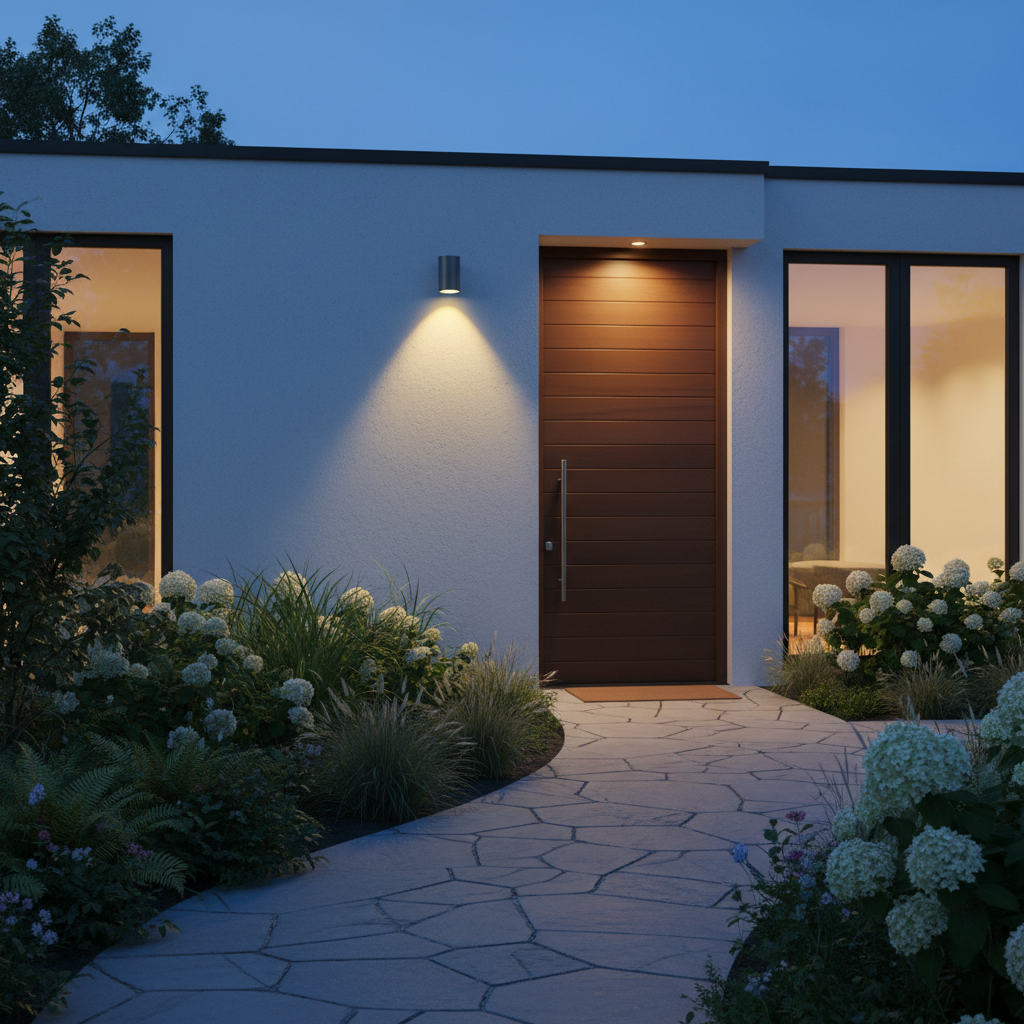
You have a driveway, facade, or patio that goes dark at night — and you don't want to call an electrician for it. Good news: a well-chosen outdoor solar wall light solves the problem in under 30 minutes, no wires, no electrical drilling, no extra energy bills.
But here's the catch: the market is flooded with models under $15 that die after six months. The result? You buy again, you throw away, you get frustrated. This article helps you make the right choice the first time — with concrete criteria, not just marketing hype.
What a Solar Wall Sconce Should Really Do
Before looking at product sheets, ask yourself a simple question: what is this light for? The answer changes everything in terms of prioritizing criteria.
Light for Security or Ambiance?
These are not the same product. A security-oriented outdoor solar wall light must detect motion at a minimum of 26 feet (8 meters) and project powerful light — at least 800 to 1000 lumens — to deter or alert. An ambient light, on the other hand, can settle for 200 to 400 lumens with a pleasant warm color temperature.
If you want both, look for a model with multiple modes: motion detection + soft standby. Some lights stay on at low intensity constantly and switch to full power when motion is detected. This is often the best compromise for an entryway or gate.
How Long Does It Work Without Sun?
This is the question almost no one asks before buying, yet it's the most important. In winter, under cloudy skies, a cheap solar light with a small battery will die after two or three gray nights. A light with a generous battery and an efficient solar panel will last two to three weeks without recharging.
Always check the battery capacity (in mAh) and the advertised runtime in detection mode — not in continuous mode, which is rarely representative of actual use.
Does It Really Withstand Bad Weather?
An IP65 rating is the minimum for a solar wall sconce used year-round. It guarantees protection against water jets from all directions — rain, snow, pressure washer. Below IP44, you risk durability issues, especially in regions with harsh winters.
Some manufacturers mention weather resistance without specifying an IP rating — avoid these. This often indicates the product has not been certified.
Technical Criteria to Compare Before Buying
Here's a table summarizing the essential criteria for comparing solar wall lights without getting lost in technical specifications.
| Criterion | Entry-Level | Mid-Range | High-End |
|---|---|---|---|
| Luminous Flux | 100–300 lm | 400–800 lm | 900–1500 lm |
| Runtime (detection mode) | 3–7 days | 10–15 days | 20–30 days |
| Protection Rating | IP44 | IP65 | IP65–IP67 |
| Motion Detection Range | 10–16 ft (3–5 m) | 16–26 ft (5–8 m) | 26–39 ft (8–12 m) |
| Detection Angle | 90–120° | 120–150° | 180° |
| Manufacturer Warranty | 6–12 months | 1–2 years | 3–5 years |
Why Lumens Matter More Than Watts
For solar lights, wattage is often highlighted because it looks impressive on labels — but what truly matters is the luminous flux in lumens. This measures the actual amount of light produced and perceived. A 5W solar panel can power a 600-lumen or a 200-lumen light depending on circuit efficiency: watts tell you nothing about actual brightness.
For an outdoor solar wall light placed at a home entrance: plan for at least 600 lumens. For a driveway or ambient patio lighting: 200 to 400 lumens are generally sufficient.
Integrated vs. Remote Solar Panel: What's the Difference?
Most solar wall sconces have their panel integrated directly into the light body. This is simpler to install, but it imposes a strong constraint: the light must be placed where it receives sun, not necessarily where you need light.
Models with a remote panel (connected by a 6.5 to 16.5-foot / 2 to 5-meter cable) are more flexible: you can mount the light in the shade under an overhang, and the panel captures sun on the facade or ground. This is particularly useful for north-facing facades or partially shaded areas. The trade-off: installation is slightly more complex, and the aesthetic is less streamlined.
Where to Install an Outdoor Solar Wall Light on Your Facade?
Placement determines both solar efficiency and lighting quality. A few simple rules for choosing well.
What Installation Height for a Solar Wall Sconce?
Between 7.2 and 9.2 feet (2.20 and 2.80 meters) high is the ideal zone for most outdoor uses. At this height, the motion sensor covers a wide ground area without generating false alerts from passing cats or falling leaves. Below 5.9 feet (1.80 m), you risk nuisance triggers; above 9.8 feet (3 m), the detection angle becomes less precise.
North-Facing Facade: Does It Still Work?
This is the real question homeowners with a north-facing entrance ask. Frank answer: it works, but much less effectively if the solar panel is integrated. In winter, a north-facing facade receives so little direct radiation that the battery will take several days to fully recharge.
If your facade is north-facing or shaded by trees or an extension, opt for a model with a remote panel that you can position on a south-facing wall or on the roof — or a rechargeable USB wireless lighting solution if sunlight is truly too limited. For this type of situation, our guide to outdoor lighting without major work explores several interesting alternatives.
How Many Feet From the Gate or Entrance?
For effective welcome lighting, place the light at least 5 feet (1.50 meters) from the entry point — this gives the detector time to spot an approaching person and turn on the light before they are already at your door. If you have a long access path, plan for two staggered lights to cover the entire area without blind spots.
Common Mistakes to Avoid When Buying a Solar Sconce
Thousands of customer reviews on marketplaces consistently show the same disappointments. Here's how to avoid them.
Relying Solely on Low Price
An outdoor solar wall light sold for less than $12 will almost always have an undersized battery — often 600 to 800 mAh — which will last one season if you're lucky. The battery is the component that degrades fastest and cannot be replaced on low-end models. In practice, you'll buy a new product every 12 to 18 months. Mathematically, a $40–$60 model with a large battery and a 3 to 5-year warranty is cheaper over 3 years.
Ignoring Color Temperature
Cool white light (6000K and above) gives an "industrial security" look suitable for parking lots, not really for a home entrance. For a residential facade, an outdoor solar wall light in warm white (2700–3000K) or neutral (4000K) integrates much better with architecture and creates a welcoming ambiance. If the manufacturer doesn't mention color temperature, be wary — it's often because they don't control this parameter.
Not Checking the Detection Angle
A 90° detection angle leaves significant blind spots on the sides. For an entrance or gate, a solar facade light with a 180° angle is much more suitable — it covers the entire area in front of the wall without a person being able to approach "from the side" without triggering the light.
Mounting the Light in the Shade
This is the most common blunder. People install the light under an overhang because it looks better — but the solar panel never sees the sky. Result: the battery recharges halfway, and the light turns off in the middle of the night. If you want a light under an overhang, absolutely choose a model with a remote panel.
Outdoor Solar Wall Light vs. Solar Floodlight: Which to Choose?
The form of the fixture isn't just about aesthetics — it determines how light is distributed and who it's for.
When a Wall Sconce is the Right Choice
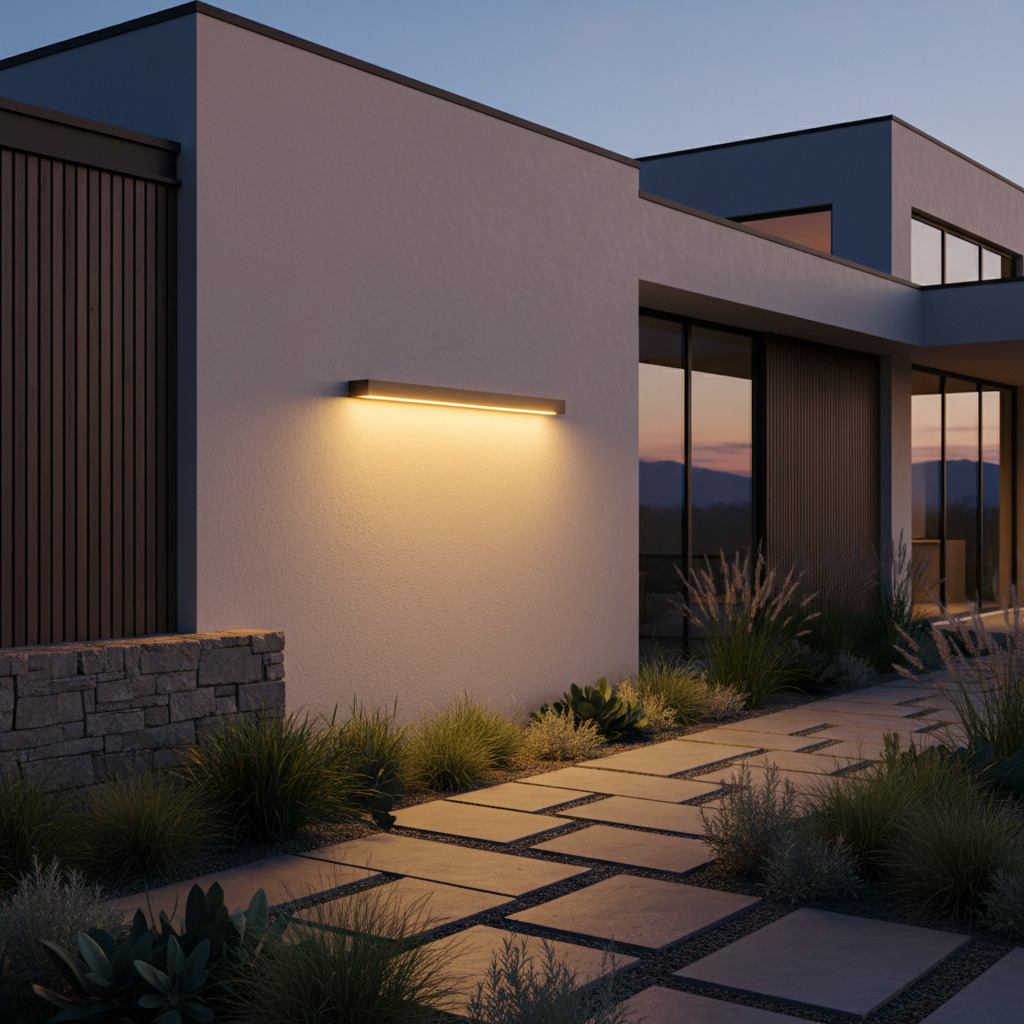
A wall sconce illuminates laterally and downwards, creating a diffused and pleasant light on a facade, patio, or path. It's the natural choice if you want ambiance, to highlight your home's architecture, or to softly illuminate a welcoming area. Sconces are also more discreet and integrate better with a wall than floodlights.
When a Solar Floodlight is More Suitable
If you need to illuminate a large ground area — a parking lot, a yard, a long driveway — an adjustable solar floodlight is more effective. It concentrates its luminous flux where you direct it, often with higher power. To learn more about the practical differences, check out our comparison on choosing an outdoor solar floodlight.
In summary: sconce for ambiance and decoration, floodlight for raw performance and large areas.
Lumic's SolarGlow: What It Actually Offers
If you're looking for an outdoor solar wall light that lasts without compromising on power, the SolarGlow deserves to be on your shortlist.
What objectively differentiates it from entry-level models: 1200 lumens — a power few solar sconces achieve in this category — and a 20-day runtime without solar recharge in detection mode. This is the result of a solar panel and battery sized to truly work in winter, not just in July.
For detection: two motion sensors covering 180° with a range of about 26 feet (8 meters). It's hard to go unnoticed. The IP65 certification ensures resistance to rain, snow, and frost. 5-year warranty + 90-day satisfaction guarantee — the kind of guarantee that speaks volumes about the manufacturer's confidence in their product.
Reviews on Trustpilot (4.5/5, over 2200 reviews) regularly mention its robustness in winter conditions and ease of installation — two points that exactly match the most common frustrations with low-end solar lights.
Installing an Outdoor Solar Wall Light: What You Need to Know First
What Equipment Do You Need for Installation?
Installing a solar wall sconce doesn't require special skills, but prepare the necessary tools: a drill with bits suitable for your facade (concrete, brick, stucco), anchors and screws, a spirit level, and a pencil for marking. On a wood or PVC facade, simple screws are sufficient.
Allow 20 to 30 minutes for a neat installation, including marking and leveling. If you're a renter and don't want to drill, some models offer reinforced adhesive mounting — but check that the light's weight is compatible with the bearing surface.
How to Orient the Solar Panel to Maximize Recharging?
The panel should be oriented south (in the Northern Hemisphere) with a tilt angle of about 30 to 45° from horizontal to maximize annual solar radiation. Avoid shaded areas between 10 AM and 4 PM — this is the most productive recharging window of the day. Even partial shade on the panel (tree branch, eaves) can significantly reduce recharging.
Do You Need Authorization to Install a Solar Wall Light?
In the vast majority of cases, no. A solar wall light requires neither electrical connection nor prior work declaration for a single-family home. If you're in a condominium, simply check the internal regulations — some regulations govern modifications to facades visible from common areas. In a protected area (historic district, near a historic monument), checking with the city hall is recommended.
Maintenance and Durability: What Manufacturers Rarely Say
A good outdoor solar wall light doesn't require much maintenance — but a few simple steps significantly extend its lifespan.
The solar panel accumulates dust, dead leaves, and sometimes moss over the seasons. A monthly wipe with a damp cloth is enough to maintain optimal charging efficiency. If the panel is very dirty, a small drop of diluted window cleaner will do the trick — avoid abrasive products that scratch the surface.
The battery has a limited lifespan in charge/discharge cycles. Most lithium batteries support 500 to 800 cycles before noticeably losing capacity — equivalent to 3 to 5 years of daily use. This is why the manufacturer's warranty is an important indicator: a product with a 5-year warranty is designed to last, a product with a 6-month warranty… less so.
If you're also wondering about lighting a garage or hallway without an electrical grid, our guides on garage lighting without electricity and wireless hallway lighting can further inform your decision.
In Summary: How to Choose Your Solar Wall Light
Here are the key takeaways before placing an order.
- Define the use: security (power and detection range prioritized) or ambiance (color temperature and aesthetics).
- Check lumens, not watts. Minimum 600 lm for a home entrance, 200–400 lm for ambiance.
- Demand IP65 for year-round use in the US/Canada.
- Verify runtime in detection mode — not continuous mode. Aim for at least 15 days to get through winter smoothly.
- Be wary of north-facing facades: prefer a remote panel if sunlight is limited.
- The warranty reveals manufacturer confidence: less than 2 years is a red flag.
Taking the time to compare these concrete criteria is the difference between a light that illuminates your facade for 5 years and one that ends up in the landfill after one winter. The right solar wall light isn't necessarily the most expensive — but it's almost never the cheapest either.