Introduction: The Art of Minimalist Kitchen Lighting in 2026
Minimalist kitchen lighting embodies the very essence of contemporary design: doing more with less. This revolutionary approach transforms your culinary space into a serene haven where every light source has its purpose. According to a Houzz 2025 study, 78% of French homeowners now prioritize simplicity and functionality in their kitchen layout.
Minimalism in lighting doesn't mean sacrificing performance; quite the opposite. It's about creating a perfectly balanced luminous environment where each element contributes to a soothing visual harmony. This philosophy of clean lighting meets the expectations of a society seeking authenticity and well-being in its daily habitat.
Discover how to transform your kitchen into a sophisticated minimalist space with smart lighting solutions that combine contemporary aesthetics and optimal energy efficiency.
Fundamentals of Minimalist Kitchen Lighting
Philosophy of Less is More in Lighting
Minimalist kitchen lighting is based on three fundamental principles that redefine our approach to domestic illumination. First, functional simplicity: each light source must fulfill a specific role without decorative excess. Second, discreet integration: fixtures disappear visually, leaving only their luminous effect. Third, quality over quantity: better to have one premium light source than a multitude of mediocre solutions.
This minimalist approach is inspired by Scandinavian and Japanese design, where space breathes thanks to enlightened choices. The goal is not to create an austere environment but rather a serene space where light becomes an architectural element in its own right. Clean lines and noble materials come together to create a warm and contemporary ambiance.
Psychology of a Clean Space
Discreet lighting positively influences our daily well-being by reducing visual stress and promoting concentration. Neuroscience confirms that clean environments improve cognitive functions and reduce anxiety. In a minimalist kitchen, lighting becomes a tool for domestic zen, transforming culinary preparation into a moment of active meditation.
The absence of excessive visual stimuli allows the mind to focus on the essentials: culinary creation. This holistic approach to lighting creates an environment conducive to creativity and family sharing, central values of modern French cuisine.
LED Technologies: The Perfect Alliance of Minimalism and Innovation
Integrated LED Strip Lights: Invisibility and Performance
LED strip lights form the backbone of minimalist kitchen lighting thanks to their architectural integration capability. These linear solutions blend into structural elements to create uniform and modern lighting without visual pollution. Installation under upper cabinets or in specially designed grooves achieves a sought-after floating light effect.
LED technology offers exceptional energy efficiency (120 lumens/watt) while maintaining a minimal visual footprint. Ultra-thin profiles less than 0.6 inches (15 mm) thick integrate perfectly into kitchens with clean lines. Wireless technology revolutionizes installation by eliminating visible wiring, preserving the sought-after aesthetic purity.
Intelligent Motion Detection
Integrating motion sensors into minimalist kitchen lighting represents the culmination of the "less is more" philosophy. This technology eliminates visible switches while optimizing energy consumption. Lighting activates automatically based on real needs, creating a smooth and intuitive user experience.
Ambient light sensors complement this intelligent system by adjusting light intensity to natural conditions. This preventive approach avoids daytime glare while ensuring optimal evening lighting. The Movement 3.0 from Lumic perfectly illustrates this convergence between advanced technology and minimalist aesthetics.
Design and Planning of Clean Lighting
Analysis of Specific Lighting Needs
Designing clean lighting requires a meticulous analysis of culinary activities and their spatial distribution. Unlike traditional approaches that multiply sources, minimalism favors optimizing each light point. This strategy requires a deep understanding of traffic flows, work areas, and usage times.
Task lighting is the absolute priority: at least 500 lux on the work surface to ensure visual comfort during cutting and preparation. Ambient lighting is limited to a few indirect sources creating a warm atmosphere without visual overload. This layered approach achieves a sophisticated result with minimal means.
Architectural Integration and Materials
Modern minimalist lighting integrates into existing architecture rather than superimposing on it. Light grooves carved into walls, false ceilings with indirect lighting, or backlit niches create dramatic effects without visual clutter. This approach requires upfront planning but guarantees an exceptional result.
Materials play a crucial role in light diffusion: matte surfaces to avoid parasitic reflections, light colors to optimize reflection, smooth textures for easy maintenance. The chromatic harmony between lighting and materials creates a soothing visual coherence characteristic of the minimalist style.
Practical Solutions for Discreet Lighting
Under-Cabinet Lighting: The Art of Invisibility
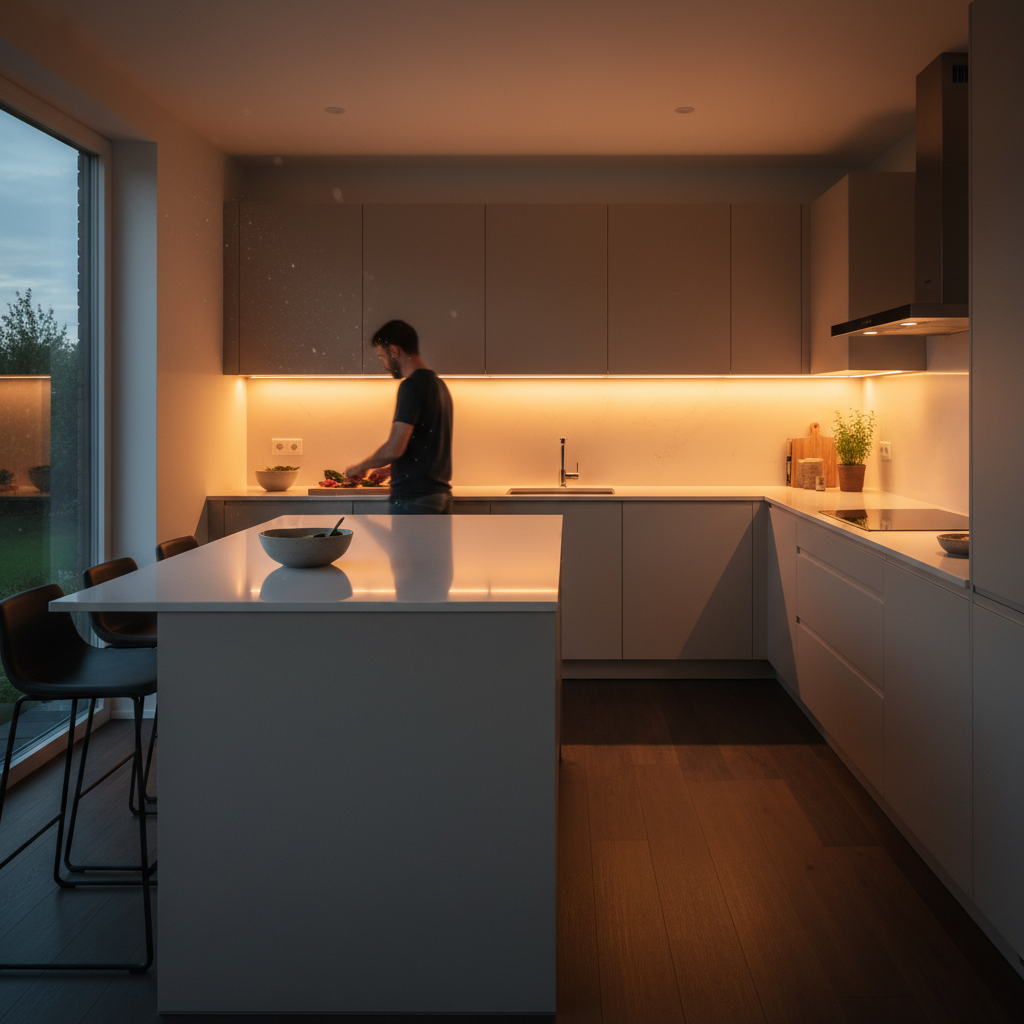
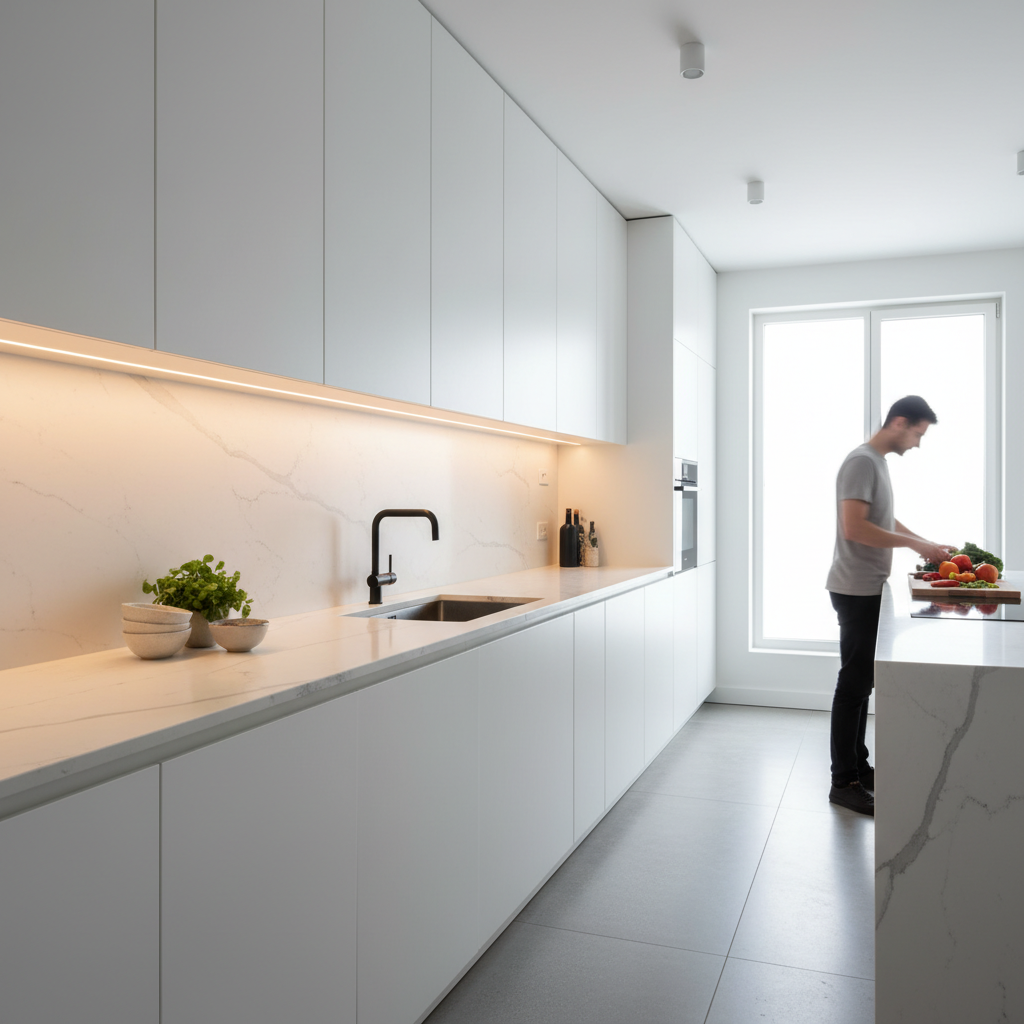
Under-cabinet lighting represents the quintessence of discreet lighting in a minimalist kitchen. This technical solution offers optimal task lighting while preserving the sought-after visual cleanliness. Installing ultra-thin LED strips on the underside of upper cabinets creates a uniform light plane, eliminating shadows on the work surface.
The key to success lies in choosing the color temperature: 3000K for a warm evening ambiance, 4000K for culinary precision during the day. Models with variable temperature allow adapting lighting according to activity and time, thus optimizing visual comfort. Magnetic installation facilitates maintenance while preserving the minimalist aesthetic during interventions.
Indirect Lighting: Creating Atmosphere without Clutter
Indirect lighting is the soul of the minimalist kitchen, creating a soft ambiance without apparent light sources. This technique involves directing light onto reflective surfaces (ceiling, walls) that diffuse it evenly throughout the space. The result evokes a soft, enveloping natural light.
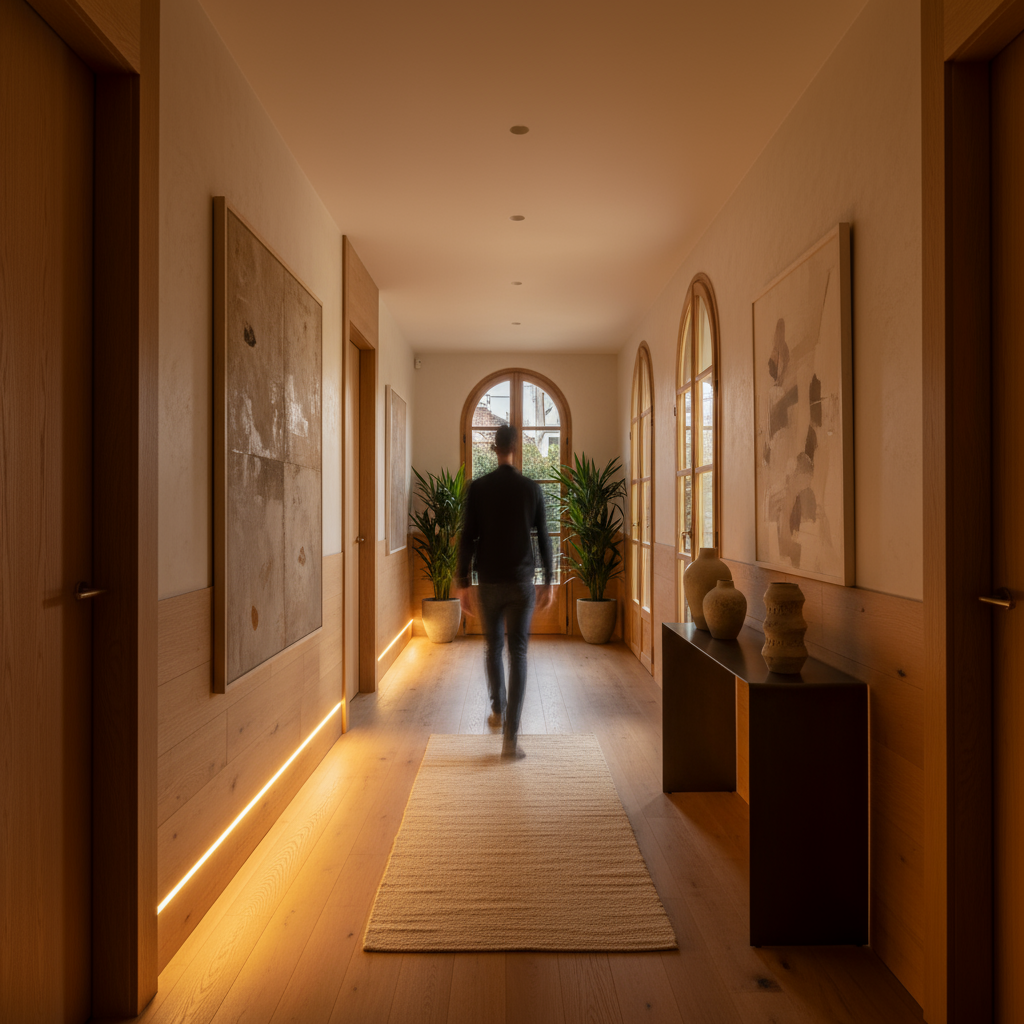
Light cornices, base lighting, or LED strips hidden behind facades create particularly spectacular floating light effects. This approach requires higher power (count 30% loss by reflection) but generates incomparable visual comfort. The absence of direct glare allows full enjoyment of the space without eye strain.
Color Palette and Color Temperature
Harmony of Whites in Minimalist Lighting
Mastering color temperature is crucial in minimalist kitchen lighting where each shade influences the overall ambiance. Neutral whites (4000K) form the basis of work lighting, offering an essential true-to-life color rendering for culinary preparation. This temperature preserves the authenticity of food colors while maintaining a contemporary ambiance.
Introducing warm whites (2700-3000K) in ambient lighting creates a smooth transition to moments of conviviality. This chromatic duality allows adapting the atmosphere according to activity: culinary productivity during the day, family relaxation in the evening. Avoiding cold whites (>5000K) preserves the human warmth essential to the kitchen space.
Avoiding Colored Light Pollution
Minimalism in lighting prohibits multicolored effects that visually pollute the space. Unlike sometimes enticing RGB trends, the minimalist kitchen favors chromatic sobriety to preserve visual serenity. This aesthetic restraint does not exclude sophistication: perfectly mastered white lighting creates more impact than a profusion of colors.
The color rendering index (CRI >90) becomes a priority to ensure the chromatic fidelity of food and materials. This technical requirement ensures a professional culinary environment while maintaining the sought-after clean aesthetic.
Installation and Technical Integration
Invisible Installation Techniques
Installing clean lighting requires a rigorous technical approach to preserve the minimalist aesthetic. Concealing wiring is a major challenge: passages in walls, routing under furniture, or using dedicated profiles. This upfront technical planning avoids later aesthetic compromises.
Wireless solutions revolutionize this issue by completely eliminating visible wiring. Magnetic technology allows installation in 30 seconds without drilling or wiring, thus preserving the purity of architectural lines. This approach is particularly suitable for renovations where intervention on the main structure remains limited.
Maintenance and Design Longevity
Durability is a fundamental pillar of minimalism: better to invest in long-lasting solutions than to multiply replacements. Premium LED strips offer a lifespan of 50,000 hours, or 15 to 20 years of normal use. This longevity preserves the aesthetic integrity of the installation over the long term.
Ease of maintenance directly influences design longevity: reversible fastening systems, easy access to components, compatibility with technological advancements. The 5+ years warranty offered by some manufacturers reflects this qualitative approach consistent with the minimalist philosophy.
Smart Lighting and Minimalist Home Automation
Simplified and Intuitive Control
Modern minimalist lighting integrates advanced control technologies while preserving ease of use. Discreet touch interfaces replace traditional switches, creating clean surfaces without aesthetic disruption. Voice control completely eliminates visible control elements, allowing intuitive operation without clutter.
Automatic programming according to usage habits optimizes the user experience: gradual activation upon waking, adaptation according to culinary activity, automatic shutdown in case of absence. This domestic artificial intelligence anticipates needs without manual intervention, perfectly embodying the minimalist philosophy of "less effort for more results".
Connected Ecosystem Integration
The minimalist home automation ecosystem favors interoperability and simplicity of management. A single communication protocol (Zigbee, Matter) unifies the control of all lighting, avoiding the multiplication of applications and interfaces. This holistic approach creates a coherent and peaceful technological environment.
Synchronization with circadian rhythms optimizes well-being: energizing light in the morning, soothing in the evening. This automatic personalization improves quality of life while maintaining the simplicity of use characteristic of minimalism.
Energy Savings and Sustainability
Optimal Energy Performance
Minimalist kitchen lighting excels in energy efficiency by optimizing each light source. The "quality over quantity" approach translates into substantial savings: a premium 20W LED strip advantageously replaces three 50W halogen spots, reducing consumption by 7.5 times. This performance is accompanied by superior lighting quality and exceptional longevity.
Motion detection and ambient light sensors automatically optimize consumption according to real needs. This energy intelligence can reduce consumption by an additional 60% compared to classic LED lighting. The initial investment pays off in less than two years thanks to the savings generated.
Reduced Environmental Impact
Minimalism in lighting significantly contributes to reducing the domestic carbon footprint. Fewer fixtures mean less material consumed, less waste generated, and less energy wasted. This responsible approach aligns perfectly with French energy transition goals.
The exceptional durability of premium LED solutions avoids frequent replacements and their associated environmental impacts. A mercury-free LED strip of quality can operate for 15 to 20 years without maintenance, eliminating recurring electronic waste from low-end solutions.
Errors to Avoid in Minimalist Lighting
Trap of Under-Lighting
The pursuit of cleanliness should not compromise functionality: poorly sized discreet lighting creates a dark and uncomfortable environment. The classic mistake is to excessively reduce light power in the name of minimalism. Task lighting of 500 lux remains essential for visual comfort, regardless of the aesthetic approach adopted.
The solution lies in optimizing light distribution rather than reducing power. Well-designed lighting can appear discreet while delivering the required performance. This technical mastery differentiates professional minimalist lighting from often disappointing amateur attempts.
Neglecting Maintenance
The illusion of simplicity in minimalism can lead to neglecting practical maintenance aspects. Hard-to-access integrated lighting compromises its longevity and may require heavy interventions for simple operations. Planning accessibility from the design stage avoids these costly pitfalls.
Favor modular systems and reversible fasteners that preserve aesthetics while facilitating maintenance. This technical anticipation is essential to maintain the integrity of minimalist design over the long term.
Inspirations and Achievements in Clean Lighting
International Minimalist Trends
Modern minimalist lighting is inspired by Scandinavian and Japanese achievements where light becomes a structuring architectural element. Nordic kitchens favor large reflective white surfaces combined with generous indirect lighting. This approach creates bright and peaceful spaces despite the low natural winter light.
The Japanese aesthetic "Ma" (the art of emptiness) influences contemporary creations with its mastery of negative space and light. The interplay of shadow and light creates visual depth without material clutter. This conceptual sophistication elevates lighting to the art of living.
Adaptations to French Constraints
Adapting minimalism to French architectural constraints requires a pragmatic approach. The typical long kitchens of Parisian apartments benefit from uniform linear lighting that visually enlarges the space. Under-cabinet lighting becomes a priority to compensate for the reduced depth of work surfaces.
Individual houses offer more creative freedom: zenithal lighting through skylights, backlit glass roofs, or peripheral light cornices. These integrated architectural solutions create exceptional atmospheres while respecting minimalist codes.
Budget and Return on Investment
Intelligent Investment Strategy
Minimalist kitchen lighting requires a higher initial investment than traditional solutions but generates substantial long-term savings. A qualitative approach with fewer but more efficient light points optimizes the overall quality-price ratio. This strategy avoids multiple purchases and qualitative disappointments of economic solutions.
The optimal budget ranges from $550 to $1,650 for a medium-sized kitchen, including premium LED strips, control system, and professional installation. This amount may seem high but is justified by durability (15-20 years), energy savings ($55-88/year), and property value increase (3-5% added value).
Long-Term Profitability
Profitability analysis over 10 years demonstrates the economic relevance of quality investment. Cumulative energy savings ($550-880), absence of replacement ($220-440 avoided), and property value increase justify the initial extra cost. This patrimonial approach aligns perfectly with the minimalist philosophy of "buy better to buy less".
The comparison with discount solutions reveals favorable total cost of ownership differences for premium solutions. This economic reality reinforces the coherence of the minimalist approach in lighting.
Conclusion: Minimalist Kitchen Lighting, Contemporary Art of Living
Minimalist kitchen lighting transcends mere utility to become a true contemporary art of living. This holistic approach transforms the culinary space into a sanctuary of serenity where every ray of light contributes to overall harmony. Far from being an aesthetic constraint, minimalism reveals the intrinsic beauty of light and architecture.
Modern LED technologies finally allow this vision to be realized without functional compromise. The alliance between technical performance and visual cleanliness opens new creative perspectives for French kitchens. This silent revolution already influences architectural trends and redefines our expectations of domestic comfort.
Investing in quality clean lighting represents much more than a mere technical improvement: it is a lifestyle choice that prioritizes quality over quantity, durability over the ephemeral, well-being over ostentation. This philosophy resonates perfectly with contemporary aspirations for authenticity and environmental responsibility.
To discover how to transform your kitchen into a sophisticated minimalist space, explore modern lighting solutions that combine French innovation and timeless design. Technological excellence at the service of clean beauty: this is the promise of 21st-century minimalist kitchen lighting.